
Business
12K Facebook employees may lose jobs amid ‘quiet layoffs’: Report


Meta is reportedly conducting ‘quiet layoffs’ at Facebook that may lead to thousands of job cuts — at least 12,000 or about 15 per cent of its workforce.
According to a report in Insider, the senior executives are in the process of executing “quiet layoffs” of underperforming workers.
Several employees told Insider that as much as 15 per cent of the workforce could be cut within the next few weeks. This means that some 12,000 employees could be out of jobs soon.
“It might look like they are moving on, but the reality is they are being forced out,” the employee told Insider.
Facebook employees are bracing for layoffs for months since the social networking giant announced a hiring freeze.
At its peak, Meta’s stock price approached $380 per share. But in the last year, the company share price has nosedived 60 per cent.
Meta Founder and CEO Mark Zuckerberg has made it clear that the social network is freezing hiring across the board, warning that more layoffs are in the pipeline.
According to reports, Zuckerberg made these comments during an internal call to employees.
Zuckerberg mentioned during the last Meta earnings call that “Our plan is to steadily reduce headcount growth over the next year. Many teams are going to shrink so we can shift energy to other areas.”
In May, Zuckerberg announced a hiring freeze affecting certain segments of Meta.
However, he has now expanded the hiring freeze across departments and verticals.
Facebook’s parent company Meta is currently reducing staff to cut costs amid the economic downturn, apparently putting some of them on traditional 30 to 60 days “lists” to find a new role within the company or leave.
Meta has a “long practice” where employees whose roles are eliminated are subject to termination if they can’t find a new job internally within a month.
As Big Tech companies lay off employees and freeze new hirings, Zuckerberg said in July that the company’s plan is to steadily reduce headcount growth over the next year.
Admitting that the social network has entered an economic downturn that will have a broad impact on the digital advertising business, Zuckerberg said that many “teams are going to shrink so we can shift energy to other areas inside the company”.



Gold prices dipped 3.28 per cent on a weekly basis, while silver prices declined 7.83 per cent this week, as rising crude oil prices heightened inflation fears.
The rising inflation concerns reinforced expectations that global interest rates will stay higher for longer, prompting a wave of selling across precious‑metals markets.
On Friday, MCX gold futures expiring December declined 0.81 per cent while MCX silver futures for December shed 1.75 per cent. Gold futures stood at Rs 1,42,150, while silver futures stood at Rs 1,96,100 per kg.
Gold saw its steepest weekly decline since June and slipped below the psychologically important $4,000 per ounce level for the first time since mid-July, analysts said.
The selloff in silver intensified over weakness in US technology stocks, particularly AI-linked companies, which triggered margin calls and forced investors to liquidate precious-metal holdings.
Meanwhile, crude oil surged to multi-month highs following renewed attacks on Saudi energy infrastructure and shipping routes, while the Indian rupee surrendered its early-week gains amid rising oil prices and renewed dollar demand.
However, lower prices encouraged physical gold purchases in India during the Dussehra festival, providing some underlying demand support, while Chinese jewellery demand remained subdued.
Market participants forecast that precious metals could remain under pressure if elevated energy prices reinforce inflation concerns and expectations of tighter monetary policy. However, physical demand and any moderation in bond yields could offer support following the recent correction, they said.
Markets largely expect the US Fed to keep interest rates unchanged at the October 27–28 policy meeting, but expectations of another rate hike in December remain elevated, with traders pricing approximately a 78 per cent probability.
Investors are also awaiting the US Personal Consumption Expenditures report next week for additional guidance on inflation and future interest-rate decisions.
Immediate resistance for Comex Gold is placed at $4,070–$4,100 zone, while support lies at $3,970–$4,000 zone, analysts said.
For MCX Gold, immediate resistance is placed at Rs 1,43,000–Rs 1,43,700 zone, while the support lies at Rs 1,40,000–Rs 1,41,000, they added.

The Directorate of Enforcement (ED), Hyderabad Zonal Office, on Friday conducted search operations at seven premises across Hyderabad, Secunderabad and Medchal-Malkajgiri in Telangana under the Prevention of Money Laundering Act (PMLA), an official statement said on Saturday.
The raids targeted the registered office of M/s Kanakadhara Ventures Pvt. Ltd. (KVPL), the residences of its directors, and premises linked to entities and individuals alleged to have acted as conduits for the diversion of bank funds.
The searches form part of an ongoing investigation into the alleged “misutilisation” and diversion of credit facilities sanctioned to KVPL and its directors, the ED statement said.
The ED case stems from an FIR dated December 8, 2022, registered by the Central Bureau of Investigation, Bank Securities and Fraud Branch (BS&FB), Bangalore, on a complaint from Punjab National Bank.
The FIR alleges offences under Sections 120-B, 420, 468 and 471 of the Indian Penal Code, and provisions of the Prevention of Corruption Act, 1988.
According to the agency, a consortium of banks led by Punjab National Bank — comprising IDBI Bank, Union Bank of India, Andhra Bank (now UBI) and Bank of Baroda — suffered a loss of Rs 326.49 crore.
ED investigations revealed that Bank Guarantee and Letter of Credit facilities granted to KVPL were misused. Funds were allegedly diverted through related and conduit entities on the strength of fabricated steel purchase invoices and transport documents.
The company is also accused of operating bank accounts outside the consortium arrangement without the knowledge of the lending banks, the statement said.
During the searches, officials seized incriminating documents, digital devices and other records related to the diversion and layering of funds. Unaccounted cash amounting to Rs 15 lakh was also recovered.
Multiple immovable properties and investments linked to the case have been identified.
ED said further investigation is underway.
The coordinated action underscores the agency’s continued focus on tracing the proceeds of bank frauds and cracking down on complex money-laundering networks involving corporate entities.
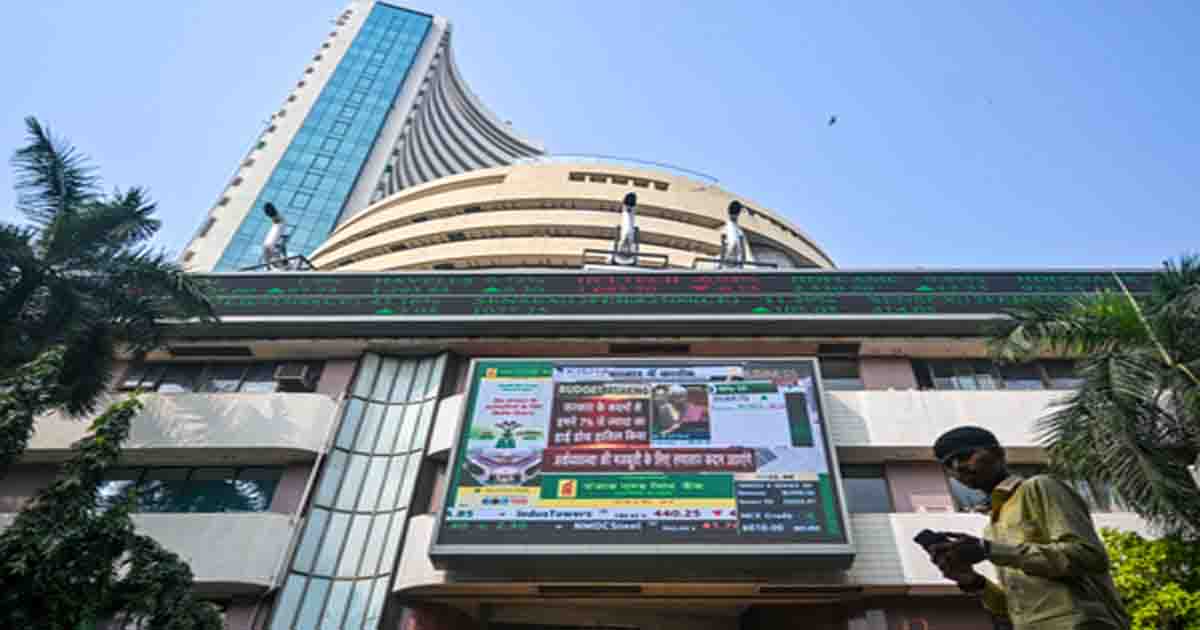
The macroeconomic environment remains challenging, with crude oil emerging as a key source of uncertainty for domestic markets, analysts said on Saturday, as the Indian equities endured a challenging, holiday-shortened week, with benchmark indices extending their losses.
Nifty 50 and Sensex recorded weekly declines of approximately 2.4 per cent and 2.2 per cent, respectively.
Both benchmark indices extended their losing streaks to four consecutive sessions.
The sell-off spread beyond large-cap stocks, with mid-cap and small-cap indices experiencing sharper declines as investors reduced exposure amid rising uncertainty, said market participants.
The Nifty 50 ended the week under pressure, after declining for four consecutive sessions. Persistent selling has weakened the short-term technical structure, with the index struggling to sustain its earlier recovery.
The immediate resistance zone is placed around 22,800, followed by 23,000, said analysts. For the Sensex, on the downside, 72,600–72,500 forms the immediate support zone.
The broader market took the brunt of the de-risking, as valuation concerns and the unwinding of leveraged positions triggered a disproportionately sharp correction in mid- and small-caps, while large-caps held up comparatively better.
Across sectors, IT was the lone pocket of resilience, recovering from early selling to end the week largely unchanged on improving earnings visibility and renewed investor appetite.
However, rate-sensitive sectors such as consumer durables, metals and realty saw the heaviest selling as input-cost and margin worries resurfaced, said analysts.
Brent crude oil rose to a six-month high on Friday. Brent futures gained 3.1 per cent to close at $116.72 a barrel, highest since April 29. US West Texas Intermediate added 3.8 per cent to settle at $103.27 a barrel.
Brent added 6.2 per cent for the week, while WTI advanced 2 per cent for the week.
According to analysts, sustained increases in crude prices could raise energy and transportation costs, weigh on consumption and intensify pressure on oil-sensitive sectors.

Bihar: JD (U) expels Anant Singh, wife Neelam Devi from party for six years

Iranian Speaker Qalibaf unable to attend BRICS Parliamentary Forum in New Delhi

‘Searching for Rs 500 crores too’: Shrikant Shinde reacts to audio clip row

Naseeruddin Shah backs SRFTI students’ protest: BJP trying to frighten future filmmakers

Delhi Aastha Kunj Park: CCTV, 105 new lights in place after last month’s gang rape

Rahul, Cong ecosystem want to force regime change: BJP after Neha Bora praises B’desh Gen-Z protest

BJP pays tribute to ex-President Abdul Kalam, recalls his enduring influence on generations of India’s youth

Attack on democratic rights: INDIA Bloc leaders on detentions of anti-ECI protestors

INDIA bloc begins protest march against ECI

Maha Congress stages agitation against Gyanesh Kumar
-

 Crime4 years ago
Class 10 student jumps to death in Jaipur
-

 Maharashtra2 years ago
Mumbai Local Train Update: Central Railway’s New Timetable Comes Into Effect; Check Full List Of Revised Timings & Stations
-

 Maharashtra2 years ago
Mumbai To Go Toll-Free Tonight! Maharashtra Govt Announces Complete Toll Waiver For Light Motor Vehicles At All 5 Entry Points Of City
-

 Maharashtra2 years ago
False photo of Imtiaz Jaleel’s rally, exposing the fooling conspiracy
-

 National News2 years ago
Ministry of Railways rolls out Special Drive 4.0 with focus on digitisation, cleanliness, inclusiveness and grievance redressal
-

 Maharashtra2 years ago
Maharashtra Elections 2024: Mumbai Metro & BEST Services Extended Till Midnight On Voting Day
-

 National News2 years ago
J&K: 4 Jawans Killed, 28 Injured After Bus Carrying BSF Personnel For Poll Duty Falls Into Gorge In Budgam; Terrifying Visuals Surface
-

 Crime2 years ago
Baba Siddique Murder: Mumbai Police Unable To Get Lawrence Bishnoi Custody Due To Home Ministry Order, Says Report