
National News
‘Was willing and keen’: Penguin India hints it never refused to publish Sonia Gandhi memoir


New Delhi, Aug 28: Refusing to divulge confidential discussions with Congress leader and author Sonia Gandhi, Penguin India said on Friday that it was always “willing and keen” to publish her memoir “Belonging: A Journey of Love” and dismissed suggestions that a disagreement over editorial changes prevented the project from going ahead.
The memoir has now been published by William Collins and, according to some e-commerce websites, it is expected to be released on November 10.
In a statement refuting media reports alleging a controversy behind the botched project, Penguin Random House India said that it “is not the publisher of ‘Belonging’ in India. Any suggestion that Penguin Random House India decided not to publish ‘Belonging’ because the author declined editorial changes does not accurately reflect the circumstances”.
“As a publisher, it is both our prerogative and our responsibility to fact-check and provide authors with recommendations that are in the best interests of their books. This is a normal part of the publishing process. Throughout the relevant discussions, Penguin Random House India’s position was that we remained willing and keen to publish the book,” it said.
“We will not comment further on confidential discussions with the author,” said the publisher.
The statement from the publisher follows reports in the media that the publisher refused to publish the book due to disagreement over editorial changes.
The book, published by William Collins, is likely to be released on Amazon on November 10, and its Kindle edition is priced at Rs 2,615.
The brief about the book on Amazon says: “A surprising, richly told memoir that seamlessly weaves the personal with the political to tell a riveting story: of love, of family, and of an endlessly fascinating country, India.”
“How did a girl from a small village in Italy rise as a politician in India and become known around the world? Belonging begins in Cambridge, England, where in 1965 Sonia Maino, a nineteen-year-old student, falls in love at first sight with the handsome, dark-eyed young man she’s destined to marry: Rajiv Gandhi, grandson of Jawaharlal Nehru, independent India’s first Prime Minister,” it says.
The publisher’s note on Sonia Gandhi’s memoir adds, “This dramatic account, at once epic and intimate, gives readers a unique lens on India — its tumultuous post-independence history and its present political struggles – offering an insider’s keen perspective on the country’s enormous political, economic and social changes over fifty years.”
“Movingly, the book goes behind the scenes of a renowned political family. Most revelatory of all is the portrait of Sonia herself as she invites readers into her private joys and travails, as well as the people and events that shaped her. In a voice at once perceptive and modest, she shares her insights into identity, duty, and the meaning of home,” it says.
“’Belonging’ is at heart one courageous woman’s story of falling in love with a man and a country, of finding the strength to remake her life and to serve India, the place where she belongs,” says the publisher’s note on the online e-commerce retailer.

National News
Rahul Gandhi move to meet CJI ‘childish attempt’ to pressure judiciary: Bihar BJP chief

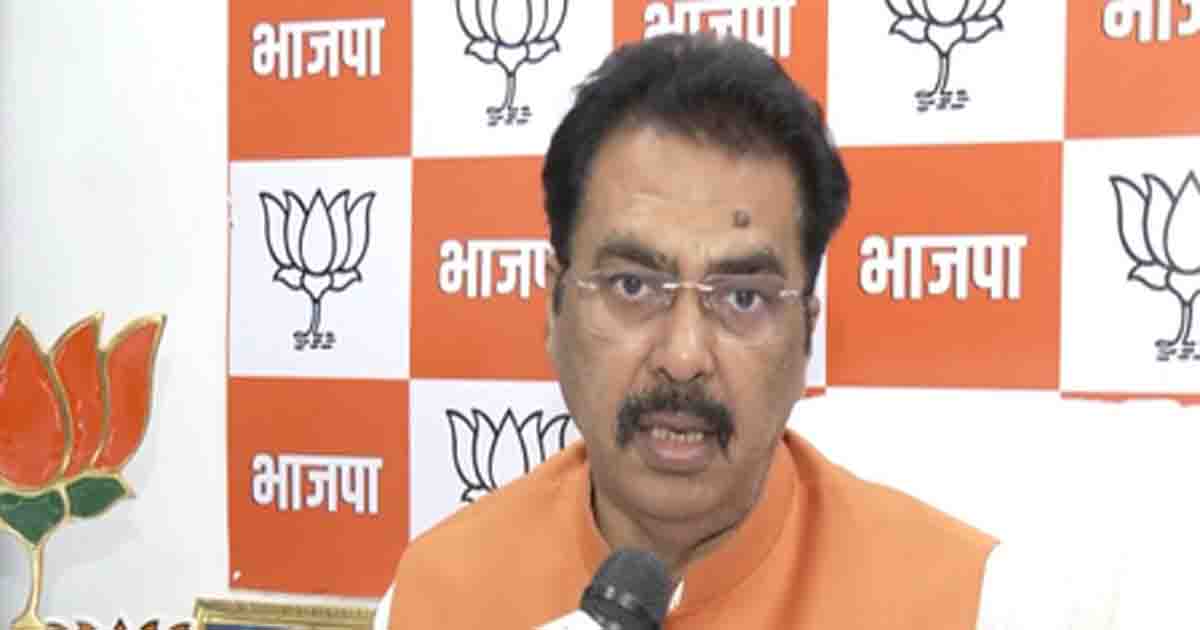
Patna, Oct 12: BJP Bihar President Sanjay Saraogi on Monday criticised Leader of the Opposition in Lok Sabha Rahul Gandhi’s proposed march to the Supreme Court to submit a memorandum to Chief Justice of India (CJI) Surya Kant, calling it a “childish attempt” to put political pressure on the judiciary.
Saraogi said the alleged stone-pelting by protesters on security officials in Delhi and Rahul Gandhi’s attempt to approach the Chief Justice to submit a memorandum were unacceptable.
The remarks came amid plans by Rahul Gandhi and other INDIA bloc leaders to march to the Supreme Court to submit a memorandum to the CJI. However, CJI Surya Kant had declined their request.
Speaking to media, Saraogi said, “This is a childish attempt to put political pressure on the judiciary. These are immature acts. The unruly mob that pelted stones at the police and Rahul Gandhi going to the Chief Justice’s doorstep to submit a memorandum are unacceptable. The country’s Supreme Court is not a platform for political rallies.”
“If you have the courage, file a legal petition. Congress lawyers have filed petitions several times. Therefore, do not turn this into a political spectacle on the streets. The Chief Justice has already said that your case can be heard in court and that you should present your legal arguments there,” he said.
Saraogi further accused the opposition of creating chaos on the streets and attempting to put pressure on the Election Commission.
“The country is witnessing this cheap spectacle of creating chaos on the streets and putting pressure on the Election Commission. Surrounding Jantar Mantar without permission, breaking barricades and pelting stones at Akashvani Bhawan are unacceptable under any circumstances,” he said.
Referring to Cockroach Janata Party (CJP) spokespersons Saurav Das and Ashutosh Ranka, Saraogi said their visit to the Parliament Street police station, where they allegedly demanded time and created a disturbance while claiming to maintain peace, was also objectionable.
“If they have any evidence, let them present it. This is not a one-day process. It is a process that takes 120–150 days, involving more than 35 lakh government and political party officials,” he said.
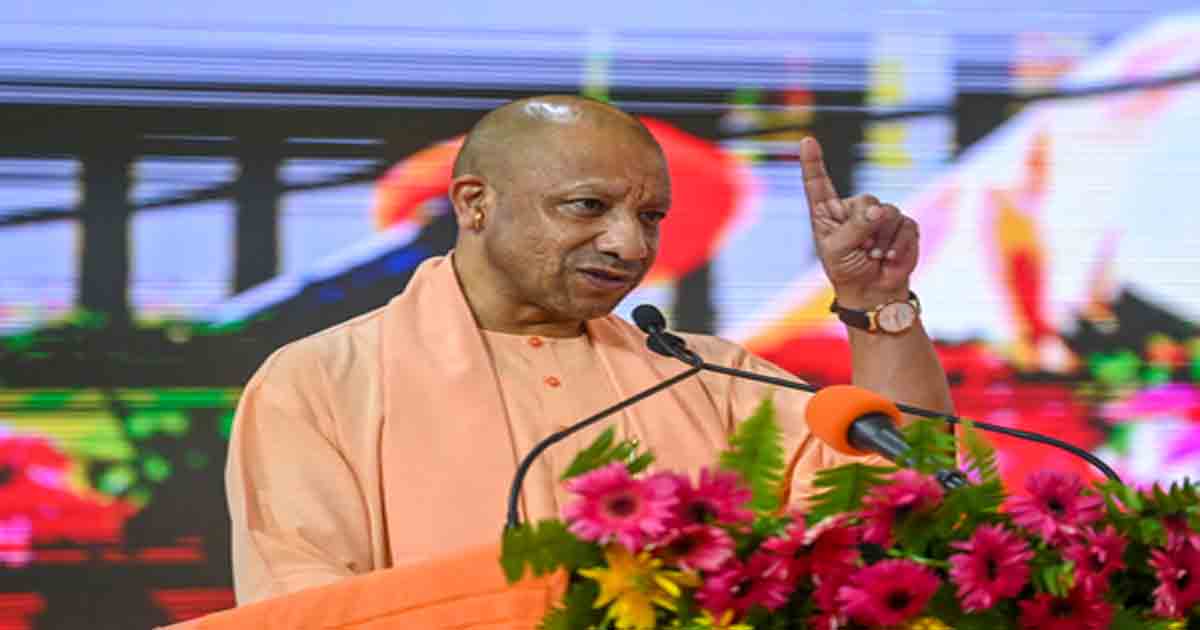
The Uttar Pradesh government is set to increase the monthly honorarium of around 60,000 village watchmen, or ‘gram praharis’, by Rs 1,000, starting October 13.
The proposed increase will raise their monthly honorarium from Rs 2,500 to Rs 3,500, marking a 40 per cent hike. Each village watchman will receive an additional Rs 12,000 annually following the increase.
Chief Minister Yogi Adityanath is expected to announce the decision during an event in Bareilly on October 13.
The Chief Minister is also scheduled to felicitate village watchmen at the Bareilly Police Lines during the programme.
The move comes after the state government raised the honorarium of cooks, Anganwadi workers and panchayat assistants in recent months. The government is now preparing to provide financial relief to village watchmen, who form an important link in the rural policing and information network.
Attached to local police stations, village watchmen relay information about suspicious activities, local disputes, and law-and-order issues to the police. They also help maintain communication between villages and police stations. They have been demanding an increase in their honorarium, and the proposed announcement is expected to address that demand.
With an estimated 60,000 village watchmen across the state, the proposed hike is expected to impose an additional financial burden of around Rs 7 crore per month and Rs 84 crore annually on the state exchequer.
Funds for the increase are likely to be provided for in a supplementary budget.
The government has taken similar decisions to increase the earnings of other categories of workers receiving an honorarium or allowance.
The monthly honorarium of around 3.53 lakh cooks preparing midday meals in government-run basic education schools has been increased from Rs 2,000 to Rs 3,000.
The honorarium of Anganwadi workers has been raised by Rs 4,000 per month, while that of Anganwadi helpers has been increased by Rs 2,000 per month.
Similarly, the monthly honorarium of more than 57,000 panchayat assistants has been raised from Rs 6,000 to Rs 9,000. The daily allowance of Provincial Guards (Prantiya Rakshak Dal) volunteers has also been increased from Rs 500 to Rs 600.
Separately, the government is considering increasing monthly pensions for senior citizens, destitute women and persons with disabilities from Rs 1,000 to Rs 1,500. The proposal, which has received in-principle approval from Chief Minister Yogi Adityanath, is likely to be placed before the state Cabinet in the second half of November.
The schemes currently cover more than 67 lakh senior citizens, 42 lakh destitute women and 12 lakh persons with disabilities. If approved, beneficiaries would receive an additional Rs 6,000 annually.

Two men, including a microfinance branch manager and a colliery employee, were killed after their motorcycle collided head-on with a Scorpio SUV on the Tamas River bridge on National Highway-30 in Madhya Pradesh’s Maihar district, police said on Monday.
According to police, the tragic accident occurred around 11.30 p.m. on Sunday on the Maihar-Rewa route. The motorcycle was heading towards Rewa, while the SUV was travelling in the opposite direction towards Maihar.
The collision was so severe that the front portion of the SUV was completely damaged. The occupants of the SUV allegedly abandoned the vehicle and fled the scene, police said.
Both motorcycle riders sustained critical injuries and were taken to the Civil Hospital in Maihar with police assistance. Doctors declared them dead on arrival, following which their bodies were shifted to the hospital mortuary.
The deceased were identified as Shivam Bathre (28), a resident of Shahpura Bhitauni in Jabalpur district, and Sujit Kol (32), a resident of Mauhari village in Satna district.
“Both men sustained critical injuries in the head-on collision. They were rushed to the Civil Hospital in Maihar, where doctors declared them dead,” a police official said.
Bathre worked as a branch manager at Swatantra Micro Finance in Amarpatan and lived in rented accommodation there. He was the only son in his family and had married in 2024. His wife gave birth to a son just 15 days before the accident.
Kol was employed as a supervisor at a colliery in Ambikapur. He had been married for five years and is survived by his wife and daughter.
According to preliminary information, Bathre had visited his home in Jabalpur on leave and parked his motorcycle at Maihar railway station. While returning to Maihar by train, he met Kol. The two then set out for Amarpatan on Bathre’s motorcycle, where the accident occurred.
“The occupants of the Scorpio fled after abandoning the vehicle. We are investigating the accident, and efforts are being made to trace those involved,” a police officer said.
The vehicles involved in the accident were a motorcycle bearing registration number MP 20 X 2815 and a Scorpio SUV with registration number UP 37 F 9818.

Rahul Gandhi move to meet CJI ‘childish attempt’ to pressure judiciary: Bihar BJP chief

Indian equity markets open higher amid positive global cues

UP govt to raise monthly honorarium of 60,000 village watchmen by Rs 1,000

Two killed as motorcycle collides head on with SUV in MP’s Maihar

Regime change certain in 2027: Akhilesh lashes out at BJP, Election Commission

Gift to President Putin part of PM Modi bid to globally display India’s heritage

PM Modi’s warm camaraderie with Putin, Xi on full display at BRICS Summit

INDIA bloc begins protest march against ECI

Complaint against Netflix & Mukesh Chhabra for inappropriate language on ‘India’s Got Latent 2’

Maha Congress stages agitation against Gyanesh Kumar
-

 Crime4 years ago
Class 10 student jumps to death in Jaipur
-

 Maharashtra2 years ago
Mumbai Local Train Update: Central Railway’s New Timetable Comes Into Effect; Check Full List Of Revised Timings & Stations
-

 Maharashtra2 years ago
Mumbai To Go Toll-Free Tonight! Maharashtra Govt Announces Complete Toll Waiver For Light Motor Vehicles At All 5 Entry Points Of City
-

 Maharashtra2 years ago
False photo of Imtiaz Jaleel’s rally, exposing the fooling conspiracy
-

 National News2 years ago
Ministry of Railways rolls out Special Drive 4.0 with focus on digitisation, cleanliness, inclusiveness and grievance redressal
-

 Maharashtra2 years ago
Maharashtra Elections 2024: Mumbai Metro & BEST Services Extended Till Midnight On Voting Day
-

 National News2 years ago
J&K: 4 Jawans Killed, 28 Injured After Bus Carrying BSF Personnel For Poll Duty Falls Into Gorge In Budgam; Terrifying Visuals Surface
-

 Crime2 years ago
Baba Siddique Murder: Mumbai Police Unable To Get Lawrence Bishnoi Custody Due To Home Ministry Order, Says Report