
International News
US-led coalition concludes anti-IS operation in Iraq: Pentagon

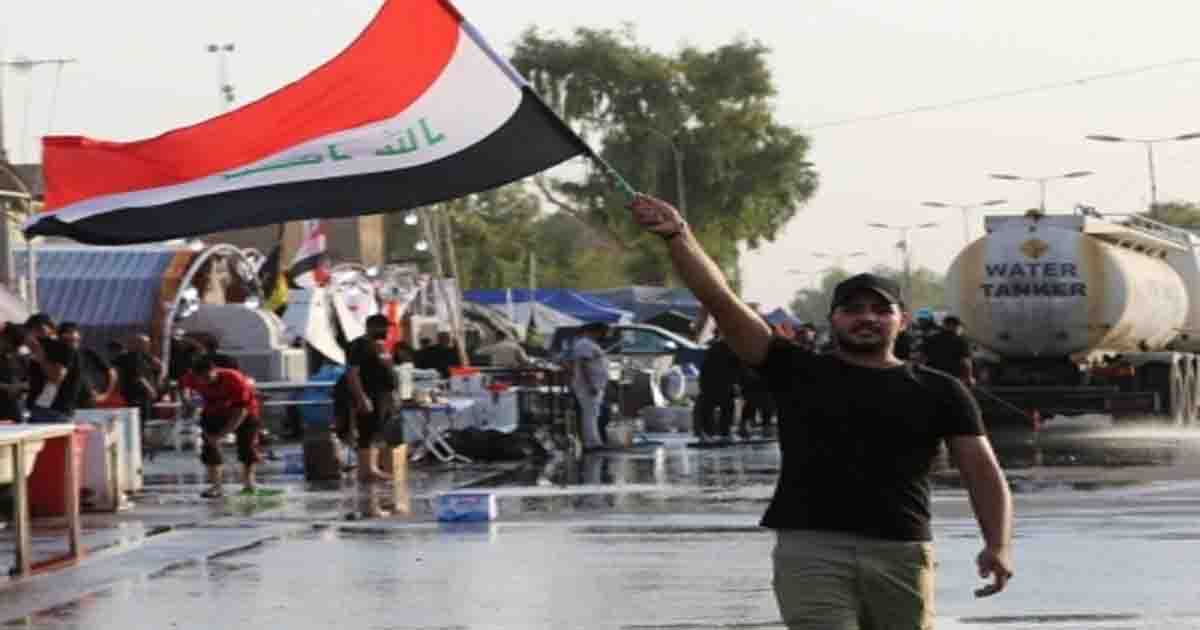
Washington/Baghdad, Sep 30: The United States and its allies have officially ended ‘Operation Inherent Resolve’ against the Islamic State (IS) in Iraq, the Pentagon said on Wednesday.
The Iraqi Security Forces, including the Peshmerga and other security forces in the Iraqi Kurdistan region, will “lead the continuing effort to secure Iraq and keep IS remnants suppressed,” the Pentagon’s chief spokesman Sean Parnell said in a statement.
The primary responsibility for addressing Iraq’s remaining security challenges now rests with the Iraqi government, the statement said, adding that the United States will continue to provide “targeted training and intelligence support” to its Iraqi partners.
On the same day, Iraqi Prime Minister Ali al-Zaidi also announced the conclusion of the international coalition’s mission to combat the IS in Iraq, Xinhua news agency reported. In 2014, the United States and its allies launched their campaign and deployed forces to fight the IS militants in Iraq and neighbouring Syria.
In 2024, Washington and Baghdad agreed on a gradual pullout of US troops from Iraq, seven years after the Iraqi government declared the country’s full liberation from the IS militants at the end of 2017.
Last week, the Iraqi government said that it is in direct dialogue with the United States to secure sanctions exemptions for certain Iraqi airports to resume flights with Iran on humanitarian grounds.
The media office of Iraqi Prime Minister Ali al-Zaidi said on Saturday that the requested waivers aim to allow flights for medical treatment, education, religious visits, and civilian interests following recent US Department of the Treasury measures against Iranian airlines operating in the region.
The statement stressed that Iraq is actively working to de-escalate regional tensions, warned that prolonged crisis further complicate the situation, and called on all parties to resolve conflicts through dialogue.
The Iraqi government on Thursday officially signed an agreement to take over the US Embassy’s diplomatic support centre at Baghdad International Airport, according to an Iraqi Foreign Ministry statement.
The agreement was signed at the ministry headquarters by Iraqi Deputy Foreign Minister Mohammed Hussein Bahr Al-Uloom and charge d’affaires at the US Embassy in Iraq Steven Fagin.
The handover was part of the Iraqi government’s efforts to finalise procedures regarding the conclusion of the US-led international coalition and the foreign military presence in Iraq, in accordance with the timeline set for September 30 this year, it said.
In August, al-Zaidi said that September 30 remained the firm deadline for ending the US-led coalition’s military mission in Iraq and completing its troop withdrawal.


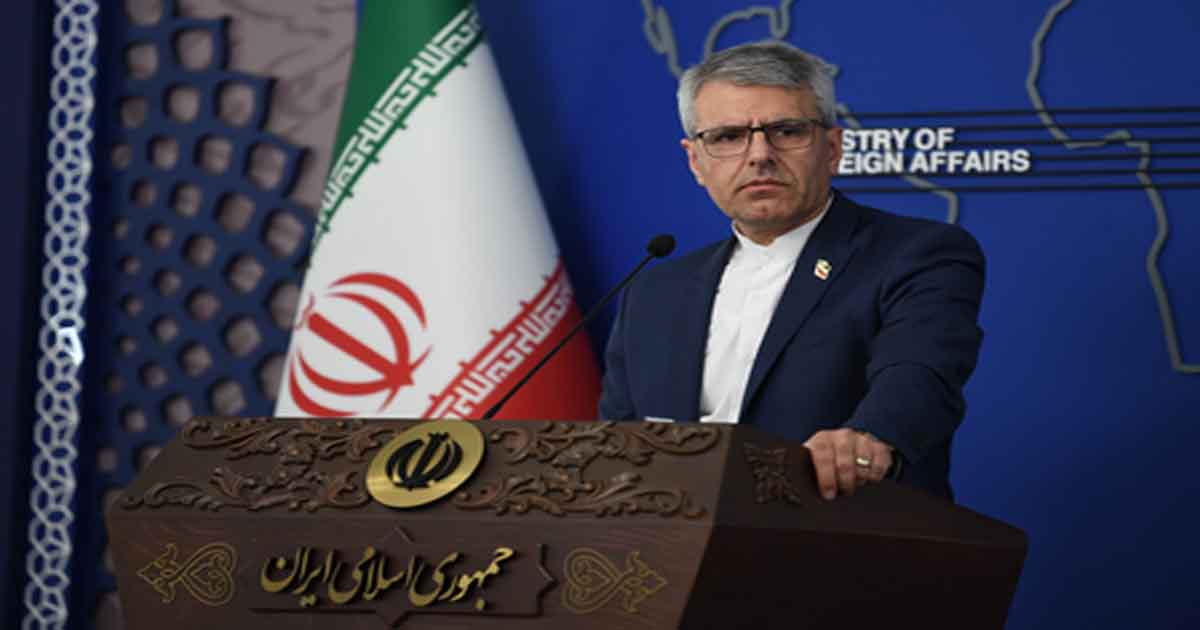
Iran Foreign Ministry announced on Wednesday that the country has designated the Argentine Navy and Air Force as terrorist organisations.
The move came in response to the Argentine government’s decision in late March to designate Iran’s Islamic Revolution Guard Corps (IRGC) as a terrorist entity, the ministry said in a statement.
The ministry described Argentina’s decision as “hostile and being in contradiction with the fundamental principles of international law,” saying Iran’s move was based on the principle of reciprocity and a domestic law on reciprocal action against the US designation of the IRGC as a terrorist organisation.
The law calls for equivalent countermeasures against countries that comply with or support Washington’s actions against Tehran, the statement said, Xinhua news agency reported. The ministry held the Argentine government responsible for all consequences arising from the decision, stressing that the IRGC is an integral part of Iran’s armed forces.
The office of Argentine President Javier Milei announced on March 31 that Argentina had designated the IRGC as a terrorist organisation.
The decision followed calls by US President Donald Trump’s administration for its allies to designate the IRGC and Hezbollah as terrorist organisations.
The Argentine government said the measure had been adopted in response to the IRGC’s support for Hezbollah, a Lebanese armed group, which Buenos Aires blames for a deadly 1994 bombing attack on the AMIA Jewish community centre in the capital city. The attack killed 85 people and injured over 300 others.
Earlier this month, the Iranian Foreign Ministry announced that Tehran had designated Britain’s Royal Navy, Royal Air Force and Secret Intelligence Service as “terrorist and hostile” entities over the British government’s anti-Iran actions.
Meanwhile, Qatar said Tuesday that progress had been made in negotiations between the United States and Iran, describing recent White House talks involving Qatari Prime Minister and Foreign Minister Sheikh Mohammed bin Abdulrahman bin Jassim Al Thani as positive, while cautioning that it was too early to predict when an agreement could be reached.
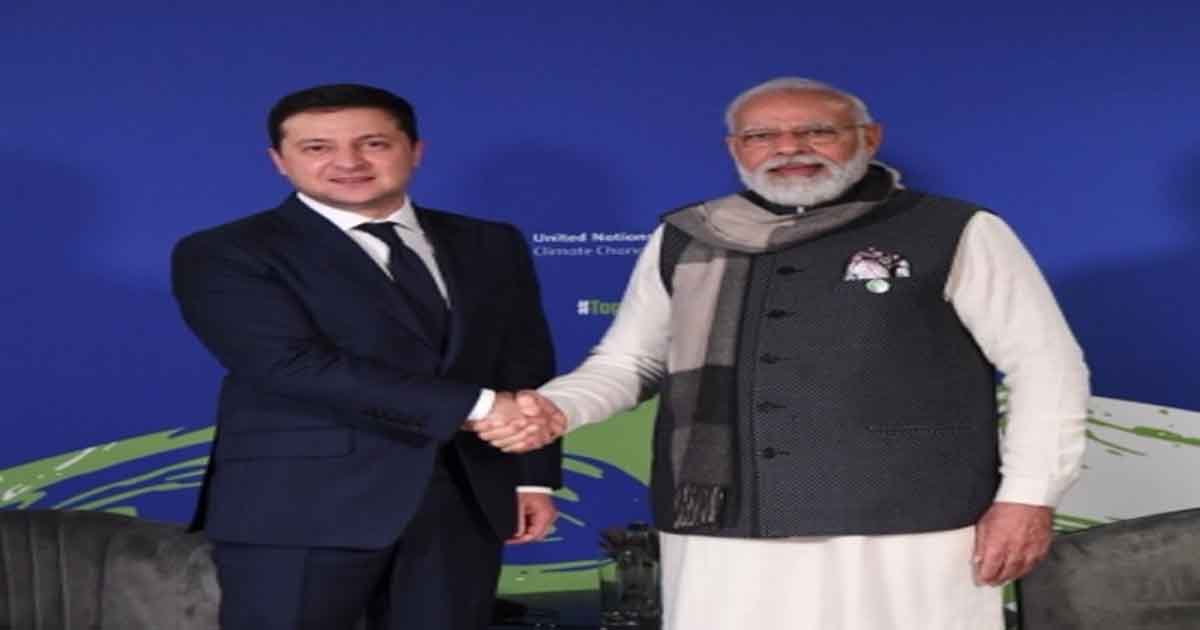
India is seen as a credible country that can help in the peace talks between Russia and Ukraine because it is one of few major powers with working relationships with both countries, according to a report in Al Jazeera.
It cited a foreign affairs expert as saying that India’s strategic autonomy puts it in a position to push for peace because New Delhi is “friends with both” sides.
India has also been even-handed. In July, it summoned Moscow’s charge d’affaires to condemn a Russian strike on a merchant vessel that killed 10 people, including four Indian crew members. Days later, it summoned Ukraine’s ambassador over an Indian seafarer killed in a Ukrainian drone strike on the MV Omorfi, the report observes.
It highlights that India is also an importer of goods from both Russia and Ukraine. In the 2025-26, India imported 1.46 million tonnes of sunflower oil from Russia and 443,000 tonnes from Ukraine, according to the Indian Solvent Extractors’ Association (SEA), alongside large volumes of Russian crude.
The article cites Maximilian Hess, a fellow at the Foreign Policy Research Institute, as saying that Zelenskyy approached India “because they have leverage over Moscow, and they are still one of the few major buyers of its oil.”
He added that a large amount of Russian money sits in the Indian financial system, which Moscow wants to keep access to.
Before Russia’s full-scale invasion in 2022, about a third of the world’s grain exports passed through the Black Sea, with Ukraine supplying a tenth of global wheat exports and 15 percent of maize. Disruption hits food-importing countries hardest, particularly in Africa and parts of Asia, the report states.
Indian officials point out that India as a leading voice of the Global South is keen that food exports to these developing nations resume to prevent adequate supplies and controlling rising inflation.
Both Ukrainian President Volodymyr Zelensky and Prime Minister Narendra Modi have discussed the issue of opening the food corridor over a phone call.
“India is ready to mediate in establishing food corridors, and we are counting on these efforts to continue,” Zelenskyy posted on X after call. The leaders discussed Russia’s blocking of grain exports in the Black Sea, he said.
PM Modi said India was ready to contribute “in every possible way” towards a peaceful resolution of the Russia-Ukraine conflict.
External Affairs Minister S. Jaishankar, during a visit to Kyiv in September, spoke of a potential pause on strikes against Black Sea shipping and energy infrastructure. On October 4, he said India was talking to both Russia and Ukraine about shipping safety, grain and energy exports and “non-attack possibilities”.
Ukrainian Foreign Minister Andrii Sybiha earlier called India’s proposal “the broadest”, because it covers both the Black Sea and energy infrastructure. The US plan offers only a halt to strikes on energy facilities.
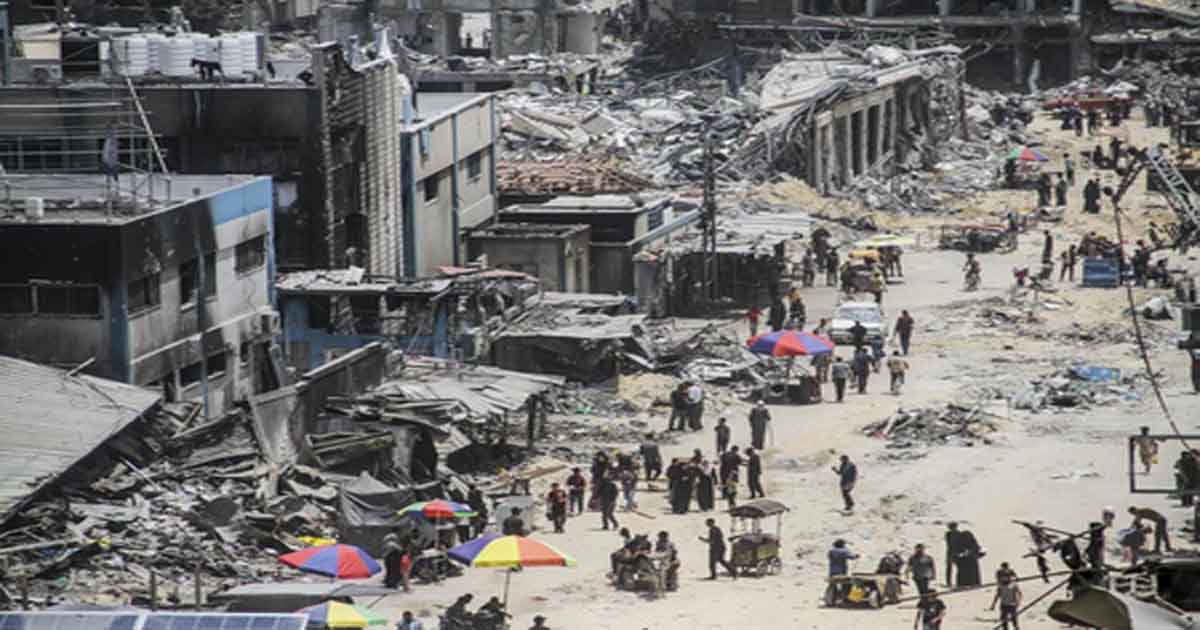
Israel has blamed Hamas for the suffering of Palestinians in Gaza and said reconstruction could not begin until the group disarmed, a day after US President Donald Trump’s Board of Peace criticised Israel for delays in allowing humanitarian supplies into the war-devastated enclave.
In a statement posted on X on Tuesday (local time), Prime Minister Benjamin Netanyahu’s office said Israel had facilitated the entry of more than 91,000 tents and over 8,200 trucks carrying winter supplies, including blankets, clothing and tarpaulins.
“Hamas alone is responsible for the suffering of the people of Gaza,” the statement said, adding that the group’s refusal to disarm remained the main obstacle to reconstruction.
As of November 8, humanitarian partners had received appeals for aid from more than 26,000 households whose shelters or belongings were damaged. More than 6,000 family shelters were reportedly destroyed and 17,400 damaged, and more than 3,900 households currently have no shelter at all, according to the United Nations Office for the Coordination of Humanitarian Affairs (OCHA).
The Board of Peace said Monday that Israel’s response to the winter emergency remained “insufficient” and called for the immediate entry of essential shelter, sanitation and drainage equipment.
It said Israeli delays had aggravated a foreseeable humanitarian crisis, while also urging Hamas to disarm and relinquish power, according to Xinhua news agency.
The Board of Peace, chaired by Trump, was formally established in January 2026, following an October 2025 ceasefire between Israel and Hamas to oversee the implementation of Trump’s peace plan, including Gaza’s transitional governance and reconstruction.
The OCHA said about 1.4 million Palestinians, or 65 per cent of Gaza’s population, were living in tents or makeshift shelters. It warned that humanitarian shelter stocks inside Gaza were virtually exhausted, while more than 150,000 tents remained outside the territory awaiting entry.

Two men arrested for forcibly pulling a woman’s gold chain and fleeing in Kandivali, a case of theft registered against both

‘Took time to get used to Indian food but learnt slowly’: Sonia Gandhi shares her love for India’s cuisines

Red Fort car blast probe exposes blueprint for spread of terror modules across India

‘Conspiracy, not accident’: NCP on Ajit Pawar death

Shehzad Poonawalla presents winning trophy for ‘Rise and Fall 2’ to Maharashtra CM, Devendra Fadnavis

Rahul, Cong ecosystem want to force regime change: BJP after Neha Bora praises B’desh Gen-Z protest

BJP pays tribute to ex-President Abdul Kalam, recalls his enduring influence on generations of India’s youth

Attack on democratic rights: INDIA Bloc leaders on detentions of anti-ECI protestors

Congress trying to protect 3 crore Bangladeshi infiltrators in voter list: HM Shah

Online betting: ED conducts searches at 20 premises in Mumbai, Pune, Hyderabad
-

 Crime4 years ago
Class 10 student jumps to death in Jaipur
-

 Maharashtra2 years ago
Mumbai Local Train Update: Central Railway’s New Timetable Comes Into Effect; Check Full List Of Revised Timings & Stations
-

 Maharashtra2 years ago
Mumbai To Go Toll-Free Tonight! Maharashtra Govt Announces Complete Toll Waiver For Light Motor Vehicles At All 5 Entry Points Of City
-

 Maharashtra2 years ago
False photo of Imtiaz Jaleel’s rally, exposing the fooling conspiracy
-

 National News2 years ago
Ministry of Railways rolls out Special Drive 4.0 with focus on digitisation, cleanliness, inclusiveness and grievance redressal
-

 Maharashtra2 years ago
Maharashtra Elections 2024: Mumbai Metro & BEST Services Extended Till Midnight On Voting Day
-

 National News2 years ago
J&K: 4 Jawans Killed, 28 Injured After Bus Carrying BSF Personnel For Poll Duty Falls Into Gorge In Budgam; Terrifying Visuals Surface
-

 Crime2 years ago
Baba Siddique Murder: Mumbai Police Unable To Get Lawrence Bishnoi Custody Due To Home Ministry Order, Says Report