
National News
UP CM Yogi Adityanath meets DSP-cum-cricketer Deepti Sharma

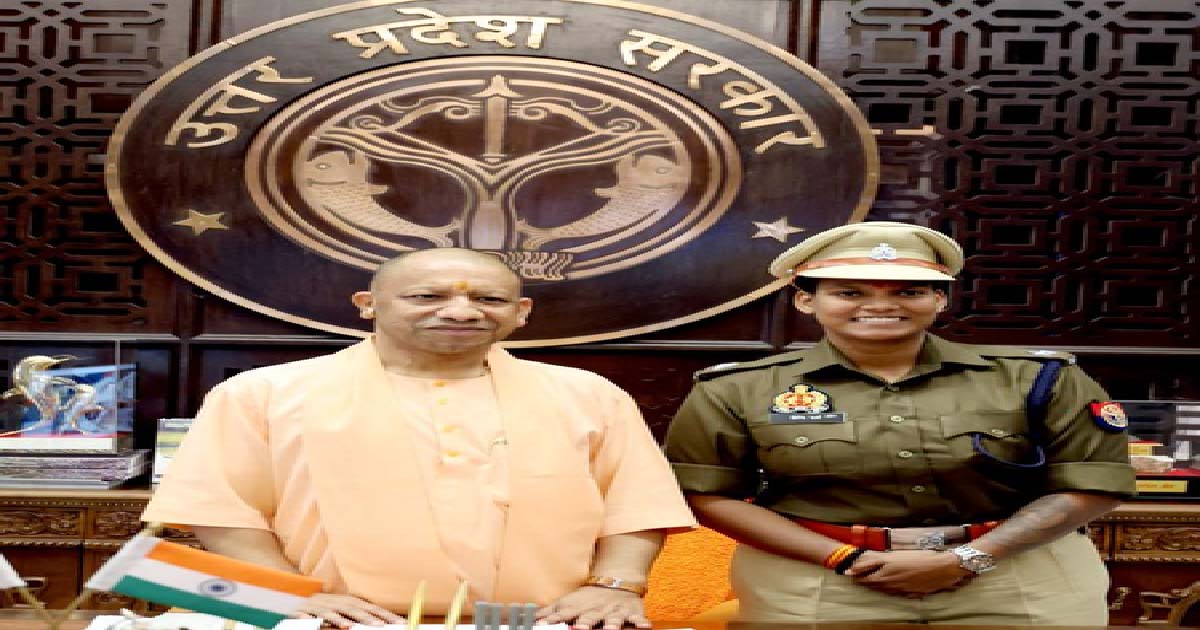
Lucknow, Nov 14: Uttar Pradesh Chief Minister Yogi Adityanath, on Friday, met the state’s World Cup winning Women’s Cricket Team player Deepti Sharma and also led a Cabinet meeting which took 20 key decisions, including one on easing the registration process for old age pension, an official said.
Sharma, who is serving as Deputy Superintendent of Police (DSP) in the state, was praised by Chief Minister Adityanath for her good performance in the World Cricket final and winning the Player of the Tournament award.
“Deepti has done the Uttar Pradesh Police proud at the world stage,” CM Adityanath had tweeted soon after the women’s cricket team lifted the World Cup on November 2.
Cricketer Deepti Sharma was earlier appointed as DSP in January this year under the sports quota as part of Chief Minister Adityanath’s Skilled Athlete Scheme.
During the Cabinet meeting held at the CM residence on Friday, CM Adityanath led his Ministers in congratulating the women’s cricket team for winning the World Cup.
The Cabinet also condemned the fatal Delhi blast on November 10.
A key decision taken at the meeting relates to saving the elderly the trouble of running around for pension.
The Cabinet decided that the social welfare department will deploy call-centre executives to contact and seek consent of the beneficiary and fill their forms online through common service centres.
The forms will be verified using family IDs before the release of their pension, saving the elderly to run around to complete formalities.
As a pilot project, the scheme will be tried in five districts, including Ghaziabad, Gorakhpur, Hardoi, Kannauj and Lalitpur, an official said.
In the existing system, an online application by an elderly person seeking pension needs the verification by the Sub-Divisional Magistrate and village Block Development Officer before an approval from the District Magistrate-led Committee.
An official said the proposed new system will speed up the entire process.
The scheme will benefit all elderly over the age of 60 with an annual income of Rs 56,460 or less in urban areas and Rs 46,080 or less in rural areas.
The Cabinet also approved a scheme to provide car loan to employees of judicial services.
Other Cabinet decisions included approval for a private university in Shahjahanpur and beneficial rate revision for cane procurement.

Business
Employees’ body to meet on April 13 as Central govt staff keen on 8th Pay Commission decisions


New Delhi, April 7: Millions of Central government employees and pensioners await the outcome of the drafting committee of the National Council (Joint Consultative Machinery) on April 13 to get cues on the 8th Pay Commission salary revision, a report said on Tuesday.
The drafting committee meeting scheduled for 11:00 am at the JP Choubey Memorial Library (AIRF office premises) here will review a final common memorandum and discuss pay scale revisions, annual increments, allowances and other benefits, the report from NDTV Profit said.
“The April 13 meeting is in continuation of the March 12, 2026, meeting when all drafting committee members of the 8th Pay Commission met to discuss the common memorandum of all employee and pensioner bodies,” said NC-JCM secretary, Shiv Gopal Mishra, in a letter to members of the drafting committee.
The government has not yet announced the official date for the salary increase. Arrears will be calculated based on the date fixed for the implementation of the 8th Pay Commission
even as employee and pensioner groups press for arrears to be calculated from January 1, 2026, the report said.
The Federation of National Postal Organisations has asked the government to merge the 58 per cent dearness allowance with basic pay and give interim relief from the same date.
The salary increase will hinge on the fitment factor the government adopts which analysts expect to exceed 2.5. Some employee groups have sought a fitment factor of 3.15, even though the official decision may take over a year, the report said.
Pankaj Chaudhary, MoS Finance, told Parliament in March that the 8th Pay Commission will make its recommendations on pay, allowances, pensions, and other benefits for central government employees. The 8th Pay Commission is expected to complete this work within 18 months from November 2025.
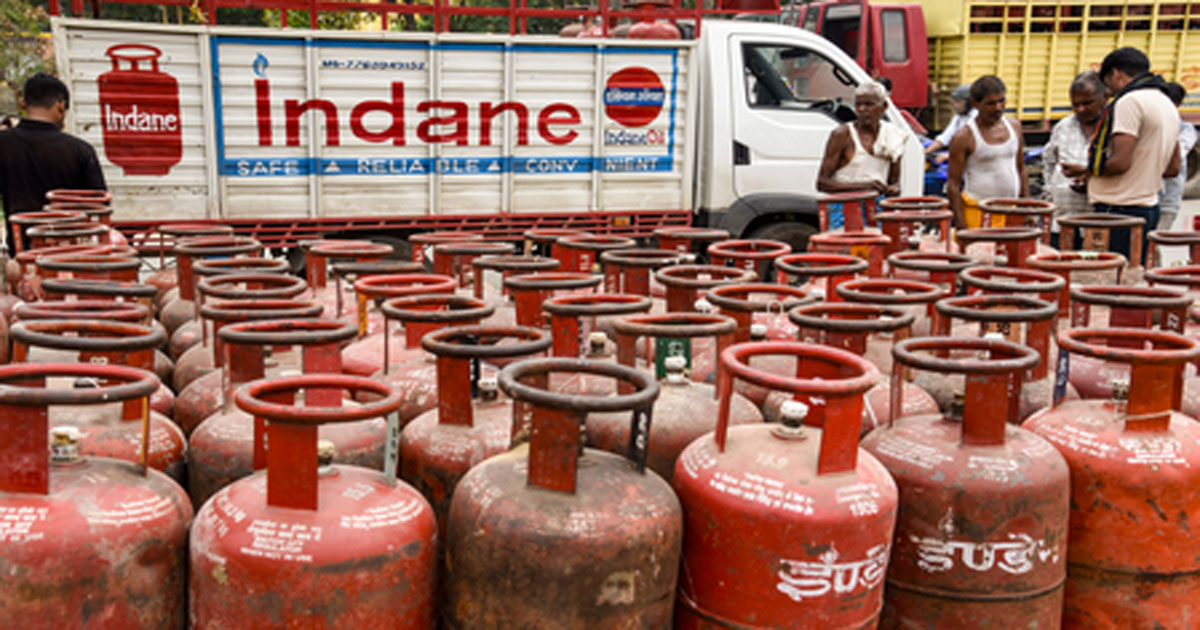
New Delhi, April 7: The Centre has decided to double the daily allocation of 5-kg free trade LPG (FTL) cylinders available for distribution to migrant labourers across states, according to an official communication.
The Petroleum Ministry said in a notification the enhanced allocation will be based on the average daily supply of cylinders provided to migrant workers.
The revised allocation goes beyond the earlier cap of 20 per cent specified in March announcement.
The government also said that the additional 5-kg FTL cylinders will be placed at the disposal of state governments and their Food and Civil Supplies Departments for distribution exclusively to migrant labourers with the assistance of oil marketing companies (OMCs).
Earlier, the government had said it was making all efforts to ensure adequate availability of petrol, diesel and LPG amid the prevailing geopolitical situation, while advising citizens to avoid panic buying and rely only on official sources for information.
Consumers were also encouraged to use digital modes for LPG bookings and minimise visits to distributors unless necessary.
The government has prioritised domestic LPG and PNG supplies, along with critical sectors such as hospitals and educational institutions.
It has also implemented several demand and supply-side measures, including enhancing refinery output and increasing LPG booking intervals to 25 days in urban areas and up to 45 days in rural areas.
To ease pressure on LPG demand, alternate fuels such as kerosene and coal have been made available, while states have been advised to expand PNG connections.
The government also said there has been no disruption in LPG supply affecting migrant workers.
According to official data, around 51 lakh domestic LPG cylinders were delivered recently, with online bookings rising to 95 per cent and delivery authentication-based distribution increasing significantly to curb diversion.
New Delhi, April 7: The Delhi Police on Tuesday rescued a 17-year-old minor girl and arrested an accused in a swift operation carried out by the women patrolling team of Mahila Chowki, Central District, preventing a serious crime as the victim was lured to Delhi on the pretext of getting her a job.
According to officials, the incident came to light on April 2, at around 10:00 AM, when a police team from Kamla Market Police Station comprising SI Kiran Sethi, W/Ct Khushboo, and W/Ct Pooja was on routine patrol duty near S.N. Marg. During patrolling, a minor girl approached the team seeking immediate help.
The police personnel acted promptly, ensured her safety, and recorded her statement. The victim, a resident of Darbhanga district in Bihar, revealed that she had left her home on March 14 following a domestic dispute and travelled to Delhi on the advice of a friend.
Upon her arrival at New Delhi Railway Station, she was received by Shivji Das (52), an acquaintance of her friend. He took her to his residence in Nehru Vihar, where she stayed from March 15 to April 2 under the pretext of being offered domestic work.
The victim alleged that during this period, especially in the absence of the accused’s wife, Shivji Das outraged her modesty, made inappropriate advances, and threatened her with defamation if she disclosed the incidents to anyone.
On April 2, the accused brought the girl to S.N. Marg area and asked her to wait in a parking lot, claiming he was arranging a job for her. Sensing danger and feeling unsafe in the suspicious surroundings, the victim sought help from the women police team passing by.
Acting on her complaint, the police immediately apprehended the accused at the spot. During further enquiry, when officers visited nearby shops to gather statements, it emerged that the accused was attempting to negotiate a deal to sell the minor. The alleged plan was foiled due to the timely intervention of the police team.
Based on the victim’s statement, an FIR (No. 95/2026) was registered at Kamla Market Police Station under relevant provisions of the Bharatiya Nyaya Sanhita and the POCSO Act.
The victim has undergone medical examination and was produced before the Child Welfare Committee. She is currently safe and staying in a shelter home.
Police confirmed that the accused, Shivji Das, a native of Darbhanga, Bihar, has been arrested, and further investigation into the case is underway.

Transparency with quality in Mumbai Municipal Corporation’s road cement concreting project, stay informed about the current status of road work in the area: Municipal Commissioner

Key findings from the investigation into Ashok Kharat… Action to be taken against those who made it viral on social media; 2 FIRs registered, 6 arrested: SIT.

Mumbai: Anti-Narcotics Cell cracks down on drug dealers, seizes drugs worth over Rs 10 crore, arrests 10 accused

Mumbai: Massive Fire Engulfs Railway Coach At Matunga Carshed, Welding Sparks Suspected

Employees’ body to meet on April 13 as Central govt staff keen on 8th Pay Commission decisions

Married Mumbai Woman Mocked In Andheri Society Over ‘Lift Kissing’ CCTV Video, Files Police Complaint

LPG Crisis In Maharashtra: Cyber Crime On Rise Amid Shortage, 2 Women Lose ₹4 Lakh In ‘Gas Update’ Online Scam In Kalyan-Dombivli

Dhurandhar 2 Box Office Collection Day 1: Ranveer Singh Starrer Takes An Exceptional Opening; Crosses ₹100 Crore Mark

Thane Horror: Man Slashed With Chopper In Naupada For Refusing ‘Vargani’, Caught On Camera

Mumbai Police Busts Fake Apple Accessories Racket In Ghatkopar, ₹16.33 Lakh Goods Seized; Six Booked
-

 Crime4 years ago
Class 10 student jumps to death in Jaipur
-

 Maharashtra2 years ago
Mumbai Local Train Update: Central Railway’s New Timetable Comes Into Effect; Check Full List Of Revised Timings & Stations
-

 Maharashtra1 year ago
Mumbai To Go Toll-Free Tonight! Maharashtra Govt Announces Complete Toll Waiver For Light Motor Vehicles At All 5 Entry Points Of City
-

 Maharashtra2 years ago
False photo of Imtiaz Jaleel’s rally, exposing the fooling conspiracy
-

 National News1 year ago
Ministry of Railways rolls out Special Drive 4.0 with focus on digitisation, cleanliness, inclusiveness and grievance redressal
-

 Maharashtra1 year ago
Maharashtra Elections 2024: Mumbai Metro & BEST Services Extended Till Midnight On Voting Day
-

 National News2 years ago
J&K: 4 Jawans Killed, 28 Injured After Bus Carrying BSF Personnel For Poll Duty Falls Into Gorge In Budgam; Terrifying Visuals Surface
-

 Crime1 year ago
Baba Siddique Murder: Mumbai Police Unable To Get Lawrence Bishnoi Custody Due To Home Ministry Order, Says Report