
International News
UAE: Indian national among two killed by falling debris of intercepted missile

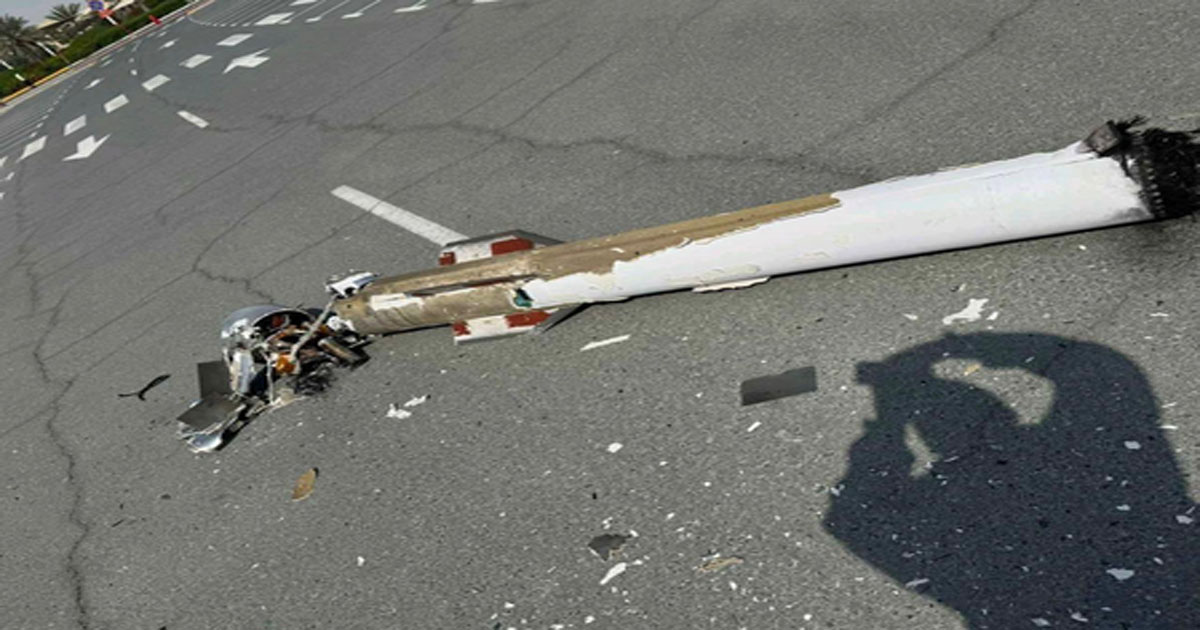
Abu Dhabi, March 26: One Indian national was killed and another injured as two people died and three suffered injuries after the debris of a ballistic missile fell in UAE’s Abu Dhabi on Thursday following a successful interception by the country’s air defence systems.
“As part of the ongoing follow-up to the previously reported incident caused by falling debris following the successful interception of a ballistic missile by air defence systems, the incident has resulted in the deaths of two individuals of Pakistani and Indian nationality, and in injuries ranging from serious to moderate sustained by three individuals of Emirati, Jordanian and Indian nationality,” the Abu Dhabi Media Office wrote on X.
“The public is advised to obtain information only from official sources and to avoid spreading rumours or unverified information,” it added.
Earlier in the day, Abu Dhabi Media Office had said that authorities had responded to an incident involving falling debris in Sweihan street after the missile was intercepted by air defence systems.
“Abu Dhabi authorities have responded to an incident involving falling debris in Sweihan street, following the successful interception of a ballistic missile by air defence systems. The incident resulted in the deaths of two unidentified individuals, three injuries, and damage to a number of cars. Further updates will be provided in due course,” Abu Dhabi Media Office posted on X.
“The public is advised to obtain information only from official sources and to avoid spreading rumours or unverified information,” it added.
The ongoing conflict in West Asia began on February 28 following the strikes carried out by Israel and the US on Iran, which resulted in the killing of Iran’s Supreme Leader Ayatollah Ali Khamenei and top military officials. In response, Iran has launched drone and missile attacks targetting the US and Israeli facilities, regional capitals and allied forces in West Asia.
Earlier in the day, UAE’s Ministry of Defence said that its air defences were responding to incoming missile and drone threats from Iran. It advised people to adhere to the safety and security instructions issued by the authorities.
In a statement shared on X, UAE’s Ministry of Defence said, “UAE air defences are currently responding to incoming missile and drone threats from Iran. MOD asserts that the sounds heard are the result of the Air Defence Systems intercepting missiles and drones.”


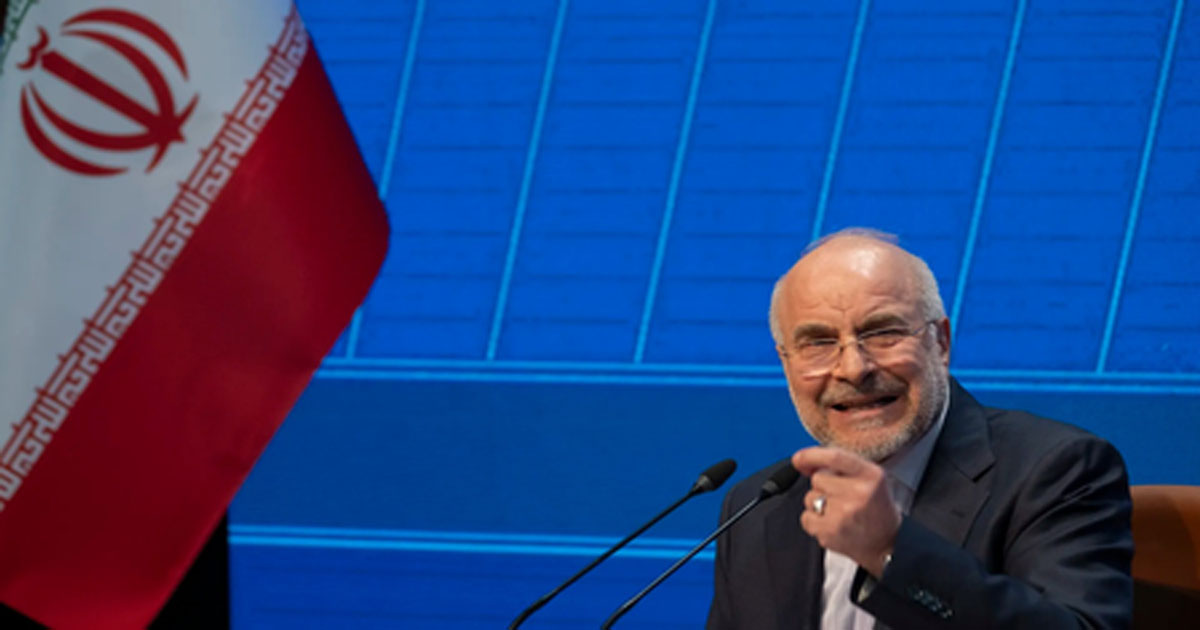
Tehran, April 9: A fresh diplomatic row has erupted after Iranian officials accused the United States of violating three clauses of the 10-Point Proposal, the agreed framework for upcoming negotiations.
In a formal statement released late on Tuesday, Iran said its “deep historical distrust” of Washington had been reinforced by repeated violations of commitments.
The statement noted that while the President of the United States had described the 10-Point Proposal as a “workable basis on which to negotiate,” three provisions had already been breached.
The first violation, according to Tehran, was non-compliance with the ceasefire clause relating to Lebanon.
Iranian officials pointed out that Pakistan’s Prime Minister Shehbaz Sharif had explicitly called for “an immediate ceasefire everywhere, including Lebanon and other regions, effective immediately.”
The second violation involved the entry of a drone into Iranian airspace, which was shot down in Lar, Fars Province.
The third concerned denial of Iran’s right to enrichment, a right enshrined in the sixth clause of the framework.
Iran argued that these breaches undermine the credibility of negotiations even before they begin.
“The very workable basis on which to negotiate has been openly and clearly violated,” the statement declared, adding that in such circumstances, “a bilateral ceasefire or negotiations is unreasonable.”
The development comes as Pakistan has been actively engaged in efforts to broker peace in the region, with Prime Minister Sharif repeatedly urging restraint and dialogue.
Islamabad has positioned itself as a mediator, stressing the importance of immediate ceasefires to prevent escalation across Lebanon and other conflict zones.
The allegations highlight the fragile state of trust between Tehran and Washington, raising doubts over whether the proposed framework can serve as a viable foundation for meaningful talks.
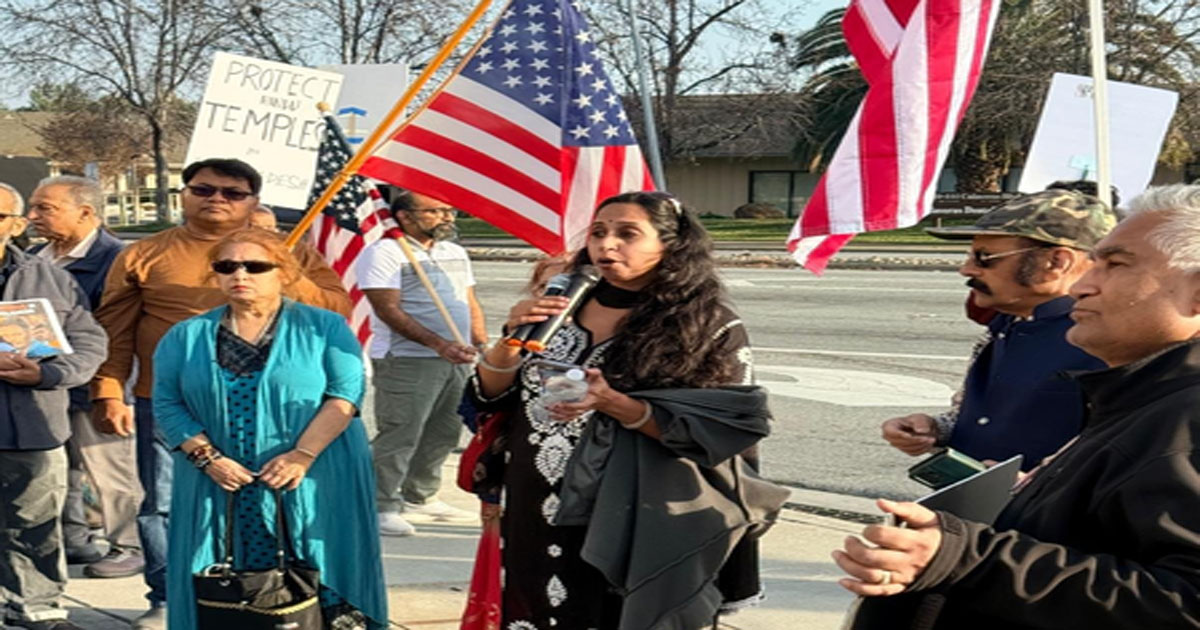
Washington, April 9: The Hindu American Foundation (HAF) has approached a US appeals court, arguing that California’s civil rights regulator has wrongly linked caste discrimination to Hinduism and targeted Indian and South Asian communities, in a case that could shape how caste is addressed in US workplaces.
In a reply brief filed on April 6 before the Ninth Circuit Court of Appeals, HAF urged the court to remove what it called procedural hurdles that led a lower court to dismiss its lawsuit against the California Civil Rights Department (CRD). The foundation said the district court erred by not examining the substance of its claims.
HAF argues that the CRD’s enforcement approach “explicitly and implicitly links ‘caste’ to Hinduism and people of Indian or South Asian descent,” effectively singling out a minority community.
The case traces back to a high-profile complaint filed by the CRD against Cisco Systems and two managers, alleging caste-based discrimination. The regulator publicly stated it had “Sue(d) Cisco Systems, Inc. and Former Managers For Caste-Based Discrimination” and filed action under California’s Fair Employment and Housing Act.
According to HAF, the CRD “doubled down” on its theory that Cisco should have prevented caste discrimination “occurring within its South Asian Indian workforce.” The foundation noted that the term “caste” appears repeatedly in the agency’s active complaint.
HAF contends that the CRD’s framing relied on “racist and demonstrably false tropes” about Indians and Hindus. It cited the department’s earlier claim that “India’s caste system” is “a strict Hindu social and religious hierarchy.”
The CRD has since removed that phrasing and argued that the issue is now moot. But HAF maintains that the core problem persists.
“Removing the phrase ‘Hindu social and religious hierarchy’ doesn’t change the fact that the CRD is attempting to direct ‘caste’ policies solely at the company’s Indian, South Asian, and Hindu workforce,” the foundation said.
Needhy Shah, HAF Senior Legal Director, warned that the implications extend beyond a single case.
“The Hindu American, Indian American, and South Asian American communities are concerned, and if they aren’t, they should be,” Shah said.
“The CRD is attempting to wield its enforcement powers by singling out the very minority groups it is charged to protect. Californians are paying attention, and so are employers and businesses regulated by the CRD,” Shah added.
She further said, “The CRD is playing caste cop, blaming caste discrimination on Hinduism, and it’s only a matter of time until they identify their next Hindu target.”
HAF is represented by lead counsel Tim Travelstead of Narayan Travelstead Ku P.C.
The Ninth Circuit’s decision on whether to revive the case could have broader implications for how US civil rights law interprets caste and its association with religion or ethnicity, particularly for Indian-origin communities.
Caste has emerged as a contentious issue in parts of the United States, especially in technology sector workplaces with significant South Asian representation. Some advocacy groups have pushed for explicit caste protections, while others argue such measures risk stereotyping entire communities.
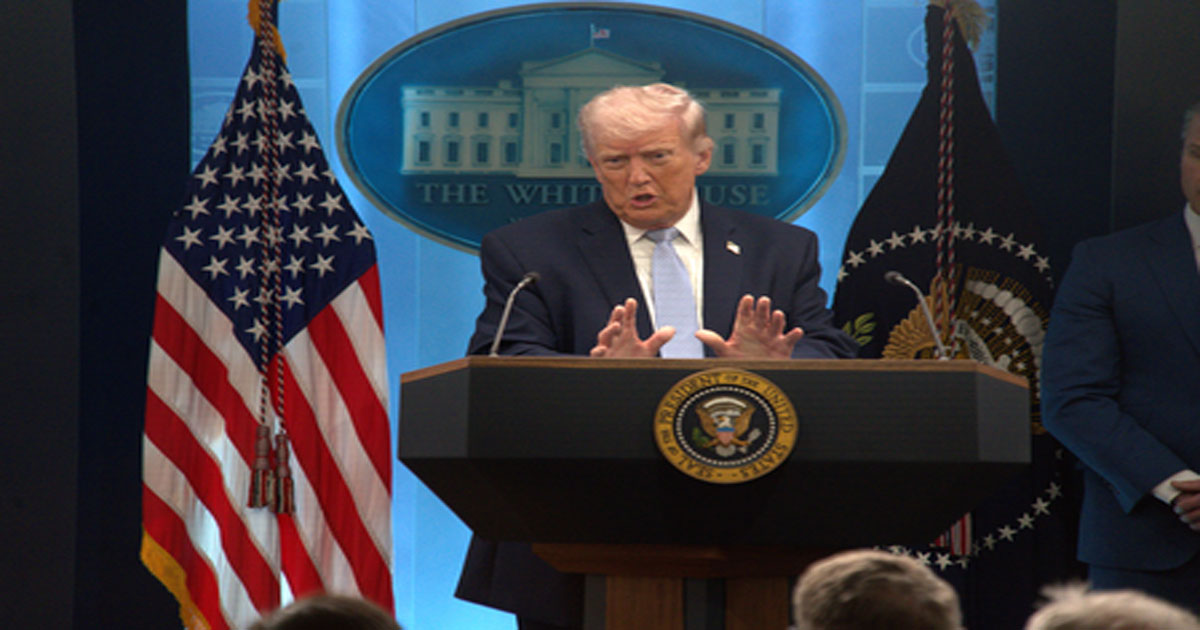
Washington, April 8: US President Donald Trump on Wednesday announced what he called a “very productive regime change” in Iran, saying the US would eliminate uranium enrichment and work to dig up and remove deeply buried nuclear “dust”.
In a series of posts, Trump outlined a framework that combined nuclear restrictions, sanctions relief and sharp trade penalties.
“The United States will work closely with Iran, which we have determined has gone through what will be a very productive regime change!” he wrote on Truth Social, a day after the US and Iran agreed to a two-week ceasefire and reopening of the Strait of Hormuz.
He asserted that Iran would no longer be allowed to enrich uranium. “There will be no enrichment of Uranium,” Trump said, adding that the United States would work with Iran to “dig up and remove all of the deeply buried (B-2 Bombers) nuclear ‘dust.’”
Trump said the material remained under strict monitoring. “It is now, and has been, under very exacting Satellite Surveillance (Space Force!). Nothing has been touched from the date of attack,” he said.
The President also pointed to ongoing negotiations that could ease economic pressure on Tehran. “We are, and will be, talking tariff and sanctions relief with Iran. Many of the 15 points have already been been agreed to,” he said, without detailing the terms or the parties involved.
Minutes later, Trump issued a warning to countries supplying weapons to Iran, signalling an aggressive escalation in trade policy.
“A country supplying military weapons to Iran will be immediately tariffed, on any and all goods sold to the United States of America, 50 per cent, effective immediately. There will be no exclusions or exemptions!” he said.
The dual messaging — offering sanctions relief while threatening sweeping tariffs — reflected a strategy that mixes economic coercion with conditional engagement.

Mumbai Local Trains To Have Hawkers Inside Soon? Central Railway Approves 100 Vendors Amid Safety, Overcrowding Concerns: Report

Iran accuses US of violating key clauses of peace framework before talks

Anti-Terrorism Branch Busts Hawala Racket In Malad East, Detains Man With Fake Passports, Foreign Currency; Terror Funding Angle Probed

Hindu American Foundation moves court over caste, Hinduism row

21-Year-Old Arrested By Mumbai EOW For ₹13.17 Crore Fraud In Unlisted NSE Share Transactions; Complainant Paid ₹25.30 Crore

Married Mumbai Woman Mocked In Andheri Society Over ‘Lift Kissing’ CCTV Video, Files Police Complaint

LPG Crisis In Maharashtra: Cyber Crime On Rise Amid Shortage, 2 Women Lose ₹4 Lakh In ‘Gas Update’ Online Scam In Kalyan-Dombivli

Dhurandhar 2 Box Office Collection Day 1: Ranveer Singh Starrer Takes An Exceptional Opening; Crosses ₹100 Crore Mark

Mumbai Police Busts Fake Apple Accessories Racket In Ghatkopar, ₹16.33 Lakh Goods Seized; Six Booked

Thane Horror: Man Slashed With Chopper In Naupada For Refusing ‘Vargani’, Caught On Camera
-

 Crime4 years ago
Class 10 student jumps to death in Jaipur
-

 Maharashtra2 years ago
Mumbai Local Train Update: Central Railway’s New Timetable Comes Into Effect; Check Full List Of Revised Timings & Stations
-

 Maharashtra1 year ago
Mumbai To Go Toll-Free Tonight! Maharashtra Govt Announces Complete Toll Waiver For Light Motor Vehicles At All 5 Entry Points Of City
-

 Maharashtra2 years ago
False photo of Imtiaz Jaleel’s rally, exposing the fooling conspiracy
-

 National News1 year ago
Ministry of Railways rolls out Special Drive 4.0 with focus on digitisation, cleanliness, inclusiveness and grievance redressal
-

 Maharashtra1 year ago
Maharashtra Elections 2024: Mumbai Metro & BEST Services Extended Till Midnight On Voting Day
-

 National News2 years ago
J&K: 4 Jawans Killed, 28 Injured After Bus Carrying BSF Personnel For Poll Duty Falls Into Gorge In Budgam; Terrifying Visuals Surface
-

 Crime1 year ago
Baba Siddique Murder: Mumbai Police Unable To Get Lawrence Bishnoi Custody Due To Home Ministry Order, Says Report