
International News
Trump-Xi reset cannot end rivalry

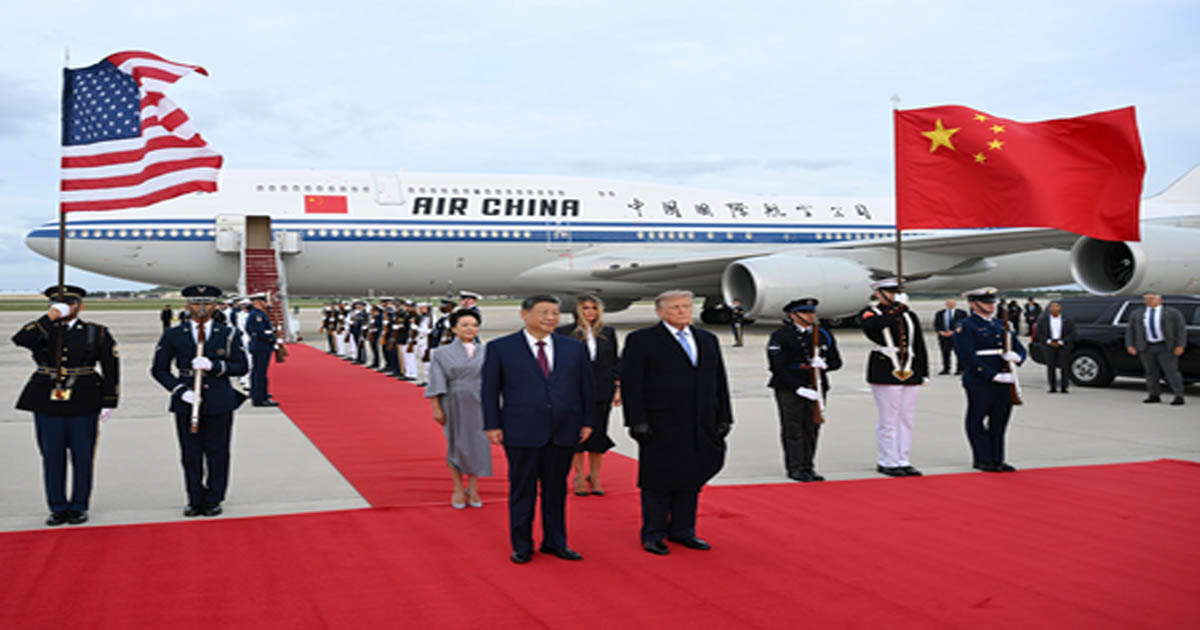
Washington, Sep 25: US President Donald Trump and Chinese President Xi Jinping used military honours, conciliatory language and a lavish White House dinner to steady the world’s most consequential bilateral relationship. But their day in Washington produced a framework for managing rivalry, not a settlement of it.
The visit’s central achievement was political choreography.
Trump personally received Xi at Joint Base Andrews, an unusual courtesy for a visiting head of state. A red carpet, US service members and a flyover by two B-1 bombers gave the arrival both grandeur and an unmistakable display of American power.
The next morning brought another formal welcome at the White House. Trump called their relationship a “truly great friendship” built on “mutual respect and the vital interests of our people”.
He said their talks would cover security, technology and “superintelligence”.
Xi answered with the language of guardrails. He called for candid dialogue, greater government-to-government contact and regular military communication.
“China and the United States must hold the line of no conflict and no confrontation between us,” Xi said.
That sentence captured the summit better than its ceremonial excess.
Neither leader suggested that the competition over advanced computer chips, artificial intelligence, military power or influence in Asia had disappeared. Xi said competition should be “healthy” and “kept within bounds”. Trump stressed their common interests.
Trade supplied the clearest immediate result.
Treasury Secretary Scott Bessent said a tariff truce, due to expire in November, had been extended until January 10. The arrangement keeps some US tariffs suspended while China maintains supplies of rare-earth minerals needed by American manufacturers.
It buys time. It is not the larger economic bargain both governments say they want.
The Wall Street Journal reported before the meeting that semiconductor export controls, one of Washington’s strongest sources of leverage, were not on the agenda. Agriculture and lower-technology trade offered easier ground.
Artificial intelligence exposed the same pattern.
Xi said the two countries had “the capability and responsibility to develop and manage AI for good” and ensure its development remained under human control. US officials have discussed an incident-notification channel, effectively an AI hotline.
No binding AI agreement or verification system was announced.
The gap between tone and substance was also visible on Taiwan, Iran and human rights. These are issues on which the two governments’ interests sharply diverge. Yet the public remarks offered no new formula on Taiwan, no clear Chinese commitment on Iran and no announced progress on detained Americans or political prisoners.
For Trump, the summit showcased his preference for leader-to-leader diplomacy. For Xi, the full honours demonstrated that Washington received China as an equal despite deep distrust.
The Washington Post described the airport reception as a rare gesture. The New York Times reported criticism that Trump was giving Xi unusually deferential treatment.
As the presidents met, Melania Trump and Peng Liyuan visited the Smithsonian’s National Museum of Asian Art, extending the day’s carefully planned cultural diplomacy.
The state dinner completed the message. American technology executives filled the room. Trump presented Xi with a bald-eagle sculpture and toasted “a future of harmony, peace, and success”.
Xi said their talks had produced “common understanding on many issues”, but did not identify a major new agreement. He argued that China’s national rejuvenation and Trump’s effort to make America great again “can surely be mutually reinforcing”.
Trump and Xi restored ceremony, high-level contact and a vocabulary for coexistence. The rivalry remains. What changed was their joint effort to keep it from becoming uncontrollable.
India has a direct stake in that effort. New Delhi’s border dispute with Beijing, participation in the Quad and dependence on global technology, energy and mineral supply chains make the course of US-China relations important for its security and economy.
Trump and Xi had met seven times before the Washington summit, including encounters in Florida, Germany, Argentina, Japan, South Korea and Beijing. Xi’s latest trip was his second formal state visit to the United States and his first visit to Washington in more than a decade.


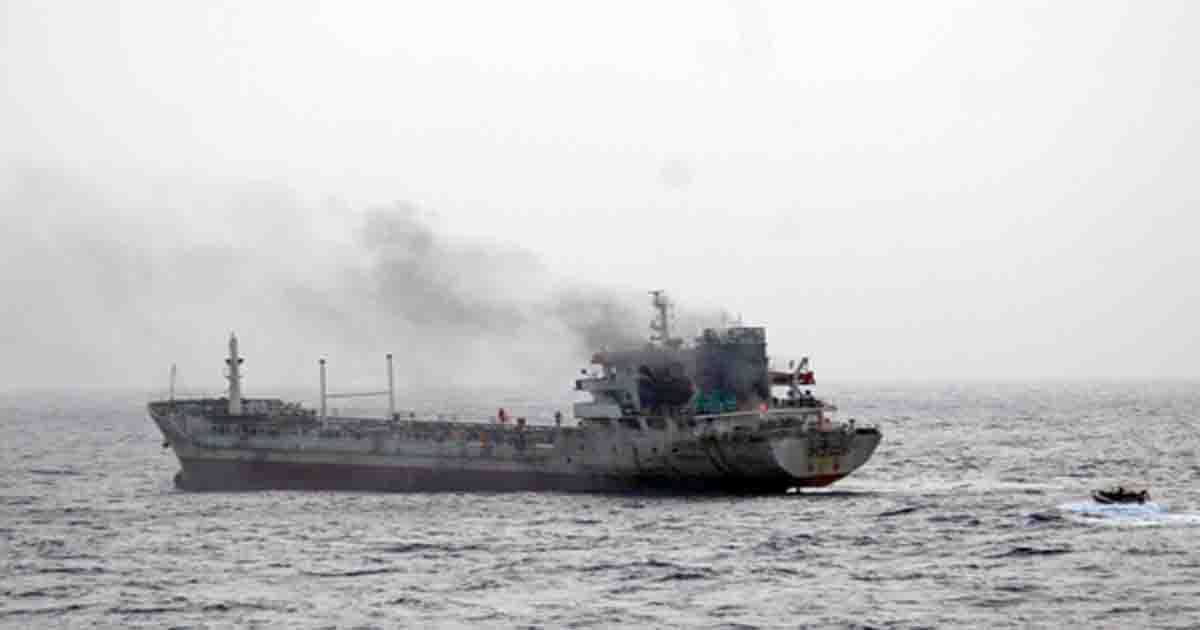
London, Oct 17: A tanker has reportedly been attacked 78 nautical miles northeast of Al Jubail, Saudi Arabia, the United Kingdom Maritime Trade Operations (UKMTO) said on Saturday.
The master of the tanker reported being attacked by a rocket-propelled grenade from a small boat, resulting in damage to the aft port quarter, according to the UKMTO.
Crew are accounted for and reported safe, and a complete damage assessment and environmental impact are unknown, said the UKMTO.
Earlier this week, Yemen’s Houthi group said that it had launched a large-scale missile and drone attack targeting an airport and oil facilities in Saudi Arabia. It also vowed to continue strikes against Saudi targets in the coming days.
In a statement broadcast by Houthi-run al-Masirah TV, Houthi military spokesperson Yahya Sarea said the group targeted Saudi energy giant Aramco in Dhahran in the Eastern Province, as well as King Khalid International Airport and an Aramco refinery in Riyadh.
According to Sarea, the operation involved “a large number of ballistic and cruise missiles and drones,” which accurately hit their targets, causing damage and fires.
The Houthi spokesperson said the operation was carried out in retaliation for Saudi Arabia-led strikes on the Houthi-held capital of Sanaa and other areas under the group’s control. He said Saudi-led forces had carried out 2,281 air and missile strikes since the latest escalation began, Xinhua news agency reported.
Sarea vowed that the group’s attacks “deep inside Saudi Arabia” would continue in the coming days, targeting airports and oil facilities. He also renewed a warning to international airlines, civilians and employees to stay away from airports and oil facilities in Saudi Arabia that the group had designated as targets.
The Houthi claim came after the Saudi-led coalition in Yemen said it intercepted six Houthi missiles and three drones heading towards Saudi Arabia on Tuesday. An Aramco administrative building in Dhahran was targeted Tuesday evening, sparking a limited fire, while debris from two cruise missiles intercepted over Riyadh injured four people and damaged 15 homes, Saudi authorities said Wednesday.
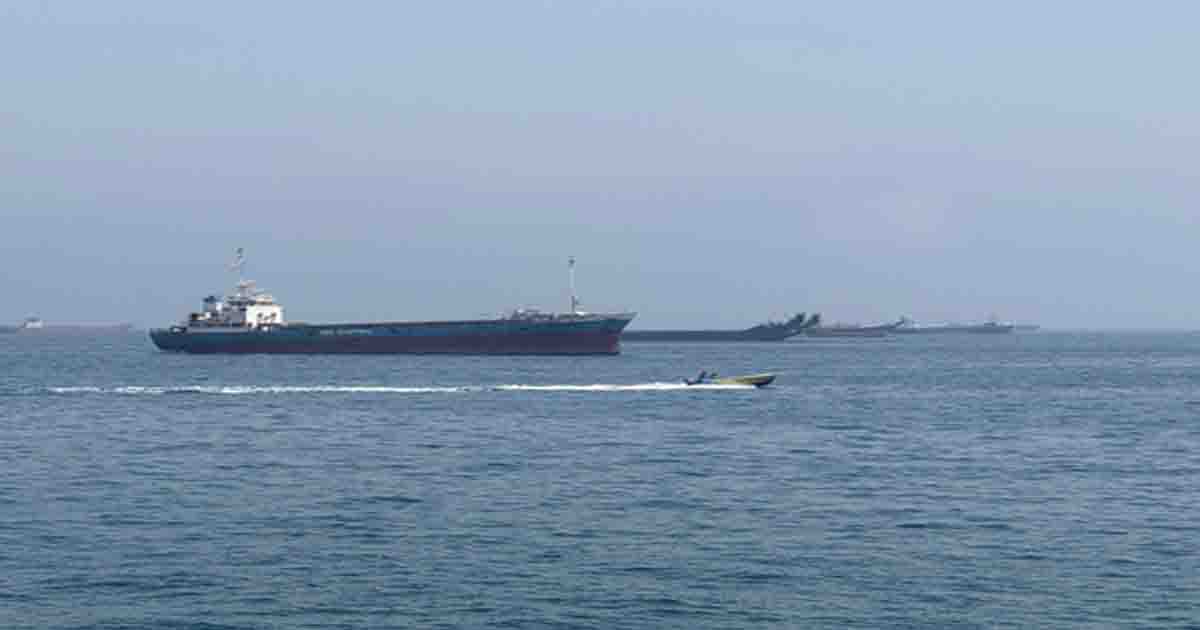
The navy of Iran’s Islamic Revolutionary Guard Corps (IRGC) said on Saturday that a “violating” supertanker that sought to cross the Strait of Hormuz through an “unauthorised” route within the preceding hours suffered a “huge” explosion after hitting a naval mine.
The explosion resulted in a “massive” fire on the oil tanker, which had turned off its GPS and radar systems, the navy said in a statement published by the IRGC’s official news outlet, Sepah News.
Carrying more than two million barrels of crude oil, the vessel sought “unauthorised” passage through the strait with the US. military’s support, Sepah News reported, adding that the waterway has been closed, Xinhua News Agency reported.
On Wednesday, the IRGC Navy said a “violating” container ship attempting to pass through the Strait of Hormuz via an “unauthorised and high-risk” route sank earlier in the day after hitting a naval mine south of the waterway.
Speaking to state-run IRIB TV on Tuesday, IRGC Navy Commander Ali Azmaei said his troops are controlling the Persian Gulf and the Strait of Hormuz “round the clock,” while the Gulf of Oman is under the control and supervision of Iran’s navy.
He warned that those violating shipping rules under US “deception or provocation” would face a decisive response from Iran.
Meanwhile, Iran’s President Masoud Pezeshkian on Friday reiterated that his country does not seek to develop nuclear weapons, dismissing anti-Tehran propaganda claiming otherwise as a “lie.”
Pezeshkian made the remarks during a meeting with Georgian Prime Minister Irakli Kobakhidze on the sidelines of the 17th Conference of the Parties (COP17) to the Convention on Biological Diversity in the Armenian capital, Yerevan, according to a statement on his office’s website.
“Iran does not seek to develop nuclear weapons, and we consider the destructive propaganda against our country as a lie,” he said, citing the clear positions of Iran’s late Supreme Leader Ali Khamenei regarding the prohibition of developing nuclear weapons.
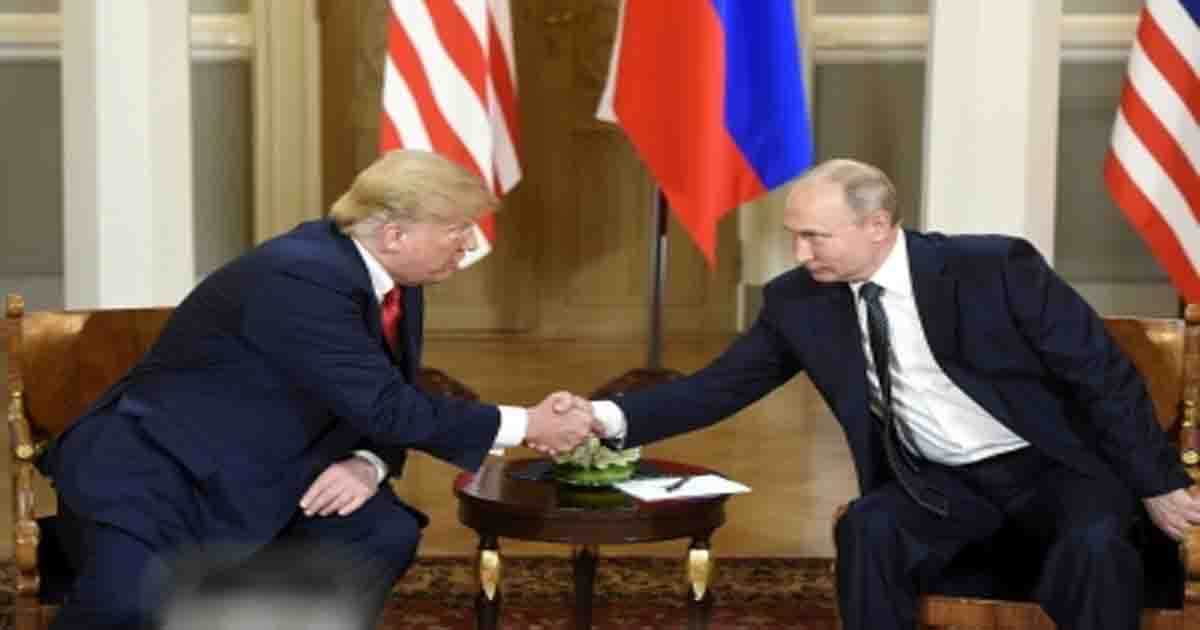
Washington, Oct 17: President Donald Trump said Russia had asked to be represented at the G20 meetings the United States is hosting this year, and that he would welcome Russian President Vladimir Putin.
Asked by reporters at the White House before departing on Marine One whether Putin was coming to the G20, Trump said, “No, no, they asked to be represented. I don’t know if he’s coming. Certainly would love to have him,” he said.
Trump raised the G20 himself while answering a question about fuel prices. “And one more, because on the G20 meetings, you had Russian representatives go to those meetings,” he said.
The United States holds the G20 presidency in 2026. Secretary of State Marco Rubio will host the G20 Foreign Ministers’ Meeting in Atlanta, Georgia, on October 30 and 31, according to the State Department. Trump will host the Leaders’ Summit on December 14 and 15 at Trump National Doral in Miami, Florida, the State Department has said.
Russia and India are both members of the G20. India hosted the grouping’s summit in New Delhi in September 2023.
Trump also said he would like to reach a nuclear deal with China and Russia but is not counting on it happening this year.
On the war in Ukraine, Trump was asked whether he had forgotten that it was Putin who started the war. “Well, you know, I know the details, okay? And at some point I’ll release the details. But I don’t care anything except for one. I want that war ended,” he said.
“25,000 soldiers on average a month are being killed. Last month was 32,000 soldiers,” Trump said. “I deal with both of them. I think they want that war ended there, and I think it’s going to end. That’s all I care about. I want that war to end.”
Asked about restrictions on Ukraine’s use of Starshield, Trump said, “No, we didn’t do that at all.”

Samajwadi Party, education two banks of river who can’t meet: UP CM Yogi Adityanath

Tanker attacked northeast of Saudi Arabia: UKMTO

MP: Mild earthquake tremors felt in Singrauli

Maha CM calls emerging technologies key to India’s youth

Iran IRGC says supertanker exploded after hitting mine in Hormuz Strait

Rahul, Cong ecosystem want to force regime change: BJP after Neha Bora praises B’desh Gen-Z protest

BJP pays tribute to ex-President Abdul Kalam, recalls his enduring influence on generations of India’s youth

INDIA bloc begins protest march against ECI

Maha Congress stages agitation against Gyanesh Kumar

Complaint against Netflix & Mukesh Chhabra for inappropriate language on ‘India’s Got Latent 2’
-

 Crime4 years ago
Class 10 student jumps to death in Jaipur
-

 Maharashtra2 years ago
Mumbai Local Train Update: Central Railway’s New Timetable Comes Into Effect; Check Full List Of Revised Timings & Stations
-

 Maharashtra2 years ago
Mumbai To Go Toll-Free Tonight! Maharashtra Govt Announces Complete Toll Waiver For Light Motor Vehicles At All 5 Entry Points Of City
-

 Maharashtra2 years ago
False photo of Imtiaz Jaleel’s rally, exposing the fooling conspiracy
-

 National News2 years ago
Ministry of Railways rolls out Special Drive 4.0 with focus on digitisation, cleanliness, inclusiveness and grievance redressal
-

 Maharashtra2 years ago
Maharashtra Elections 2024: Mumbai Metro & BEST Services Extended Till Midnight On Voting Day
-

 National News2 years ago
J&K: 4 Jawans Killed, 28 Injured After Bus Carrying BSF Personnel For Poll Duty Falls Into Gorge In Budgam; Terrifying Visuals Surface
-

 Crime2 years ago
Baba Siddique Murder: Mumbai Police Unable To Get Lawrence Bishnoi Custody Due To Home Ministry Order, Says Report