
International News
Trump claims Iran reset, orders nuclear dust cleanup

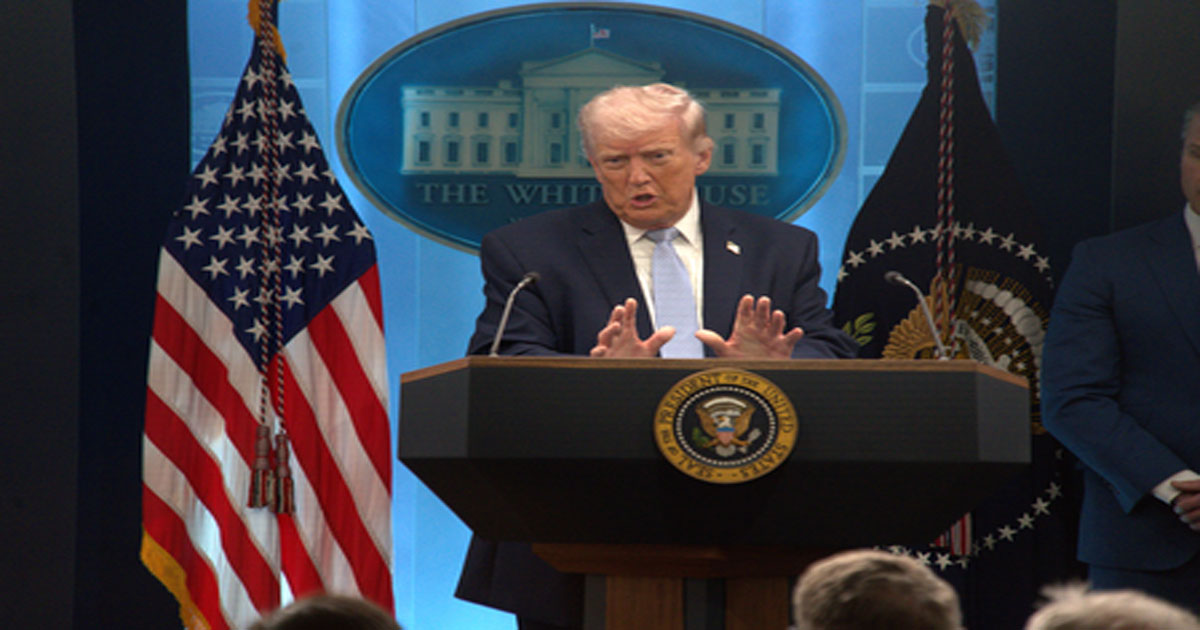
Washington, April 8: US President Donald Trump on Wednesday announced what he called a “very productive regime change” in Iran, saying the US would eliminate uranium enrichment and work to dig up and remove deeply buried nuclear “dust”.
In a series of posts, Trump outlined a framework that combined nuclear restrictions, sanctions relief and sharp trade penalties.
“The United States will work closely with Iran, which we have determined has gone through what will be a very productive regime change!” he wrote on Truth Social, a day after the US and Iran agreed to a two-week ceasefire and reopening of the Strait of Hormuz.
He asserted that Iran would no longer be allowed to enrich uranium. “There will be no enrichment of Uranium,” Trump said, adding that the United States would work with Iran to “dig up and remove all of the deeply buried (B-2 Bombers) nuclear ‘dust.’”
Trump said the material remained under strict monitoring. “It is now, and has been, under very exacting Satellite Surveillance (Space Force!). Nothing has been touched from the date of attack,” he said.
The President also pointed to ongoing negotiations that could ease economic pressure on Tehran. “We are, and will be, talking tariff and sanctions relief with Iran. Many of the 15 points have already been been agreed to,” he said, without detailing the terms or the parties involved.
Minutes later, Trump issued a warning to countries supplying weapons to Iran, signalling an aggressive escalation in trade policy.
“A country supplying military weapons to Iran will be immediately tariffed, on any and all goods sold to the United States of America, 50 per cent, effective immediately. There will be no exclusions or exemptions!” he said.
The dual messaging — offering sanctions relief while threatening sweeping tariffs — reflected a strategy that mixes economic coercion with conditional engagement.

International News
Despite ceasefire announcement, India issues fresh advisory, urges nationals to leave Iran expeditiously

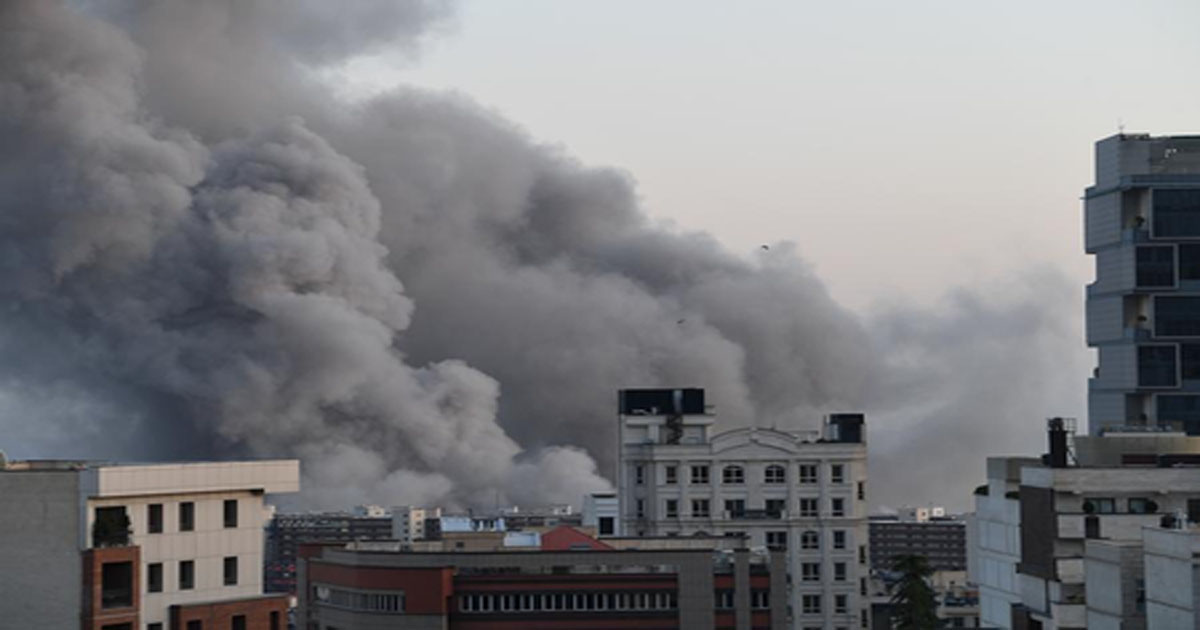
Tehran, April 8: India on Wednesday advised its nationals in Iran to leave expeditiously, using only embassy-suggested routes despite the ceasefire agreement between the US and Iran.
In an advisory, the Indian Embassy in Tehran said, “In continuation of the advisory of 07 April 2026, and in light of recent developments, Indian nationals still in Iran are strongly advised to expeditiously exit Iran, in coordination with the Embassy and using the routes suggested by the Embassy.”‘
“It is again reiterated that there should be no attempt to approach any international land border without prior consultation and coordination with the Embassy,” the Indian mission further said, adding the emergency contacts with the advisory.
This comes just hours after the US and Iran reached a ceasefire agreement.
US President Donald Trump stepped back from the brink of a major military escalation with Iran, announcing a conditional two-week pause in planned attacks tied to reopening the Strait of Hormuz, a development that came as a big relief to people across the world.
The decision came 90 minutes before the self-imposed 8 p.m. EST deadline set by Trump for Iran to reach a deal, after backchannel diplomacy.
Trump, in a post on Truth Social on Tuesday (local time), said he would “suspend” an escalation of attacks for two weeks if Iran agrees to open the key shipping route.
In a social media post, he said talks with Pakistan led to what he called a “double-sided ceasefire.”
“The reason for doing so is that we have already met and exceeded all Military objectives, and are very far along with a definitive Agreement concerning long-term peace with Iran, and peace in the Middle East,” Trump wrote.
He added that the United States had received “a 10-point proposal from Iran” that was “a workable basis on which to negotiate.”
Trump said “almost all of the various points of past contention” had been agreed, and the two-week pause would allow the agreement “to be finalised and consummated.”
The ceasefire is conditional. Trump said it depends on Iran agreeing to the “complete, immediate, and safe opening of the Strait of Hormuz.”
Iran signalled tentative acceptance. Iranian Foreign Minister Seyed Abbas Araghchi said Tehran would halt operations if attacks stop.
“If attacks against Iran are halted, our Powerful Armed Forces will cease their defensive operations,” he said.
“For a period of two weeks, safe passage through the Strait of Hormuz will be possible via coordination with Iran’s Armed Forces and with due consideration of technical limitations,” he added.
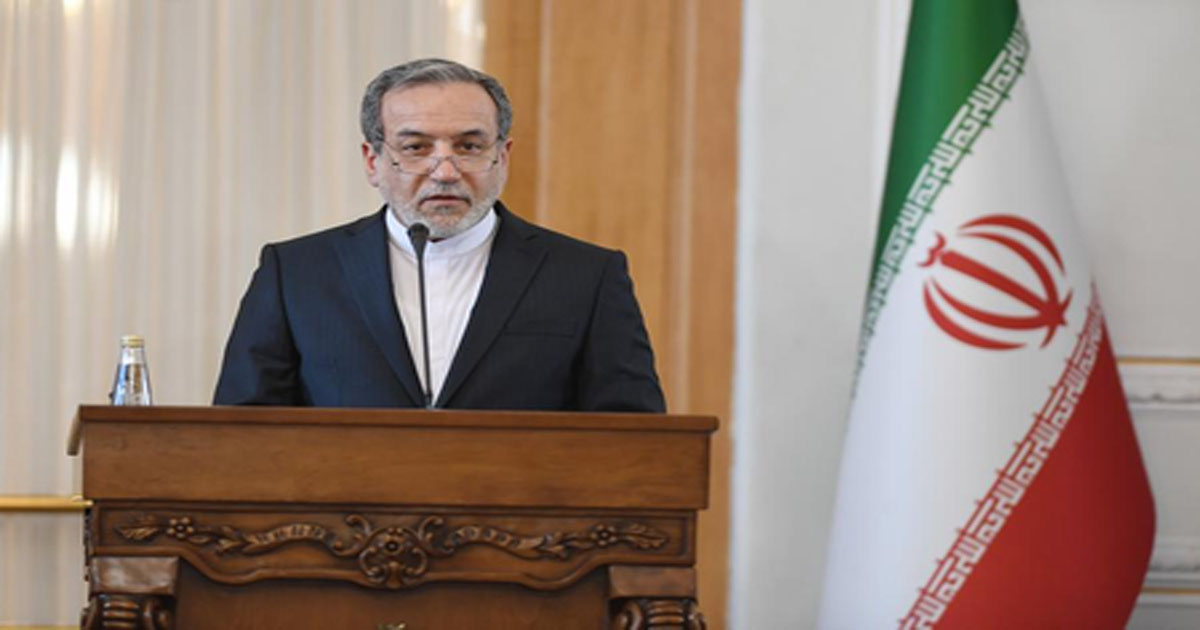
Tehran, April 8: Iran on Wednesday indicated its willingness to halt its military response provided that attacks against it are stopped, while also announcing a temporary opening of the strategically vital Strait of Hormuz for a period of two weeks.
In a statement, Iranian Foreign Minister Seyed Abbas Araghchi said the development comes at a time when ceasefire negotiations are currently underway, signalling a possible de-escalation in ongoing tensions.
He further stated that a two-week window would be provided during which vessels would be allowed to safely pass through the Strait of Hormuz, subject to proper coordination with Iranian authorities and adherence to operational conditions.
Explaining the context of the move, the Iranian Foreign Minister said that the decision was taken “considering the request by the US for negotiations based on its 15-point proposal as well as announcement by POTUS about acceptance of the general framework of Iran’s 10-point proposal as a basis for negotiations.”
He added that Iran’s position remains conditional and dependent on reciprocal actions.
“If attacks against Iran are halted, our Powerful Armed Forces will cease their defensive operations. For a period of two weeks, safe passage through the Strait of Hormuz will be possible via coordination with Iran’s Armed Forces and with due consideration of technical limitations,” Araghchi said, citing the stance of Iran’s Supreme National Security Council.
Meanwhile, Trump also announced that he has agreed to suspend planned military strikes on Iran for two weeks.
“Subject to the Islamic Republic of Iran agreeing to the complete, immediate, and safe opening of the Strait of Hormuz, I agree to suspend the bombing and attack of Iran for a period of two weeks,” he said, describing the move as part of “a double-sided ceasefire”.
The announcement signals a temporary halt in what had been shaping up as a major escalation in the Gulf, with Trump asserting that US military goals had already been achieved.
“The reason for doing so is that we have already met and exceeded all Military objectives, and are very far along with a definitive Agreement concerning long-term peace with Iran, and peace in the Middle East,” he said.
Trump said Washington had received “a 10-point proposal from Iran,” which he described as “a workable basis on which to negotiate”.
“Almost all of the various points of past contention have been agreed to between the United States and Iran,” he added, suggesting that the pause would allow both sides to finalise terms.
“A two-week period will allow the Agreement to be finalised and consummated,” Trump said.
He framed the development as a breakthrough in efforts to stabilise the region, saying it was “an honour to have this long-term problem close to resolution.”
Trump’s post on Truth Social media came less than 90 minutes before his 8 p.m. EST deadline, wherein he had asked Iran to agree to a deal or face consequences to be bombed to the “Stone Age”.

Washington, April 8: Oil prices dropped sharply after US President Donald Trump said he would pause planned military strikes on Iran for two weeks, easing fears of a wider conflict in the energy-rich Gulf region.
US crude futures fell below $100 a barrel, reversing recent gains driven by weeks of tensions around the Strait of Hormuz, a key global oil transit route, The Wall Street Journal said on Tuesday (Local time).
The decline followed Trump’s announcement that he would suspend attacks on Iran, subject to Tehran reopening the strait, according to the Journal.
Stock markets also reacted positively. Futures tied to major US indexes rose more than 2 per cent, signalling investor relief after days of volatility linked to the crisis, it reported.
“Stock futures are surging and oil prices falling after President Trump posted on Truth Social that he would suspend attacks on Iran for two weeks,” the report said.
The Strait of Hormuz, through which roughly a fifth of global oil flows, has been at the centre of the conflict. Iran had restricted passage for several weeks, contributing to rising prices and supply concerns, according to reports by The Hill.
Markets had been on edge ahead of Trump’s deadline for Iran to reach a deal, with traders fearing a major escalation could disrupt shipments across the Gulf and send prices sharply higher, the Journal noted.
Instead, the announcement of a potential ceasefire triggered a broad rally across global markets. Asian stocks also climbed, with Japan’s Nikkei and South Korea’s Kospi advancing after the news.
Investors had largely treated Trump’s earlier threats as negotiating tactics. “Some investors had bet that Trump… could extend the deadline to reopen the Strait of Hormuz, something he has done multiple times in the past month,” the daily reported.
Oil prices had surged in recent weeks amid fears that the strait could be closed or severely restricted. The waterway handles shipments critical to global supply chains, including crude oil and liquefied natural gas.
The easing of tensions also lifted other asset classes. Gold prices rose, reflecting continued uncertainty, while equities gained as the risk of immediate conflict receded, according to the Journal.
However, analysts cautioned that the situation remains fragile. The proposed two-week ceasefire depends on Iran agreeing to fully reopen the strait and on both sides refraining from further escalation.
Even after the announcement, reports of missile and drone activity in parts of the Gulf raised questions about how durable the pause would be, according to The New York Times.
The broader conflict has already disrupted energy markets for weeks. Limited shipping access and uncertainty over supply have driven price swings and heightened volatility across global markets.
The two-week window now offers a chance for diplomacy to stabilise the situation, but traders remain wary of sudden shifts in policy or military action.
The Strait of Hormuz remains one of the world’s most critical energy chokepoints. Any disruption can have immediate global consequences, particularly for large importers.
For India, which relies heavily on crude imports from the Gulf, sustained volatility in oil prices could impact inflation, currency stability and overall economic growth.

Search continues for absconding accused under trial in Mumbai Sessions Court, Crime Branch teams are active, case registered on constable’s complaint

Trump claims Iran reset, orders nuclear dust cleanup

Mumbai Crime: 3 Brothers Booked For Alleged ₹450 Crore Land Fraud In Bhandup Using Forged Documents

Mumbai: Instructions to identify low-lying areas and locations before monsoon, Municipal Commissioner inspects drains and sweet river works in City Division

All auctions of Worli plots should be stopped and an auction policy should be formulated in consultation with group leaders of all parties: Raees Shaikh

Married Mumbai Woman Mocked In Andheri Society Over ‘Lift Kissing’ CCTV Video, Files Police Complaint

LPG Crisis In Maharashtra: Cyber Crime On Rise Amid Shortage, 2 Women Lose ₹4 Lakh In ‘Gas Update’ Online Scam In Kalyan-Dombivli

Dhurandhar 2 Box Office Collection Day 1: Ranveer Singh Starrer Takes An Exceptional Opening; Crosses ₹100 Crore Mark

Mumbai Police Busts Fake Apple Accessories Racket In Ghatkopar, ₹16.33 Lakh Goods Seized; Six Booked

Thane Horror: Man Slashed With Chopper In Naupada For Refusing ‘Vargani’, Caught On Camera
-

 Crime4 years ago
Class 10 student jumps to death in Jaipur
-

 Maharashtra2 years ago
Mumbai Local Train Update: Central Railway’s New Timetable Comes Into Effect; Check Full List Of Revised Timings & Stations
-

 Maharashtra1 year ago
Mumbai To Go Toll-Free Tonight! Maharashtra Govt Announces Complete Toll Waiver For Light Motor Vehicles At All 5 Entry Points Of City
-

 Maharashtra2 years ago
False photo of Imtiaz Jaleel’s rally, exposing the fooling conspiracy
-

 National News1 year ago
Ministry of Railways rolls out Special Drive 4.0 with focus on digitisation, cleanliness, inclusiveness and grievance redressal
-

 Maharashtra1 year ago
Maharashtra Elections 2024: Mumbai Metro & BEST Services Extended Till Midnight On Voting Day
-

 National News2 years ago
J&K: 4 Jawans Killed, 28 Injured After Bus Carrying BSF Personnel For Poll Duty Falls Into Gorge In Budgam; Terrifying Visuals Surface
-

 Crime1 year ago
Baba Siddique Murder: Mumbai Police Unable To Get Lawrence Bishnoi Custody Due To Home Ministry Order, Says Report