
Maharashtra
The state government is preparing to bring private kindergartens under its control


Mumbai: The lack of educational facilities, midday meals for children, and proper implementation of government schemes in private schools running in the streets of the state has increased the concern of parents. As a measure against this, the School Education Department has started preparing a new manual to bring private schools under government control.
According to the new National Education Policy, pre-primary education for children between 3 and 6 years of age has been considered important, and it is proposed to include private schools in this policy as well. Currently, many schools running in the streets are running without any manual and are out of the control of the local administration. It has been assured that a suitable educational environment will be created for the children under this new rule of the Education Department.
Under the new regulations, educational curriculum for children will be implemented in the balwadis, along with midday meals and appropriate schemes for the physical and mental development of children. This is expected to provide quality education to the children.
It has not yet been decided which department will control these balwadis – the School Education Department, the Women and Child Welfare Department, and the Integrated Child Development Services Department. However, it is believed that this decision will reduce the anxiety of parents and improve the educational quality of children.



A tragic accident claimed the life of a six-year-old girl after she fell from a lobby window on the 11th floor of Navkar Tower in Naigaon East in the Vasai-Virar region of Maharashtra Palghar district, officials said on Wednesday.
The incident has plunged her family into grief, while residents of the housing society are also mourning the child’s untimely death.
According to the accidental death report (ADR) registered at Naigaon Police Station, the deceased has been identified as Mithali Dinesh Sutar, aged six. Her father, Dinesh Sutar, a resident of Navkar Tower in Naigaon East, is the complainant in the case.
As per the complaint, the incident occurred on Tuesday afternoon. At around 3.45 p.m., Mithali went to the 11th-floor lobby to play with a girl who lived opposite her home. The two children were playing together when the unfortunate incident took place.
At approximately 4 p.m., the mother of the other girl, who was also a neighbour, approached Mithali’s father and informed him that his daughter had fallen from the lobby window.
Shocked by the news, Dinesh Sutar and other residents immediately rushed to the ground floor of the building. They found Mithali lying on her back on a fire brigade pipe.
The family immediately arranged an ambulance and rushed her to Cardinal Hospital in Vasai West for medical treatment.
Doctors at the hospital conducted an ECG in an attempt to assess her condition. However, despite their efforts, the child could not be revived.
At around 6.45 p.m., doctors declared her dead, according to the officials.
Following the incident, Naigaon Police registered an accidental death report under Section 194 of the Bharatiya Nagarik Suraksha Sanhita (BNSS) at around 9.30 p.m.
Further legal proceedings are underway.
The tragic loss of the six-year-old has left the family devastated.
A home once filled with the laughter and happiness of a little child is now engulfed in grief, while the incident has sent shockwaves through the residential society.
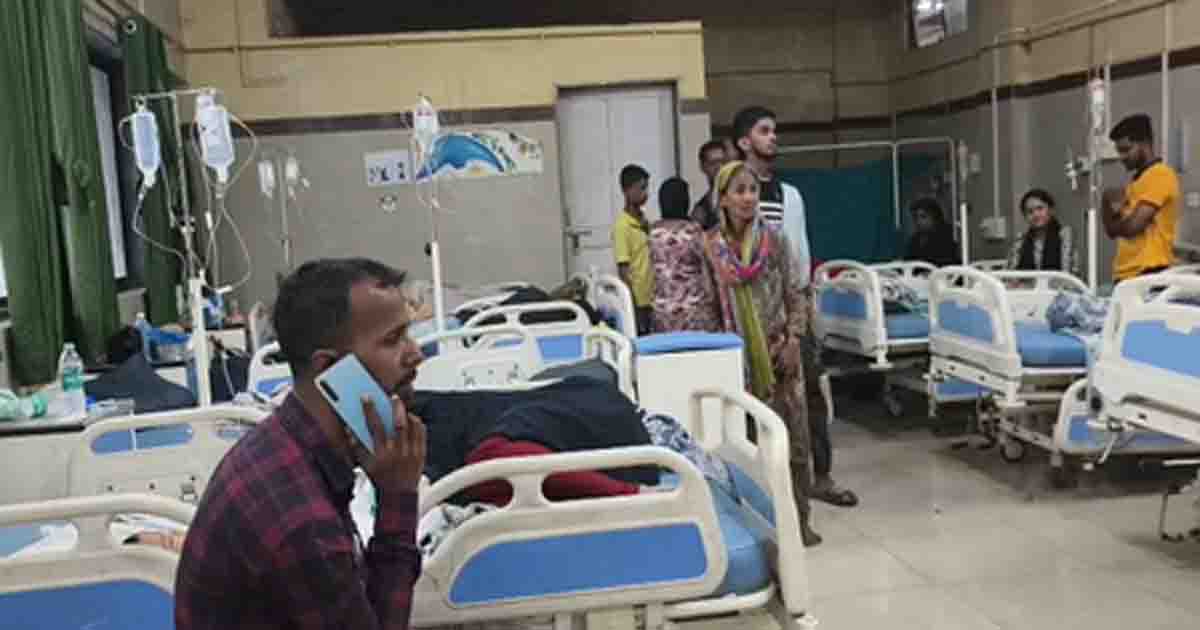
At least 43 people, including 10 children, fell ill due to suspected food poisoning after consuming chicken shawarma purchased from a roadside stall near Vanjar Patti Naka in Maharashtra Bhiwandi, officials said.
The affected individuals include people ranging in age from a two-year-old child to adults aged up to 40 years. A pregnant woman is also among those admitted to the hospital following the incident.
According to the information, the total number of people affected has reached 43, comprising 17 men, 16 women and 10 children. Several of them reportedly developed symptoms such as vomiting, diarrhoea and fever after consuming the shawarma.
Those experiencing health complications have been admitted to the Indira Gandhi Memorial (IGM) Sub-District Hospital in Bhiwandi, where they are currently receiving medical treatment.
The incident has raised concerns after several people who reportedly ate food purchased from the same stall fell ill within a short period.
One of the patients, speaking to media, recounted falling sick a day after eating shawarma from the stall.
Describing the difficulties faced after consuming the food, the patient said, “I ate shawarma on Monday, and the next day I fell ill. I remained sick throughout the day and was unable to even stand up. Following this, I was admitted to the hospital. After coming here, I came to know that several other people had also fallen ill after eating shawarma.”
Another patient, who also reported falling sick after eating shawarma from Vanjar Patti Naka, said the symptoms had persisted since then.
“I had shawarma from Vanjar Patti Naka, and I have been sick ever since. I have been vomiting continuously since then. There are many patients admitted here, and all of them are suffering from food poisoning,” the patient told media.
Another person, whose brother was admitted to the hospital after falling ill, said the family learnt about the larger outbreak only after reaching the medical facility.
“My brother is here. He suffered food poisoning after eating shawarma. When we came here, we got to know that many other people who had eaten shawarma had also fallen ill,” the person said.
The affected patients are currently undergoing treatment at the IGM Sub-District Hospital.
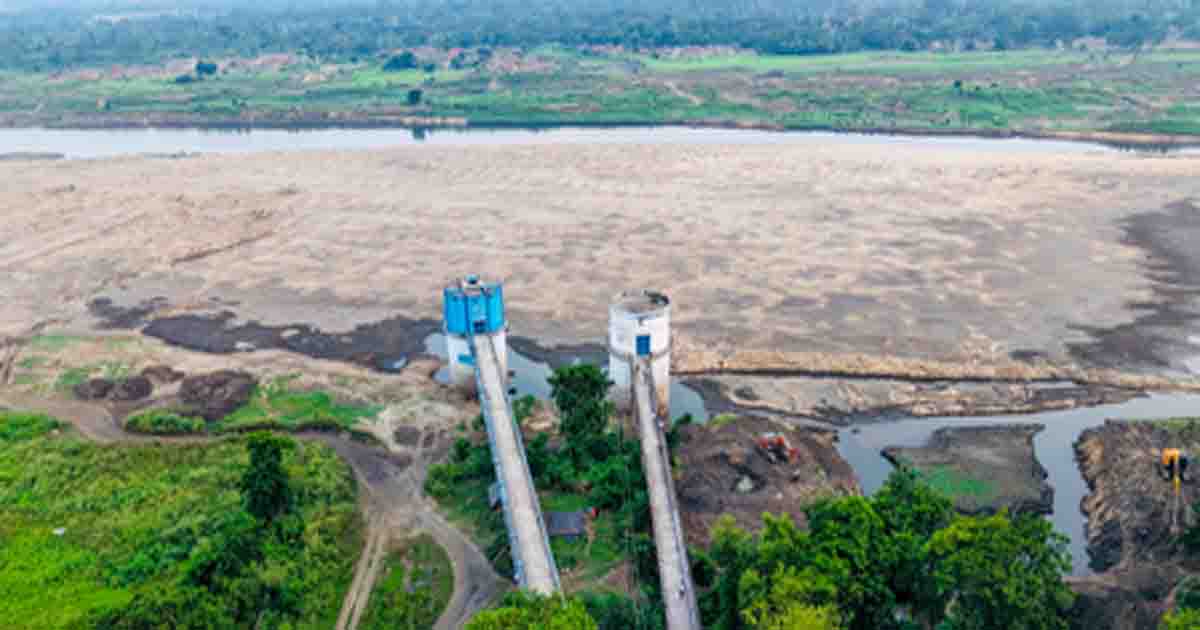
The drought situation in Maharashtra is worsening by the day. With local water sources supplying villages and hamlets gradually drying up, the demand for water tankers has doubled over the past month, putting additional pressure on the already strained water supply system.
As many as 19 dams in the Marathwada region have completely dried up, triggering concerns that the water crisis could intensify further in the coming days.
Due to the impact of El Niño, a severe drought looms over the state, prompting the government to declare drought conditions in 310 talukas. With growing demands to include 13 additional talukas on the list, authorities have ordered surveys to assess the drought conditions in those areas.
Scarcity mitigation measures have already been initiated in the declared talukas as the administration takes various steps to overcome the mounting water shortage. The weekly state cabinet meeting slated for Wednesday will hold a comprehensive review of the situation and take decisions on intensifying the implementation of mitigation measures.
With local water supply schemes failing, reliance on tankers has spiked sharply. Currently, as many as 1,323 tankers are supplying water to 1,102 villages and 3,801 hamlets across 11 districts in the state, said the compilation made by the state government.
The Marathwada region accounts for the highest deployment, with 668 tankers in operation of which Beed district leads with 326 active tankers. In Nashik District, despite having a high concentration of dams, the administration has been forced to deploy 43 tankers to meet local water needs. Officials from the Water Supply Department have warned that the demand for tankers is likely to rise further in the near future.
While local water schemes are shutting down, overall water storage in the state’s dams has also dropped significantly. Total water storage across all dams in Maharashtra currently stands at 61.88 percent, a sharp decline as compared to 90.26 percent at the same time last year. As per the report by the water resources department, the water storage in the Konkan region is 79 percent, Pune Division 72.44 percent, Nashik Division 71.30 percent, Nagpur Division 54.93 percent, Amravati Division 50.53 percent and Marathwada 33.79 percent (down drastically from 90.16 percent last year).
The situation in Marathwada is particularly alarming, with major reservoirs running empty. In Dharashiv district, all dams have dried up except for the Lower Terna dam, which holds just 14 percent water. Beed faces a similar crisis; barring the Majalgaon and Dhanegaon dams—which hold a meager 14 percent to 16 percent storage — all other dams in the district are completely dry.
According to sources, the severe local deficit has forced the administration to bring in water-filled tankers from neighbouring districts to supply the affected areas.
Earlier, citing erratic rainfall, prolonged dry spells, declining groundwater levels, and depleting water storage across parts of the state, the Maharashtra Planning Department has issued a Government Resolution (GR) laying down guidelines for fund allocation, work prioritisation, and temporary suspension of non-essential water-intensive new construction works in scarcity-affected regions under the District Annual Plan (General) for the 2026–27 financial year.
The government has resorted to this move to conserve water amid worsening drought conditions across Maharashtra. The state’s Planning Department headed by Chief Minister Devendra Fadnavis has also asked local authorities to redirect all resources toward ensuring uninterrupted drinking water supply in drought-declared talukas.
District Planning Committees (DPCs), led by District Collectors as member secretaries, have been directed to prioritise works that deliver direct water access to citizens and livestock within the scarcity period.
Priority categories include completing incomplete pipelines, pumps, connections, tanks, and distribution systems; repairing post-defect-liability water supply assets to curb leakage; linking water sources to scarcity-hit works; finishing nearly complete works facing minor fund shortfalls; and executing ongoing water supply schemes in the 310 drought-hit talukas.
Works such as Water Treatment Plants (WTPs), Sewage Treatment Plants (STPs), solar projects, and solid waste management in municipal councils/nagar panchayats slated for completion before March 31, 2027, along with fodder and water measures for livestock, public health, and essential livelihood works, are also eligible under the prioritised framework.

Delhi Police arrest chain snatcher with 25 plus criminal cases under Operation ‘Street Shield’

‘We are not beggars’: Imran Masood slams SP over candidate list amid seat sharing talks

Two killed as gunmen open fire at wedding in Bihar Bhojpur

6-year-old girl dies after falling from 11th-floor lobby window in Maharashtra Vasai

‘Education, austerity, knowledge, control over senses means to good life, salvation’: PM Modi

Congress trying to protect 3 crore Bangladeshi infiltrators in voter list: HM Shah

Red Fort car blast probe exposes blueprint for spread of terror modules across India

Trump flags Iran targets as talks continue

‘Conspiracy, not accident’: NCP on Ajit Pawar death

BJP, Shiv Sena slam Mallikarjun Kharge for terming Diwali ‘Khushiyon ka Eid’
-

 Crime4 years ago
Class 10 student jumps to death in Jaipur
-

 Maharashtra2 years ago
Mumbai Local Train Update: Central Railway’s New Timetable Comes Into Effect; Check Full List Of Revised Timings & Stations
-

 Maharashtra2 years ago
Mumbai To Go Toll-Free Tonight! Maharashtra Govt Announces Complete Toll Waiver For Light Motor Vehicles At All 5 Entry Points Of City
-

 Maharashtra2 years ago
False photo of Imtiaz Jaleel’s rally, exposing the fooling conspiracy
-

 National News2 years ago
Ministry of Railways rolls out Special Drive 4.0 with focus on digitisation, cleanliness, inclusiveness and grievance redressal
-

 Maharashtra2 years ago
Maharashtra Elections 2024: Mumbai Metro & BEST Services Extended Till Midnight On Voting Day
-

 National News2 years ago
J&K: 4 Jawans Killed, 28 Injured After Bus Carrying BSF Personnel For Poll Duty Falls Into Gorge In Budgam; Terrifying Visuals Surface
-

 Crime2 years ago
Baba Siddique Murder: Mumbai Police Unable To Get Lawrence Bishnoi Custody Due To Home Ministry Order, Says Report