
National News
SP Chief Akhilesh Yadav Calls UP budget ‘Second Last’ Of Yogi Govt, Says No Link With BJP Manifesto

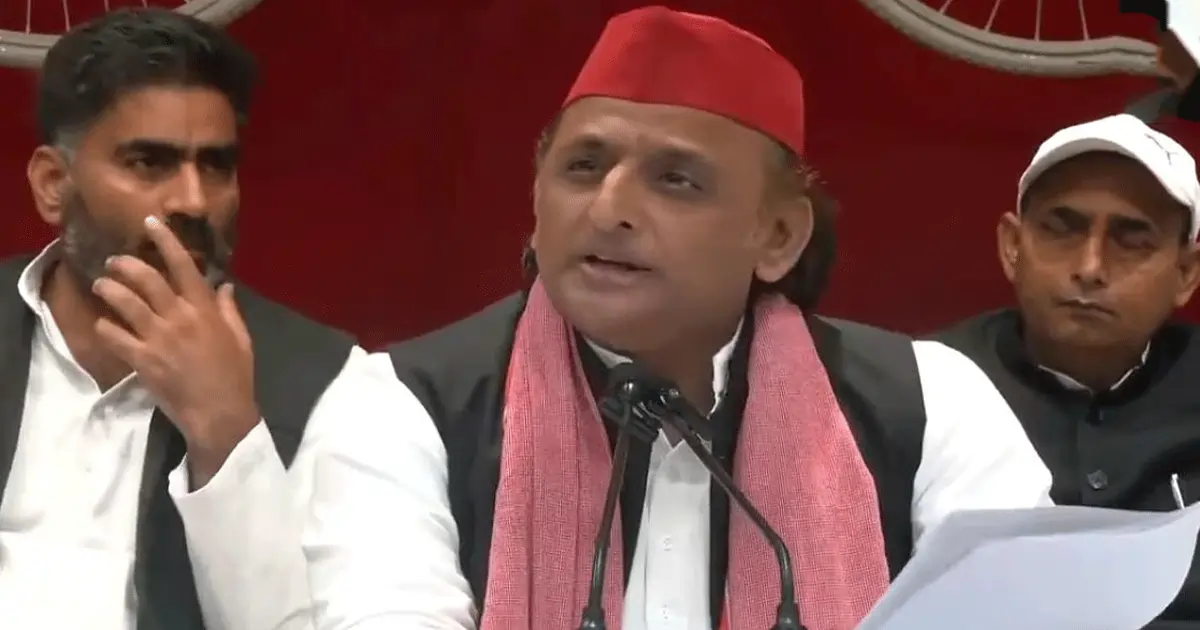
Lucknow: Samajwadi Party chief Akhilesh Yadav on Thursday dismissed the Uttar Pradesh budget presented by the Yogi Adityanath-led government, calling it the “second last budget” of the BJP in the state.
Criticising the government’s approach, Yadav claimed that none of its budgets, including the latest one, had a clear vision or direction for Uttar Pradesh.
“This is the ninth budget of this government, and it is their second last,” the SP chief said.
After this, the final budget will be presented, and then the people will get a chance to choose a new government, he said, adding that the budget has no connection with the promises made in the BJP’s manifesto.
“The government has presented budgets without any roadmap on how to take the state forward. There is no clarity on how the needs of the common people will be addressed,” he stated.
He also took a dig at the BJP’s repeated claims of presenting the “biggest budget”, saying that every new budget is naturally larger than the previous one.
“Every time they present a budget, they say it’s the biggest one. This statement can be made by any government because every budget is bound to be bigger than the last,” he remarked.
Yadav described the budget as hollow, claiming it was all noise with nothing substantial inside.
“This is not a budget, it’s an empty drum that makes a lot of noise but has nothing inside. The people feel like no real budget has been presented, just sermons, while they keep wondering when the actual budget will come,” he said.
The former UP chief minister further alleged that the budget has left different sections of society disappointed.
“Farmers’ hopes have dried up, women are even more worried about managing household expenses, the unemployed see nothing but darkness ahead, and traders are feeling the deepening impact of economic slowdown. Even BJP ministers and MLAs who were thumping desks in the Assembly are now anxious because they will have to face the anger of people in their constituencies over inflation and unemployment,” he said.
Taking a swipe at the government’s treatment of artisans, the Lok Sabha MP from Kannauj said, “The weavers’ looms have fallen silent. The people are now asking how much budget has been allocated for the ‘Jumla Ministry’.”
He also took potshots at Adityanath’s speech in the Assembly, noting that while the BJP opposed Urdu, the CM himself used several Urdu words in his address.
“Some people even oppose Urdu in Urdu itself,” he quipped.
Listing several words used by the CM, including ‘badnaam,’ ‘bakhsha,’ ‘gunehgar,’ ‘haseen,’ and ‘duniya,’ he asked whether these were not Urdu words and extended his argument by questioning the Hindi equivalents of words like ‘rail,’ ‘engine,’ ‘steering,’ ‘clutch,’ and ‘platform.’
Referring to a book on the Kumbh Mela study by Harvard University, Yadav said he had previously sent an English version of the book to Adityanath for decoration purposes and was now sending a Hindi version so that he could actually read it.
On the BJP’s election promises, the SP chief alleged that the government had failed to deliver on its commitments.
“The BJP manifesto promised free electricity for farmers’ irrigation needs over the next five years. Nine budgets have passed, but has this promise been fulfilled? They also pledged to set up a Rs 25,000 crore agro-infrastructure mission in the name of Sardar Vallabhbhai Patel, but what happened to that?” Yadav asked.
They announced a Rs 1,000 crore Bhama Shah Price Stabilization Fund for crops like potatoes, tomatoes, and onions, yet nothing has materialised, he said.
Yadav accused the BJP of failing to support farmers despite promising Minimum Support Price (MSP) guarantees.
“They promised to provide MSP to farmers, but where is it? We had built mandis to ensure fair prices for farmers, and this government has destroyed them. Not a single new mandi has been built under the BJP rule,” he claimed.
He further pointed out that the BJP had assured sugarcane farmers that their dues would be paid within 14 days, failing which they would receive interest.
“The government only talks about the amount it has paid so far, but never discloses the outstanding dues. It also never tells farmers how much the price of sugarcane has increased,” he said.
Yadav said that the BJP’s budget had left people disillusioned.
“After nine budgets, the government still has no answers for the unemployed, struggling farmers, or common citizens. The countdown for a new government has begun,” he said.

National News
In first X post Sonia Gandhi recalls how her love story with Rajiv Gandhi began in England


Congress Parliamentary Party (CPP) Chairperson Sonia Gandhi has shared a video on social media recalling how her love story with former Prime Minister Rajiv Gandhi began in 1965 at a small Greek restaurant called The Varsity in Cambridge, England.
In her debut post on X, Sonia Gandhi spoke about her upcoming memoir, ‘Belonging: A Journey of Love’, which is scheduled to be released on November 10. She also shared personal memories of her life with Rajiv Gandhi, offering a glimpse into the early days of their relationship through recollections and old photographs.
“In a small Greek restaurant in Cambridge, my journey of love began. Rajiv and I created a world filled with love, laughter and memories. On 10th November, I share that world with you,” she said.
Recalling their first meeting at the Greek restaurant in Cambridge in 1965, Sonia spoke warmly about Rajiv Gandhi and the qualities that attracted her to him.
“Of course he was very good-looking,” she said.
She also remembered the difficulties of finding good food in England during those days, explaining that restaurants were relatively few and that she eventually discovered a Greek restaurant frequented by Indian and Italian students.
She recalled how the restaurant became the setting for the beginning of their relationship.
“That is when I met Rajiv; in that very restaurant. When I first met him, I felt almost immediately that he was someone I would really love to be with. And of course, I learned out he felt the same. I remember when I first met him, a common friend introduced us and then we became friends. We used to go to parties with friends,” Sonia recalled.
Reflecting on Rajiv Gandhi’s personality, she said his gentle nature had left a lasting impression on her from the very beginning.
“He was a very gentle-looking person. Of course he was very good-looking, but that gentleness came through. That was something that really touched me and struck me. I’ll never forget when I first met him,” she added.
Sonia Gandhi’s post on X marked her first appearance on the social media platform.
Earlier on Thursday, she also joined Instagram, where she shared a message introducing her forthcoming memoir and expressing gratitude for being able to present its first look to readers.
“Hello everyone, I’m truly grateful to share this moment with you all: the first look of Belonging: A Journey of Love. It is a story of love, duty, loss, and finding a place to belong. I look forward to sharing it with you,” Sonia Gandhi wrote in her first Instagram post while sharing the first look of the book.
In the video shared on Instagram, Sonia Gandhi is seen receiving the first copies of her book and sharing sweets with her daughter and Congress MP Priyanka Gandhi Vadra. The two were also seen hugging.
The book is set to launch on November 10, while pre-orders have been opened. The memoir is being published globally by Alfred A. Knopf, with HarperCollins India handling its release in the country.
Spanning 544 pages, the book traces Sonia Gandhi’s journey from her childhood in post-war Italy to her meeting and eventual relationship with Rajiv Gandhi. It also chronicles the personal tragedies that shaped her life, including the assassinations of former Prime Minister Indira Gandhi and Rajiv Gandhi, and explores her subsequent role in Indian politics.
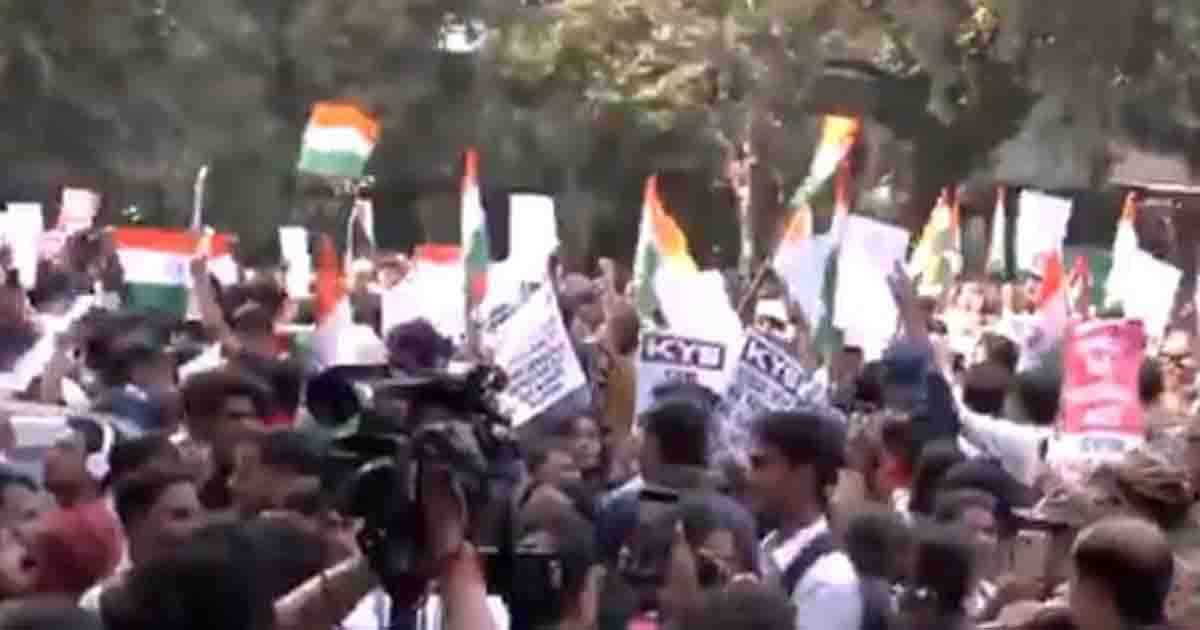
Several Left-Wing organisations, student leaders and civil society members on Friday took part in a protest march towards the Election Commission of India (ECI) headquarters in the national Capital amid heavy security, demanding the resignation of Chief Election Commissioner (CEC), Gyanesh Kumar, over alleged irregularities in the Special Intensive Revision (SIR) of electoral rolls.
The participants, including members of Left-Wing’s All India Students’ Federation (AISF) and All India Youth Federation (AIYF), gathered near Bangla Sahib Gurdwara at Delhi’s Connaught Place to march to the Election Commission’s headquarters near Patel Chowk.
CPI(M) leader Brinda Karat, CPI leader P Sandosh Kumar and political activist Yogendra Yadav also took part in the protest.
Speaking to reporters, Yadav said: “The protests will continue uninterrupted. If you shut down one Jantar Mantar, hundreds of Jantar Mantars will emerge. You may silence one person, but you cannot silence the people. This movement will continue in its own form because it is about the most basic democratic rights of the people of this country.”
P Sandosh added: “…We will intensify our movement in the coming days, and there will be larger gatherings. We will continue our agitation until the resignation of Mr. Gyanesh Kumar. No one can save him for sure.”
Heavy security deployment was also witnessed outside the ECI headquarters and several protesters were detained by the police.
Earlier in the day, the Delhi Traffic Police had advised commuters to avoid affected routes in view of the protest march.
In a post on ‘X’, the Delhi Traffic Police said: “In connection with the anticipated movement of a large number of people from Bangla Sahib Gurudwara towards Jantar Mantar today, traffic diversions will be in place from 1:00 P.M. to 5:00 P.M.”
“Commuters are advised to avoid affected roads, plan their journeys in advance and follow traffic police instructions,” it said.
Further, the Traffic Police appealed to motorists to remain patient, follow rules and cooperate with traffic personnel deployed in the area. “Please follow diversion signs and traffic directions to avoid congestion,” it said.
The protests demanding the resignation of CEC Kumar gained momentum following a media report claiming differences within the poll panel regarding procedures related to the SIR.
Earlier this month, the agitations against the CEC were led by the Opposition INDIA Bloc and the Cockroach Janta Party (CJP), leading to brief detentions of several leaders.
Meanwhile, the BJP has launched a nationwide campaign titled ‘Save democracy, remove anarchy’ to counter the Opposition’s criticism of the SIR.
National News
One killed as freight train hits pickup van at unmanned railway crossing in MP Anuppur
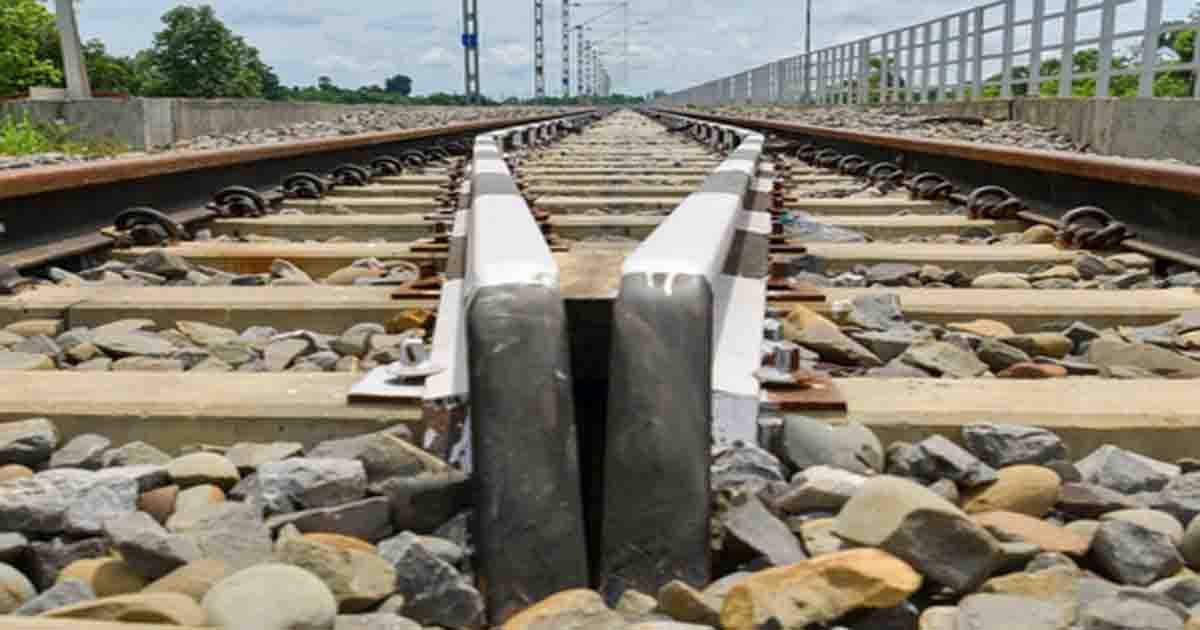
A 25-year-old man was killed, and six others were injured when a freight train collided with a pickup vehicle in Madhya Pradesh Anuppur district, officials said on Friday.
The incident happened late Thursday night, police said. The accident occurred near Sanjay Nagar Double Story in the Chachai police station area when the pickup, carrying seven people returning to their village after delivering DJ equipment, was hit by a train heading towards Sangwa siding to collect coal for the Amarkantak Thermal Power Plant.
The deceased, Ravi Barman, a resident of Chakethi village, was trapped inside the vehicle and died on the spot. The impact was so severe that his head was severed from his body. His body was later removed with the help of a JCB machine.
The six injured, including the pickup driver, were taken to the district hospital in Anuppur. They were later assured better treatment in Jabalpur.
The pickup driver said the crossing had neither a railway gate nor a gatekeeper. The injured were identified as Arjun Kol (17), Vikas Singh (22), Shivam Baig (18), Kanhaiya Verma (25), Karan Kol (19) and Rajesh Singh (26). All six are residents of Chakaithi village.
According to police, several occupants jumped out after seeing the approaching locomotive, but Ravi got trapped inside the vehicle and could not escape.
The locomotive pilot reportedly fled the spot, leaving the engine running.
The accident raised questions about safety arrangements along the railway line used for transporting coal.
Following the accident, Ravi’s family demanded compensation and a job for one of his brothers at the power plant.
After a meeting involving district and police officials, villagers and power plant representatives, assurances were given that compensation would be provided as per applicable rules, and a gate would be installed at the crossing.
Anuppur Sub-Divisional Officer of Police Sujit Kumar said the body would be sent for post-mortem examination, and an accidental death case would be registered. “Further action will be taken after the investigation,” he said.

In first X post Sonia Gandhi recalls how her love story with Rajiv Gandhi began in England

Action under the ‘Pedestrian First’ initiative by the ‘G-North’ ward of the Mumbai Municipal Corporation

ED files FIR, foils bid to trespass flat attached in extortion case against Dawood’s brother

ED attaches Rs 85.2 crore Kolkata land linked to Unity Infraprojects bank fraud case

Left parties, student groups march towards EC HQ, demand Gyanesh Kumar resignation

Rahul, Cong ecosystem want to force regime change: BJP after Neha Bora praises B’desh Gen-Z protest

BJP pays tribute to ex-President Abdul Kalam, recalls his enduring influence on generations of India’s youth

Attack on democratic rights: INDIA Bloc leaders on detentions of anti-ECI protestors

INDIA bloc begins protest march against ECI

Maha Congress stages agitation against Gyanesh Kumar
-

 Crime4 years ago
Class 10 student jumps to death in Jaipur
-

 Maharashtra2 years ago
Mumbai Local Train Update: Central Railway’s New Timetable Comes Into Effect; Check Full List Of Revised Timings & Stations
-

 Maharashtra2 years ago
Mumbai To Go Toll-Free Tonight! Maharashtra Govt Announces Complete Toll Waiver For Light Motor Vehicles At All 5 Entry Points Of City
-

 Maharashtra2 years ago
False photo of Imtiaz Jaleel’s rally, exposing the fooling conspiracy
-

 National News2 years ago
Ministry of Railways rolls out Special Drive 4.0 with focus on digitisation, cleanliness, inclusiveness and grievance redressal
-

 Maharashtra2 years ago
Maharashtra Elections 2024: Mumbai Metro & BEST Services Extended Till Midnight On Voting Day
-

 National News2 years ago
J&K: 4 Jawans Killed, 28 Injured After Bus Carrying BSF Personnel For Poll Duty Falls Into Gorge In Budgam; Terrifying Visuals Surface
-

 Crime2 years ago
Baba Siddique Murder: Mumbai Police Unable To Get Lawrence Bishnoi Custody Due To Home Ministry Order, Says Report