
International News
Singapore is invested in India’s ambition of Viksit Bharat, says President Shanmugaratnam on his state visit

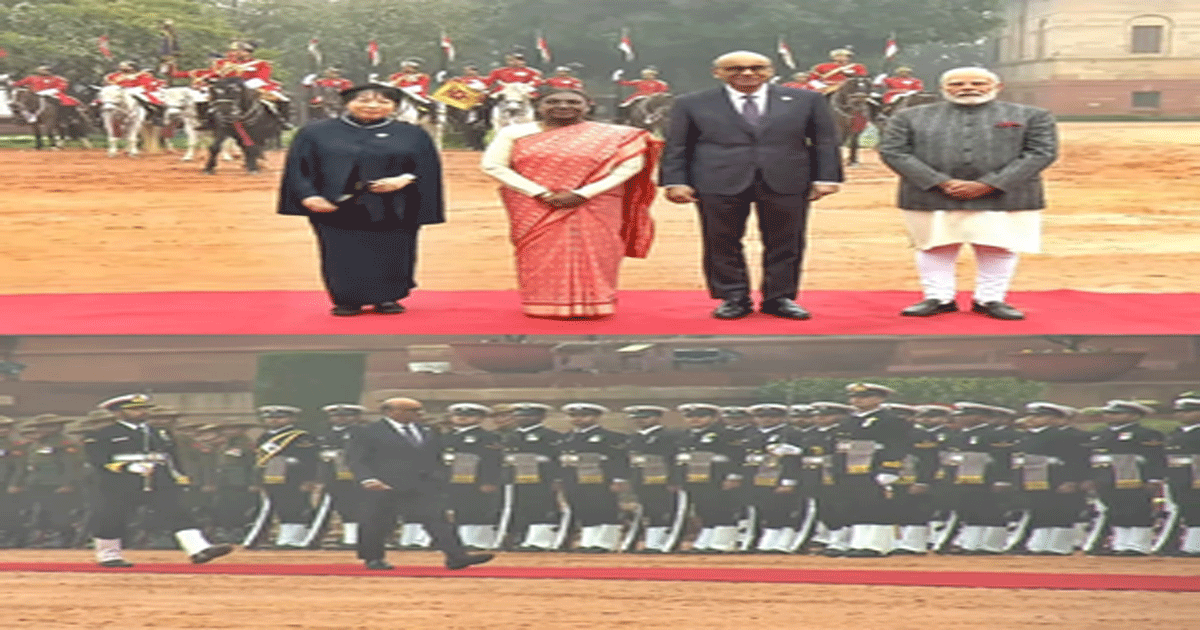
New Delhi, Jan 16: Singapore President Tharman Shanmugaratnam was given a ceremonial welcome at the Rashtrapati Bhavan on Thursday by President Droupadi Murmu and Prime Minister Narendra Modi, marking the beginning of his State Visit to India.
This visit, his first as President of Singapore, coincides with the 60th anniversary of diplomatic relations between the two nations.
Speaking to the reporters following his ceremonial welcome, the Singapore President said, “We will never forget that India was one of the first few countries to recognise Singapore’s independence in 1965, and since then, our relationship has grown by bounce. It is a natural partnership between small country Singapore and large country India, but we find ways to cooperate in our mutual interests.”
Stressing the bilateral ties between the two nations, he mentioned that Singapore is the largest investor in India, and the defence ties between the two nations are also strong, continuing to grow further.
“We are now on a new trajectory with India with the upgrade of our relations to a comprehensive strategic partnership, which was announced during Prime Minister Modi’s visit to Singapore in September last year. We are exploring new initiatives going beyond the existing very active relationship that we have. We are working on cooperating in advanced manufacturing and semiconductors, new generation and net zero industrial parks, as well as on the skilling of the new industries that are involved,” he mentioned.
Stating the Indian and Singapore leaders “see eye-to-eye,” Shanmugaratnam also stated that both countries are working together in the field of digitalisation and sustainability.
“Singapore is invested in India’s ambition to be a developed country –Viksit Bharat 2047,” he added.
Tharman arrived in New Delhi on Tuesday evening and engaged in high-level discussions on Wednesday.
External Affairs Minister S. Jaishankar met the visiting President to discuss key areas of bilateral cooperation, including semiconductors, industrial parks, skilling, digitalisation, and trade development.
“Delighted to call on President Tharman Shanmugaratnam of Singapore today. Discussed our cooperation in semiconductors, industrial parks, skilling, digitalisation, and trade development. Confident that his State visit will add new momentum to our comprehensive strategic partnership,” Jaishankar shared on X after the meeting.
Accompanied by a high-level delegation of ministers, parliament members, and officials, the Singapore President is scheduled to hold bilateral meetings with President Murmu and Prime Minister Modi later in the day. Following his engagements in New Delhi, he will visit Odisha on January 17-18.
The Ministry of External Affairs highlighted the robust relationship between the two countries, emphasising that it is rooted in friendship, trust, and mutual respect. The ties were elevated to a Comprehensive Strategic Partnership during Prime Minister Modi’s visit to Singapore in September 2024.
Prime Minister Modi had previously acknowledged the strength of bilateral cooperation in various sectors during his visit to Singapore. He noted the potential for further collaboration, particularly in areas like social and digital investments and India’s emergence as a leading global growth centre.
President Tharman’s visit is expected to strengthen the Comprehensive Strategic Partnership, fostering deeper collaboration in key areas of mutual interest.


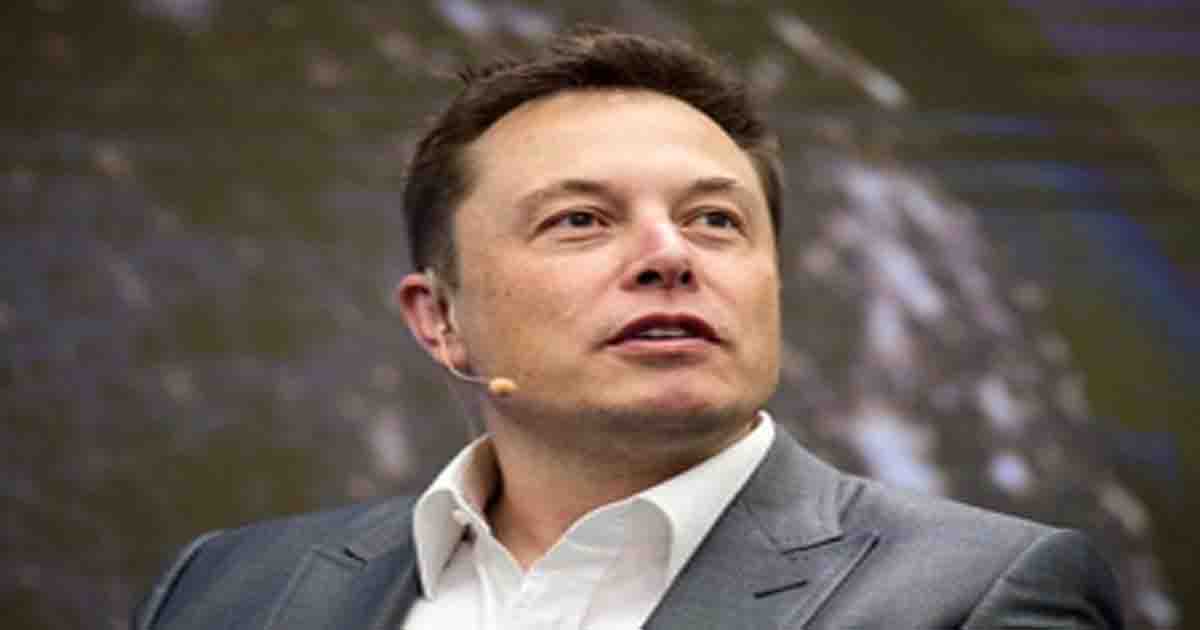
Washington, Oct 10: Ashley St. Clair, the mother of one of billionaire Elon Musk’s children, has alleged that she was offered a financial arrangement worth nearly $40 million in exchange for remaining silent about their relationship, a claim Musk has publicly denied.
In an interview published by The New York Times on Friday, St. Clair, a former conservative social media influencer, said she rejected a proposed nondisclosure agreement because it would have prevented her from discussing Musk and their relationship indefinitely.
The proposed arrangement included a $15 million lump-sum payment and $100,000 a month for 21 years, according to St. Clair. Together, those amounts would total $40.2 million.
Musk disputed the allegation after an earlier report about the proposed agreement.
“She was never offered that and has a history of making false claims,” Musk wrote on X, according to the newspaper.
St. Clair, who gave birth to a child in 2024, said the proposed confidentiality agreement was sent to her two months after childbirth by Jared Birchall, Musk’s financial manager.
She alleged that the document was transmitted through Signal, an encrypted messaging application, and would have restricted her ability to discuss the relationship even with members of her family.
According to St. Clair, the restrictions would also have extended to her heirs.
She said she rejected the agreement because she considered the proposed conditions unacceptable, particularly where they concerned her children.
The newspaper reported that Musk did not respond to its requests for comment on the interview.
St. Clair’s account comes as she appears in “Musk,” a nearly four-hour documentary directed by Oscar-winning filmmaker Alex Gibney examining the technology entrepreneur’s personal life, business interests and public influence.
The former influencer told the newspaper that her decision to participate in the documentary was partly motivated by concerns about the influence of wealth and power.
She said she had become increasingly uncomfortable with the expectation that people should trust powerful individuals simply because of their financial success.
St. Clair described meeting Musk in 2023 after he contacted her through Twitter, now known as X, where she had developed a following by promoting conservative political positions.
At the time, she was working for the conservative satirical publication The Babylon Bee and raising a child from an earlier relationship.
She said the two began communicating regularly and subsequently developed a personal relationship.
During a trip to St. Barts in January 2024, Musk raised the possibility of having a child together, according to her account.
St. Clair said she initially viewed the relationship positively but became concerned after learning more about Musk’s custody dispute with musician Grimes, with whom he shares three children.
She also described becoming increasingly disillusioned with the political movement surrounding President Donald Trump, which she had previously supported.
In the interview, St. Clair acknowledged having promoted political positions and rhetoric that she now regrets, including commentary concerning race, gender and transgender people.
She said her changing views developed gradually and were not solely the result of her personal dispute with Musk.
Musk has criticised Gibney’s documentary, accusing the filmmaker of assembling accounts from people with grievances against him or little personal knowledge of him.
The allegations surrounding the proposed financial agreement remain disputed, and the interview does not establish that Musk personally authorised the terms described by St. Clair.
Musk is the chief executive of Tesla and SpaceX and the owner of X. His business interests span electric vehicles, space exploration, artificial intelligence and digital communications, giving him a prominent role in American technology and public affairs.

Kathmandu, Oct 9: At least five people were killed when a school bus plunged off the road in Nepal’s western city of Pokhara early Friday morning, a senior police officer said.
The bus belonging to Kalika English Boarding School skidded off the road at Okhleko Bhir in Ward No. 28 of Pokhara Metropolitan City, Kaski district, at around 6:20 a.m., according to Nepali authorities.
“At least five people have been confirmed dead,” Superintendent of Police Naveen Karki, chief of the District Police Office, Kaski, told media. “We have learned that there were 17 students, one other passenger and a driver on the bus when the accident occurred.”
Police said the cause of the accident was not immediately known.
Kaski Chief District Officer Kuman Singh Gurung said the bus was carrying mostly Grade 10 students who were travelling to attend tuition classes when the accident occurred.
Nepal has witnessed a rise in road accidents in recent years, alongside an increase in the number of vehicles on its roads. A decade ago, the Nepal Traffic Police reported 4,999 road accidents.
In fiscal year 2024-25, the country recorded 7,669 road accidents and 1,900 deaths, according to official data.
Of the total accidents, 278 were classified as serious. Beyond the significant human toll, road safety issues also have a major economic impact.
A World Bank study in Nepal found that the economic cost of road traffic injuries had tripled since 2007, reaching 1.5 percent of the country’s gross national product. Road crashes also have a devastating and disproportionate impact on poor people.
More than 70 percent of all road fatalities in Nepal involve vulnerable road users, such as pedestrians, cyclists and motorcyclists, the World Bank said. Considering the growing number of road accidents, the Nepali government has introduced the Road Safety Bill at the House of Representatives which aims to improve coordination among agencies involved in road safety, prevent and reduce road accidents, strengthen monitoring and evaluation, and reduce the human and economic losses caused by accidents.
The bill includes provisions on institutional arrangements for road safety, provincial and local road safety coordination committees, safe road infrastructure, safer vehicles and transport services, speed regulation, road-user safety and awareness, accident rescue and treatment, insurance, and compensation.
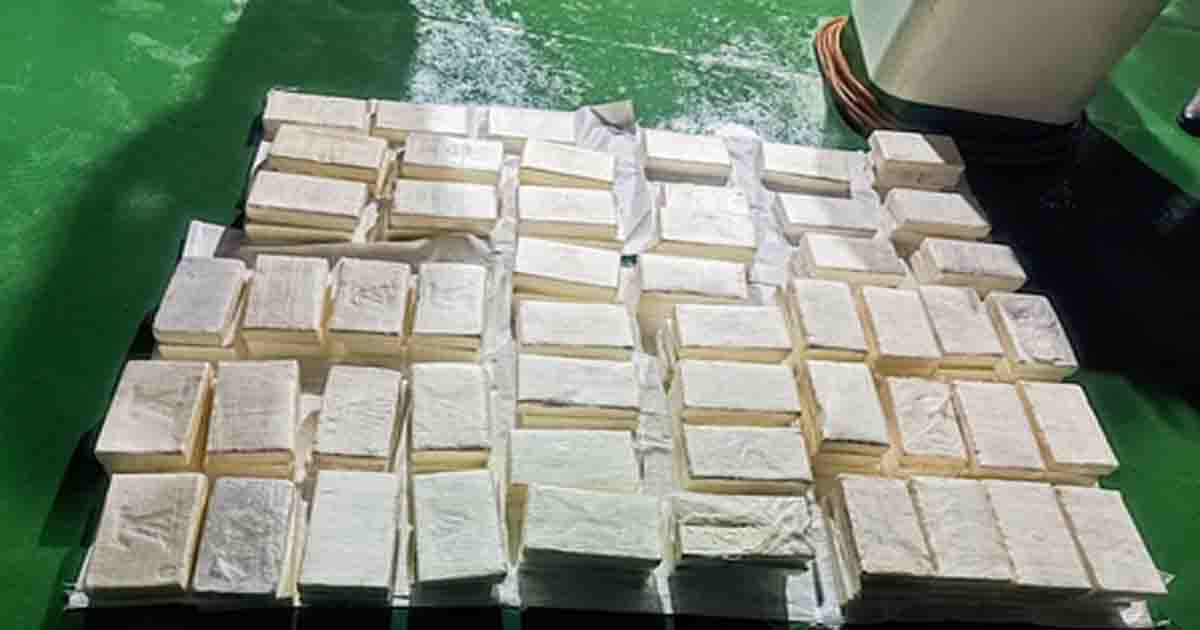
New Delhi, Oct 9: Pakistan-based narcotic cartels are now encouraging their cronies in India to ramp up homegrown production. With agencies such as the Narcotics Control Bureau (NCB) carrying out several drug busts, the cartels from Pakistan have decided to focus more on home-made substances to fuel their trade.
Before the Taliban took control of Afghanistan, poppy fields were in abundance. Opium and heroin were coming out of Afghanistan in large quantities, and Pakistan-based cartels would rely heavily on this product.
The Taliban have taken strict measures and ensured that Afghanistan shall no longer have drug-producing fields. Instead, in the fields of Afghanistan, one gets to see potatoes, grain, and other vegetables being grown.
This decision has resulted in a drop of 95 per cent in the production of drugs. Before the Taliban took over, drugs were being produced or grown on 232,000 hectares.
Following the ban in 2022, Pakistan- and Myanmar-based drug cartels began moving towards synthetic drugs. Drugs such as methamphetamine or meth are in very high demand both in the Indian and international markets.
Unlike opium and heroin, meth can be produced all through the year. This means that the production levels would be ten times higher when compared to heroin or opium. Further, this also ensures that synthetic drugs are cheaper when compared to the field-produced narcotics.
This also drives consumption, as the affordability of such narcotics makes them accessible to a wider section of society.
An Intelligence Bureau official said that drug cartels which had set up massive synthetic drug manufacturing units in Myanmar and Pakistan are now insisting that their recruits in India do the same at home.
“This has been done due to the massive drug busts that have taken place in India in recent months. The new tactic by the narcotic cartels is similar to the one that Pakistan tries to adopt when it comes to terror-related activities,” said the IB official.
There is a major push being made for homegrown terror modules so that Pakistan can have the deniability factor each time a bust takes place, the official added.
Another official said that the creation of multiple homegrown synthetic drug producing units also eliminates the risk of the contraband being intercepted either on Indian or international waters.
The Indian agencies have literally choked every route that is being used by cartels run by the likes of Dawood Ibrahim and Haji Salim.
The Iran war has added to their miseries as the usual routes that would be used to smuggle drugs into India have largely been disrupted.
In 2024, the NCB and Delhi Police busted a clandestine meth lab in Greater Noida, adjacent to the National Capital. During the operation, the NCB seized 95 kg of meth.
Officials say that the cartels would push and also facilitate the setting up of such homegrown drug-producing units in many more parts of the country.
“There is a lot of focus being given to both Tamil Nadu and Kerala. The recent drug busts have affected the southern markets and also the supplies into Sri Lanka and eventually Thailand,” officials say.
The intelligence agencies have learnt that Haji Salim, who controls this route, has been dialling his contacts in Sri Lanka, Kerala and the Maldives. He is also in touch with some of his associates who are behind bars now, the agencies have learnt.
Haji Salim has been instructing them to make all possible arrangements to set up clandestine meth-producing labs in large numbers.
These recent drug busts, which directly affected the southern markets and the other routes leading from there, have put Haji Salim under immense pressure, especially from his international dealers. He feels that ramping up homegrown production will make up for the loss.
Moreover, transporting homegrown drugs is easier than smuggling them in from Pakistan and then through the Indian waters. This, he hopes, would solve the problem, and in case of a bust, Pakistan can always deny any involvement, an official said.

CJP stir: Around 1,000 detained across Delhi

CJP founder Abhijeet Dipke grandmother passes away in Maharashtra

Shehnaaz Gill recalls Mahhi Vij giving her clothes during tough times, calls her ‘pure and clean-hearted’

Sanjay Raut predicts ‘major political upheaval’, says Centre fears protesters

Saira Banu recalls Dilip Kumar drying Nana Patekar hair after he arrived home drenched in rain post ‘Krantiveer’ National Award win

Gift to President Putin part of PM Modi bid to globally display India’s heritage

PM Modi’s warm camaraderie with Putin, Xi on full display at BRICS Summit

INDIA bloc begins protest march against ECI

Complaint against Netflix & Mukesh Chhabra for inappropriate language on ‘India’s Got Latent 2’

Maha Congress stages agitation against Gyanesh Kumar
-

 Crime4 years ago
Class 10 student jumps to death in Jaipur
-

 Maharashtra2 years ago
Mumbai Local Train Update: Central Railway’s New Timetable Comes Into Effect; Check Full List Of Revised Timings & Stations
-

 Maharashtra2 years ago
Mumbai To Go Toll-Free Tonight! Maharashtra Govt Announces Complete Toll Waiver For Light Motor Vehicles At All 5 Entry Points Of City
-

 Maharashtra2 years ago
False photo of Imtiaz Jaleel’s rally, exposing the fooling conspiracy
-

 National News2 years ago
Ministry of Railways rolls out Special Drive 4.0 with focus on digitisation, cleanliness, inclusiveness and grievance redressal
-

 Maharashtra2 years ago
Maharashtra Elections 2024: Mumbai Metro & BEST Services Extended Till Midnight On Voting Day
-

 National News2 years ago
J&K: 4 Jawans Killed, 28 Injured After Bus Carrying BSF Personnel For Poll Duty Falls Into Gorge In Budgam; Terrifying Visuals Surface
-

 Crime2 years ago
Baba Siddique Murder: Mumbai Police Unable To Get Lawrence Bishnoi Custody Due To Home Ministry Order, Says Report