
Maharashtra
Shiv Sena UBT criticises silence on Ram Mandir irregularities and NEET paper leak ‘scam’

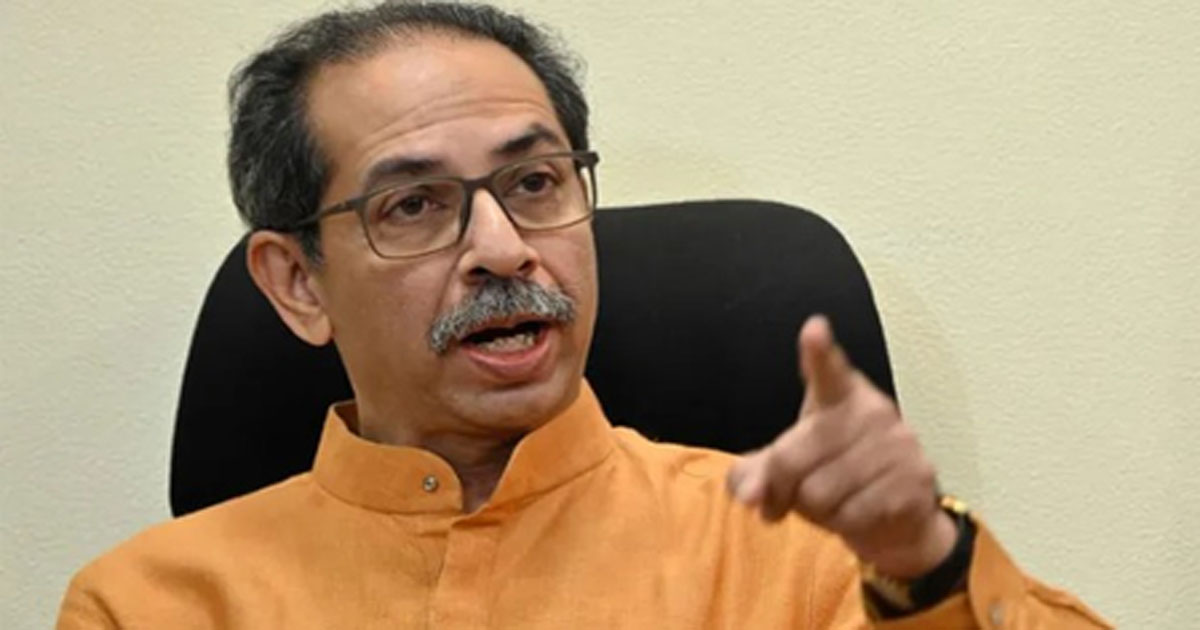
Mumbai, June 27: The Shiv Sena Uddhav Balasaheb Thackeray on Saturday accused the ruling political leadership and Hindutva outfit ‘Sakal Hindu Samaj’ of maintaining a hypocritical silence over the alleged theft and financial irregularities at the Ayodhya Ram Mandir and the NEET paper leak scandal.
It has questioned why organisations that frequently take to the streets over issues like ‘Love Jihad,’ religious conversions, and cow slaughter have remained completely passive when major irregularities involve individuals within their own ideological fold.
The Thackeray camp in the scathing editorial of party mouthpiece Saamana claimed that The Sakal Hindu Samaj is sleeping like Kumbhakarna.” It taunted, “while a restless Lord Ram and his family have, once again, departed for exile.”
The editorial highlighted recent revelations concerning the “loot” of donations, collection boxes, and silver items at the Ayodhya Ram Mandir. It pointed out that while a Special Investigation Team (SIT) was formed and cases were registered against eight individuals, the main suspects, including Champat Rai and other trustees, were allegedly shielded by the government.
“In Ayodhya, individuals linked to the temple and the BJP bought lands at throwaway prices and later sold them back to the Ram Mandir Trust at inflated rates. AAP MP Sanjay Singh provided evidence to the SIT, but it wasn’t investigated. Now, minor figures like Tinnu Yadav and Anukalp Mishra have been arrested by the UP government,” said the editorial.
Taking a sarcastic swipe at the political ecosystem, the editorial suggested that the ‘Sakal Hindu Samaj’ and top BJP leaders only raise a “loud voice for Hindutva” if a Muslim name is involved.
“Should someone spread a rumour that Tinnu and Mishra are actually Muslims operating under fake Hindu names just to wake up the Sakal Hindu Samaj?” the editorial asked sharply, adding that because the accused are Hindu, these organisations have “closed their eyes and mouths.”
The Thackeray camp expanded its criticism beyond Ayodhya, linking the silence of these pro-Hindutva groups to the massive NEET-UG examination paper leak scandal.
The editorial said that Maharashtra emerged as a major hub for the paper leak, with eight to ten individuals and a coaching class owner arrested. It underscored that these accused individuals possess strong Hindutva and BJP connections, saying that the scam has devastated the lives of thousands of Hindu children, driving some to suicide, yet the ‘Sakal Hindu Samaj’ has failed to hit the streets to protect the interests of these youths.
The editorial further highlighted instances of political compromise and corruption that went unprotested. It claimed that BJP leader Suvendu Adhikari stated that cows older than 14 years could be slaughtered, yet no Hindutva outfits organised protest marches in West Bengal against this stance. It alleged financial mismanagement and “loot” at the holy Mahakal Temple in Ujjain under the BJP-led state government, noting that leaders have remained quiet.
The Uddhav Thackeray-led Shiv Sena argued that the Ram Mandir awakened Hindutva and served as the political launchpad for the current leadership, yet the deity’s own temple is now being plundered.

Maharashtra
CM Fadnavis criticises protesters for targeting constitutional bodies; backs CJI’s stance

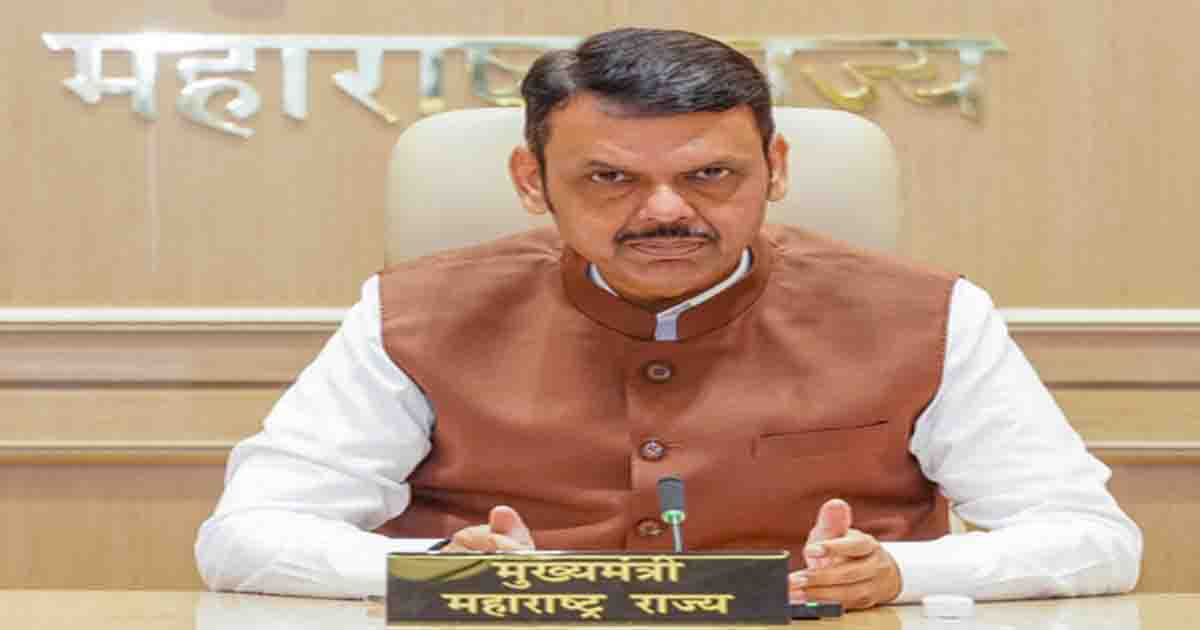
Mumbai, Oct 12: Maharashtra Chief Minister Devendra Fadnavis on Monday launched a scathing attack on the opposition and activist groups, defending Chief Justice of India (CJI) Surya Kant’s decision to decline a meeting with protesters.
Speaking during a media interaction, he accused opposition parties and outfits of running a systematic design to undermine India’s core constitutional institutions and usher in an “ultra-Leftist” brand of anarchy.
Defending the CJI’s refusal to meet demonstrators, CM Fadnavis asked, “Which Constitution states that the Chief Justice of India should meet protesters and marchers?” He emphasised that the CJI acted well within his constitutional rights and praised the judiciary’s stance that grievances must be legally addressed inside courtrooms rather than through street pressure.
CM Fadnavis alleged that a well-crafted conspiracy is underway to systematically devalue independent pillars of democracy, such as the Supreme Court, the Election Commission, and the Reserve Bank of India (RBI). He noted that the ultimate goal of these groups is to convince citizens that constitutional frameworks cannot deliver justice.
Commenting on recent demonstrations, including those by the Congress and civil groups, CM Fadnavis distinguished between lawful democratic protest and chaos. Pointing to instances where crowds allegedly crossed the line with provocative sloganeering, he asserted that when thousands with criminal records mobilise to disrupt public order, it amounts to outright anarchy rather than peaceful dissent.
Addressing reports that certain protesters praised his governance style as “soft-hearted” to allow demonstrations, he dismissed the remarks as a tactical ploy. He stated he is not easily swayed by opportunistic flattery, pointing out that the intent behind such praise was merely a convenient vehicle to target higher offices.
Contrasting the current protests with constructive democratic engagement, CM Fadnavis highlighted his administration’s willingness to engage in dialogue with anyone — reiterating that even violent insurgent elements like Naxalites have been approached with attempts at reform and persuasion through democratic channels, rather than enabling lawlessness under the guise of activism.
CM Fadnavis’ comment comes after BJP National President Nitin Nabin targeted Opposition parties and youth groups leading protests in the national capital over electoral roll revisions and the Chief Election Commissioner’s accountability.
Nabin accused the INDIA bloc and youth organisations (such as the Cockroach Janta Party) of attempting to “destabilise the nation” after being rejected by voters in democratic elections. He alleged that the ongoing protests were being driven at the behest of “foreign forces” seeking to undermine domestic peace and economic development.
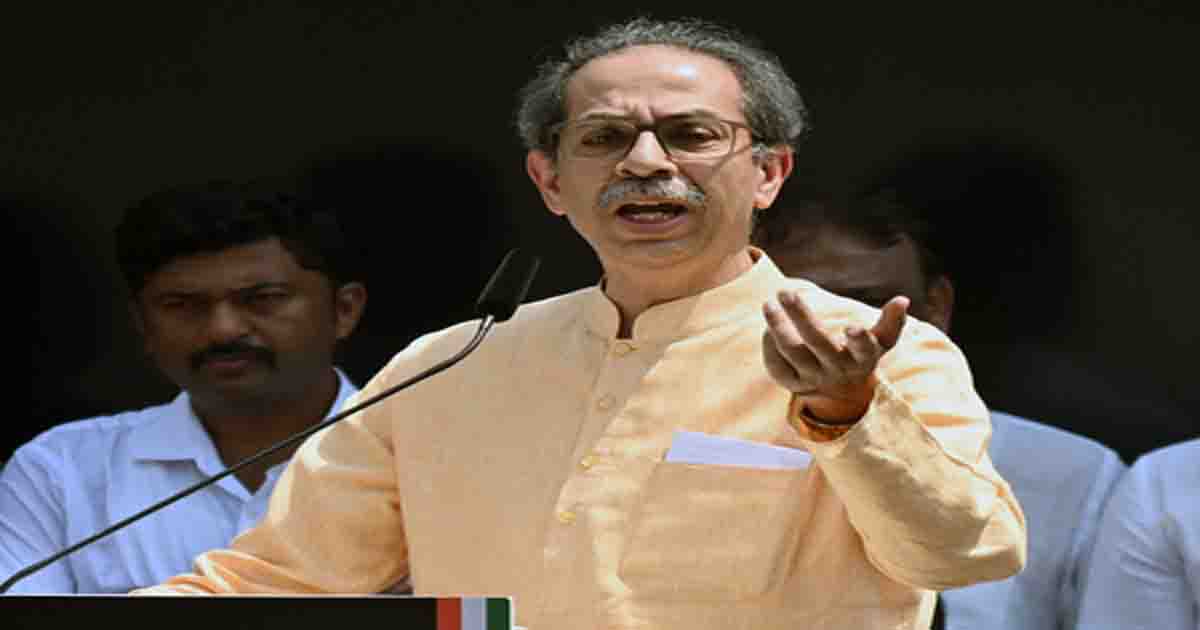
Mumbai, Oct 12: The Shiv Sena Uddhav Balasaheb Thackeray on Monday accused the Central government of resorting to “cowardly” dictatorial tactics to crush “widespread” anti-government demonstrations across the country.
Its criticism comes in the wake of a security clampdown in the national capital and Mumbai on October 10, during which thousands of protesters, student activists, and key opposition figures were detained.
The Thackeray camp in the party’s mouthpiece, ‘Saamana’, said that the Central government deployed armed security personnel — recalled from anti-terror and anti-Naxalite operations in regions such as Chhattisgarh, Jharkhand, Jammu & Kashmir, and Manipur — to enforce an unprecedented blockade across Delhi.
Access routes and alleys across the national capital were sealed, while an estimated force of nearly 1,00,000 armed personnel surrounded the residence of Union Home Minister Amit Shah on Krishna Menon Road. The aggressive security grid disrupted public infrastructure, shutting down internet services, metro transit, local bus networks, incoming long-distance trains and commercial flights. Police reportedly boarded an aircraft to detain key political leaders, including Dipankar Bhattacharya and Manoj Jha, claimed the editorial.
Despite the widespread logistical shutdown, large crowds of students and civil society members reached protest venues in Delhi. During the crackdown, police arrested former Chief Ministers, including former West Bengal CM Mamata Banerjee and AAP convener Arvind Kejriwal, the editorial stated.
In Mumbai, police detained Tushar Gandhi, the great-grandson of Mahatma Gandhi, as he attempted to lead a peaceful satyagraha towards August Kranti Maidan. The action drew immediate resistance from opposition leaders, with Shiv Sena(UBT) leader Aaditya Thackeray and party workers marching to the DN Nagar police station to demand his immediate release, the editorial said.
The editorial highlighted growing international scrutiny over India’s internal security operations. The United Nations Human Rights Office expressed deep concern over the arbitrary detentions, the heavy-handed police conduct, and reports of female demonstrators being dragged into prison vans and taken to undisclosed locations. The UN urged Indian authorities to uphold the fundamental right to peaceful assembly and release all arbitrarily detained citizens. In addition, global news outlets, including The New York Times and major London dailies, featured photos of the crackdown, observing that Indian democracy faces a severe crisis.
Rebutting statements from BJP leaders and state media portraying the demonstrations as a “flop show”, the Thackeray camp asserted that the government’s panicked reliance on iron-fisted policing demonstrated its underlying vulnerability.
The editorial alleged a decade-long pattern of public harassment, treasury exploitation, and electoral manipulation. “When a dictator is afraid, the demon within him builds armed steel walls for self-protection, but these walls are inevitably destroyed by the rebellion of the people,” the editorial declared, claiming that public outrage over governance issues has reached a tipping point.
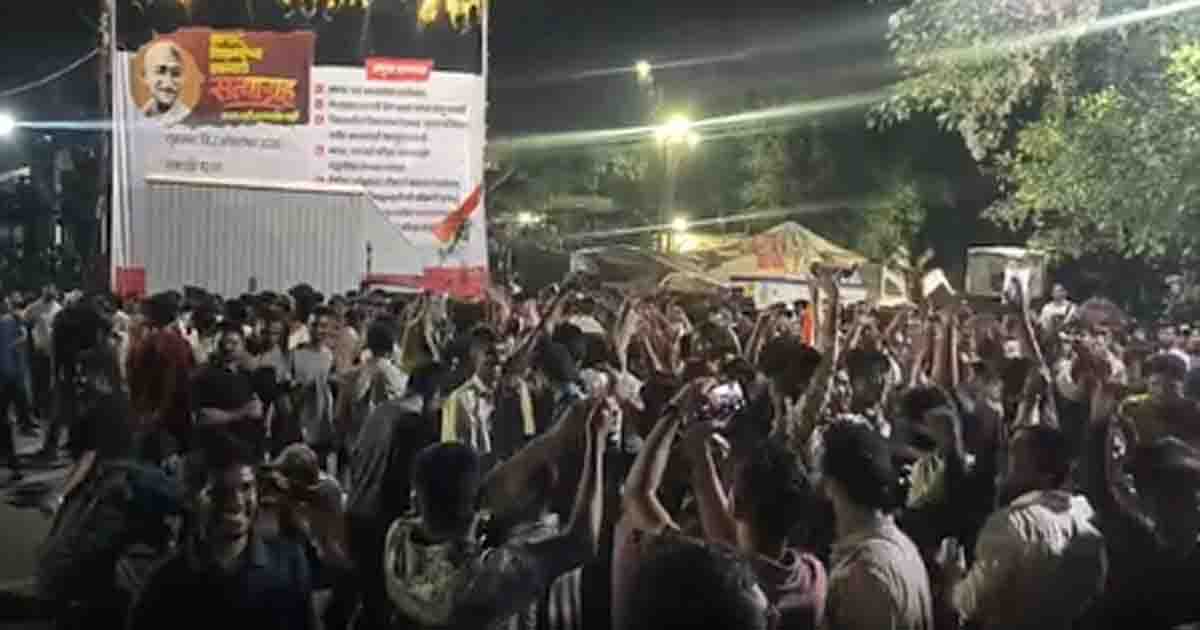
Mumbai/Pune, Oct 12: In a major development surrounding the alleged Maharashtra Public Service Commission paper leak controversy, MPSC Chairman Vivek Bhimanwar has announced his decision to proceed on leave until the state-ordered judicial inquiry into the matter is completed.
The decision came around 1.24 a.m. on Monday, after the Maharashtra government, late Sunday night, constituted an inquiry panel. It appointed senior IAS officer Tukaram Mundhe as its Secretary to thoroughly overhaul the Commission’s examination processes and investigate allegations of paper leaks and administrative irregularities.
Following these dual announcements, competitive exam aspirants in Pune called off their 11-day-long street protest.
In his post on X, MPSC Chairman Vivek Bhimanwar emphasised his commitment to transparency and administrative integrity. “The state government has announced a judicial inquiry into the MPSC paper leak case. Throughout my entire life, I have always prioritised ethics. Therefore, I have decided to go on leave during this period instead of continuing to serve in the post until this inquiry is completed. The autonomy, credibility, and interests of students of the MPSC have always been my priority, and they will continue to be so in the future. Jai Hind! Jai Maharashtra,” he said.
The decision came following a marathon midnight meeting between state Public Works Minister Shivendra Raje Bhosale, political leaders, and a delegation of protesting students. In a gesture of goodwill after the breakthrough, the protesting aspirants applauded and expressed gratitude to the police officers deployed at the site.
Minister Shivendra Raje Bhosale, along with leaders like MLAs Rohit Pawar and Vishwajeet Kadam, held extensive positive discussions with the students, assuring them that the state stands with them.
To address systemic flaws and recommend comprehensive administrative reforms in the MPSC, the state government has proposed a high-level inquiry and review committee headed by former Chief Justice of the Bombay High Court, Justice Dilip Bhosale.
The Committee’s members include Former Justice P.D. Naik, Senior Administrative Officer Tukaram Mundhe (who will also serve as the Committee Secretary), Retired Secretary Ganesh Patil and Inspector General of Police Lakhmi Gautam. The committee has been tasked with studying structural flaws in MPSC operations and submitting a detailed reform report within two months.
Thousands of competitive exam candidates, under the banner of various student rights organisations, had been staging demonstrations near Navi Peth and SM Joshi Bridge in Pune for over a week.
With the government conceding to key demands, including setting up an independent probe and the step-down of top leadership, the agitators announced late Sunday that the protest stands temporarily suspended.
NCP(SP) MLA Rohit Pawar, who participated in the protest alongside the students, welcomed the government’s concessions. While maintaining that the primary demand was the Chairman’s resignation, he stated that the government ultimately met the core demands and successfully established a high-level committee to overhaul the commission.
Speaking to the media, Rohit Pawar remarked, “Although it was delayed, the government has accepted the students’ demands. While our primary demand was a resignation, keeping the students’ examinations in mind, we decided to suspend the agitation. This victory belongs to the unity of the students.”
He also announced that he will now proceed on a tour of drought-affected regions in Vidarbha.
Rohit Pawar acknowledged that while the government did not force an immediate resignation — sending Chairman Vivek Bhimanwar on leave instead — they stepped back significantly to meet the students’ grievances. “The children took one step back, but the government took ten steps back,” he noted.
He praised the unprecedented solidarity shown by aspirants in Pune, alongside leaders and supporters like Pramod Patil, who backed the movement. He emphasised that the administration has been given a strict timeframe to implement improvements, warning that accountability will remain a priority.

Jantar Mantar de-notified as ‘designated’ protest site; three new venues allocated

BJP Mahila Morcha protests at Cong HQs over sexual harassment row involving MP Bimol Akoijam

Sunny Deol dons a never-seen-before rugged avatar in the first look of ‘Suryaa’

CM Fadnavis criticises protesters for targeting constitutional bodies; backs CJI’s stance

Shiv Sena(UBT) condemns crackdown on anti-govt protests in ‘Saamana’

Gift to President Putin part of PM Modi bid to globally display India’s heritage

PM Modi’s warm camaraderie with Putin, Xi on full display at BRICS Summit

INDIA bloc begins protest march against ECI

Complaint against Netflix & Mukesh Chhabra for inappropriate language on ‘India’s Got Latent 2’

Maha Congress stages agitation against Gyanesh Kumar
-

 Crime4 years ago
Class 10 student jumps to death in Jaipur
-

 Maharashtra2 years ago
Mumbai Local Train Update: Central Railway’s New Timetable Comes Into Effect; Check Full List Of Revised Timings & Stations
-

 Maharashtra2 years ago
Mumbai To Go Toll-Free Tonight! Maharashtra Govt Announces Complete Toll Waiver For Light Motor Vehicles At All 5 Entry Points Of City
-

 Maharashtra2 years ago
False photo of Imtiaz Jaleel’s rally, exposing the fooling conspiracy
-

 National News2 years ago
Ministry of Railways rolls out Special Drive 4.0 with focus on digitisation, cleanliness, inclusiveness and grievance redressal
-

 Maharashtra2 years ago
Maharashtra Elections 2024: Mumbai Metro & BEST Services Extended Till Midnight On Voting Day
-

 National News2 years ago
J&K: 4 Jawans Killed, 28 Injured After Bus Carrying BSF Personnel For Poll Duty Falls Into Gorge In Budgam; Terrifying Visuals Surface
-

 Crime2 years ago
Baba Siddique Murder: Mumbai Police Unable To Get Lawrence Bishnoi Custody Due To Home Ministry Order, Says Report