
Business
Sensex, Nifty open lower amid mixed global cues

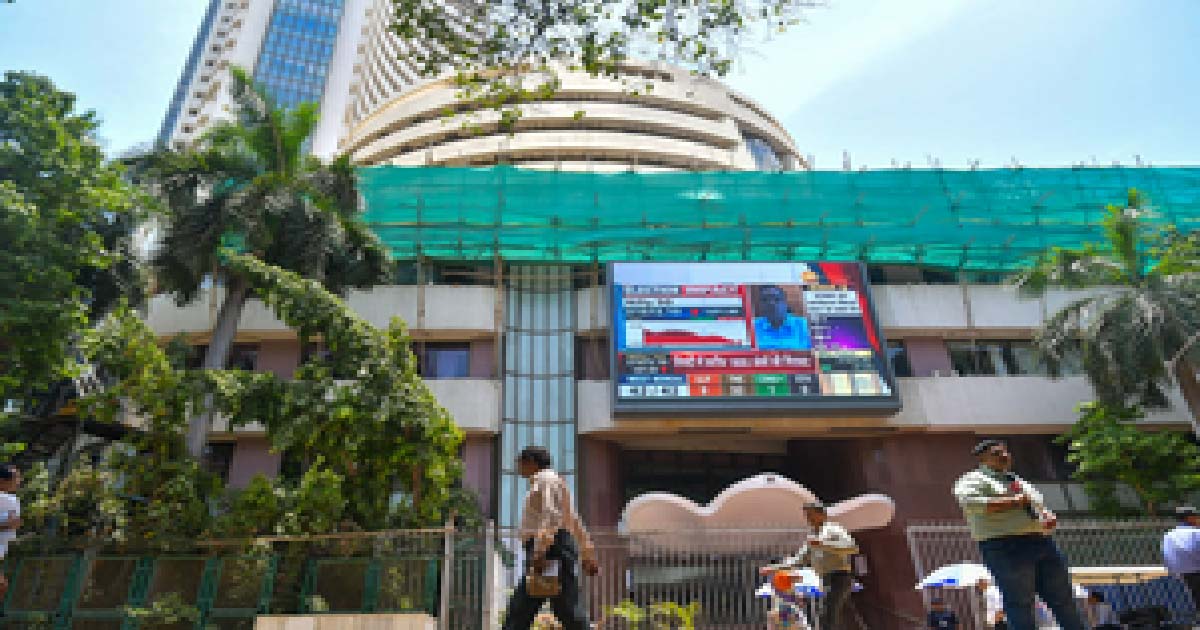
Mumbai, Nov 11: The Indian benchmark indices opened mildly in red on Tuesday, amid progress on the US shutdown bill and optimism regarding an India-US trade deal soon.
As of 9.25 am, the Sensex was down 177 points, or 0.21 per cent at 85,338 and the Nifty inched down 51 points, or 0.20 per cent to 25,523.
The broadcap indices performed better than benchmarks, with the Nifty Midcap 100 down only 0.09 per cent and the Nifty Smallcap 100 losing 0.06 per cent.
TCS, Tech Mahindra and Dr Reddy’s Labs were among the major gainers in the Nifty Pack, while losers included Bajaj Finance, Bajaj Finserv, Shriram Finance and Asian Paints.
Sectoral indices were trading mixed with most of them trading with mild negative bias. Nifty IT was the standout gainer up 0.31 per cent, while financial services, FMCG, Pharma and PSU Bank down 0.71 per cent, 0.49 per cent, 0.16 per cent and 0.57 per cent respectively.
“Nasdaq bounced back 2.2 per cent after the AI trade was weak last week. The return from AI stocks may take longer than expected, but there is no bubble in AI stocks, unlike the Tech bubble that crashed in 2000,” said market watchers.
They noted that Nasdaq PE was above 70 and many tech stocks were above 150 in March 2000, and AI stock PE valuations now range from 28 to 51, while Nasdaq’s PE is 32.
Most of the Asia-Pacific markets rose in early trading sessions on Tuesday tracking Wall Street gains on revived optimism regarding artificial intelligence stocks.
The US markets ended in the green zone overnight, as Nasdaq jumped 2.27 per cent, the S&P 500 added 1.54 per cent, and the Dow inched up 0.81 per cent.
In Asian markets, China’s Shanghai index lost 0.46 per cent, and Shenzhen dipped 0.67 per cent, Japan’s Nikkei added 0.43 per cent, while Hong Kong’s Hang Seng Index eased 0.29 per cent. South Korea’s Kospi jumped 1.38 per cent.
On Monday, foreign institutional investors (FIIs) sold equities worth Rs 4,889 crore, while domestic institutional investors (DIIs) were net buyers of equities worth Rs 1,787 crore.



New Delhi, April 8: Global crude oil prices on Wednesday plunged sharply up to 20 per cent, after US President Donald Trump announced a two-week ceasefire with Iran that includes a pledge to restore navigation through the Strait of Hormuz — the narrow waterway at the heart of the world’s most acute energy crisis in decades.
The international benchmark Brent crude futures shed nearly 16 per cent or $17.39 to $91.88, hitting an intraday low, while US WTI crude declined almost 20 per cent or $21.90 to $91.05.
The Strait of Hormuz, through which roughly a fifth of global oil flows, has been at the centre of the conflict. Iran had restricted passage for several weeks, contributing to rising prices and supply concerns. Markets had been on edge ahead of Trump’s deadline for Iran to reach a deal, with traders fearing a major escalation could disrupt shipments across the Gulf and send prices sharply higher.
Oil prices had surged in recent weeks amid fears that the strait could be closed or severely restricted. The waterway handles shipments critical to global supply chains, including crude oil and liquefied natural gas.
The US-Israel-Iran conflict has been paused for two weeks after approximately 40 days of hostilities that began in February.
President Trump’s shift in stance came just ahead of his stated deadline for Iran to reopen the Strait of Hormuz or risk extensive strikes on its civilian infrastructure.
Meanwhile, Iran indicated it would halt its military operations provided attacks against it ceased simultaneously. Foreign Minister Abbas Araghchi, in a formal statement, confirmed that safe passage through the Strait of Hormuz would be ensured for two weeks in coordination with Iranian armed forces.
The conflict had triggered an unprecedented surge in oil prices in March, with gains exceeding 60 per cent during the period.
Additionally, Indian equity benchmarks also rallied sharply on the development, trading more than 3 per cent higher in early trade. The Sensex jumped nearly 4 per cent, while the Nifty surged 3.5 per cent to their respective intraday highs.
Business
Employees’ body to meet on April 13 as Central govt staff keen on 8th Pay Commission decisions


New Delhi, April 7: Millions of Central government employees and pensioners await the outcome of the drafting committee of the National Council (Joint Consultative Machinery) on April 13 to get cues on the 8th Pay Commission salary revision, a report said on Tuesday.
The drafting committee meeting scheduled for 11:00 am at the JP Choubey Memorial Library (AIRF office premises) here will review a final common memorandum and discuss pay scale revisions, annual increments, allowances and other benefits, the report from NDTV Profit said.
“The April 13 meeting is in continuation of the March 12, 2026, meeting when all drafting committee members of the 8th Pay Commission met to discuss the common memorandum of all employee and pensioner bodies,” said NC-JCM secretary, Shiv Gopal Mishra, in a letter to members of the drafting committee.
The government has not yet announced the official date for the salary increase. Arrears will be calculated based on the date fixed for the implementation of the 8th Pay Commission
even as employee and pensioner groups press for arrears to be calculated from January 1, 2026, the report said.
The Federation of National Postal Organisations has asked the government to merge the 58 per cent dearness allowance with basic pay and give interim relief from the same date.
The salary increase will hinge on the fitment factor the government adopts which analysts expect to exceed 2.5. Some employee groups have sought a fitment factor of 3.15, even though the official decision may take over a year, the report said.
Pankaj Chaudhary, MoS Finance, told Parliament in March that the 8th Pay Commission will make its recommendations on pay, allowances, pensions, and other benefits for central government employees. The 8th Pay Commission is expected to complete this work within 18 months from November 2025.
Business
Thane-Borivali Twin Tunnel Work Launched; Here’s How TBM Nayak Will Transform Travel For Mumbaikars

Mumbai: The first Tunnel Boring Machine (TBM), named Nayak, has been launched to begin excavation for the Thane–Borivali Twin Tunnel project today. The inauguration was officially done by Chief Minister Devendra Fadnavis along with Deputy Chief Ministers Eknath Shinde and Sunetra Pawar. Transport Minister Pratap Sarnaik was also present at the event, which took place at the TBM launch site in Manpada, Thane.
At present, the 23-kilometre journey between Thane and Borivali takes anywhere between 60 and 90 minutes, largely due to heavy congestion on Ghodbunder Road. Once completed, the new tunnel route will bring this travel time down to just 15 minutes, offering a faster and more reliable commute. The project, which began on May 19, 2023, is expected to be completed by May 2028.
Implemented by MMRDA, the project also includes connecting roads linking the Western Express Highway in Borivali and Ghodbunder Road in Thane.
A machine built for Mumbai’s toughest terrain, a 13.34-metre diameter single-shield TBM—among the largest deployed in urban tunnelling. Weighing nearly 2,500 tonnes and assembled from over a thousand components, the machine represents cutting-edge engineering tailored for challenging geological conditions.
Meanwhile, prior to this, Phase 1 of the long-awaited Metro Line 9 rail service between Dahisar East and Mira Bhayandar was inaugurated. CM Devendra Fadnavis, along with Deputy CM Eknath Shinde, Transport Minister Pratap Sarnaik, and Mumbai Mayor Ritu Tawde, were present at the inauguration ceremony of phase 1 connecting Dahisar East to Kashigaon.
The 4.97 km line connecting Dahisar and Kashigaon, with stations at Pandurang Wadi and Miragaon, is expected to provide relief to commuters in the Mira-Bhayander region, which currently depends heavily on road transport, leading to frequent traffic congestion.

Search continues for absconding accused under trial in Mumbai Sessions Court, Crime Branch teams are active, case registered on constable’s complaint

Trump claims Iran reset, orders nuclear dust cleanup

Mumbai Crime: 3 Brothers Booked For Alleged ₹450 Crore Land Fraud In Bhandup Using Forged Documents

Mumbai: Instructions to identify low-lying areas and locations before monsoon, Municipal Commissioner inspects drains and sweet river works in City Division

All auctions of Worli plots should be stopped and an auction policy should be formulated in consultation with group leaders of all parties: Raees Shaikh

Married Mumbai Woman Mocked In Andheri Society Over ‘Lift Kissing’ CCTV Video, Files Police Complaint

LPG Crisis In Maharashtra: Cyber Crime On Rise Amid Shortage, 2 Women Lose ₹4 Lakh In ‘Gas Update’ Online Scam In Kalyan-Dombivli

Dhurandhar 2 Box Office Collection Day 1: Ranveer Singh Starrer Takes An Exceptional Opening; Crosses ₹100 Crore Mark

Mumbai Police Busts Fake Apple Accessories Racket In Ghatkopar, ₹16.33 Lakh Goods Seized; Six Booked

Thane Horror: Man Slashed With Chopper In Naupada For Refusing ‘Vargani’, Caught On Camera
-

 Crime4 years ago
Class 10 student jumps to death in Jaipur
-

 Maharashtra2 years ago
Mumbai Local Train Update: Central Railway’s New Timetable Comes Into Effect; Check Full List Of Revised Timings & Stations
-

 Maharashtra1 year ago
Mumbai To Go Toll-Free Tonight! Maharashtra Govt Announces Complete Toll Waiver For Light Motor Vehicles At All 5 Entry Points Of City
-

 Maharashtra2 years ago
False photo of Imtiaz Jaleel’s rally, exposing the fooling conspiracy
-

 National News1 year ago
Ministry of Railways rolls out Special Drive 4.0 with focus on digitisation, cleanliness, inclusiveness and grievance redressal
-

 Maharashtra1 year ago
Maharashtra Elections 2024: Mumbai Metro & BEST Services Extended Till Midnight On Voting Day
-

 National News2 years ago
J&K: 4 Jawans Killed, 28 Injured After Bus Carrying BSF Personnel For Poll Duty Falls Into Gorge In Budgam; Terrifying Visuals Surface
-

 Crime1 year ago
Baba Siddique Murder: Mumbai Police Unable To Get Lawrence Bishnoi Custody Due To Home Ministry Order, Says Report