
International News
Security tied to maintaining our ‘arrangements’ in Hormuz, won’t allow enemy to impose its will: Iran

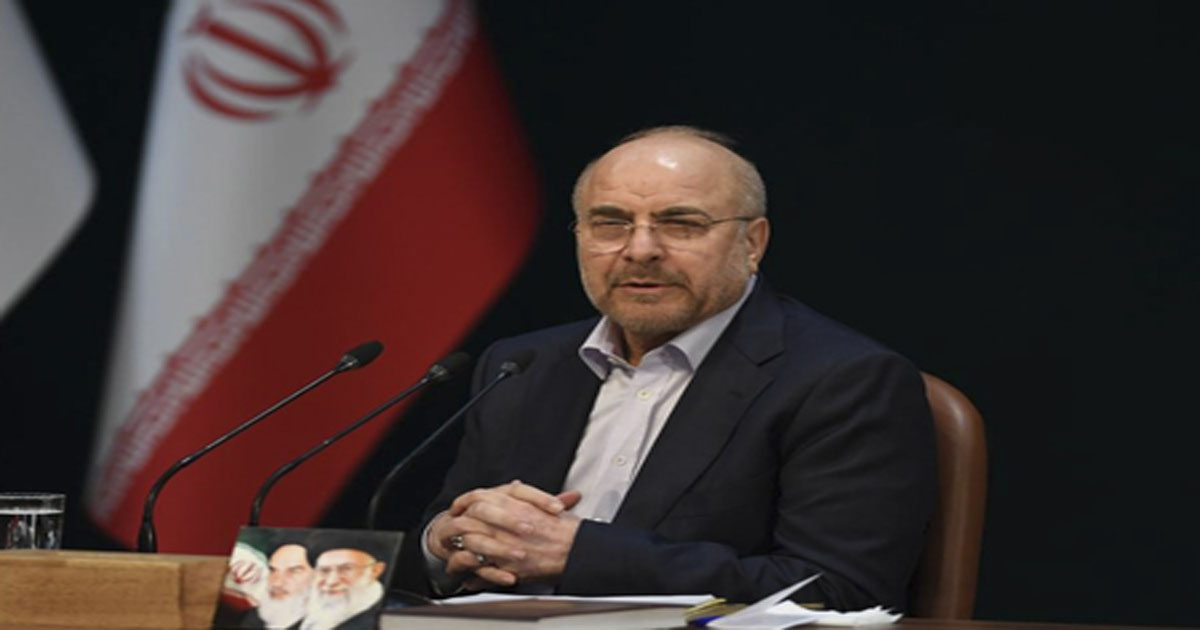
Tehran, July 16: Iran’s Parliament Speaker Mohammad Baqer Qalibaf has said the country’s national security is tied to maintaining “Iranian arrangements” in the administration of the Strait of Hormuz, stressing that Tehran will not allow the “enemy” to impose its will.
In a statement released on Wednesday (Local time), Qalibaf, also the head of Iran’s negotiating team, said that the United States seeks to deal blows to Iran whenever possible to advance its own interests, stressing that Iran should adopt its approaches during war or negotiations based on its national interests and security, realism, and long-term strategy.
He noted that Iran does not welcome war, “but we always must be ready for battle” to safeguard national security and interests.
Qalibaf added that diplomacy and negotiation should be pursued in parallel to ensure national interests, reports Xinhua news agency.
Addressing the recently signed peace memorandum of understanding (MoU) with the United States, which envisioned a 60-day negotiation period for a final agreement, the speaker said that the MoU is meaningful only when its provisions are honoured and implemented; otherwise, if Iran is not supposed to benefit from the deal, it sees no reason to remain committed to it.
The MoU, signed on June 18 and aimed at ending the war in the region on all fronts, including Lebanon, now hangs in the balance as clashes between Iranian and US forces have erupted over the past few days.
Meanwhile, the US military conducted a new round of strikes against Iran, US Central Command said early on Thursday (Indian time).
“At 3 p.m. ET (1900 GMT), U.S. forces launched operations for a second wave of strikes today against Iran,” the command wrote in a post on X. “The strikes are targeting Iranian military capabilities used to threaten vessels freely transiting through the Strait of Hormuz.”

International News
First Russian tanker carrying 40,000 tonnes of diesel to depart in 2-3 days: Putin

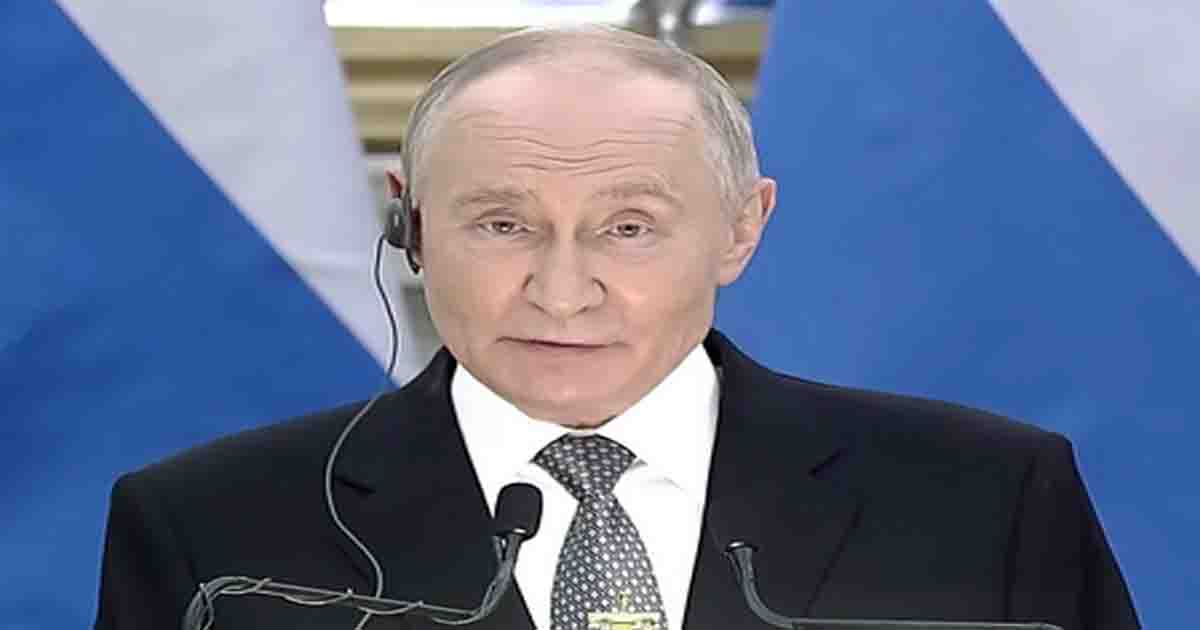
The first tanker carrying 40,000 tonnes of Russian diesel fuel will depart in two to three days, Russian President Vladimir Putin said Wednesday.
Russia is currently preparing shipments of several tankers carrying diesel fuel, Putin said during his meeting with US special envoy Steve Witkoff at the Konstantinovsky Palace in St. Petersburg.
The fuel is for the global and US markets, Xinhua news agency reported.
Putin held a telephone conversation with US President Donald Trump on October 9, during which considerable attention was paid to prospects for resolving the Ukraine crisis, the Kremlin said.
On global energy developments, Russia reaffirmed its readiness to supply oil and petroleum products to US and global markets, according to the Kremlin.
On Tuesday, Ukrainian President Volodymyr Zelensky discussed proposals for various ceasefire formats with Witkoff in Oslo, Norway, Ukraine’s state-run Ukrinform news agency reported.
The meeting was also attended by Norwegian Prime Minister Jonas Gahr Store and Finnish President Alexander Stubb.
Speaking after the meeting, Zelensky said the talks also covered security guarantees for Ukraine and the country’s recovery.
Following the meeting, Witkoff travelled to St. Petersburg in Russia, where he met Russian leadership to discuss peace efforts.
Global energy markets have faced sustained pressure since the outbreak of hostilities in the Middle East earlier this year. The conflict has triggered what the International Energy Agency termed the “largest supply disruption” in the history of global fuel markets.
Last week, US President Donald Trump said that “massive” oil, gas and mineral exploration is “getting ready” to begin in Greenland.
Writing on his Truth Social platform, Trump suggested that experts believe the Arctic island owns an amount of “easily available oil” which is “far greater than that of almost any land, anywhere in the world.”
He did not provide any specific estimates or elaborate on the exploration plans.
Trump also said any future attack on the United States would “have to come across Greenland, where our Defence will routinely knock down drones, missiles, or any other form of weapon not yet even conceived.”
Trump’s remarks followed a wide-ranging deal signed in late September by the United States, Denmark and Greenland to expand the US military presence on the island.
The deal came after months of pressure from Trump, who repeatedly called for acquiring the autonomous Danish territory and did not rule out the use of military or economic means. The proposal has drawn strong opposition from NATO allies and Greenlanders.
International News
EAM Jaishankar and US counterpart Rubio discuss advancing ties, regional developments
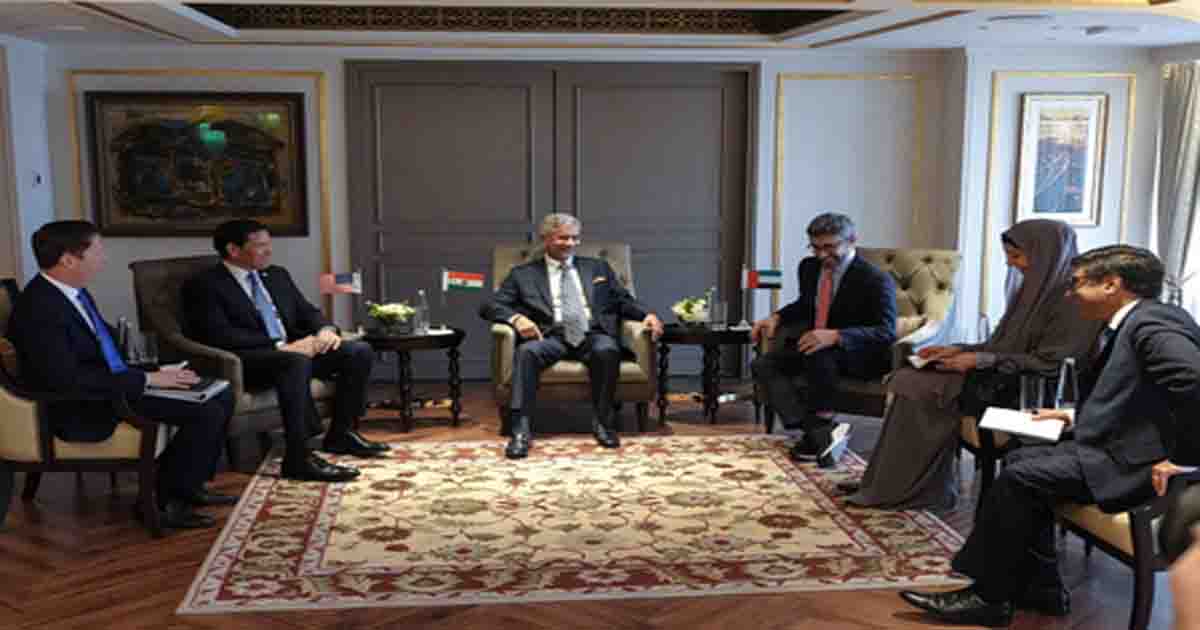
External Affairs Minister (EAM) S Jaishankar held a meeting with US Secretary of State Marco Rubio in Mumbai on Tuesday, with discussions focusing on further advancing bilateral ties.
During the meeting, the two ministers exchanged views on regional developments. Foreign Secretary Vikram Misri, US Ambassador to India Sergio Gor and other officials were also present at the meeting.
“Pleased to meet US Marco Rubio in Mumbai today. We shared views on further advancement of our ties, focusing on trade, energy, technology, defence and people-to-people ties. Also exchanged views on regional developments,” EAM Jaishankar stated on X after the meting.
Rubio said that he and EAM Jaishankar discussed energy security and defence cooperation.
“In Mumbai, Indian External Affairs Minister S Jaishankar and I discussed energy security and defense cooperation while reaffirming the importance of advancing the U.S.-India strategic partnership,” the US Secretary of State posted on X.
Earlier, EAM Jaishankar, Marco Rubio and UAE Foreign Minister Sheikh Abdullah bin Zayed Al Nahyan held a meeting in Mumbai, with discussions held on regional energy security and advancing shared economic priorities.
“It was great to meet with Indian External Affairs Minister S Jaishankar and UAE Foreign Minister Sheikh Abdullah bin Zayed Al Nahyan to discuss regional energy security and advance our shared economic priorities,” Rubio stated on X after the meeting.
Following the meeting, Ambassador Gor also took to X and wrote: “The US, India, and UAE have real opportunities to advance cooperation on energy, trade, technology, and regional connectivity. Marco Rubio, S Jaishankar, and UAE Foreign Minister Sheikh Abdullah bin Zayed Al Nahyan in Mumbai for a discussion on turning our close ties into concrete results!”
Earlier in the day, Marco Rubio arrived in Mumbai for an official visit to India. For his visit to Mumbai, Rubio is accompanied by his wife, Jeanette Rubio and US Ambassador to India Sergio Gor.
The Ministry of External Affairs (MEA) extended a warm welcome to Rubio as he arrived in Mumbai for his second visit to India, noting that it provides an opportunity to further advance cooperation across various pillars of the India-US Comprehensive Global Strategic Partnership.
“Welcome to Mumbai, US Secretary of State Marco Rubio, on your second visit to India! He was received by Shri Ashish Shelar, Minister of Culture, Electronics, IT and AI, Government of Maharashtra at the airport. The visit provides an opportunity to further advance cooperation across the various pillars of the India-US Comprehensive Global Strategic Partnership,” the MEA posted on X.
After concluding his engagements in Mumbai, Rubio will travel to Gujarat’s Jamnagar for talks that will include “enhanced energy cooperation”, the US State Department said.
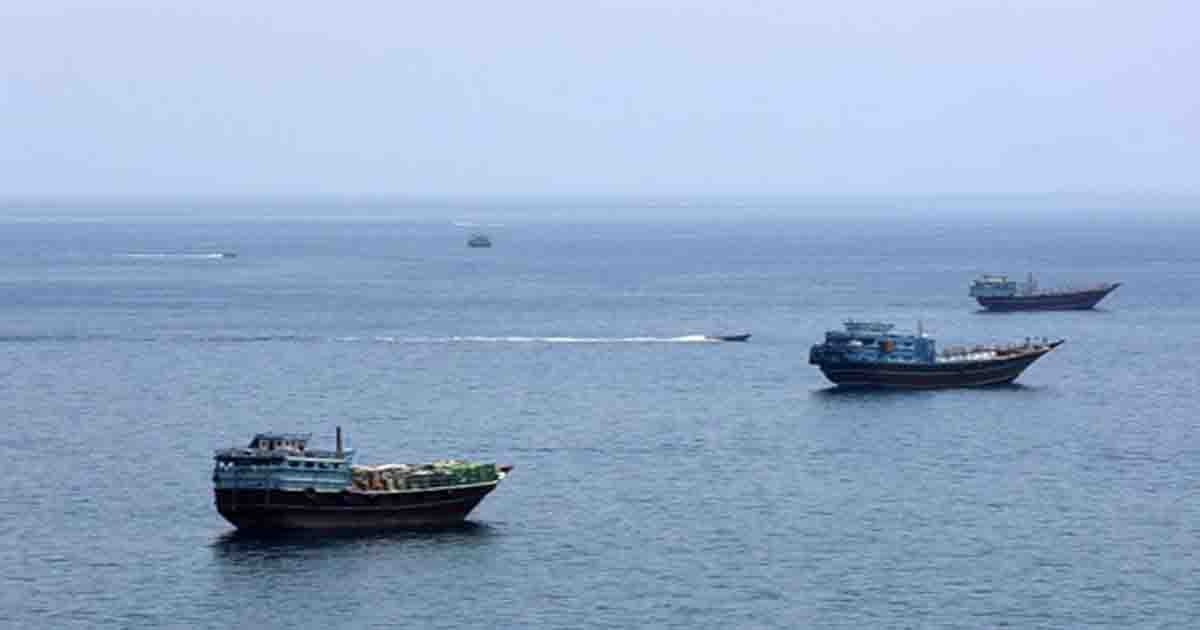
The United States has effectively blocked Iranian oil exports through the Strait of Hormuz while allowing millions of barrels of crude from other countries to reach global markets, Secretary of State Marco Rubio has said, describing the strategy as part of Washington’s efforts to weaken Tehran’s economy without disrupting international energy supplies.
Rubio said between 13 million and 14 million barrels of oil were passing through the strategic waterway daily, with American military forces escorting and protecting commercial vessels against Iranian attacks.
The remarks, made during an interview with Breitbart News on October 15 and released by the State Department on October 19, offered an account of Washington’s military and economic strategy in the Gulf.
“Today, on average over the last 10 days and certainly over the last 30, about 13 to 14 million barrels of oil are going through the Straits of Hormuz out to the global market, and some days it’s actually equivalent to what it was pre-conflict,” Rubio said.
The figures represent the administration’s assessment and were not independently verified in the interview.
The Strait of Hormuz is one of the world’s most important energy corridors, connecting oil-producing Gulf countries with international markets, including India and other major Asian economies.
Rubio said American forces were helping maintain shipping movements despite continuing Iranian attacks.
“And the U.S. military is involved in escorting and defending these ships from these strikes,” he said.
The Secretary of State claimed that Iran had lost control of the waterway following American military operations and that Washington was now using sanctions and a blockade to restrict Tehran’s oil revenues.
“The only country in the world that cannot get a single barrel of oil through the Straits of Hormuz is Iran,” Rubio said.
The assertion was not accompanied by independent shipping data or figures showing the volume of Iranian exports affected by the restrictions.
Rubio said the administration’s objective was to prevent Iran from using energy supplies and maritime security as instruments of pressure against other countries.
He argued that American military operations had significantly weakened Iran’s conventional capabilities, including its naval forces, air defences and facilities producing missiles and drones.
According to Rubio, the administration had sought to prevent Tehran from developing a nuclear weapon while relying on conventional military capabilities to deter international intervention.
He said Iran continued to threaten shipping even after losing much of its ability to control the strait.
Rubio also defended the administration’s economic measures against Tehran, saying they were designed to reduce the resources available to Iran’s military and allied armed groups.
“Every dollar you deny them in sanctions is a dollar they don’t have for Hizballah, a dollar they don’t have for Hamas, a dollar they don’t have for the terrorist militias inside of Iraq, and a dollar they don’t have for their own military or their own nuclear ambitions,” he said.
The Secretary of State acknowledged public frustration over the continuing confrontation with Iran but maintained that Washington had achieved important military objectives.
He described the current American military role in the Strait of Hormuz primarily as defensive, involving the protection of shipping while economic pressure continued.
The claims about Iran’s military losses, oil exports and the effectiveness of the blockade could not be independently established from the interview alone.
The Strait of Hormuz connects the Persian Gulf with the Gulf of Oman and the Arabian Sea. It is a major transit route for crude oil and liquefied natural gas shipped from Gulf producers to international customers, making disruptions particularly significant for energy-importing Asian economies.

CISF seizes foreign currency worth Rs 1.13 crore at Kolkata airport

First Russian tanker carrying 40,000 tonnes of diesel to depart in 2-3 days: Putin

Gujarat: Man held after 0.77 grams of mephedrone found in ‘porter’ delivery parcel

Bihar: 75-year-old man stabbed to death; woman and her son injured

Maha Minister instructs submission of village-wise water scarcity action plan by Oct 25

Rahul, Cong ecosystem want to force regime change: BJP after Neha Bora praises B’desh Gen-Z protest

Attack on democratic rights: INDIA Bloc leaders on detentions of anti-ECI protestors

BJP pays tribute to ex-President Abdul Kalam, recalls his enduring influence on generations of India’s youth

INDIA bloc begins protest march against ECI

Maha Congress stages agitation against Gyanesh Kumar
-

 Crime4 years ago
Class 10 student jumps to death in Jaipur
-

 Maharashtra2 years ago
Mumbai Local Train Update: Central Railway’s New Timetable Comes Into Effect; Check Full List Of Revised Timings & Stations
-

 Maharashtra2 years ago
Mumbai To Go Toll-Free Tonight! Maharashtra Govt Announces Complete Toll Waiver For Light Motor Vehicles At All 5 Entry Points Of City
-

 Maharashtra2 years ago
False photo of Imtiaz Jaleel’s rally, exposing the fooling conspiracy
-

 National News2 years ago
Ministry of Railways rolls out Special Drive 4.0 with focus on digitisation, cleanliness, inclusiveness and grievance redressal
-

 Maharashtra2 years ago
Maharashtra Elections 2024: Mumbai Metro & BEST Services Extended Till Midnight On Voting Day
-

 National News2 years ago
J&K: 4 Jawans Killed, 28 Injured After Bus Carrying BSF Personnel For Poll Duty Falls Into Gorge In Budgam; Terrifying Visuals Surface
-

 Crime2 years ago
Baba Siddique Murder: Mumbai Police Unable To Get Lawrence Bishnoi Custody Due To Home Ministry Order, Says Report