
Business
Relief for Vodafone Idea as SC allows Centre to reconsider AGR dues issue


New Delhi, Oct 27: In a relief for Vodafone Idea, the Supreme Court on Monday allowed the Centre to reconsider the issue of Adjusted Gross Revenue (AGR) dues worth Rs 9,450 crore to ease the burden of the loss-making telecom company. The court reasoned that this matter falls in the Union’s policy domain.
The Supreme Court noted that the decision was made keeping in mind the interest of 20 crore consumers of the telecom company.
In a landmark 2019 verdict, the Supreme Court endorsed the Centre’s definition of AGR and allowed the Centre to collect dues worth Rs 92,000 crore which came as a huge setback for telecom majors such as Vodafone and Bharti Airtel.
Vodafone’s latest petition flagged a fresh AGR demand of Rs 9,450 crore raised by the Department of Telecommunications. The petition contended that a substantial portion of the demand pertained to the pre-2017 period, which had already been settled by the Supreme Court.
Solicitor General of India Tushar Mehta told the court that “there is a huge change in circumstances” of the case because the government has infused equity in Vodafone.
“The government’s interest is public interest. There are 20 crore consumers. If this company is to suffer, it would lead to issues for consumers,” he said.
The Supreme Court noted in its order that the Centre is willing to examine the issue. “The government is also willing to reconsider and take an appropriate decision if the court permits. In the peculiar facts, we see no impediment in government reconsidering the issue. We clarify that this is a matter of policy, there is no reason as to why the Union should be prevented from doing so,” the apex court said.
AGR refers to a fee-sharing mechanism under which telecom operators must share a part of their revenue with the Centre as licensing fees and spectrum usage charges. There was a longstanding dispute between telecom companies and the Centre over the definition of AGR. While the telecom giants stressed that AGR should be based just on core services, the Centre argued it should also factor in non-telecom services provided by the telecom giants.

Business
Navi Mumbai Airport expands inflight catering capacity with ‘TajSATS’ ahead of winter season

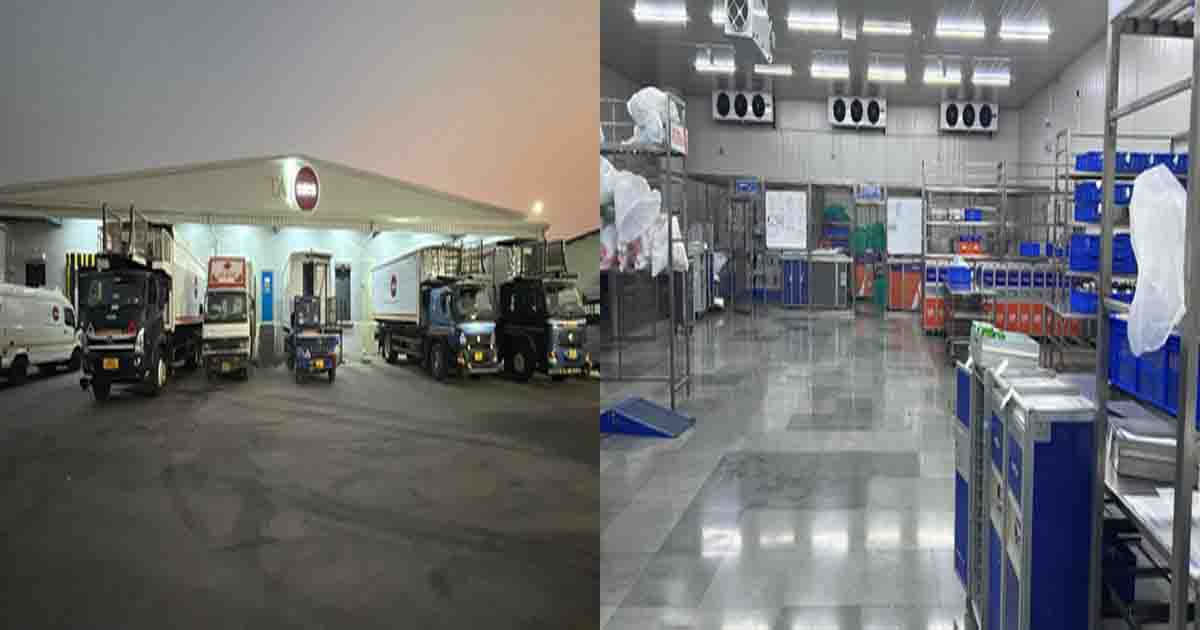
Mumbai, Oct 6: Navi Mumbai International Airport (NMIA) on Tuesday said that its dedicated inflight catering facility — operated by aviation catering company TajSATS — is prepared to support growing airline operations ahead of the Winter 2026-27 schedule, which runs from October 25 to March 27, 2027.
Located within the airport precinct, the flight kitchen currently serves more than 40 departing flights daily and has the capacity to produce up to 7,500 meals a day.
Moreover, the facility can be expanded to produce 15,000 meals daily as airline movements and passenger traffic increase.
“As NMIA expands its airline network, it is important that our supporting infrastructure grows with it,” said Subhash Murikenchery, Chief Airport Officer, Navi Mumbai International Airport.
“The TajSATS flight kitchen gives airlines the flexibility to meet rising demand and enhances the culinary experience for passengers,” he added.
The facility features production infrastructure, refrigeration systems and operational processes designed to respond to changes in airline schedules and demand.
Its location within the airport precinct is intended to facilitate meal delivery to departing aircraft.
NMIA said the facility provides local meal-uplift capabilities for international carriers operating to and from India, offering airlines an additional catering option closer to their point of departure.
“Approximately 40 per cent of international carriers operating from India rely on back catering from their own flight kitchens. NMIA’s inflight catering infrastructure has been developed to support this requirement, alongside the catering needs of domestic carriers,” according to the airport.
The catering infrastructure at NMIA has been developed to support those requirements alongside the needs of domestic carriers.
In addition, the facility offers catering services for both domestic and international airlines and can accommodate a range of dietary requirements, including special meals, allergen-sensitive menus and halal meals.
NMIA said the kitchen complies with food safety and quality standards including Hazard Analysis and Critical Control Points (HACCP), ISO 22000 and regulations of India’s Food Safety and Standards Authority.
TajSATS — which has operated in the aviation catering sector for more than four decades — also runs the flight kitchen at Mumbai’s Chhatrapati Shivaji Maharaj International Airport.
The airport said the facility is already operational and designed to scale in line with future growth in airline connectivity and passenger volumes.

Mumbai, Oct 6: Indian equity benchmarks opened higher on Tuesday amid positive global cues and buying in private banking stocks.
Nifty opened at 22,603.25, an increase of 47.50 points or 0.21 per cent.
Meanwhile, Sensex opened at 72,508.05, up 125.58 points or 0.17 per cent.
Private banks led sectoral gains in early trade as Nifty Private Bank rose 0.75 per cent.
Nifty MidSmall IT & Telecom index gained 0.5 per cent, while the metal index advanced 0.32 per cent.
Notably, chemical, energy, financial services and cement were also trading higher, while PSU banks and FMCG were largely flat.
On the losing side, Nifty Auto fell 0.4 per cent, followed by healthcare, pharma and consumer durables indices. Realty, IT and media indices were also marginally lower.
Market experts said the near-term tone remained cautiously constructive, supported by a firm opening and improved global cues, although the broader setup remained tentative following the recent decline.
Analysts said a sustained recovery in the opening hours, backed by broader market participation, would be important to determine whether the current bounce can extend.
The market could remain in a ‘sell on rally’ mode as elevated US bond yields were likely to keep foreign institutional investors (FIIs) selling, even as domestic institutional investors (DIIs) continued to support large-cap stocks amid strong fund inflows, according to them.
The experts said a sustained market rally would require a sharp decline in crude oil prices, although there was currently no clear indication of such a move.
On the technical front, analysts see 23,100-23,220 as near-term objectives, with 22,800 likely to pose an intermediate hurdle.
A failure to move above the 22,555-22,615 band could signal further consolidation, while the downside is expected to remain limited around 22,050 for now.
Additionally, FIIs remained net sellers in Indian equities, offloading shares worth Rs 4,699 crore on Monday. DIIs provided support, making net purchases of Rs 5,181 crore.
In addition, Asian shares traded higher in early hours after a technology-led rally propelled the Nasdaq to a fresh record high.
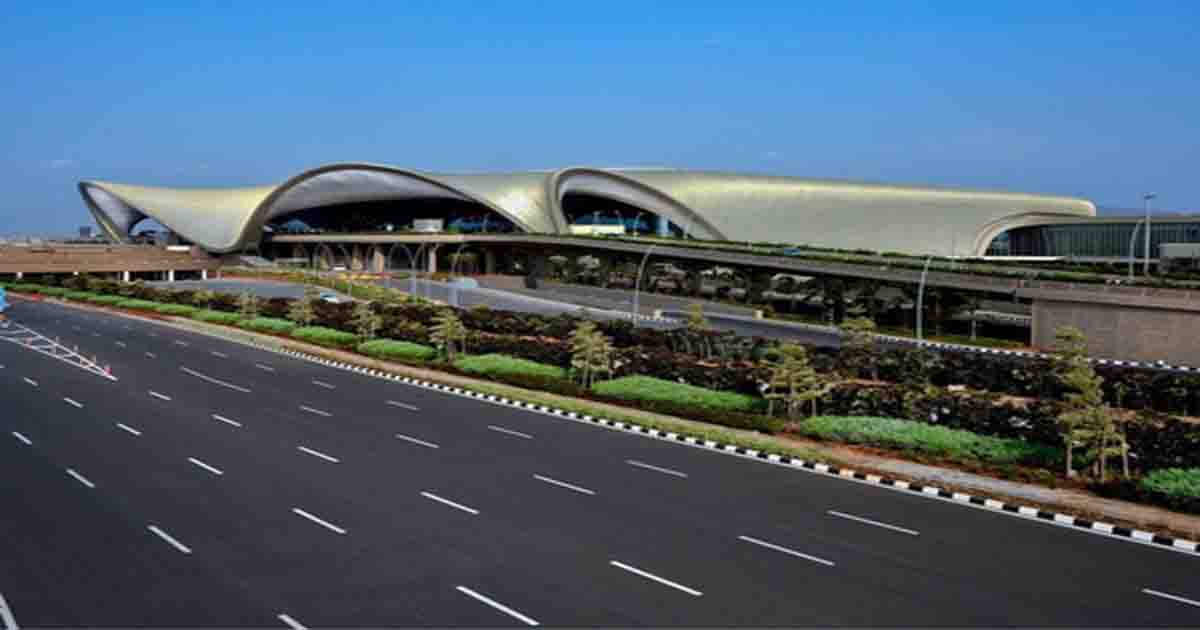
Ahmedabad, Oct 5: Navi Mumbai International Airport (NMIA) is strengthening its public transport and ground mobility infrastructure ahead of the Winter Schedule 2026-27, with a wider network of buses, taxis, autorickshaws, car rentals, and airport shuttles aimed at improving connectivity across Mumbai, Navi Mumbai, Pune and the wider Mumbai Metropolitan Region, it was announced on Monday.
The airport, operated by Adani Airport Holdings Limited (AAHL), is preparing for the Winter Schedule that will run from October 25, 2026, to March 27, 2027.
As part of the expansion, the Maharashtra State Road Transport Corporation (MSRTC) will launch e-Shivai electric bus services from NMIA on October 7.
The first phase of MSRTC services will connect the airport with Dadar, Borivali and Pune. Fares from NMIA have been set at Rs 450 for Pune, Rs 210 for Borivali, and Rs 170 for Dadar East. Children below 12 years and women travelling with a National Common Mobility Card will be eligible for a 50 per cent fare concession.
The Dadar-NMIA service will operate through Sion and Atal Setu, while the Borivali-NMIA route will connect CSMIA Terminal 1, Bandra, and Atal Setu. The Pune route will have two daily services, with one operating in the morning and another in the afternoon. MSRTC also plans to introduce services connecting NMIA with Thane and Nashik by mid-November.
Private bus operator Chalo Bus is already providing 21 daily services connecting NMIA with Marol in Andheri East, Bandra, Dadar, and the World Trade Centre in Colaba. The operator is also adding capacity during peak periods to cater to passenger and airport employee movement.
Within Navi Mumbai, Navi Mumbai Municipal Transport (NMMT) is operating seven dedicated airport routes, A1 to A7, linking Terminal 1 with Kharkopar, Targhar, Belapur, Nerul, Panvel, Khandeshwar and the Airport Project Office. Services between Belapur and Nerul are available every 15-20 minutes during peak hours, while further connectivity to Vashi and Panvel is planned.
The airport is also expanding taxi and last-mile connectivity. Uber Go and Uber Premier will provide app-based cab services, while Uber Auto will cater to passengers seeking on-demand autorickshaw services for shorter journeys. Prepaid taxi and autorickshaw facilities, along with car rental services, are also being introduced at the airport.
Bharat Taxi is scheduled to begin operations at NMIA from October 10 with a dedicated fleet of up to 40 vehicles, adding another option for passengers travelling to and from the airport.
A complimentary inter-airport shuttle service is also being introduced between NMIA and Chhatrapati Shivaji Maharaj International Airport (CSMIA). Operated by Cityflo, Aarya and Chalo, the shuttle will run every hour and provide passengers with a direct transfer option between Mumbai’s two airports.
Overall ground transport capacity at NMIA is being scaled up to 4,594 vehicles and services, including 3,787 app-based taxis, 184 car rentals, 171 autorickshaws and 547 buses. The airport is also deploying mobility signage, improved wayfinding systems and on-ground passenger assistance, with designated areas for buses, shuttles, arrivals, departures and private vehicles.

Karnataka: Convict’s wife’s complaint exposes alleged sexual exploitation, forged SC order release racket

Navi Mumbai Airport expands inflight catering capacity with ‘TajSATS’ ahead of winter season

‘Not eyeing 3 but 403 seats’: Akhilesh’s cryptic tweet creates stir, raises suspense on 3rd RS seat

‘Bigg Boss 20’: Qazi Touqeer battles fever, his team says he remains under medical care

INDIA bloc begins protest march against ECI

Gift to President Putin part of PM Modi bid to globally display India’s heritage

PM Modi’s warm camaraderie with Putin, Xi on full display at BRICS Summit

Corporators of all parties in trouble! Corporators of all major parties including Shiv Sena (UBT), BJP and Congress are facing legal challenges.

Complaint against Netflix & Mukesh Chhabra for inappropriate language on ‘India’s Got Latent 2’

Maha Congress stages agitation against Gyanesh Kumar
-

 Crime4 years ago
Class 10 student jumps to death in Jaipur
-

 Maharashtra2 years ago
Mumbai Local Train Update: Central Railway’s New Timetable Comes Into Effect; Check Full List Of Revised Timings & Stations
-

 Maharashtra2 years ago
Mumbai To Go Toll-Free Tonight! Maharashtra Govt Announces Complete Toll Waiver For Light Motor Vehicles At All 5 Entry Points Of City
-

 Maharashtra2 years ago
False photo of Imtiaz Jaleel’s rally, exposing the fooling conspiracy
-

 National News2 years ago
Ministry of Railways rolls out Special Drive 4.0 with focus on digitisation, cleanliness, inclusiveness and grievance redressal
-

 Maharashtra2 years ago
Maharashtra Elections 2024: Mumbai Metro & BEST Services Extended Till Midnight On Voting Day
-

 National News2 years ago
J&K: 4 Jawans Killed, 28 Injured After Bus Carrying BSF Personnel For Poll Duty Falls Into Gorge In Budgam; Terrifying Visuals Surface
-

 Crime2 years ago
Baba Siddique Murder: Mumbai Police Unable To Get Lawrence Bishnoi Custody Due To Home Ministry Order, Says Report