
Business
RBI likely to go for steps to spur growth in February monetary policy review: Jefferies

Mumbai, Jan 29: The RBI’s monetary policy committee meeting scheduled for February is likely to spring some positive surprises with a growth-favoured approach, according to brokerage firm Jefferies.
Reserve Bank of India (RBI) policies can take a growth-supportive turn, especially with the government expected to take a tight fiscal stance on February 1, Jefferies said in a note.
The recent move by the central bank to provide liquidity is a positive indicator, the report said. It was referring to the RBI’s announcement this week that it would inject Rs 1.5 lakh crore liquidity into the banking system in the coming weeks till the end of February.
If the RBI Governor Sanjay Malhotra-led committee takes a potentially dovish stance on liquidity or rates, the rupee may depreciate further, Jefferies observed in its note.
“Our cautious view on the budget is predicated on an expected slowdown in government capex.” But the stock corrections largely build in those worries, it said. A high base in revenues and the government’s firmness on fiscal consolidation will likely limit any significant spending growth, Jefferies said.
On the slowdown in economic growth, most of the reasons are temporary. The March quarter should be better with the significant underspending in eight months of fiscal 2025 expected to reverse from November 2024 to March 2025, the brokerage said.
Further, a potential improvement in liquidity and regulations can prompt some uptick in the months ahead, it added.
The pressures to increase expenditure on social welfare schemes are rising and there are some expectations of a hike in corporate taxes. If neither were to happen, the market may be relieved, Jeffries said.
The RBI had, in its monetary policy review on December 6, slashed the cash reserve ratio (CRR) for banks by 0.5 per cent to make more funds available for lending to spur economic growth but kept the key policy repo rate unchanged at 6.5 per cent with an eye on inflation.
The CRR was reduced from 4.5 per cent to 4 per cent. This was the first time since March 2020 that the CRR has been cut. The CRR is the proportion of deposits that banks have to set aside as idle cash in the system.
The CRR cut infused Rs 1.16 lakh crore into the banking system and was aimed to bring down market interest rates to spur growth.
The RBI on Monday announced that it would inject another Rs 1.10 lakh crore liquidity in the banking system through open market purchase auctions of Government securities and carrying out a variable rate repo auction. Besides, a $5 billion dollar-rupee swap auction would also be held to provide more liquidity in the system. These measures are aimed at making more funds available to banks for giving out loans and bringing down the interest rate as part of the measures to spur growth in an economy that has been slowing economy amid geopolitical uncertainties.


Mumbai, Oct 12: Domestic equity benchmark indices opened higher on Monday amid positive factors like gains in Asian markets and a decline in crude oil prices.
Nifty began trading session at 22,593.20, up 72.75 points or 0.32 per cent.
Meanwhile, Sensex opened at 72,771.32, up 298.99 points or 0.41 per cent.
In early deals, mostly sectoral indices were trading in positive territory. Nifty Media, Nifty Auto and Nifty Chemicals jumped up to 1 per cent.
Similarly, Nifty Realty, Nifty Oil & Gas, Nifty Cement, Nifty Metal and Nifty IT surged between 0.81 per cent to 0.64 per cent. However, other sectoral indices were also trading marginally higher.
On the downside, Nifty PSU Bank just slipped 0.01 per cent.
Market experts said external headwinds are dominating domestic tailwinds, adding that the market is going through a stage wherein external headwinds are dominating domestic tailwinds.
Elevated crude prices and high US bond yields will continue to impact market. FIIs will continue to sell in the near term, and DIIs will continue to absorb FII selling, according to them.
Moreover, an impressive GDP growth estimate of 7.1 per cent for FY27 and improving corporate profitability provide strong fundamental support to the market, the experts said.
“Therefore, investors can accumulate fairly valued growth stocks ignoring uncertainty and volatility in market. For investors with medium-to-long-term horizon, this market provides value buying opportunities. Patience is key,” they added.
They further noted that if crude declines sharply following favourable developments in the Middle East, the market can rally significantly from current levels.
Technically, Friday’s bounce and inside bar formation set up an environment for a rise to 22,800-23,200. However, inability to close above 22,575 will keep trend within bear grip. Downside marker for day may be kept at 22,295, Friday’s reaction low, another analyst said.
In addition, asian markets opened cautiously today in early hours as investors braced for earnings season which could test elevated technology valuations.
Oil prices eased on prospects of higher Russian supplies following agreement to halt attacks on energy facilities.
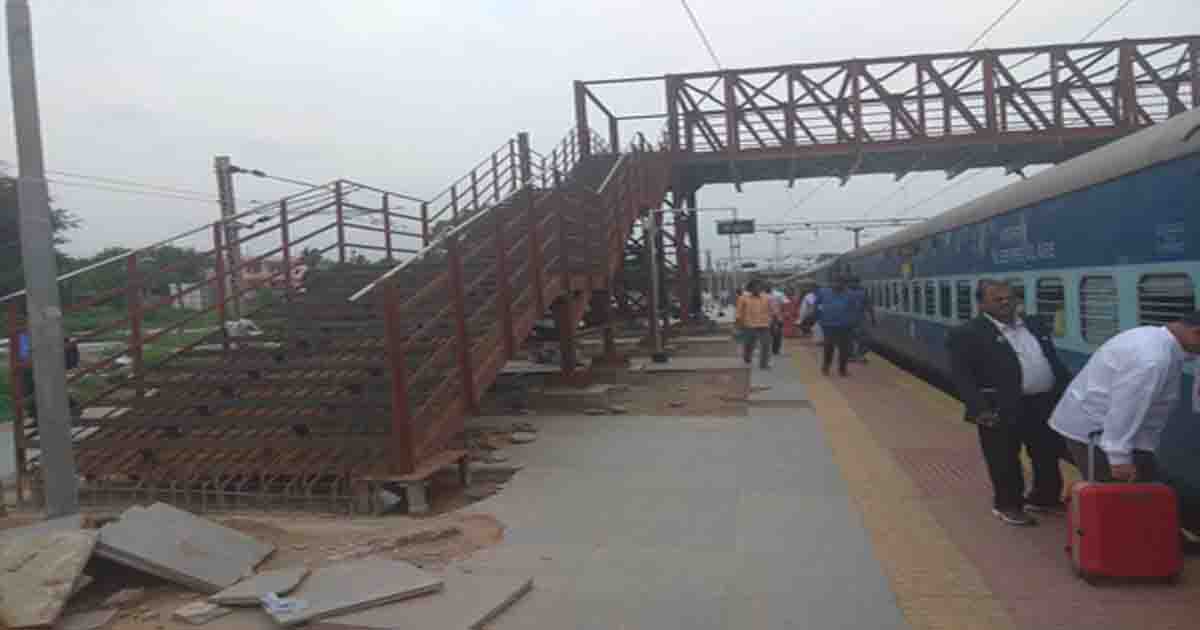
New Delhi, Oct 11: Indian Railways has announced 3,548 graduate-level vacancies for jobs under the Non-Technical Popular Categories (NTPC–Graduate), which provide opportunities for graduates to work across different functional areas of railway operations and administration, according to an official statement issued on Sunday.
The recruitment through Centralised Employment Notification issued by the Railway Recruitment Boards (RRBs) covers four categories of posts, including Chief Commercial Cum Ticket Supervisor, Goods Train Manager, Junior Accounts Assistant Cum Typist, and Senior Clerk Cum Typist. These positions offer career opportunities across commercial services, train operations, accounts and administration, supporting the efficient functioning of railway services across the country, the statement said.
Of the total 3,548 vacancies, as many as 2,750 are for Goods Train Manager, followed by 371 for Senior Clerk Cum Typist, 300 for Junior Accounts Assistant Cum Typist, and 127 for Chief Commercial Cum Ticket Supervisor.
The posts offer initial basic pay under the Seventh Central Pay Commission. Chief Commercial Cum Ticket Supervisor carries an initial basic pay of Rs 35,400 per month at Pay Level 6, while the other three categories carry an initial basic pay of Rs 29,200 per month at Pay Level 5. Applicable allowances and service conditions will be governed by the relevant rules.
The online application process commenced on October 8, and eligible candidates can submit their applications until 11:59 p.m. on November 6. The last date for payment of the examination fee is November 8, while the application modification window is scheduled from November 9 to 18 November.
Candidates must possess a degree from a recognised university or its equivalent and fulfil the prescribed post-specific eligibility conditions. The notified age limit is 18-33 years as on January 1, 2027, with applicable age relaxations for eligible categories under the prescribed rules.
The selection process comprises a first-stage Computer-Based Test (CBT), a second-stage CBT, followed by document verification and medical examination, as applicable. The recruitment framework also provides applicable reservation and age-relaxation benefits, along with scribe assistance and compensatory time for eligible candidates with disabilities, in accordance with the prescribed provisions.
Another provision under CEN No. 06/2026 is the dispensation of the Computer-Based Typing Skill Test (CBTST) for the posts of Junior Accounts Assistant Cum Typist and Senior Clerk Cum Typist. Candidates are nevertheless expected to possess basic computer and typing proficiency, which will be assessed after joining, as specified in the notification, the statement said.
Candidates can access the detailed notification, vacancy distribution, eligibility criteria and recruitment updates through the official Railway Recruitment Boards website:https://rrb.indianrailways.gov.in
Business
BMC to crack down on illegal debris disposal, impose Rs 25,000 fine for tracking violations

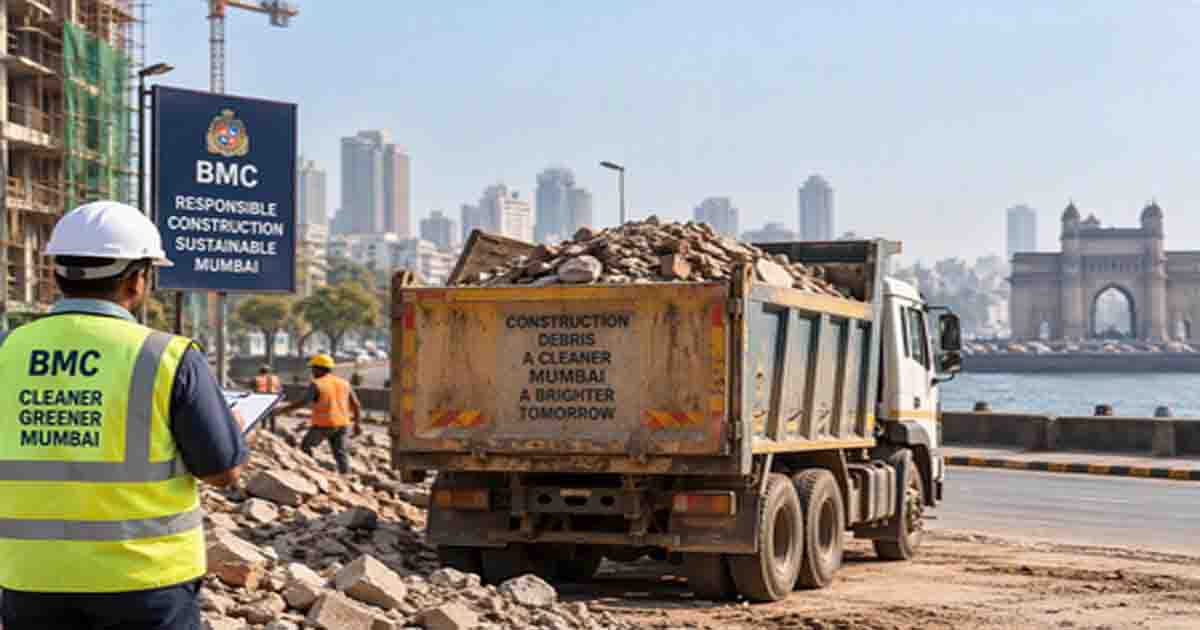
Mumbai, Oct 11: As air quality concerns begin to resurface following the withdrawal of the monsoon, the Brihanmumbai Municipal Corporation (BMC) is reportedly set to tighten enforcement of construction and demolition (C&D) waste management rules across the city.
Starting Monday, the civic body will levy a penalty of Rs 25,000 on every vehicle found transporting construction debris or excavation material without an active and authorised Vehicle Tracking and Monitoring System (VTMS).
Construction sites that fail to register on the BMC’s Mumbai Debris Control and Tracking System (MDCTS) portal will also face a fine of Rs 25,000 for each violation.
The move comes amid growing concerns over illegal dumping of construction waste and its impact on Mumbai’s environment and air quality. In a circular issued to all 26 municipal wards, the BMC has directed officials to begin inspections and enforcement drives immediately.
Mumbai generates more than 8,000 tonnes of construction and demolition waste every day, significantly exceeding the city’s treatment capacity.
The two processing facilities at Dahisar and Shilphata can collectively handle only around 1,200 tonnes of debris daily, creating a large gap that has led to rampant illegal dumping.
Civic officials said debris is frequently discarded along roadsides, vacant plots, drains, creeks, water bodies and mangrove areas, as per the report.
To improve monitoring and accountability, the BMC launched the MDCTS portal on August 24. The digital platform is designed to track C&D waste from its point of generation to authorised disposal or processing facilities.
It also allows civic authorities to monitor debris-carrying vehicles in real time, detect route deviations and identify suspected cases of illegal dumping.
The civic body has made registration on the portal mandatory for contractors, government agencies and private developers undertaking construction activities.
Registered entities are required to submit detailed waste management plans, while vehicles transporting debris must be fitted with GPS-enabled VTMS devices and follow approved transportation routes.
According to BMC data, the MDCTS portal recorded 220 registrations between August 24 and October 9. These included 109 builders and developers, 44 transporters, 19 BMC contractors, 17 external buyers of debris and soil, 15 corporate entities and four government agencies. No registrations were received from individual citizens during the period.

Shiv Sena(UBT) condemns crackdown on anti-govt protests in ‘Saamana’

CMRL-Exalogic scam: Pinarayi Vijayan, Riyas named first accused in two separate cases

Paper leak issue: MPSC Chairman Bhimanwar goes on leave, Pune protesters call off stir

Maha BJP: Was MPSC protest for students or Rohit Pawar’s political launch?

Rahul Gandhi move to meet CJI ‘childish attempt’ to pressure judiciary: Bihar BJP chief

Gift to President Putin part of PM Modi bid to globally display India’s heritage

PM Modi’s warm camaraderie with Putin, Xi on full display at BRICS Summit

INDIA bloc begins protest march against ECI

Complaint against Netflix & Mukesh Chhabra for inappropriate language on ‘India’s Got Latent 2’

Maha Congress stages agitation against Gyanesh Kumar
-

 Crime4 years ago
Class 10 student jumps to death in Jaipur
-

 Maharashtra2 years ago
Mumbai Local Train Update: Central Railway’s New Timetable Comes Into Effect; Check Full List Of Revised Timings & Stations
-

 Maharashtra2 years ago
Mumbai To Go Toll-Free Tonight! Maharashtra Govt Announces Complete Toll Waiver For Light Motor Vehicles At All 5 Entry Points Of City
-

 Maharashtra2 years ago
False photo of Imtiaz Jaleel’s rally, exposing the fooling conspiracy
-

 National News2 years ago
Ministry of Railways rolls out Special Drive 4.0 with focus on digitisation, cleanliness, inclusiveness and grievance redressal
-

 Maharashtra2 years ago
Maharashtra Elections 2024: Mumbai Metro & BEST Services Extended Till Midnight On Voting Day
-

 National News2 years ago
J&K: 4 Jawans Killed, 28 Injured After Bus Carrying BSF Personnel For Poll Duty Falls Into Gorge In Budgam; Terrifying Visuals Surface
-

 Crime2 years ago
Baba Siddique Murder: Mumbai Police Unable To Get Lawrence Bishnoi Custody Due To Home Ministry Order, Says Report