
National News
Prez Murmu faces ‘repeated’ insults from Congress: Sonia Gandhi’s comments fuel backlash

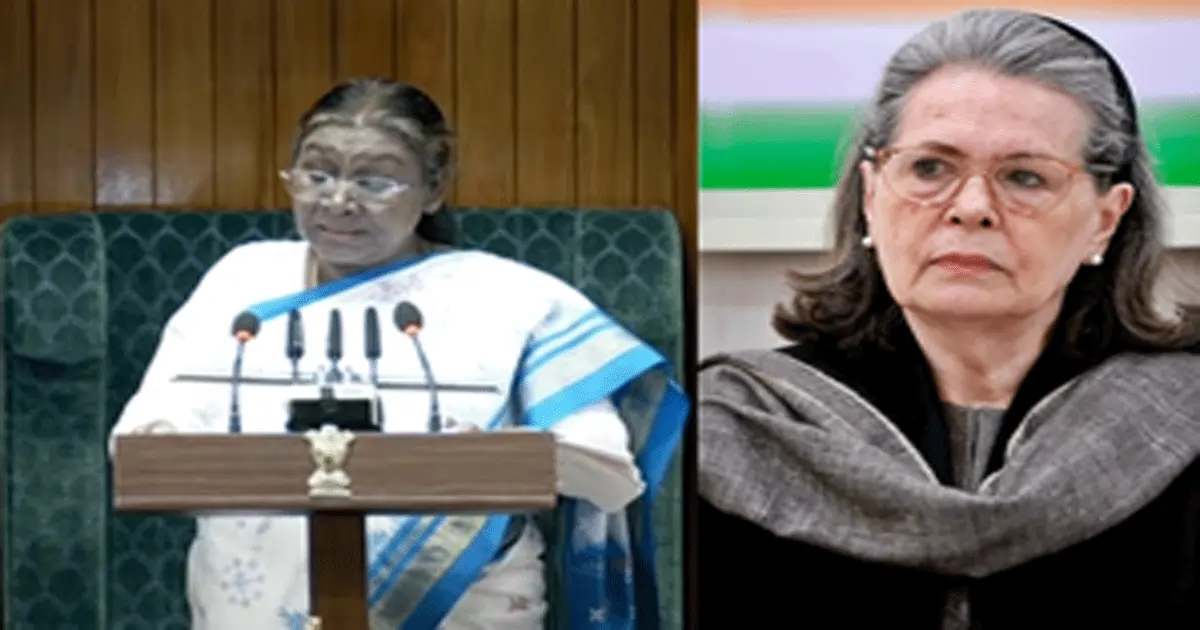
New Delhi, Jan 31: The Budget Session of Parliament began on Friday amidst a fresh controversy following remarks by Congress MP Sonia Gandhi about President Droupadi Murmu. Speaking to reporters after the President’s address to a joint sitting of Parliament, Sonia Gandhi described President Murmu as a “poor thing”, expressing concern that the 66-year-old President appeared exhausted after delivering her long customary speech.
“The President was getting very tired by the end. She could hardly speak, poor thing,” Gandhi said, flanked by her children, Congress MPs Rahul Gandhi and Priyanka Gandhi Vadra. Rahul Gandhi was heard assisting his mother with her comments, asking, “Boring? No comments? Repeating the same thing again and again?”
The BJP was quick to condemn the remarks, calling them “derogatory” and accusing the Congress of disrespecting the President. BJP leaders said that Congress’s “feudal mindset” cannot accept that a tribal woman like Droupadi Murmu achieved the position of President of India.
This is not the first example of insult toward President Murmu by the Congress-led opposition. On various occasions in the past, Congress leader Rahul Gandhi referred to the President’s speech as “boring”. Once, Pappu Yadav had also dismissed the speech delivered by President Murmu as a “love letter”. The political leaders slammed all these comments, with many of them describing them as an insult to the entire tribal community and the highest office in the country.
Last year Rahul Gandhi sparked a row by stating that President Murmu could not enter the Ram Mandir due to her tribal identity. But the fact that came out contradicted Rahul’s claim. President Droupadi Murmu not only visited the Ram Mandir in 2024 but also attended Maha Aarti at Saryu Ghat.
The disrespect towards President Murmu has also been seen earlier. Rahul Gandhi in 2024, then Leader of the Opposition in the Lok Sabha, noticeably failed to greet President Murmu during her address to Parliament on Constitution Day.
The Congress’ disregard for President Murmu also became evident in 2022 when party leader Ajoy Kumar mocked her candidacy, calling it a representation of an “evil philosophy of India”, suggesting that she should not be seen as an Adivasi symbol.
Congress leader Adhir Ranjan Chowdhury also in the past referred to President Murmu as ‘Rashtrapatni’ during a TV interview. This led to massive controversy with analysts and political leaders condemning this comment.
Likewise, West Bengal Minister Akhil Giri made headlines in 2022 when he mocked the President’s appearance, saying, “We don’t judge anyone by their appearance. But how does our President look?” His remarks were widely condemned as disrespectful.
The continuous pattern of disparaging comments from opposition leaders has raised questions about the treatment of tribal women in high political office, with many calling for greater respect for the dignity of the President’s office.


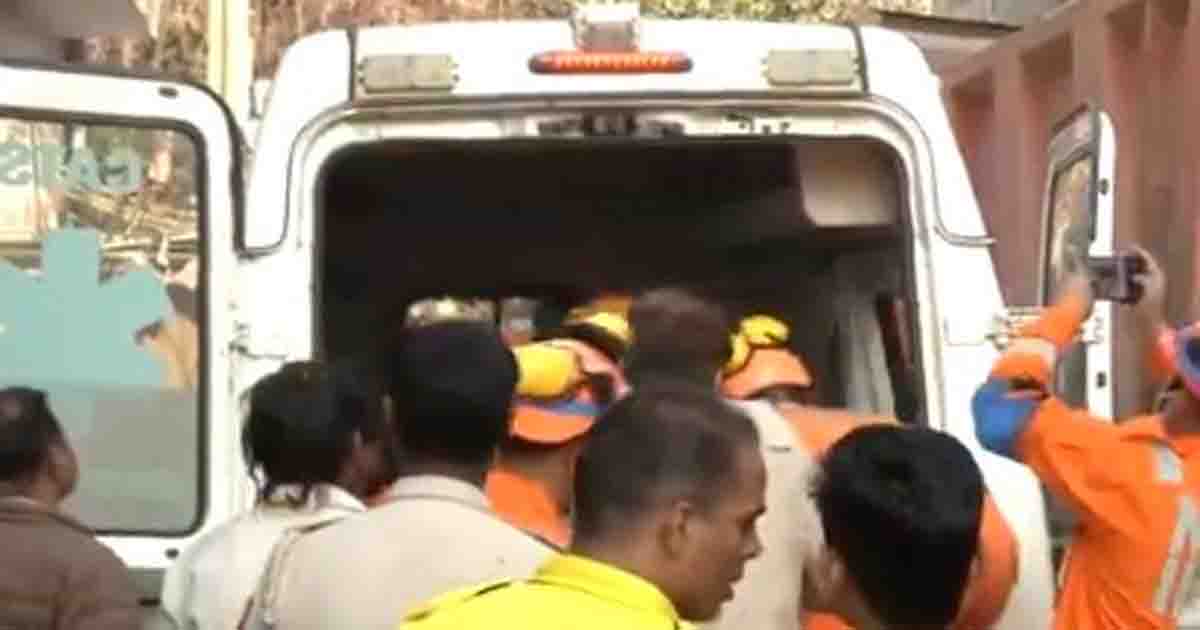
A 60-year-old man and his 33-year-old son died after two slabs of a building collapsed at Milan Garden in the Harsh Vihar area of Northeast Delhi, officials said on Monday.
The deceased have been identified as Chanderpal, 60, son of the late Nanak Chand, and his son Vijay Kumar, 33, residents of Gali No. 14 in Harsh Vihar.
According to officials, the two men were trapped under the debris after the building collapsed on Sunday evening.
During the overnight rescue operation, both were pulled out from beneath the rubble and rushed to Guru Teg Bahadur (GTB) Hospital, where doctors declared them brought dead.
Two fire brigade vehicles, two ambulances and a crane were deployed at the site to assist in the rescue operation. Civil Defence volunteers and a team of the National Disaster Response Force (NDRF) also reached the spot.
Rescue teams cleared the debris and searched the collapsed structure to locate those trapped underneath. The operation continued overnight as emergency personnel worked to remove the rubble.
The incident occurred when a new floor was being constructed above an old house. During the construction work, a portion of the existing roof reportedly gave way, causing the slab above it to collapse as well.
The Delhi Fire Service (DFS) had earlier said that it received information about the incident at 6.40 p.m. on Sunday, following which two fire tenders were dispatched to the spot.
Delhi Cabinet Ministers Kapil Mishra and Ashish Sood also visited the site to assess the situation.
Officials said the rescue operation was still underway and that legal action under the relevant provisions of law was being initiated.
Further investigation into the incident is in progress to ascertain the circumstances that led to the collapse.
The incident has raised concerns over safety during construction work, with authorities investigating the cause of the collapse.
Earlier in October, a portion of a multi-storied building collapsed in north Delhi’s Seemapuri area, with many feared trapped under the debris, officials said.
The Delhi Fire Service had sent two fire vehicles to the spot.
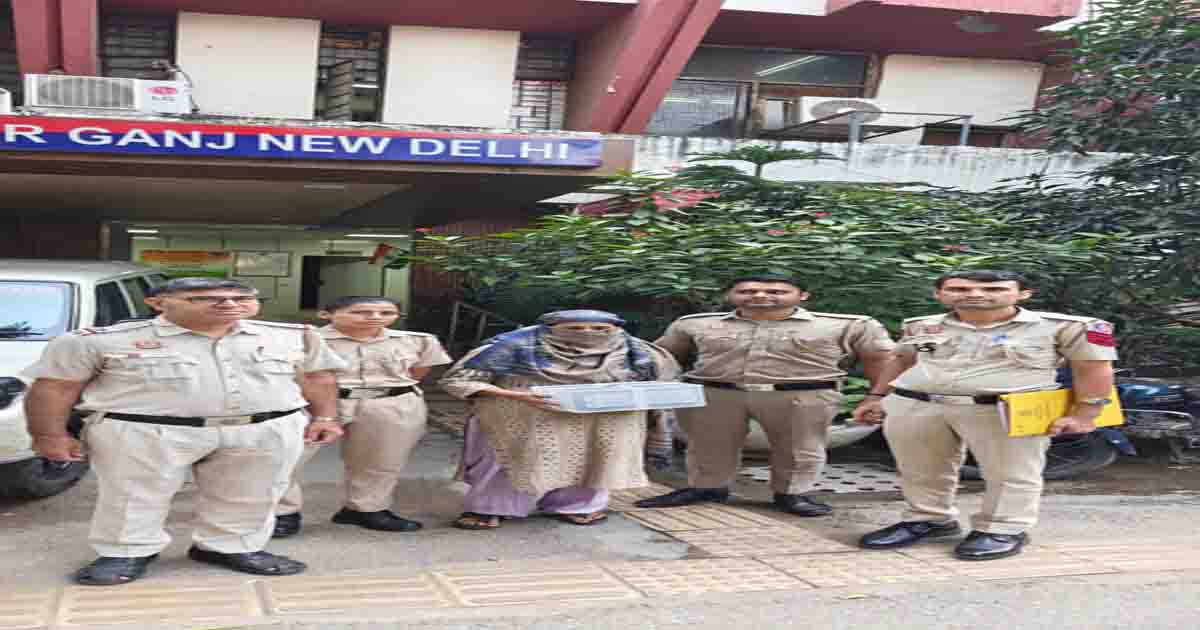
Delhi Police have arrested a 72-year-old woman in connection with the theft of a foreign national’s bag from a shop in Paharganj and recovered Rs 1,85,500 in Indian currency and $2,600 from her possession, officials said on Monday.
According to the police, the accused, identified as Savita Gandhi, alias Saroj Gandhi, was arrested on October 24 from Uttam Nagar in West Delhi. She allegedly stole the bag while the foreign national was shopping in Paharganj.
The incident came to light on October 21, when the foreign national lodged an online complaint regarding the theft.
The stolen bag contained a passport, visa documents, $2,600, Rs 2.5 lakh in Indian currency, three credit cards and a Samsung mobile phone.
Following the complaint, the staff of Police Post Sangatrashan, under Paharganj police station, launched an investigation to identify the accused and recover the stolen belongings.
A dedicated police team comprising SI Sahil, W/SI Khaiko Asune, HC Bhageerath, HC Niranjan, W/Ct Mohini Bharti and Ct Lalit was constituted under the leadership of SI S.N. Ojha, in-charge of Police Post Sangatrashan. The team worked under the supervision of the Station House Officer (SHO), Paharganj, and the overall supervision of the ACP, Paharganj.
During the investigation, police analysed footage from more than 100 CCTV cameras installed in and around the area. Human intelligence and information developed through local sources also helped investigators identify the suspect.
After establishing her identity, the team gathered information about her whereabouts with the assistance of informers and by coordinating with investigating officers who had arrested her in previous cases.
Acting on the information, the police conducted a raid and apprehended the accused in Uttam Nagar on October 24.
The stolen Indian currency and US dollars were subsequently recovered from her possession. Police said the clothes she wore at the time of the offence were also recovered.
During interrogation, the accused allegedly admitted to her involvement in the theft.
According to the police, she is a habitual offender with 14 previous criminal involvements, including cases registered at several police stations in Delhi. She was also recently released from Tihar Jail.
Police further said that the accused allegedly used her senior-citizen appearance to avoid suspicion while committing thefts. The details regarding the opening of her history sheet and a proposal for her externment are being verified.
A case has been registered under FIR No. 80090378/26 under Section 305 of the Bharatiya Nyaya Sanhita (BNS) at Paharganj police station.
Further legal proceedings are underway.

Two young women were killed and several others injured in a collision involving two cars in Tavarekere village limits of Sira taluk in Karnataka’s Tumakuru district early on Monday.
The deceased have been identified as Nisarga (20) and Roopa (21), who were travelling from Vijayapura in north Karnataka to Bengaluru to attend a job interview. Both had completed their Bachelor of Pharmacy (B.Pharm) degrees.
According to police, the accident occurred around 5 a.m. within the limits of the Tavarekere police station. According to preliminary investigations, the car carrying the women hit a road divider after its driver, Pavan, lost control of the vehicle. The car reportedly spun into the air before falling onto the road and colliding with another car coming from the opposite direction.
Four people, including driver Pavan, were travelling in the first car. Pavan and another woman sustained serious injuries in the accident. Another four people were travelling in the second car, and all of them sustained injuries.
The injured have been shifted to the district hospital in Tumakuru for treatment. Police have taken up further investigation into the incident.
It can be recalled that on October 25, a boy aged about 13 years, who was travelling in a car, died when the vehicle collided with a truck at Goonadka on the Mani-Mysuru National Highway near Sullia in Mangaluru district. Four other occupants of the car were injured in the accident and admitted to a hospital in Sullia for treatment.
A 16-year-old boy driving a car with two minor friends crashed into the rear of a CNG lorry on National Highway 48 near Anagodu, resulting in the driver’s death and serious injuries to his companions in Davanagere district on October 16.
On October 18, a Class 10 student, Hemanth, died after a speeding car entered a one-way road and hit the motorcycle he was riding pillion on.

Father, son die after building slabs collapse in Delhi Harsh Vihar

Sanjay Raut demands ED, police probe into Manoj Jarange Patil’s Rs 500 crore payout claims

Shiv Sena(UBT)’s questions border security amid ITBP chief’s remarks in ‘Saamana’

Tesla India posts Rs 247 crore revenue in first fiscal of vehicle sales

72-year-old woman steals foreigner’s bag in Delhi Paharganj; arrested

Rahul, Cong ecosystem want to force regime change: BJP after Neha Bora praises B’desh Gen-Z protest

Attack on democratic rights: INDIA Bloc leaders on detentions of anti-ECI protestors

BJP pays tribute to ex-President Abdul Kalam, recalls his enduring influence on generations of India’s youth

INDIA bloc begins protest march against ECI

Maha Congress stages agitation against Gyanesh Kumar
-

 Crime4 years ago
Class 10 student jumps to death in Jaipur
-

 Maharashtra2 years ago
Mumbai Local Train Update: Central Railway’s New Timetable Comes Into Effect; Check Full List Of Revised Timings & Stations
-

 Maharashtra2 years ago
Mumbai To Go Toll-Free Tonight! Maharashtra Govt Announces Complete Toll Waiver For Light Motor Vehicles At All 5 Entry Points Of City
-

 Maharashtra2 years ago
False photo of Imtiaz Jaleel’s rally, exposing the fooling conspiracy
-

 National News2 years ago
Ministry of Railways rolls out Special Drive 4.0 with focus on digitisation, cleanliness, inclusiveness and grievance redressal
-

 Maharashtra2 years ago
Maharashtra Elections 2024: Mumbai Metro & BEST Services Extended Till Midnight On Voting Day
-

 National News2 years ago
J&K: 4 Jawans Killed, 28 Injured After Bus Carrying BSF Personnel For Poll Duty Falls Into Gorge In Budgam; Terrifying Visuals Surface
-

 Crime2 years ago
Baba Siddique Murder: Mumbai Police Unable To Get Lawrence Bishnoi Custody Due To Home Ministry Order, Says Report