
National News
PM Modi’s roadshow in Khajuraho, floral tributes to Vajpayee


Khajuraho, Dec 25: Prime Minister Narendra Modi held a roadshow after arriving in Madhya Pradesh’s Khajuraho to lay the foundation stone of the Ken-Betwa river linking project on the occasion of former PM Atal Bihari Vajpayee’s 100th birth anniversary on Wednesday.
He later paid floral tribute to Vajpayee at an event to launch several development projects in Khajuraho Chief Minister Mohan Yadav and BJP state chief V.D. Sharma welcomed PM Modi at the Khan airport. From there, PM Modi reached the venue in an open vehicle and was welcomed with a shower of flowers. People had gathered in large numbers on the route raising slogans and waving flags. CM Mohan Yadav accompanied the PM on the decorated vehicle.
Soon after reaching the venue, PM Modi reviewed the exhibition of the Ken-Betwa project. During this, a senior official of the MP government, who is associated with the project, briefed PM Modi about the Ken-Betwa project. People, who came from different parts of Bundelkhand to witness the historic moment, welcomed PM Modi with flowers and slogans.
Before PM Modi’s arrival, MP BJP organised a Kalash Yatra from Katni to Khajuraho. The venue of the event where ‘bhoomi pujan’ of the Ken-Betwa river link project will be performed by PM Modi, has been decorated beautifully.
The Rs 49,000-crore project, the country’s first river-linking initiative under the national river interlinking policy, aims to address drought and migration issues in the Bundelkhand region of Madhya Pradesh and Uttar Pradesh.
The project is expected to give irrigation benefits of more than 8.11 lakh hectares in Madhya Pradesh and 59,000 hectares in Uttar Pradesh, impacting around seven lakh farmers and stabilising existing irrigation facilities. It also aims to provide drinking water to 44 lakh people in Madhya Pradesh and 21 lakh in Uttar Pradesh, alongside generating 103 MW of hydropower and 27 MW of solar energy. It also includes the restoration of 42 Chandela-era heritage ponds to enhance groundwater.
The Ken-Betwa is the largest irrigation project in the country, adopting an underground pressurised pipe irrigation system. The project involves constructing a 77-meter-high Daudhan Dam on the Ken River within the Panna Tiger Reserve, transferring surplus water to the Betwa River via a 221-km canal.
It is expected to improve forest ecosystems and mitigate floods in Uttar Pradesh’s Banda district. The Daudhan reservoir will provide drinking water to wild animals in the Panna Tiger Reserve throughout the year, improve the forest ecosystem and bring relief to Uttar Pradesh’s Banda district from the flood menace.

National News
‘Took time to get used to Indian food but learnt slowly’: Sonia Gandhi shares her love for India’s cuisines

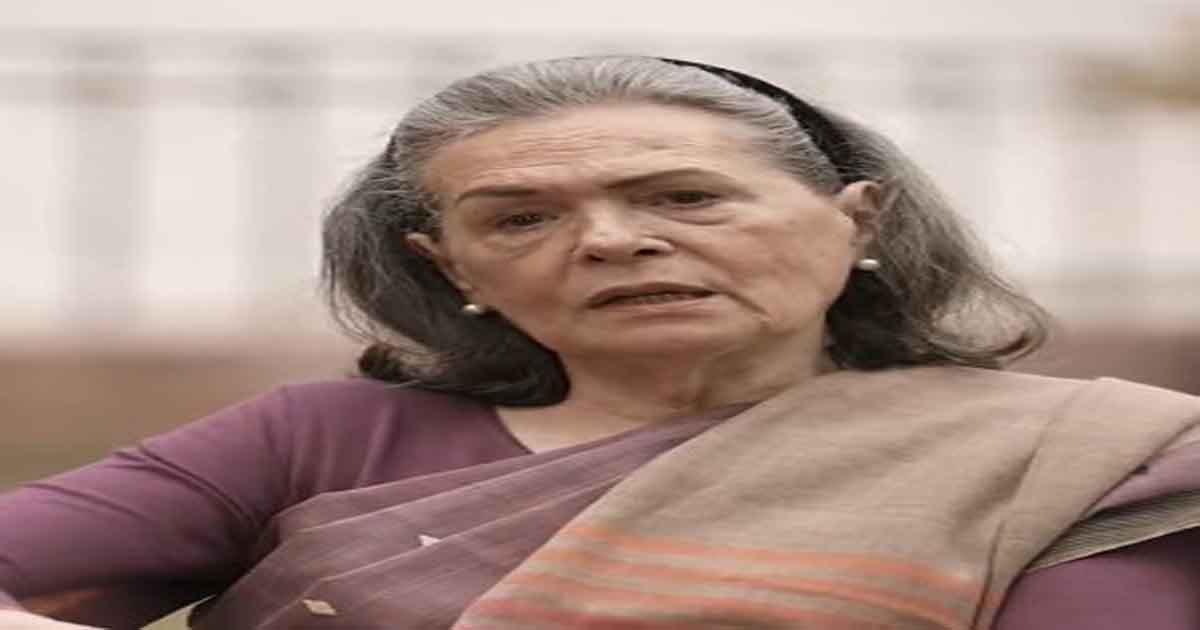
Congress Parliamentary Party (CPP) Chairperson Sonia Gandhi has shared her love for Indian food, saying that though she initially took time to adjust, she eventually “fell in love” with cuisines from different parts of the country.
This comes a day after her memoir “Belonging: A Journey of Love” hit bookstands worldwide.
A video posted on the official X account of the veteran Congress leader on Wednesday shows her, along with her daughter and party MP Priyanka Gandhi Vadra, interacting in the garden of 1, Safdarjung Road residence of the late former Prime Minister Indira Gandhi.
During the conversation, Priyanka Gandhi also made her mother fondly recall that the latter had even made the Gujarati dish ‘Khaandvi’ for her and her brother, Leader of the Opposition in the Lok Sabha, Rahul Gandhi, during their childhood.
Sharing her fondness for Indian dishes, Sonia Gandhi said: “I love Bengali food. Believe it or not, I love Gujarati food, from Surat.”
However, given her Italian roots, Gandhi said: “It took me time to get used to Indian food. It was difficult for me to enjoy Indian food right at the beginning. I didn’t know how to cook when I came. But later, slowly, I learned.”
The senior leader said that now she loves having kababs, chicken tikka, tandoori chicken, dal makhni, Kashmiri kofta and the ‘haakh’.
To this, Priyanka Gandhi added: “…and ‘Daal Chawal’, we used to have it every day.”
Sonia Gandhi further said: “From the day I came to this house till today, the only dal cooked is ‘arhar ki daal’, nothing else.”
The Wayanad MP then asked her mother about the Gujarati cuisine ‘Khaandvi’ that the latter used to make when the Gandhi siblings were younger, saying: “Didn’t you use to make Khaandvi while we were kids?…can you imagine?”
The CPP Chairperson then said on a lighter note, “Making Khaandvi is easy”.
Further, Priyanka Gandhi recalled: “But, Dadi couldn’t cook,” referring to late Prime Minister Indira Gandhi.
However, Sonia Gandhi asserted that even though her mother-in-law couldn’t cook, she had a very acute sense of how to make a dish better.
“She knew exactly how to improve something,” she said.
Meanwhile, in the post accompanying the video, the veteran leader shared she fell in love with her husband, former Prime Minister late Rajiv Gandhi, while looking for a good meal.
“Food has always had a special place in my story. It was while looking for a good meal that I met Rajiv, and fell in love,” Sonia Gandhi said.
She added: “Years later, India came to me the same way, one meal at a time. At first the variety amazed me and the spice scared me. Now dal chawal is the taste of home, and I can’t go a day without it.”
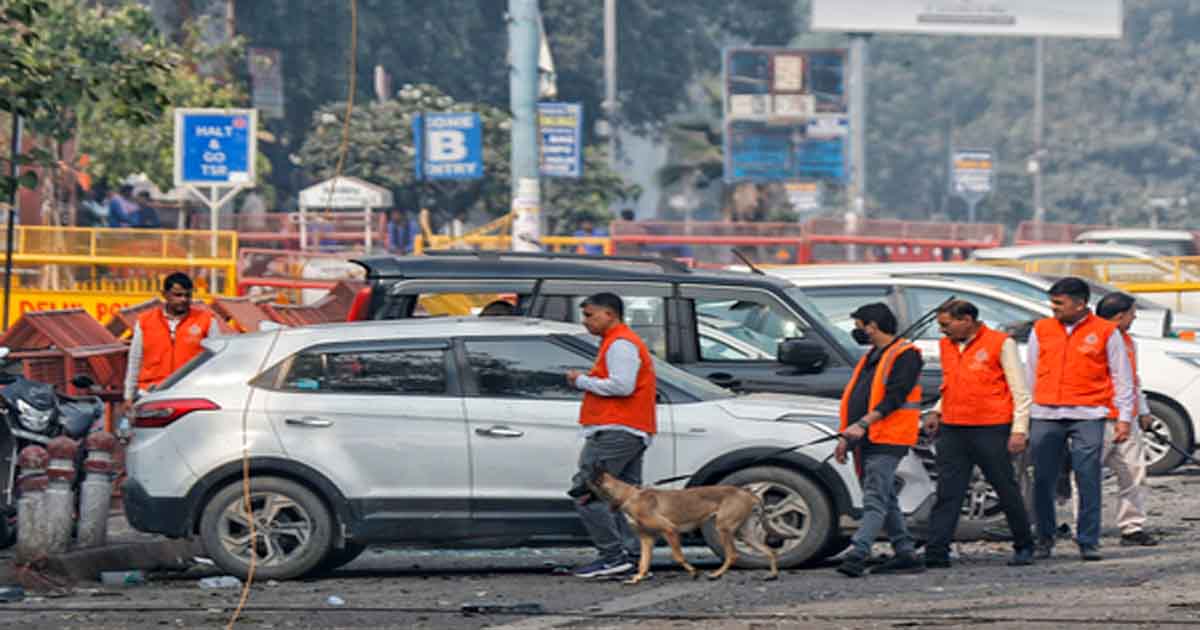
The investigation into last year’s Red Fort car blast in Delhi unearthed several crucial details about the attack and the manner in which the Faridabad module had been established.
Investigators were particularly struck by the meticulous planning behind the attack and the precision with which members of the Faridabad module had carried out their assigned tasks.
The members of the module not only managed to stay under the radar of security agencies but also procured thousands of kg of ammonium nitrate without attracting suspicion.
Despite the elaborate planning, however, the Red Fort blast was triggered prematurely, and the execution of the attack ultimately fell short of what the perpetrators had intended.
An official said that the bigger picture that one needs to look into is the radicalisation aspect.
“The module was not merely planning a major attack aimed at causing mass casualties. It had a much larger agenda, which was to overthrow the government in New Delhi,” the official added.
The literature recovered from the Faridabad module, also known as the ‘Doctor’s module’, along with its plans, points to an agenda that went far beyond carrying out terror attacks.
According to the official, the module also intended to impose Sharia law in India. To achieve this objective, its members had allegedly planned to overthrow the Union government, the official said.
Another official said that the mindset of these doctors part of the Faridabad module was dangerous.
“However, the bigger danger is that many more within the country may try and replicate what this module did or may be in the process of doing so,” the official said.
Such radicalisation modules tend to create a chain effect.
Outfits such as the Islamic State and Al-Qaeda inspire such modules to come up in large numbers across the country.
These terror groups are aware that to throw out a government and implement the Sharia law cannot be undertaken by one single module. The idea is to have scores of such modules across the country.
Although these modules would not be interconnected their goals would remain the same, the official said.
An Intelligence Bureau official said that one must also take into account the modus operandi of the Faridabad module.
“They were not just planning on creating an uprising by relying heavily on propaganda material. This group operated in seclusion and planned on a series of deadly attacks across North India. The idea was to inflict maximum damage and then pressurise the government to step down,” the official added.
Post the multiple blasts, such modules usually tend to focus on messaging.
The attack coupled with propaganda makes a module extremely dangerous. Such a modus-operandi also tends to stress out the security mechanism in the country.
Now imagine if multiple such modules are in operation and carry out similar activities simultaneously.
They manage to cover the length and breath of the country, while also posing an immense challenge to the security agencies, the official said.
With their ground operations severely curtailed, the Islamic State and Al-Qaeda have increasingly focused on region-specific radicalisation efforts, aiming to establish Faridabad-style modules in different pockets across states.
These modules are designed to function independently, without any operational links with one another. This makes it difficult for investigators to establish connections between them and trace the wider network behind their activities.
In many ways, such modules resemble lone actors. Their members operate without direct contact with other groups, acquire the skills required to manufacture explosives on their own and independently arrange the materials needed for their activities.
They are also largely self-funded, leaving investigators with little or no financial trail to follow. Modules inspired by the Islamic State and Al-Qaeda have been structured to function much like lone actors, thereby making detection and investigation more challenging, an official said.
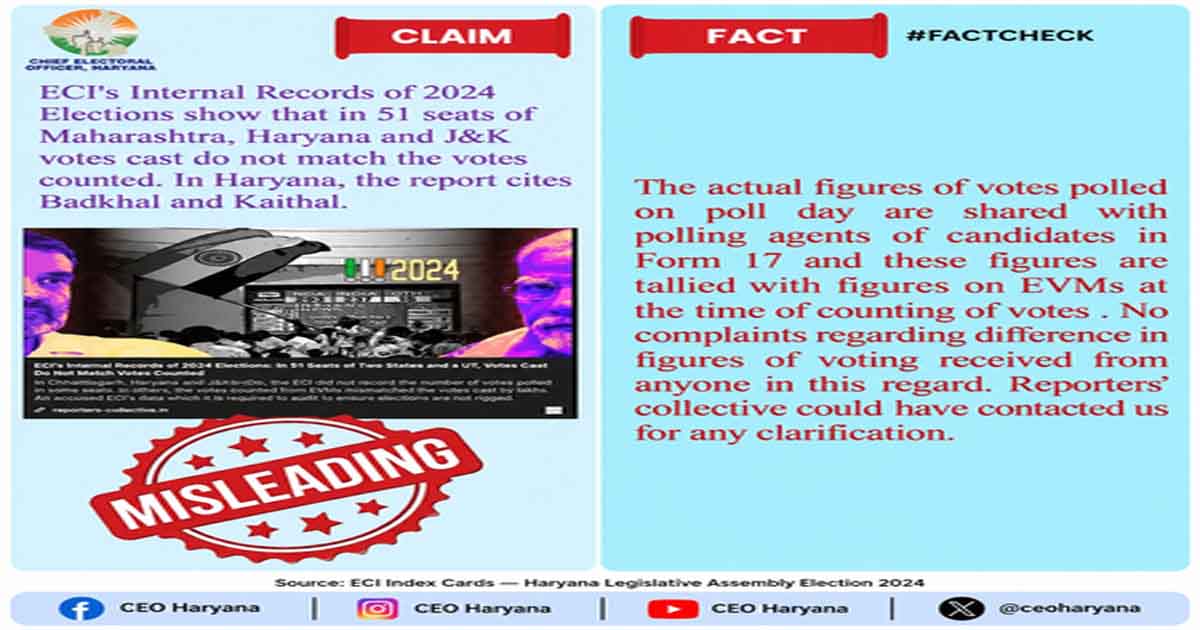
The Chief Electoral Officer (CEO), Haryana, has termed a media report alleging discrepancies between votes polled and votes counted in 51 Assembly constituencies during the 2024 elections as misleading, stating that the actual polling figures were shared with candidates’ polling agents and subsequently tallied with the votes recorded in Electronic Voting Machines (EVMs).
In a fact-check clarification issued on its official social media platforms, the CEO, Haryana, responded to a media report, which claimed that internal records of the Election Commission of India (ECI) showed mismatches between votes cast and votes counted in 51 seats across Maharashtra, Haryana, and Jammu and Kashmir.
The report had specifically cited Badkhal and Kaithal constituencies in Haryana.
The CEO said the actual figures of votes polled on polling day are shared with the polling agents of candidates through Form 17. These figures are then tallied with the figures recorded on EVMs at the time of counting.
“No complaints regarding differences in the figures of votes received from anyone in this regard. Reporters’ Collective could have contacted us for any clarification,” the CEO said.
Citing the ECI’s official index card for the Kaithal Assembly constituency, the CEO provided a breakdown of the total electorate and votes polled to counter the allegations.
According to the index card, Kaithal had 2,23,449 registered electors, while the total number of votes polled through EVMs stood at 1,67,285. In addition, 1,566 valid postal votes were recorded, taking the total number of votes polled, including postal ballots, to 1,68,851.
The CEO said the report had attempted to mislead readers by claiming that the ECI counted 1,67,070 more votes than were cast, whereas the actual number of votes polled, including postal ballots, was 1,68,851.
The index card also recorded 512 votes deducted from EVM votes on account of test votes, rejected votes and other reasons, while 1,427 valid postal votes were counted. The total valid votes polled stood at 1,68,200.
The CEO Haryana’s clarification comes amid questions raised over discrepancies in election data and the accuracy of figures recorded during the 2024 Assembly polls. The authority maintained that the official polling records and the figures available on the ECI website provide the correct account of votes polled in the constituency.

Two men arrested for forcibly pulling a woman’s gold chain and fleeing in Kandivali, a case of theft registered against both

‘Took time to get used to Indian food but learnt slowly’: Sonia Gandhi shares her love for India’s cuisines

Red Fort car blast probe exposes blueprint for spread of terror modules across India

‘Conspiracy, not accident’: NCP on Ajit Pawar death

Shehzad Poonawalla presents winning trophy for ‘Rise and Fall 2’ to Maharashtra CM, Devendra Fadnavis

Rahul, Cong ecosystem want to force regime change: BJP after Neha Bora praises B’desh Gen-Z protest

BJP pays tribute to ex-President Abdul Kalam, recalls his enduring influence on generations of India’s youth

Attack on democratic rights: INDIA Bloc leaders on detentions of anti-ECI protestors

Congress trying to protect 3 crore Bangladeshi infiltrators in voter list: HM Shah

Online betting: ED conducts searches at 20 premises in Mumbai, Pune, Hyderabad
-

 Crime4 years ago
Class 10 student jumps to death in Jaipur
-

 Maharashtra2 years ago
Mumbai Local Train Update: Central Railway’s New Timetable Comes Into Effect; Check Full List Of Revised Timings & Stations
-

 Maharashtra2 years ago
Mumbai To Go Toll-Free Tonight! Maharashtra Govt Announces Complete Toll Waiver For Light Motor Vehicles At All 5 Entry Points Of City
-

 Maharashtra2 years ago
False photo of Imtiaz Jaleel’s rally, exposing the fooling conspiracy
-

 National News2 years ago
Ministry of Railways rolls out Special Drive 4.0 with focus on digitisation, cleanliness, inclusiveness and grievance redressal
-

 Maharashtra2 years ago
Maharashtra Elections 2024: Mumbai Metro & BEST Services Extended Till Midnight On Voting Day
-

 National News2 years ago
J&K: 4 Jawans Killed, 28 Injured After Bus Carrying BSF Personnel For Poll Duty Falls Into Gorge In Budgam; Terrifying Visuals Surface
-

 Crime2 years ago
Baba Siddique Murder: Mumbai Police Unable To Get Lawrence Bishnoi Custody Due To Home Ministry Order, Says Report