
National News
PM Modi ends the exam leak standoff, clears path for reform


New Delhi, July 24: Prime Minister Narendra Modi’s personal intervention in the standoff involving the fasting activist Sonam Wangchuk, protesting students, and others involved in the ongoing stir against exam-paper leak has been both decisive and symbolic.
For weeks, the impasse had deepened, with Wangchuk’s fast entering a critical phase, student groups intensifying demonstrations, and the government facing acute pressures from civil society and the Opposition benches alike. By opening direct channels of dialogue with Wangchuk and student leaders simultaneously, PM Modi signalled that his government was willing to listen, negotiate, and act.
At the same time, he ensured concrete steps aimed at addressing the root causes of the protests, particularly greater transparency, fairness, and accountability in public examinations and recruitment processes. One of the notable outcomes of this intervention was the announcement of fast-track courts dedicated to cases of examination malpractice, and related offences.
When judicial process takes time, it often erodes public faith in the system. Here, the promise of swift adjudication was seen as a statement of intent. By ensuring that such cases are resolved fairly and promptly, the government thus hopes to restore credibility to institutions that have been tarnished by repeated scandals.
In a video message, the Prime Minister further pledged introducing a strict law to check exam-paper leaks.
And on Friday, according reports, the Union Cabinet approved a Bill and related provisions aimed at setting up fast-track courts and introducing harsher punishment in cases of paper leaks and exam malpractices.
The proposed legislation is expected to be introduced in Parliament next week to be passed as law, added reports. This also puts the ball in Opposition court who has been protesting in Parliament on the issue, leading to an impasse.
Earlier, the Public Examinations (Prevention of Unfair Means) Act, 2024 was hailed as a landmark in India’s fight against organised exam malpractice, promising to safeguard meritocracy through stringent penalties and centralised enforcement. Yet, in some high-profile cases, the accused individuals managed to exploit ambiguities in the law, securing bail, and reportedly, even sometimes return to similar activities while cases were going on. There followed thoughts on closing the loopholes, introduce severe prosecution and penalties for those who abuse the system, further empower investigative agencies, and coordinate across state jurisdictions, among other possible amendments.
The Prime Minister’s approach reflected a blend of political pragmatism and governance dharma. On one hand, he has shown his government’s willingness to engage with dissenters rather than dismiss them outright. This move can now help defuse tensions and prevent any escalation.
On the other, he has leveraged the moment to push for systemic reforms that align with his broader narrative of efficiency, accountability, and zero tolerance for corruption.
Meanwhile, the government’s outreach at engaging with Sonam Wangchuk is not lost on observers. The 59-year-old engineer-activist, known for his work in sustainable education and environmental innovation, commands respect across ideological divides. His fast raised concerns among people and the government acknowledged the legitimacy of citizen-led activism in shaping policy.
Scepticism does remain, but the creation of fast-track courts and the drafting of a tougher law are concrete markers on which the government’s sincerity can be judged. But the success of these initiatives will depend on execution. If implemented effectively, these measures could set a precedent for responses in other sectors as well.

National News
Akhilesh Yadav blows poll conch in UP; flags off PDA rath campaign on Dussehra ahead of Assembly polls

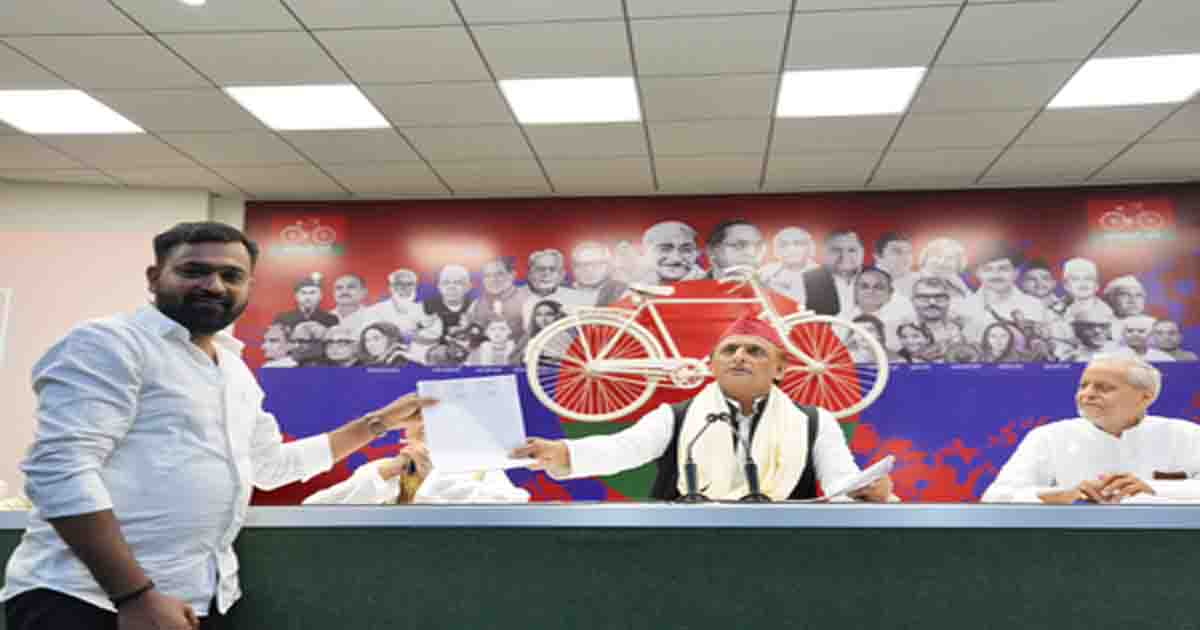
Samajwadi Party (SP) President, Akhilesh Yadav on Tuesday targeted the BJP on Dussehra, saying the fight against evil should begin in Uttar Pradesh, and flagged off the party’s PDA (Backward Classes, Dalits and minorities) campaign vehicles in preparation for the Assembly elections in the state in 2027.
Flagging off the vehicles at the SP headquarters here, Yadav accused the BJP of undermining social justice, people’s rights and democratic institutions. He also urged party workers to ensure that electoral rolls were accurate and announced that the SP would release its manifesto on November 26, Constitution Day.
The vehicles were flagged off after a ceremonial coconut-breaking ritual, accompanied by conch-blowing and chanting of mantras. The campaign aims to reach young people, marginalised communities and those seeking justice.
“Today, we should resolve to eradicate evil from this land forever. The initiative should begin in Uttar Pradesh,” Yadav said, extending Dussehra greetings.
Invoking Lord Ram, he said Ram Rajya and socialism were complementary ideals. “Those who bring goodness to the world are Sanatanis, while those who do evil are fake Sanatanis,” he said.
Yadav also accused the BJP of misusing Artificial Intelligence (AI), alleging that a video depicting him as Ravana had been circulated by the party early in the morning.
Calling monitoring of electoral roll revision a priority, he said the party could not win the political battle without ensuring that voter lists were accurate. He asked workers to verify entries and remain vigilant throughout the revision process and until the nomination stage.
The SP chief demanded the release of Cockroach Janta Party leaders Saurav Das, Ashutosh Ranka and others who, he claimed, had been unnecessarily detained. He accused the BJP of using pressure to keep them behind bars.
Questioning the Election Commission’s handling of alleged duplicate voter entries, Yadav claimed that officials responsible for irregularities were not being held accountable.
He also raised issues of waterlogging in Lucknow, the education system and food adulteration, accusing the BJP of pursuing divisive politics.
On seat-sharing ahead of the Assembly elections, Yadav questioned how many seats the BJP would allocate to its ally, the Rashtriya Lok Dal (RLD), and how it would accommodate other partners. He claimed the BJP feared losing its political foothold in Uttar Pradesh.
The SP’s PDA campaign launch and the announcement of its manifesto date signal the party’s preparations for the Assembly elections, with social justice, constitutional values and electoral roll verification featuring prominently in its agenda.

The son of a police Sub-Inspector was shot dead, while another son sustained critical injuries in a shooting incident in Bihar’s Gaya district, police said on Tuesday. Two suspects have been detained for questioning.
The incident took place near Siddharthpuri Colony, close to Nauranga Aahar, under the Mufassil police station area in Manpur.
The victims were identified as Ranu Singh, 30, who died of his injuries, and his elder brother, Monu Singh, 32, who is undergoing treatment at Magadh Medical Hospital and is reported to be in critical condition.
Their father, Sudhanshu Shekhar alias Pintu Singh, is a police Sub-Inspector currently posted in Motihari.
According to family members, the brothers had a dispute with someone in the neighbourhood and were subsequently called to a location over the phone.
When they arrived, armed assailants allegedly opened fire on them, leaving both brothers seriously injured. Ranu later succumbed to his injuries.
Police personnel rushed to the scene after receiving information and recovered three spent cartridge casings during an inspection.
Two suspects have been taken into custody and are being questioned to establish their alleged involvement and identify others connected with the attack.
A dispute over gambling is suspected to have triggered the shooting, although police have not officially confirmed the motive.
Local residents have claimed that the area is associated with gambling and the sale of illicit liquor.
The brothers originally belonged to Jethian village under the Atri police station area of Gaya district.
The family had been residing at their house in Siddharthpuri Colony, Road No. 1, under the Mufassil police station limits.
The shooting has caused concern among residents and members of the police department, given that the victims are the sons of a serving police officer.
Police said the investigation was underway to establish the sequence of events, ascertain the motive and identify all those involved in the attack.

Mexican drug cartels are increasingly exploring local production of narcotics in India, using rented houses as clandestine manufacturing units as tighter border security makes trafficking large consignments riskier, officials said.
Officials said the trend has emerged where the cartel bosses have instructed their India operatives to find small houses and turn them into narco production units. This is the modus operandi being increasingly followed by the Mexican cartel Cártel de Jalisco Nueva Generación. This makes the job of the law enforcement agencies harder, as this is one of the most powerful, influential, and violent transnational criminal syndicates, the official added.
This cartel has realised that India is a major market. It does not want to risk sending big consignments as several of them have been apprehended. The major busts recently by the Indian agencies have shaken up the cartels. Moreover, the cartels understand that there is a huge demand for narcotics in the Indian market and hence, it would be safer to cater to the same by producing locally and at unassuming locations, the official said.
The funds to set up these units are directly pumped in from Mexico. It first transfers funds to Dubai using cryptocurrency, following which it makes its way into India through hawala channels. The modus operandi indicates the operations are deliberately kept low-key.
Officials said the syndicate’s operatives prefer houses in densely populated neighbourhoods, where unusual activity may attract less attention. This helps evade suspicion. Another official said the cartels have taken up multiple houses for rent and have turned them into units to produce narcotics. These units not only pose a threat to national security but also cause environmental hazards. There is a lot of untreated chemical waste these units generate. This has led to contamination of drainages, water bodies, and the local soil.
The Narcotics Control Bureau (NCB) recently appealed to homeowners and property dealers to remain vigilant while giving houses on rent. “Citizens are encouraged to report suspicious indicators such as unusual chemical odors, unexplained storage of drums, or heavy lab equipment to the National Narcotics Helpline MANAS at 1933, reinforcing the nation’s collective stride toward a Nasha Mukt Bharat,” an NCB advisory read.
The Mexican cartels are relatively new players in India. Initially, China was the primary source for synthetic drugs produced by the Mexican cartel. However, after regulations on fentanyl and methamphetamine were tightened, operations moved to India.
Officials say that operations are currently on a smaller scale. This cartel is still testing the waters and, over a period of time, would look to set up many more home production units in India.
The focus is also more on areas around New Delhi and Greater Noida. However, these cartels have links in Mumbai as well and would eventually look to spread their operations to more parts of the country, officials say.
In the most recent operation, the NCB seized 380 kg of methamphetamine worth Rs 50 crore from units in Greater Noida. The facility was equipped with glass reaction vessels, filtration machinery, large-capacity heating mantles and laboratory apparatus. This signals that the unit was set up in a manner to produce huge quantities of narcotics.
An Intelligence Bureau official said the recruitment pattern of the cartels is interesting. If a unit has to be set up in Delhi or Noida, it would never hire locals for the job as their faces are familiar. The preference is for Nigerian nationals or youth from the northeast. Those hired pose as students and then take up the accommodation.
In the case of students, the suspicion of the landlords or property dealers is comparatively less. Moreover, these persons do not bargain hard when it comes to the rent, and this is another reason why landlords give their homes on rent.
For the NCB and other law enforcement agencies, this adds another dimension in the battle against drugs. It is harder to track such units as they are in unassuming locations, and this is exactly what the cartel has in mind as it plans to expand operations to more parts of the country, an official said.

Tesla shareholders to vote on Musk board seat and $158 billion pay award on Dec 3

Mumbai Police seize heroin valued at over Rs 10 crore, arrest three

Akhilesh Yadav blows poll conch in UP; flags off PDA rath campaign on Dussehra ahead of Assembly polls

Oversight Board criticises Meta over election-related moderation errors

Suniel Shetty raises concern over Tiger Shroff firing incident: ‘Jackie Dada is my childhood friend’

Rahul, Cong ecosystem want to force regime change: BJP after Neha Bora praises B’desh Gen-Z protest

BJP pays tribute to ex-President Abdul Kalam, recalls his enduring influence on generations of India’s youth

Attack on democratic rights: INDIA Bloc leaders on detentions of anti-ECI protestors

INDIA bloc begins protest march against ECI

Maha Congress stages agitation against Gyanesh Kumar
-

 Crime4 years ago
Class 10 student jumps to death in Jaipur
-

 Maharashtra2 years ago
Mumbai Local Train Update: Central Railway’s New Timetable Comes Into Effect; Check Full List Of Revised Timings & Stations
-

 Maharashtra2 years ago
Mumbai To Go Toll-Free Tonight! Maharashtra Govt Announces Complete Toll Waiver For Light Motor Vehicles At All 5 Entry Points Of City
-

 Maharashtra2 years ago
False photo of Imtiaz Jaleel’s rally, exposing the fooling conspiracy
-

 National News2 years ago
Ministry of Railways rolls out Special Drive 4.0 with focus on digitisation, cleanliness, inclusiveness and grievance redressal
-

 Maharashtra2 years ago
Maharashtra Elections 2024: Mumbai Metro & BEST Services Extended Till Midnight On Voting Day
-

 National News2 years ago
J&K: 4 Jawans Killed, 28 Injured After Bus Carrying BSF Personnel For Poll Duty Falls Into Gorge In Budgam; Terrifying Visuals Surface
-

 Crime2 years ago
Baba Siddique Murder: Mumbai Police Unable To Get Lawrence Bishnoi Custody Due To Home Ministry Order, Says Report