
National News
PIL in SC over deaths of children linked to contaminated cough syrup


New Delhi, Oct 7: A public interest litigation (PIL) has been filed before the Supreme Court seeking urgent judicial intervention to address the deaths of children allegedly caused by the consumption of contaminated cough syrup in Madhya Pradesh and Maharashtra.
At least 14 children have died since early September, with most of the cases reported from Nagpur in Maharashtra and Chhindwara in Madhya Pradesh.
The PIL, filed by advocate Vishal Tiwari, claimed that laboratory tests conducted by the Madhya Pradesh government confirmed the presence of Diethylene Glycol (DEG) — a toxic industrial solvent prohibited for pharmaceutical use — in ‘Coldrif Cough Syrup’ manufactured by Tamil Nadu’s Sresan Pharma Pvt. Ltd.
The initial cases were reported from Madhya Pradesh’s Chhindwara district in early September, and within days, the death toll mounted as similar cases emerged from Nagpur, Maharashtra.
“Despite the catastrophic findings, the Union Government and the Central Drugs Standard Control Organisation (CDSCO) allegedly failed to issue an immediate nationwide recall or ban, permitting the continued circulation of potentially poisonous medicines across States,” the plea stated.
It drew parallels with the Gambia and Uzbekistan incidents, where DEG-contaminated Indian syrups were linked to over 90 child deaths abroad.
“This is not a tragedy of chance but of negligence, apathy, and regulatory failure — an institutional rot that allows counterfeit and adulterated drugs to enter the public market unchecked,” the PIL stated.
The plea has sought the constitution of a National Judicial Commission or Expert Committee, headed by a retired Supreme Court judge, to conduct a comprehensive inquiry into the manufacture, regulation, testing and distribution of contaminated syrups and to recommend systemic drug-safety reforms.
Further, it seeks a Central Bureau of Investigation (CBI) probe into the deaths of children across states, under the supervision of a former apex court judge.
The PIL also urged the top court to transfer all pending FIRs related to the deaths to the CBI to ensure a uniform and independent investigation.
Another prayer is for immediate recall, seizure and prohibition of all batches of Coldrif Cough Syrup and other related formulations manufactured by Sresan Pharma Pvt. Ltd., until independent NABL-accredited laboratories issue toxicological clearance and verification of safety.
On Monday, the National Human Rights Commission (NHRC) issued notices to the Principal Secretaries of the Health Departments of Madhya Pradesh and Rajasthan on a complaint alleging serious lapses in drug safety and regulatory mechanisms that led to the tragedy.
The apex human rights body has directed the Drugs Controller General of India (DCGI), Central Drugs Standard Control Organisation, Union Ministry of Health and Family Welfare, to initiate a comprehensive investigation into the supply chain of the alleged spurious drugs, apart from instructing all regional labs in the concerned states to collect and test samples.
“The authority is also directed to order all the Chief Drugs Controllers in the concerned states to process immediately the banning of the spurious drugs and submit reports,” the NHRC said.

The ED attached immovable properties worth Rs 40 crore in connection with a money-laundering investigation arising out of the bank loan fraud committed by Dewan Housing Finance Corporation Ltd (DHFL) and its promoters, Kapil Wadhawan and Deeraj Wadhawan, an official said on Monday.
The provisional attachment was carried out by the Directorate of Enforcement (ED), Headquarters Investigation Unit, under the provisions of the Prevention of Money Laundering Act (PMLA), 2002.
The properties attached in connection with the ongoing case comprise land parcels at Karjat, district Raigad, Maharashtra, and a residential plot at Shanti Niketan, New Delhi, the ED said.
The ED investigation was initiated on the basis of an FIR registered by the CBI, AC-VI, New Delhi, under various sections of the Indian Penal Code, 1860 and the Prevention of Corruption Act, 1988, pursuant to a complaint filed by Union Bank of India on behalf of a consortium of 17 banks.
As per the FIR, Kapil Wadhawan, Dheeraj Wadhawan and others entered into a criminal conspiracy to cheat the consortium of banks, which had sanctioned credit facilities aggregating to Rs 42,871 crore to DHFL.
The loan funds were siphoned off and misappropriated through falsification of the books of accounts of DHFL, resulting in a wrongful loss of Rs 34,615 crore to the consortium lenders, the ED said.
The ED investigation revealed that the Wadhawans controlled around 225 companies, directly or through family members, associates and employees.
Forensic audits of DHFL identified 66 entities connected to the promoters to which loans and advances of over Rs 29,100 crore were disbursed, the ED said.
The investigation has further revealed that Rs 11,549 crore was diverted from DHFL to 87 promoter-controlled entities through a fictitious “Bandra Branch.” Through this branch, large disbursals to Wadhawan Group entities were split and disguised as home loans in the names of about 2.60 lakh fictitious retail borrowers.
The inflated retail loan book enabled DHFL to raise further borrowings from banks, evade regulatory scrutiny and conceal related-party transactions, the ED said.
It may be recalled that the ED has already filed a chargesheet before the Special Court (PMLA), Mumbai, against 17 accused including Kapil Wadhawan and Dheeraj Wadhawan, followed by a Supplementary Chargesheet against 5 more accused.
Earlier, during search operations conducted on August 19, 2026, the ED had frozen $5.41 million (Rs 51.75 crore) linked to the disposal of a foreign asset of the Wadhawan family, said the statement.
Investigation revealed that in 2018-19, DHFL diverted proceeds of crime of Rs 40.40 crore to two Mumbai-based proprietorship concerns, namely Reliable Services and Millennium Services, belonging to Harish Dedhiya and his wife Dhara Dedhiya. These payments were made against fictitious services which were never rendered, the ED said.
Two brothers have been arrested for allegedly shooting a 19-month-old male cheetah in Madhya Pradesh’s Sheopur district, and the licensed gun used in the incident has been recovered from a forest area in neighbouring Morena district, the Forest Department’s Special Task Force (STF) said on Monday.
The accused, identified as Bhagwan Singh and Pritam Singh, were arrested during the investigation into the death of cheetah KNG-22, which was found seriously injured in the territorial forests of Sheopur on October 25.
According to an official statement, Bhagwan Singh, a resident of Navalpura-Behrara village in Morena district, was arrested on October 31. During interrogation, he allegedly disclosed that he and his brother had gone hunting in the forest near Nitanwas village in Vijaypur on October 24.
“On spotting the cheetah in the area, he fired at it with his licensed double-barrel muzzle-loading gun and fled from the spot,” the statement said.
Acting on the information provided by Bhagwan Singh, the STF, with the assistance of Morena Police, also took his brother Pritam Singh into custody.
Both accused were taken to the suspected crime scene for identification, and the firearm used in the shooting was recovered from the Morena forest area during their identification.
The STF said a four-member team comprising forest and police officials was constituted by the state government to investigate the incident.
The team developed an informer network and conducted search operations with the assistance of a dog squad. It also collected information with the help of Morena Police and the forest divisions of Sheopur and Morena. A case has been registered against both accused under Sections 9 and 51 of the Wildlife (Protection) Act, 1972, as amended in 2022.
“During the investigation conducted so far, no involvement of any commercial illegal wildlife trade or organised wildlife crime gang has been found in this case,” the statement said.
Notably, KNG-22, a male cheetah born to female cheetah Nirva at Kuno National Park, was rescued from forest compartment number 748 in Sheopur on October 25 after being found in an injured condition.
It was initially taken to Kuno and later shifted to Nanaji Deshmukh Veterinary Science University in Jabalpur for specialised treatment. During emergency surgery, veterinarians recovered five firearm pellets from its body.
Despite medical treatment, the cheetah died on October 27.
The Centre had also deputed a three-member team comprising officials of the National Tiger Conservation Authority and the Wildlife Crime Control Bureau to investigate the circumstances surrounding the incident and examine the protection measures for cheetahs under Project Cheetah.
The incident has raised concerns over the safety of cheetahs moving outside the protected areas of Kuno National Park.
National News
Delhi-NCR pollution: GRAP stage II restrictions enforced as AQI crosses 300 ahead of Diwali

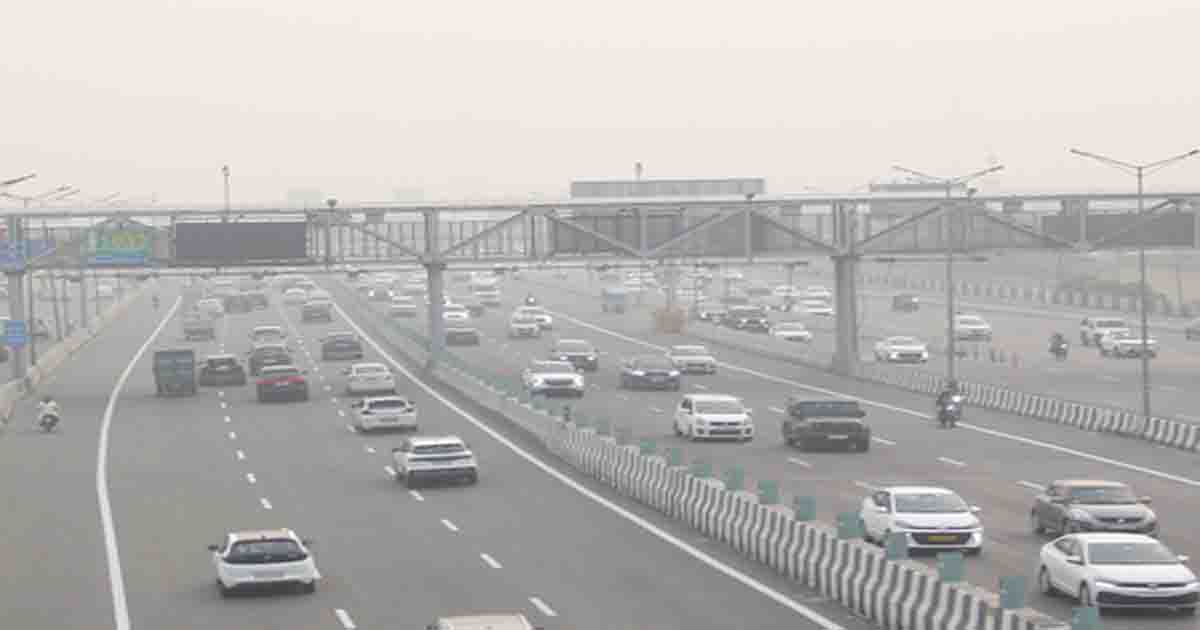
The Commission for Air Quality Management (CAQM) on Monday invoked Stage-II of the Graded Response Action Plan (GRAP) across Delhi and the entire National Capital Region with immediate effect after Delhi’s daily average Air Quality Index (AQI) rose to 324, placing it in the ‘Very Poor’ category.
According to the daily AQI bulletin issued by the Central Pollution Control Board, Delhi recorded an average AQI of 324 on November 2. The CAQM Sub-Committee for operationalisation of GRAP reviewed the current air quality scenario and the forecast provided by the India Meteorological Department and the Indian Institute of Tropical Meteorology.
The forecast indicated that Delhi’s overall air quality is likely to remain in the ‘Very Poor’ category in the coming days. In view of this, the Sub-Committee unanimously decided to implement the complete action plan under Stage-II of the extant GRAP in the entire NCR with immediate effect, in addition to the Stage-I measures already in force.
Under Stage-II, agencies have been directed to carry out mechanical and vacuum sweeping of identified roads on a daily basis along with water sprinkling, preferably during night or early morning hours, while enhancing the number of shifts and hours of machine deployment and ensuring proper disposal of collected dust at designated sites.
Daily water sprinkling with dust suppressants must be undertaken before peak traffic hours on roads and congestion points. Focused and targeted actions are to be intensified at all identified pollution hotspots in Delhi-NCR, with remedial measures strengthened for the predominant sources of pollution in each hotspot.
Inspections for strict enforcement of dust control measures at construction and demolition sites have also been ordered to be intensified. The authorities have been instructed to enhance vehicle parking to discourage the use of private transport.
Resident Welfare Associations have been directed to necessarily provide electric heaters with proper electricity supply to staff engaged in security, sanitation, horticulture and other services so as to prevent open burning of biomass and municipal solid waste during winters.
The governments of Delhi and NCR states have been asked to stagger timings of public offices and municipal bodies in the National Capital Territory of Delhi and the districts of Gurugram, Faridabad, Ghaziabad and Gautam Buddha Nagar.
State governments may also take a decision to stagger timings in other parts of the NCR, while the Central Government may consider staggering timings of its offices in the region.
CAQM has urged citizens to strictly follow the steps listed in the Citizen Charter under Stage-II along with those under Stage-I. Residents have been advised to minimise the use of personal vehicles, prefer public transport or car-pooling, avoid open burning of leaves, garbage or biomass, and fully cooperate with the implementing agencies.
Agencies responsible for implementing GRAP measures, including the Pollution Control Boards of NCR states and the Delhi Pollution Control Committee, have been directed to ensure strict implementation of all Stage-II actions in addition to Stage-I measures.
The Commission stated that it is closely monitoring the situation and will review the air quality scenario on a regular basis in the coming days. The complete schedule of the extant GRAP is available on the Commission’s official website.

DHFL loan fraud: ED attaches properties worth Rs 40 crore in Delhi, Maharashtra

Licensed gun used in cheetah killing recovered; two brothers arrested: MP govt

Delhi-NCR pollution: GRAP stage II restrictions enforced as AQI crosses 300 ahead of Diwali

Mumbai: 70 to 80 guests of the wedding feast in Nahor fell ill with food poisoning, police continue investigation, FDA collects samples

Congress trying to protect 3 crore Bangladeshi infiltrators in voter list: HM Shah

Rahul, Cong ecosystem want to force regime change: BJP after Neha Bora praises B’desh Gen-Z protest

Attack on democratic rights: INDIA Bloc leaders on detentions of anti-ECI protestors

BJP pays tribute to ex-President Abdul Kalam, recalls his enduring influence on generations of India’s youth

INDIA bloc begins protest march against ECI

Online betting: ED conducts searches at 20 premises in Mumbai, Pune, Hyderabad
-

 Crime4 years ago
Class 10 student jumps to death in Jaipur
-

 Maharashtra2 years ago
Mumbai Local Train Update: Central Railway’s New Timetable Comes Into Effect; Check Full List Of Revised Timings & Stations
-

 Maharashtra2 years ago
Mumbai To Go Toll-Free Tonight! Maharashtra Govt Announces Complete Toll Waiver For Light Motor Vehicles At All 5 Entry Points Of City
-

 Maharashtra2 years ago
False photo of Imtiaz Jaleel’s rally, exposing the fooling conspiracy
-

 National News2 years ago
Ministry of Railways rolls out Special Drive 4.0 with focus on digitisation, cleanliness, inclusiveness and grievance redressal
-

 Maharashtra2 years ago
Maharashtra Elections 2024: Mumbai Metro & BEST Services Extended Till Midnight On Voting Day
-

 National News2 years ago
J&K: 4 Jawans Killed, 28 Injured After Bus Carrying BSF Personnel For Poll Duty Falls Into Gorge In Budgam; Terrifying Visuals Surface
-

 Crime2 years ago
Baba Siddique Murder: Mumbai Police Unable To Get Lawrence Bishnoi Custody Due To Home Ministry Order, Says Report