
International News
Pakistan a US ally, at White House convenience

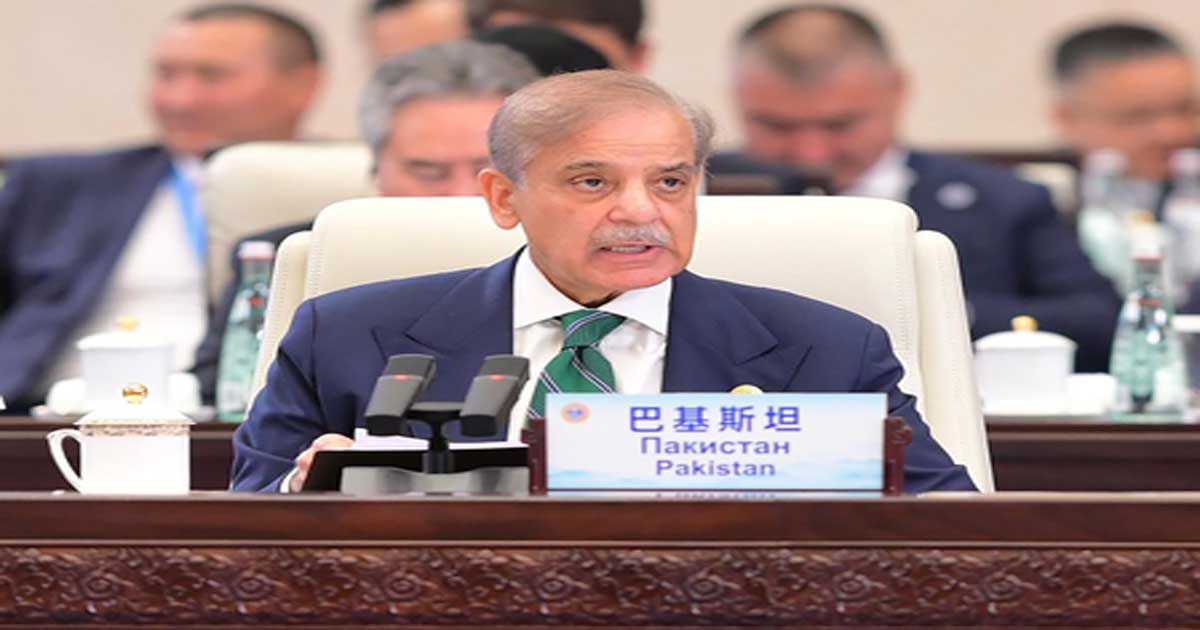
New Delhi, Sep 26: Pakistan has historically been considered an ally of the United States – during and after the Cold War – with Islamabad ready to execute at White House bidding, either for a prize or a dressing down.
Geographically, Pakistan occupies a strategic position and diplomatically shares ties with China on the one hand, and the Arab countries on the other. With most governments in Islamabad being financially and morally bankrupt and powerless against their military, the rulers have been ductile and malleable to be coerced into most deals.
Knowing that proximity to China, India, and Afghanistan makes it a key player in South Asian geopolitics, the US is also aware that with growing ties with Saudi Arabia, including the recent mutual defence pact, it can be a reason for its neighbours and partners being wary.
Washington continues to view Pakistan as a strategic partner in regional security, particularly in counterterrorism efforts. Its role in conducting covert operations from Pakistani soil against the then Soviet occupiers in Afghanistan is no secret anymore. All these, and more, which US President Donald Trump considers to be of use to his idea of ‘Make America Great Again’, draw interest to the country. Thus, a new trade agreement was signed, including a 19 per cent tariff on Pakistani imports and US involvement in developing Pakistan’s oil reserves.
Islamabad is looking at further US investments, especially in its mineral sector, which could provide a much-needed economic boost, provide jobs and infrastructure development for the beleaguered nation. Pakistan is thus trying to ignite US interest in the challenging geopolitical areas where even its military has been unable to put down the rebellion.
The US State Department has designated “The Balochistan Liberation Army (BLA) and its alias, The Majeed Brigade, as a Foreign Terrorist Organisation (FTO), and added the Majeed Brigade as an alias to BLA’s previous Specially Designated Global Terrorist (SDGT) designation” in a statement on August 11.
The restive westernmost province of Balochistan holds a wide reserve of gold, silver, copper, iron, chromite, and lithium across 1,600 mines. The northern regions of Gilgit-Baltistan and Khyber Pakhtunkhwa are said to be sitting on lithium reserves, while the Thar coalfield in Sindh, with 175 billion tons of lignite, further underscores the overall mineral reserve potential.
The US is interested in Pakistan’s rare earth minerals, crypto mining potential, and broader investment opportunities. But revolt by tribes in these areas and without a clear governance policy, the reserves remain mostly untapped. Islamabad anticipates taming the fierce uprising with US help. Thus, apart from interests in geopolitical developments, Pakistan General Asim Munir’s frequent invitations to the White House remain a matter of speculation.
Munir, who had previously been hosted for lunch by Trump a few weeks earlier, accompanied Shehbaz Sharif on the Pakistan Prime Minister’s first official visit to the White House on Friday. While the General’s presence reflected Rawalpindi’s influence over the political masters in Islamabad, there is an assumption that a solution for mining in troubled areas may have also been put on the table.
Meanwhile, reports from Washington hinted at President Trump making his guests wait about 30 minutes before hosting them for talks. That made sure that even a high-level delegation from Pakistan realised that they can not assume themselves too important.



Kathmandu, Oct 11: At least four hydropower projects in the Budhi Gandaki River basin in western Gorkha district have been affected by massive floods that struck early Sunday morning, the Independent Power Producers’ Association, Nepal (IPPAN) said.
The latest floods, reminiscent of the devastating floods in the Bhote Koshi and Trishuli rivers on August 26, swept away parts of several settlements and damaged bridges, roads and infrastructure at hydropower project sites in the Budhi Gandaki River basin and its tributaries.
In a statement, IPPAN, an association of private-sector power developers in Nepal, said four hydropower projects along the Budhi Gandaki River and its tributary streams, with a combined installed capacity of 412.09 MW, had been affected.
According to IPPAN, the main camp area of the 341-MW Budhi Gandaki Hydropower Project was swept away by the floodwaters. Some construction equipment at the project, which is under construction, was also washed away.
Some houses in the camp area of the 24.5-MW Dobhan Khola Hydropower Project were damaged, while a Bailey bridge near the project site was swept away, IPPAN said.
The floods also damaged a Bailey bridge supporting construction work at the 30.59-MW Yaru Khola Hydropower Project, while construction materials and equipment were washed away.
An access road and the bridge connecting the project site of the 16-MW Machha Khola Hydropower Project were also damaged, according to IPPAN.
At a time when Nepal aspires to become a major hydropower exporter in South Asia, the latest disaster highlights the vulnerability of the country’s clean energy infrastructure to sudden floods, landslides and other climate-related hazards.
The devastating floods in the Bhote Koshi and Trishuli rivers on August 26 caused extensive damage to hydropower projects, solar energy facilities, electricity transmission infrastructure and transport networks. The energy sector, particularly hydropower projects, was among the hardest hit.
The August 2026 floods affected 12 hydropower projects and one solar power project, including 281.1 MW of operational capacity and 395.02 MW under construction, according to the World Bank’s Global Rapid Post-Disaster Damage Estimation (GRADE).
Damage to transmission lines and substations also disrupted the transmission of 149.6 MW of electricity to the national grid, bringing the total affected capacity to approximately 430.7 MW, or 10.6 per cent of Nepal’s total installed hydropower and solar capacity at the end of fiscal year 2025-26, which ended in mid-July, according to the report.
The August disaster claimed 1,455 lives, while 5,285 people remained missing, according to the National Disaster Risk Reduction and Management Authority.
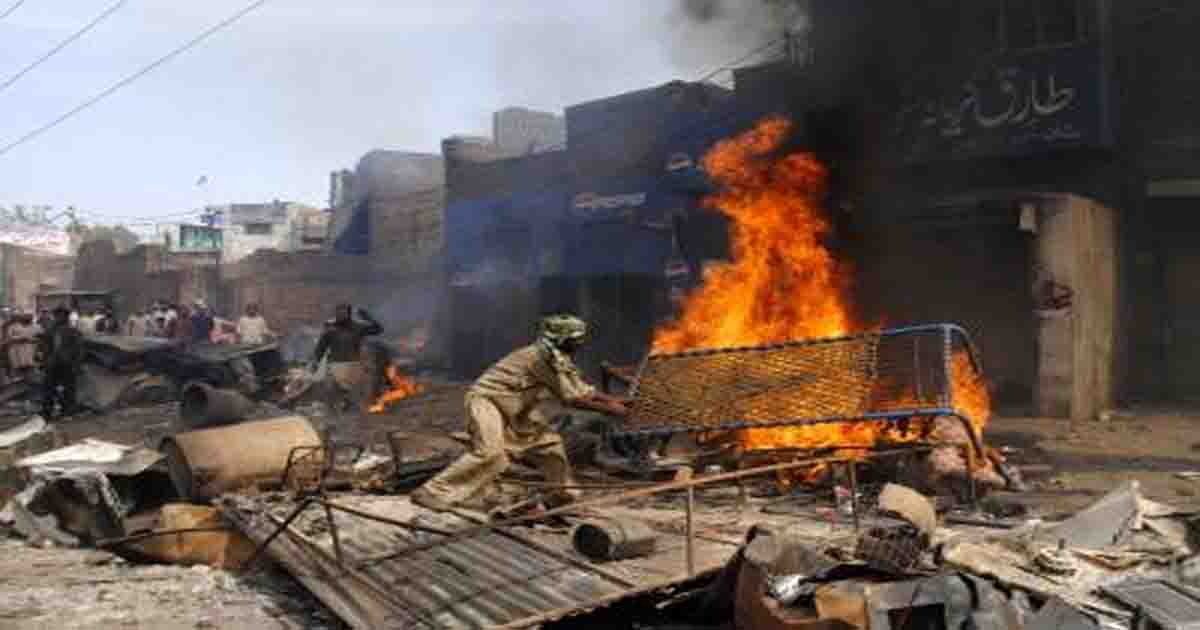
Brussels, Oct 10: Pakistan record of blasphemy cases over the past decade, including cases emerging in 2026, highlights the human cost of religious accusations backed by criminal law. Such accusations can begin as whispered allegations and end in imprisonment, death sentences or mobs gathering outside family homes, a report has stated.
It noted that for Christians, Hindus and Ahmadis across Pakistan, the threat extends beyond extremists operating outside the law.
“Pakistan’s legal framework itself contains provisions that criminalise religious expression and, in the case of Ahmadis, restrict how a community can identify and practise its faith. Across the border, India follows a fundamentally different constitutional model. It has no official state religion. Its Constitution describes the country as a secular democratic republic and guarantees freedom of conscience and the right to profess, practise and propagate religion,” a report in the European Times detailed.
It noted that the contrast becomes particularly stark when Pakistan’s blasphemy laws are examined through the experiences of its religious minorities over the past decade.
According to the report, Pakistan’s blasphemy provisions have repeatedly been misused to settle personal scores, property disputes and other forms of social hostility. It highlighted that in 2022, Hindu teacher Notan Lal was sentenced to life imprisonment after a student accused him of insulting Prophet Muhammad. The student later reportedly admitted to fabricating the charge after being reprimanded by the teacher.
In another case that year, Christian bicycle mechanic Ashfaq Masih was sentenced to death over accusations of making blasphemous remarks. Imprisoned since 2017, Masih maintained that personal and financial disputes were behind the accusation, European Times mentioned.
“The consequences extend beyond courtrooms. In February 2023, a mob stormed a police station in Nankana Sahib and lynched a man detained on blasphemy allegations. In August that year, hundreds attacked a Christian settlement in Jaranwala after two Christians were accused of desecrating the Quran. Churches, homes and a cemetery were vandalised or set on fire,” said the report, highlighting the alarming level of violence across Pakistan that followed blasphemy accusations.
The report noted that Pakistan’s constitutional designation of Islam as the state religion coexists with criminal blasphemy laws and explicit restrictions on Ahmadis. Cases involving Christians, Hindus and Ahmadis illustrate how religious accusations can escalate into arrests, imprisonment, death sentences or mob violence.
In contrast, the report said, India’s constitutional framework does not make adherence to one religion a prerequisite for citizenship. It highlighted that religious freedom is enshrined in the country’s secular Constitution, which safeguards freedom of conscience, worship and the right of religious communities to manage their institutions.
“That difference matters most when faith becomes contested. In Pakistan, the blasphemy framework can place the criminal law directly at the centre of a religious accusation, while in India, the constitutional model places religious freedom within a secular legal order in which no faith is designated as the religion of the State,” the report stated.
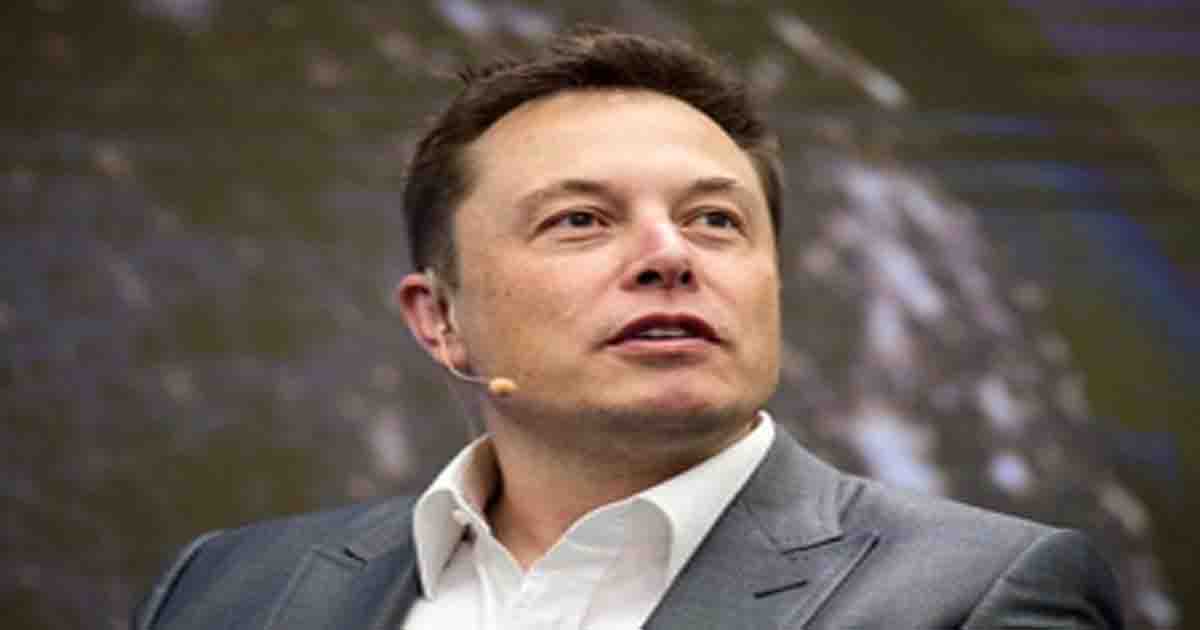
Washington, Oct 10: Ashley St. Clair, the mother of one of billionaire Elon Musk’s children, has alleged that she was offered a financial arrangement worth nearly $40 million in exchange for remaining silent about their relationship, a claim Musk has publicly denied.
In an interview published by The New York Times on Friday, St. Clair, a former conservative social media influencer, said she rejected a proposed nondisclosure agreement because it would have prevented her from discussing Musk and their relationship indefinitely.
The proposed arrangement included a $15 million lump-sum payment and $100,000 a month for 21 years, according to St. Clair. Together, those amounts would total $40.2 million.
Musk disputed the allegation after an earlier report about the proposed agreement.
“She was never offered that and has a history of making false claims,” Musk wrote on X, according to the newspaper.
St. Clair, who gave birth to a child in 2024, said the proposed confidentiality agreement was sent to her two months after childbirth by Jared Birchall, Musk’s financial manager.
She alleged that the document was transmitted through Signal, an encrypted messaging application, and would have restricted her ability to discuss the relationship even with members of her family.
According to St. Clair, the restrictions would also have extended to her heirs.
She said she rejected the agreement because she considered the proposed conditions unacceptable, particularly where they concerned her children.
The newspaper reported that Musk did not respond to its requests for comment on the interview.
St. Clair’s account comes as she appears in “Musk,” a nearly four-hour documentary directed by Oscar-winning filmmaker Alex Gibney examining the technology entrepreneur’s personal life, business interests and public influence.
The former influencer told the newspaper that her decision to participate in the documentary was partly motivated by concerns about the influence of wealth and power.
She said she had become increasingly uncomfortable with the expectation that people should trust powerful individuals simply because of their financial success.
St. Clair described meeting Musk in 2023 after he contacted her through Twitter, now known as X, where she had developed a following by promoting conservative political positions.
At the time, she was working for the conservative satirical publication The Babylon Bee and raising a child from an earlier relationship.
She said the two began communicating regularly and subsequently developed a personal relationship.
During a trip to St. Barts in January 2024, Musk raised the possibility of having a child together, according to her account.
St. Clair said she initially viewed the relationship positively but became concerned after learning more about Musk’s custody dispute with musician Grimes, with whom he shares three children.
She also described becoming increasingly disillusioned with the political movement surrounding President Donald Trump, which she had previously supported.
In the interview, St. Clair acknowledged having promoted political positions and rhetoric that she now regrets, including commentary concerning race, gender and transgender people.
She said her changing views developed gradually and were not solely the result of her personal dispute with Musk.
Musk has criticised Gibney’s documentary, accusing the filmmaker of assembling accounts from people with grievances against him or little personal knowledge of him.
The allegations surrounding the proposed financial agreement remain disputed, and the interview does not establish that Musk personally authorised the terms described by St. Clair.
Musk is the chief executive of Tesla and SpaceX and the owner of X. His business interests span electric vehicles, space exploration, artificial intelligence and digital communications, giving him a prominent role in American technology and public affairs.

Regime change certain in 2027: Akhilesh lashes out at BJP, Election Commission

Newlywed poisons husband, 3 family members in Maharashtra Jalgaon

Nana Patekar death: Final post-mortem report out, rules out foul play

Gujarat Police nab three more accused in Punjab’s Mad Sandhu murder case

FairPoint: Rahul-Priyanka aggressive street shows in Oppn power game

Gift to President Putin part of PM Modi bid to globally display India’s heritage

PM Modi’s warm camaraderie with Putin, Xi on full display at BRICS Summit

INDIA bloc begins protest march against ECI

Complaint against Netflix & Mukesh Chhabra for inappropriate language on ‘India’s Got Latent 2’

Maha Congress stages agitation against Gyanesh Kumar
-

 Crime4 years ago
Class 10 student jumps to death in Jaipur
-

 Maharashtra2 years ago
Mumbai Local Train Update: Central Railway’s New Timetable Comes Into Effect; Check Full List Of Revised Timings & Stations
-

 Maharashtra2 years ago
Mumbai To Go Toll-Free Tonight! Maharashtra Govt Announces Complete Toll Waiver For Light Motor Vehicles At All 5 Entry Points Of City
-

 Maharashtra2 years ago
False photo of Imtiaz Jaleel’s rally, exposing the fooling conspiracy
-

 National News2 years ago
Ministry of Railways rolls out Special Drive 4.0 with focus on digitisation, cleanliness, inclusiveness and grievance redressal
-

 Maharashtra2 years ago
Maharashtra Elections 2024: Mumbai Metro & BEST Services Extended Till Midnight On Voting Day
-

 National News2 years ago
J&K: 4 Jawans Killed, 28 Injured After Bus Carrying BSF Personnel For Poll Duty Falls Into Gorge In Budgam; Terrifying Visuals Surface
-

 Crime2 years ago
Baba Siddique Murder: Mumbai Police Unable To Get Lawrence Bishnoi Custody Due To Home Ministry Order, Says Report