
Business
New Income Tax Bill set to be tabled in Parliament next week

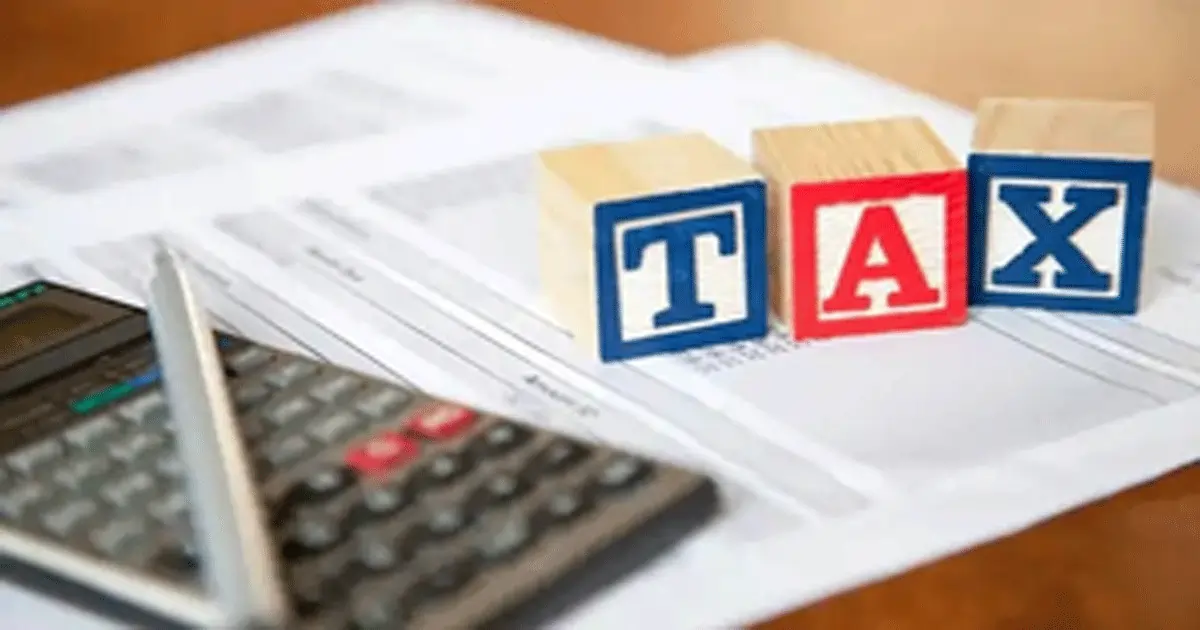
New Delhi, Feb 8: Aiming to put more money in the hands of the middle class and simplify the whole filing process, the new Income Tax Bill is set to be tabled in the Parliament next week after receiving approval from the Union Cabinet.
The bill, which was granted approval in the Cabinet meeting chaired by Prime Minister Narendra Modi on Friday, will be introduced in the Parliament next week before it is sent to the Parliament’s Standing Committee on Finance.
Before the Income Tax Bill was cleared by the Cabinet, people in the know said that the legislation would likely provide directions to widen the tax net, given the contraction in the tax base following the exemption limit being raised to Rs 12 lakh in the Union Budget.
The current Income Tax Act was enforced in the country in 1961 and now, the new Income Tax Act is being made according to the needs of the 21st century to replace the existing law, according to sources close to the development.
A review committee was formed for the new Income Tax law in the country to replace the earlier cumbersome law. According to sources, the new Income Tax Bill has been prepared by the government on the recommendation of the committee.
In this era of technology and massive digitalisation, taxpayers can perform several things online on his or her own. In such a scenario, there will be smooth changes in the new I-T Bill for the common man who can understand it seamlessly online. This is an attempt to make the system simple and convenient for common people.
Along with this, the government’s intention behind giving such a big relief to the taxpayers is to increase private consumption which would directly benefit the health of the economy.


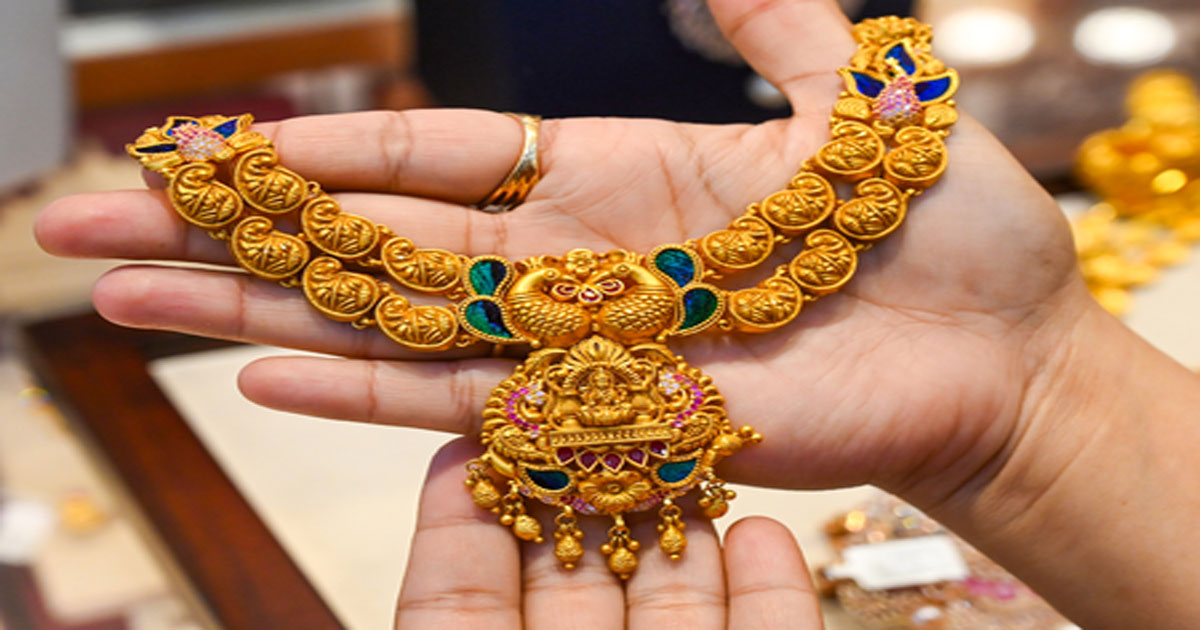
New Delhi, May 9: Gold prices rose 1.83 per cent during the week over persistent geopolitical uncertainty and volatile crude prices.
On Friday, MCX gold June futures gained 0.04 per cent while MCX silver May futures surged 1.34 per cent. Currently gold futures stand at Rs 1,52,589, while silver futures at Rs 2,61,999 per kg.
The price of 10 grams of 24-carat gold was at Rs 1,51,078 on Friday up from Rs 1,48,357 seen on Monday market opening, according to data published by the India Bullion and Jewellers Association (IBJA).
Precious metals continued to rise for four consecutive sessions as optimism over a potential US‑Iran peace agreement and a softer US dollar outweighed a stronger‑than‑expected US jobs report.
US jobs data showed that employment rose more than forecast in April while the unemployment rate held at 4.3 per cent, underscoring resilience in the labour market and reinforcing expectations that the Federal Reserve may keep interest rates higher for longer.
Central banks maintaining interest rates higher for longer, could pressure non-yielding assets like gold.
In international markets, Comex gold climbed about $50 to a session high of $4,760 per troy ounce, posting a weekly gain near 1.5 per cent. Market participants said the prospect of easing regional tensions and a weaker dollar supported demand for non‑yielding bullion.
Gold and silver have fallen nearly 10 per cent since the US-Iran conflict began on February 28.
The broader safe-haven structure remains intact, though the pace of the rally has moderated as the dollar steadies and broader risk sentiment shows tentative signs of improvement, market participants said.
Despite commodities flow disruption in the Strait of Hormuz dominating the macro narrative, markets are also entering a phase of technical consolidation following the sharp swings witnessed in recent weeks, analysts said.
Precious metals are witnessing mixed price action, with gold and silver attempting to stabilise after recent corrective pressure.
West Asian tensions were rekindled on Thursday after US and Iranian forces exchanged attacks near the strait, though US officials said the ceasefire remained in place.
Immediate resistance for MCX Gold is placed at Rs 1,54,000–Rs 1,55,500, and immediate support is seen near Rs 1,50,000–Rs 1,48,000, analysts said.
For MCX Silver, the Rs 2,65,000 zone acts as immediate resistance, and the Rs 2,60,000–Rs 2,58,000 zone now serves as immediate support, they added.

New Delhi, May 7: US tech giant Apple has announced an investment of Rs 100 crore to support the development of renewable energy infrastructure in India as part of its broader sustainability and carbon neutrality goals.
The company said the investment will be made in collaboration with CleanMax, one of India’s leading renewable energy developers, to help build more than 150 megawatts of new renewable energy capacity across the country.
According to the iPhone maker, the planned capacity would be enough to power nearly 1.5 lakh Indian households annually and may be expanded further in the coming years.
The initiative is aimed at strengthening renewable energy adoption across Apple’s supply chain operations in India and supports the company’s target of becoming carbon neutral across its entire footprint by 2030.
“At Apple, our commitment to the environment is also a driving force for innovation across the company and around the world,” said Sarah Chandler, Apple’s Vice President of Environment and Supply Chain Innovation.
“We are proud to expand our efforts to invest in India’s clean energy economy and protect the country’s precious natural resources,” she added.
Moreover, the US-headquartered firm had earlier partnered with CleanMax on rooftop solar projects to power its offices and retail stores in India with 100 per cent renewable energy.
Apart from renewable energy investments, it also announced new partnerships in India focused on reducing plastic pollution and promoting green entrepreneurship.
The company said it is working with WWF-India to support recycling and waste management initiatives to improve material recovery and reducing plastic leakage into ecosystems.
The iPhone maker is also partnering with Acumen to provide grants and mentorship support to early-stage green enterprises working in areas such as waste management, regenerative agriculture, and circular economy solutions.

Mumbai, Gold and silver traded higher on Wednesday, tracking weakness in oil prices and the dollar index, with both precious metals gaining up to 3 per cent.
On the Multi Commodity Exchange (MCX), gold futures (June 5) opened at Rs 1,52,000 per 10 grams, up Rs 2,247 or 1.5 per cent from the previous close of Rs 1,49,753.
At 11:30 am, gold was trading at Rs 1,52,419, up Rs 2,666 or 1.78 per cent. So far in the session, the yellow metal has touched an intraday high of Rs 1,52,450, up Rs 2,697 or 1.8 per cent. At the intraday low, it was still trading higher by Rs 1,900 or 1.26 per cent at Rs 1,51,653.
Meanwhile, silver futures (July 3) opened at Rs 2,49,316 per kg — also the intraday low so far — a jump of Rs 5,000 or 2.04 per cent from the previous close. At the time of filing the report, it was trading at Rs 2,51,699, up Rs 7,383 or 3.02 per cent.
In the international market as well, precious metals were trading higher. COMEX gold was up 1.92 per cent at $4,656 per ounce, while silver gained 3.45 per cent to $76.12 per ounce.
Analysts said gold prices edged higher after recovering from a one-month low, supported by easing concerns over US-Iran tensions and some stability in oil prices.
However, elevated crude prices and expectations of a prolonged higher interest rate environment continue to cap gains in bullion, they added.
In addition, the dollar index slipped 0.34 per cent to 97.97. The dollar index measures the US dollar’s strength against a basket of six major currencies, the euro, Japanese yen, pound sterling, Canadian dollar, Swedish krona and Swiss franc.
Typically, a weaker dollar supports prices of precious metals like gold and silver.
On Tuesday, international oil benchmark Brent crude fell 2.30 per cent to $107.33 per barrel, while US West Texas Intermediate crude declined 3 per cent to $99.12 per barrel.

Mumbai now has 15 zonal DCPs instead of 12, notification issued after establishment of five new police stations

Mumbai Local Update: Central Railway Announces Power & Traffic Block At Kasara Today; Several Trains Short-Terminated, Regulated – Check Details Here

Thane Crime: Youth Stabbed By Brother-In-Law In Ulhasnagar Over Inter-Caste Marriage Dispute – Shocking Visuals Surface

Mumbai’s ₹11,166 Crore Desalination Project Advances As BMC Seeks MMB, MPCB Clearances

Vijay announces 200 units of free electricity after taking oath as Tamil Nadu Chief Minister

‘Son Falsely Implicated, We Are Well-Educated’: Father Of Accused Tausif Attar Defends Son After Skullcap, Namaz Coercion Allegations Rock TCS Nashik

Asha Bhosle’s son says last respects to be paid at residence in Lower Parel, followed by last rites at Shivaji Park

Mumbai: 15th arrest in Rohit Shetty shooting case, shooter identified, arrested, more arrests possible

Maharashtra Shock: 22-Year-Old Arrested For Exploiting & Blackmailing Multiple Women In Kolhapur; Love Jihad Angle Suspected

27 Years After Gangster Sadiq Kalia’s Encounter By Daya Nayak, His Nephew Arrested For Alleged Revenge Killing In Mumbai
-

 Crime4 years ago
Class 10 student jumps to death in Jaipur
-

 Maharashtra2 years ago
Mumbai Local Train Update: Central Railway’s New Timetable Comes Into Effect; Check Full List Of Revised Timings & Stations
-

 Maharashtra2 years ago
Mumbai To Go Toll-Free Tonight! Maharashtra Govt Announces Complete Toll Waiver For Light Motor Vehicles At All 5 Entry Points Of City
-

 Maharashtra2 years ago
False photo of Imtiaz Jaleel’s rally, exposing the fooling conspiracy
-

 National News2 years ago
Ministry of Railways rolls out Special Drive 4.0 with focus on digitisation, cleanliness, inclusiveness and grievance redressal
-

 Maharashtra1 year ago
Maharashtra Elections 2024: Mumbai Metro & BEST Services Extended Till Midnight On Voting Day
-

 National News2 years ago
J&K: 4 Jawans Killed, 28 Injured After Bus Carrying BSF Personnel For Poll Duty Falls Into Gorge In Budgam; Terrifying Visuals Surface
-

 Crime2 years ago
Baba Siddique Murder: Mumbai Police Unable To Get Lawrence Bishnoi Custody Due To Home Ministry Order, Says Report