
Crime
Mumbai News: Serial Stone-Pelter Arrested For Targeting Women Commuters On Suburban Trains

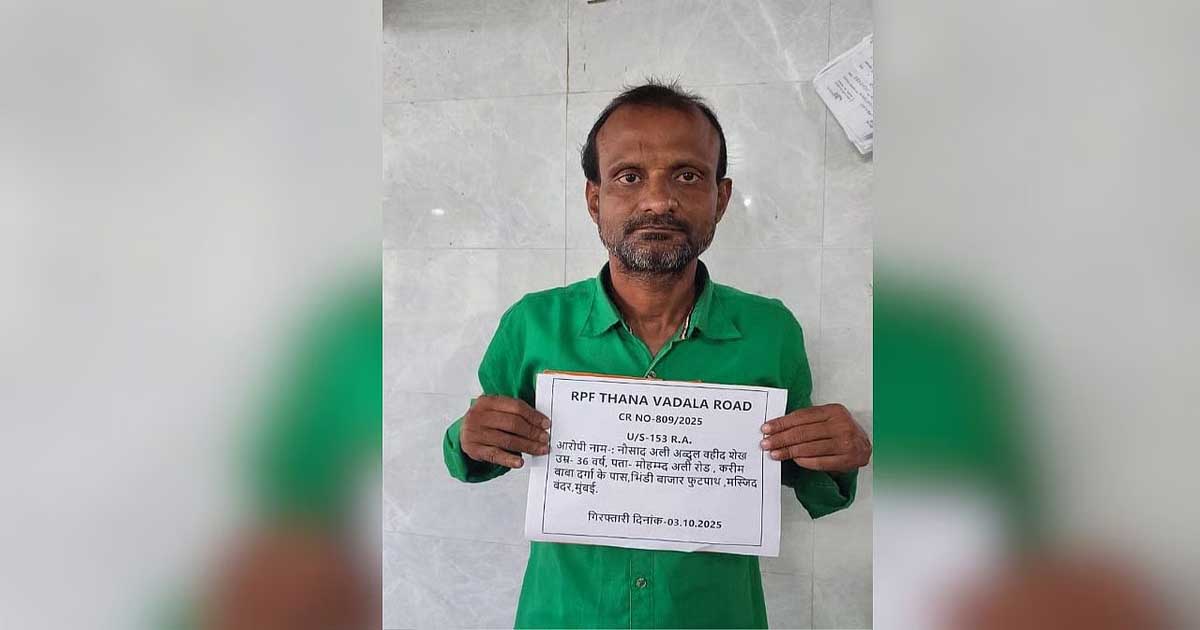
Mumbai: A joint operation by the Railway Protection Force (RPF) and Government Railway Police (GRP) on Friday led to the arrest of a habitual stone-pelter who had been terrorising Mumbai’s suburban rail commuters with repeated attacks.
The accused, Naushad Ali Abdul Wahid Sheikh, a footpath dweller from Mohammed Ali Road, Bhendi Bazaar, was nabbed near Sewri railway station following a tip-off. His arrest was the result of a coordinated effort involving RPF units from Vadala Road, Dadar, Kurla, and the RPF Crime Branch, along with GRP Vadala Road.
Authorities used CCTV footage and past records to confirm Sheikh’s involvement in multiple stone-pelting cases, with women commuters being the main victims.
During interrogation, Sheikh confessed to several incidents, including a major attack on September 26, 2025, where he hurled a stone at the women’s compartment of a Panvel-bound train, injuring a passenger. He admitted to similar assaults on September 22 and September 18, targeting women’s coaches near Sewri and Vadala Road.
In another shocking case two months ago, he allegedly threw a steel seat frame from a moving train after an altercation with a passenger.
This is not Sheikh’s first arrest. He was earlier booked by RPF Vadala in 2023 and 2024 for stone-pelting and vandalising an Automatic Ticket Vending Machine (ATVM). He had already served jail terms for those offences.
Following his confession in the latest cases, Sheikh was formally arrested under the Railways Act and produced before the 35th Judicial Magistrate (First Class), Railway Court, CSMT on October 3, 2025. He has been remanded to judicial custody and sent to byculla Jail.
Confirming the arrest, Senior Divisional Security Commissioner of Mumbai Division (Central Railway), Rishi Shukla, assured that security measures have been intensified.
“We are fully committed to ensuring the safety and security of all passengers. In light of recent incidents, we have intensified patrolling and surveillance across the suburban network of Mumbai division. Strict action will continue to be taken against those who endanger public safety,” he said.

Crime
Sanchar Saathi helped recover over 14 lakh lost phones, prevented cyber fraud worth crores, says PM Modi

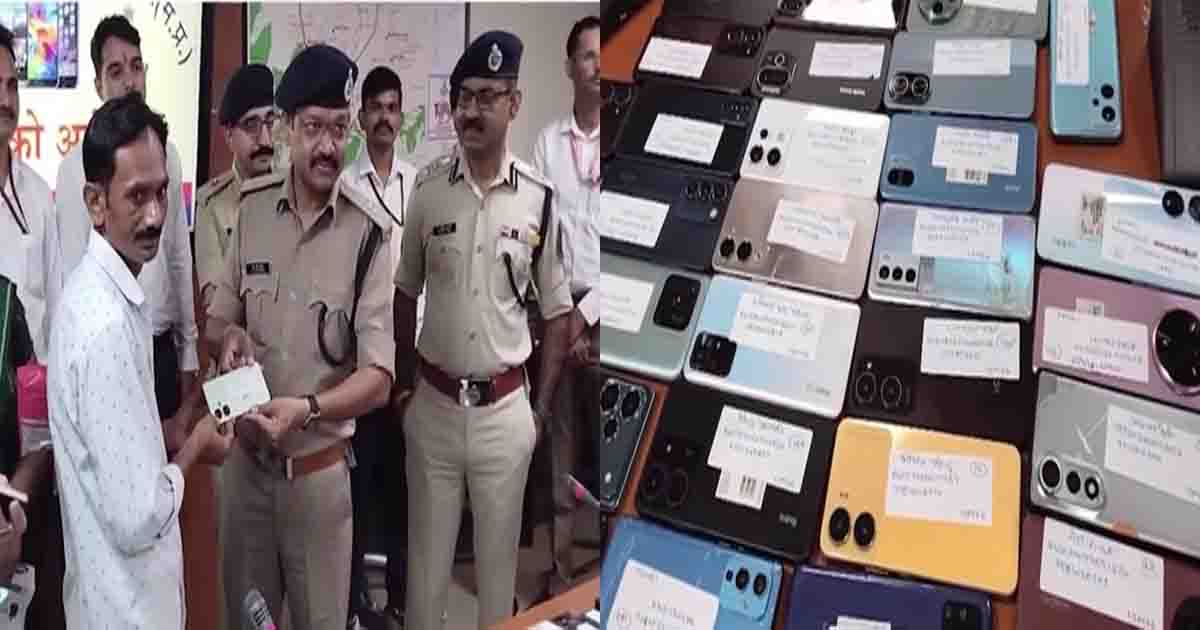
Prime Minister Narendra Modi on Sunday highlighted the role of the Central government’s ‘Sanchar Saathi’ platform in helping people recover lost mobile phones, prevent cyber fraud and protect their sensitive personal information, while urging citizens to report suspicious calls and fraudulent numbers.
Addressing the 140th episode of his monthly radio programme, ‘Mann Ki Baat’, the Prime Minister spoke about the difficulties people face when they lose their mobile phones, which often contain important contacts, photographs, documents and other personal information.
“If you lose your mobile phone, it leads to many problems. A mobile phone contains your contacts, photographs, important documents and countless other valuable information. Once you lose your phone, the hope of getting it back gradually begins to fade,” PM Modi said.
He said the government’s ‘Sanchar Saathi’ platform offers a way to address such concerns and helps people protect their sensitive information. Highlighting the growing reach of the initiative, he said the portal had recorded more than 30 crore visits, while the mobile application had been downloaded nearly three crore times.
Explaining how the platform works, PM Modi said every mobile phone has a unique identification number known as the International Mobile Equipment Identity (IMEI) number, which can be used to trace and block a lost device.
“Along with filing a police complaint, you can submit the IMEI number and a few other important details through ‘Sanchar Saathi’ to get the device blocked. After this, no one will be able to use the phone, even if they insert a new SIM card,” the Prime Minister said.
He further explained that the system also makes it easier for the police to track a lost phone’s location when someone attempts to use it by inserting a SIM card.
“Under this system, more than 14 lakh lost mobile phones have been recovered so far and returned to their owners. A phone that once seemed impossible to recover after being lost can now be traced with the help of technology, offering people fresh hope of getting it back,” he said.
The Prime Minister also underlined that ‘Sanchar Saathi’ provides citizens with an opportunity to contribute to the fight against cybercrime and help protect others from falling victim to fraud.
He urged people to report suspicious calls and numbers on the platform, explaining that a fraudulent caller who fails to deceive one person may go on to target someone else, including an elderly citizen who may be less familiar with online scams.
Sharing the example of Himanshu Singh, a resident of Pune, PM Modi said Singh had reported more than 300 suspicious numbers through the platform. According to the Prime Minister, these efforts had contributed to the cancellation of approximately 18,000 mobile connections over the past year.
He also referred to the efforts of Vivek Alhari from Nellore in Andhra Pradesh, who had helped identify and report fraudulent mobile numbers.
“Playing the role of a vigilant citizen, he shared more than 900 fraudulent numbers on the ‘Sanchar Saathi’ platform. His efforts have helped in the disconnection of approximately 17,000 mobile connections. You, too, should learn from them; this small effort on your part could save a family’s life savings in some other corner of the country,” PM Modi said.
“More than 1,600 institutions, including banks, payment apps, telecom companies and the police, are connected to ‘Sanchar Saathi’. This helps in thwarting many attempts at cyber fraud well in time. Through this system, potential losses amounting to over Rs 5,000 crore have been prevented so far,” he said.
PM Modi added that the application was available in 23 languages and had been designed to be easy to use. He appealed to citizens to spread awareness about the platform and encourage more people to make use of its services.
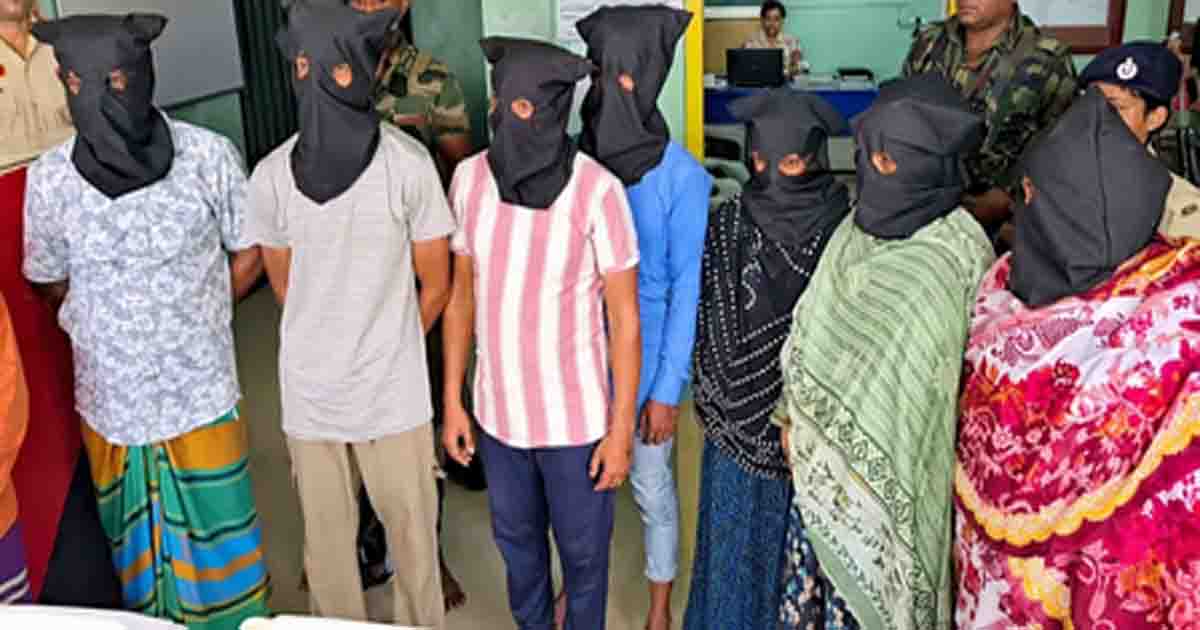
A month after the brutal attack on Border Security Force (BSF) personnel in Tripura’s Sepahijala district, security forces and the district administration have intensified action against illegal encroachments on BSF, government and forest lands in the border areas, officials said on Sunday.
The Sepahijala district administration has so far cleared more than 50 illegal encroachments in the bordering Sonamura and Bishalgarh subdivisions under the Tripura Public Premises (Eviction of Unauthorised Occupants) Act, 1982.
In the latest drive on Saturday, a joint team of the BSF and police demolished five houses and two shops allegedly constructed on encroached BSF land. Two other houses illegally built on forest land were also demolished, a senior official said.
The demolition drive, involving the district administration, police, BSF and Forest Department, was carried out in the Boxanagar area of Sepahijala district following the November 2 attack on BSF personnel at Ashabari village under Kalamchaura police station along the India-Bangladesh international border.
Inspector General of Tripura Police (Law and Order) Manchak Ipper said that around 24 people, including five women, had been arrested in connection with the attack and sent to judicial custody.
The administration identified the illegal structures following a joint investigation by security agencies and revenue authorities. The demolition was carried out after serving notices and completing the necessary legal formalities, Manchak said.
He added that some of the people whose properties were demolished were allegedly involved in criminal activities, including the recent attack on BSF personnel, while others had illegally occupied government land.
More than 100 security personnel participated in Saturday’s operation, which was led by the Sepahijala district administration. Several more occupants have been served notices, and action against illegal encroachments will continue, the IG said.
Meanwhile, a senior police official said that intensive search operations were underway to arrest the remaining accused in the November 2 attack, in which around 50 men and women were allegedly involved, either directly or indirectly.
All 24 arrested accused have been booked under various sections of the Narcotic Drugs and Psychotropic Substances (NDPS) Act, 1985, the Bharatiya Nyaya Sanhita (BNS), 2023, and the Prevention of Damage to Public Property Act, 1984.
According to police, the incident occurred when BSF personnel intercepted a group of alleged smugglers attempting to transport ganja (cannabis) across the international border into Bangladesh.
Following the interception, the BSF personnel were allegedly surrounded and attacked by a mob of around 50 men and women.
At least four BSF personnel, including a Company Commander, sustained injuries, with two reportedly seriously hurt.
The attackers also allegedly snatched a pump-action gun (PAG) from a BSF personnel and damaged a BSF vehicle. One of the alleged attackers was also injured in the incident. Video footage of the assault subsequently went viral on social media, triggering widespread reactions.
The IGP further disclosed that Tripura Police had arrested more than 500 alleged touts over the past three years for facilitating illegal cross-border movement and human trafficking. These networks allegedly operate from the Indian side of the border, helping people cross into Bangladesh illegally.
Tripura shares an 856-km-long international border with Bangladesh and is surrounded by the neighbouring country on three sides.
The state’s geographical location makes it vulnerable to cross-border smuggling, illegal migration and other transnational criminal activities. Except for a few stretches, most parts of the international border have been fenced to prevent smuggling, illegal crossings and the movement of criminals and other inimical elements.
Bollywood
SIT found insufficient evidence against Aryan Khan in Cordelia case: Ex-NCB officer Sanjay Singh

Former IPS officer Sanjay Kumar Singh, who had headed the Narcotics Control Bureau’s (NCB) Special Investigation Team (SIT) probing the 2021 Cordelia cruise drug case, has said that the team found insufficient evidence against Bollywood actor Shahrukh Khan’s son, Aryan Khan, and had to restart the investigation from scratch after taking over the probe.
In his memoir, “Code of Honour”, Singh has shared his observations and experiences from the high-profile case, including the shortcomings identified by the SIT during its investigation. He said the findings did not establish sufficient evidence against Aryan Khan, pointing out, among other things, that a friend of his had denied carrying drugs for him. Consequently, Aryan Khan was not named in the charge sheet filed in May 2022.
Speaking to media in an interview, Singh said the case had come up towards the latter part of his career and that he had included his experiences and observations in the book.
“Towards the latter part of my career, the Aryan Khan case occurred. I have included my observations and experiences from that case in my book,” he said.
Recalling the circumstances surrounding the filing of the charge sheet, Singh said there had been considerable speculation and questions from both the media and the public about why the investigating agency had not filed a charge sheet against certain individuals.
“There was a prevailing question — among the media and the public alike — as to why a chargesheet had not been filed. We therefore made a deliberate decision to communicate everything to the press in a transparent manner. I presented our position before the media, explaining why we were unable to file a charge sheet. I clarified at the time that this did not constitute a ‘clean chit’; rather, we were not filing a charge sheet because there was insufficient evidence. There were fundamental shortcomings in the case that prevented us from filing a charge sheet against the individuals involved,” Singh told media.
He also clarified that his mandate as the head of the SIT was limited to investigating the case and did not extend to examining the conduct of the earlier investigating team or individual officers at the NCB’s Mumbai Zonal Office.
“The actions of the previous team (at the Mumbai Zonal Office) or the conduct of individual officers did not fall within the scope of my inquiry. My focus remained entirely on my own investigation, and I did not incorporate those other matters into it. Furthermore, a separate committee was constituted to address the various other questions that had been raised. They likely examined those aspects, but I do not have detailed information regarding their findings, nor did I seek to learn about them,” he added.
Describing the process followed after the SIT took charge of the investigation, Singh said he personally travelled to Mumbai and examined the documents related to the case.
“I visited the scene of the incident and also went aboard the Cordelia cruise ship. I was not satisfied with the manner in which the investigation was being conducted; therefore, we effectively restarted the inquiry from scratch,” he said.
Explaining the approach adopted by his team, Singh said his priority was to ensure that the investigation remained impartial and was guided by logic and available evidence. After examining the material and reviewing the facts, the SIT concluded that there was insufficient evidence against the individuals concerned to proceed with filing a charge sheet.
“After reviewing all the facts, the Director General (DG) also concluded in the final order that there was not enough evidence against certain suspects or accused persons. The decision was made not to file a charge sheet against these individuals. My intention was never to initiate action against any officer or to highlight their errors,” Singh said.
He said that he had also informed the media about the “fundamental flaws in the case”. He said that it was alleged that a “friend was bringing drugs for Aryan, and the latter intended to consume them”.
“However, upon reviewing the friend’s statement, it became clear that Aryan had explicitly asked him not to bring any drugs, noting that the NCB was highly active. Given this, there was no justification for seizing the mobile phone or accessing the WhatsApp chats. If a mobile phone is to be seized, it must be done according to the prescribed legal procedure,” he said.
Singh mentioned that in the cases that fall under the NDPS Act, “any failure to follow due process draws sharp criticism from the court”, which, he said, “will invariably question why the mandatory procedures were not adhered to”.
“We also examined the WhatsApp chats, but found no conversations relevant to the case. Furthermore, while the intention was to build a case for drug consumption, no medical examination was ever conducted. On what basis, then, could a charge of consumption be substantiated? The investigation was riddled with such flaws, which made it impossible for us to file a charge sheet,” he added.
Singh said that it was also discovered that an informant was acting as a witness — “something that should not happen in any case”.
“Such practices are inappropriate. Given that the penalties in NDPS (Narcotic Drugs and Psychotropic Substances) cases are extremely severe, the court expects all procedures to be followed correctly during an investigation. We found that, in this instance, not all procedures were properly adhered to,” he added.

Delhi BJP President Harsh Malhotra seeks discoms’ policy for safe, affordable e-rickshaw charging

Iran says ‘violating’ oiler caught fire after hitting mines east of Hormuz Strait

Sanchar Saathi helped recover over 14 lakh lost phones, prevented cyber fraud worth crores, says PM Modi

SpaceX says Google interested in renting additional computing capacity

PM Modi’s hails Indian diaspora’s initiatives in Canada; pays tribute to Sikh artist Sobha Singh

Congress trying to protect 3 crore Bangladeshi infiltrators in voter list: HM Shah

Red Fort car blast probe exposes blueprint for spread of terror modules across India

Trump flags Iran targets as talks continue

‘Conspiracy, not accident’: NCP on Ajit Pawar death

BJP, Shiv Sena slam Mallikarjun Kharge for terming Diwali ‘Khushiyon ka Eid’
-

 Crime4 years ago
Class 10 student jumps to death in Jaipur
-

 Maharashtra2 years ago
Mumbai Local Train Update: Central Railway’s New Timetable Comes Into Effect; Check Full List Of Revised Timings & Stations
-

 Maharashtra2 years ago
Mumbai To Go Toll-Free Tonight! Maharashtra Govt Announces Complete Toll Waiver For Light Motor Vehicles At All 5 Entry Points Of City
-

 Maharashtra2 years ago
False photo of Imtiaz Jaleel’s rally, exposing the fooling conspiracy
-

 National News2 years ago
Ministry of Railways rolls out Special Drive 4.0 with focus on digitisation, cleanliness, inclusiveness and grievance redressal
-

 Maharashtra2 years ago
Maharashtra Elections 2024: Mumbai Metro & BEST Services Extended Till Midnight On Voting Day
-

 National News2 years ago
J&K: 4 Jawans Killed, 28 Injured After Bus Carrying BSF Personnel For Poll Duty Falls Into Gorge In Budgam; Terrifying Visuals Surface
-

 Crime2 years ago
Baba Siddique Murder: Mumbai Police Unable To Get Lawrence Bishnoi Custody Due To Home Ministry Order, Says Report