
National News
Mumbai News: Govandi’s Biomedical Waste Plant To Be Relocated To Panvel By September 2025 After Global Study Exposes Toxic Health Hazards

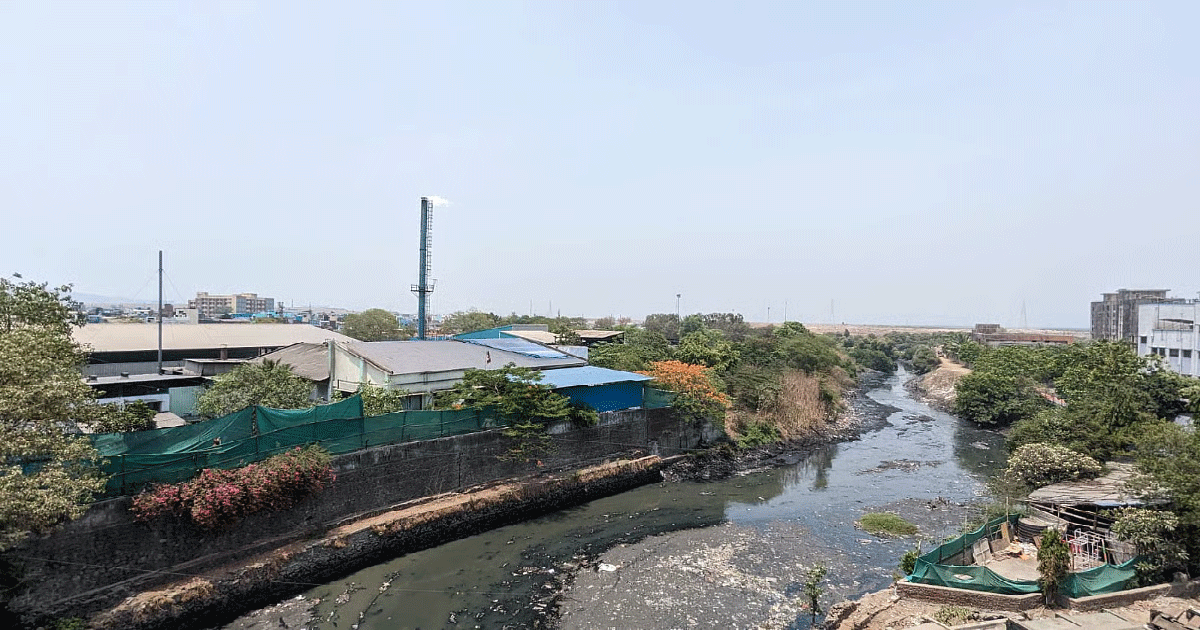
Mumbai, August 28: The long-standing concerns of Govandi residents about the Deonar Biomedical Waste Treatment Plant have now been validated in an international peer-reviewed journal, bringing global attention to a crisis that locals have raised for years.
A study by Dr. Tridibesh Dey of Aarhus Universitet, Denmark, published in Science, Technology & Human Values, documents how the facility—burning over 3,500 kg of plastic-rich hospital waste daily—is poisoning one of Mumbai’s most marginalized neighborhoods. Despite official claims of “controlled burning,” the research shows that the plant routinely releases toxic smoke and chemicals into the air.
These emissions, the study notes, compound already high tuberculosis and respiratory illness rates documented earlier by the Tata Institute of Social Sciences (TISS). Dr. Dey describes Govandi as a “toxic sacrifice zone,” where the poor are forced to shoulder the city’s biomedical waste burden.
Local activist Faiyaz Shaikh, cited in the study, welcomed the global spotlight. “Now the world knows our reality. Govandi is choking, and this plant must be relocated,” he said, echoing the deep frustration of residents who have endured decades of hazardous living conditions.
The facility, run by Enviroclean, became a flashpoint during the COVID-19 pandemic when enormous volumes of disposable masks, gloves, and protective gear were incinerated. Residents vividly recall thick black smoke spreading across Baiganwadi, Shivaji Nagar, and adjoining settlements, enveloping homes, schools, and parks.
For many families—Dalits, fisherfolk, and migrant workers from northern India—the pollution is part of daily survival in one of Mumbai’s few affordable localities.
In 2019, the Maharashtra Pollution Control Board (MPCB) recommended shutting down the plant after investigating repeated complaints. However, Enviroclean secured a stay order from the Bombay High Court, insisting it was the city’s only biomedical waste disposal facility.
While officials promised relocation and issued notices, deadlines repeatedly shifted. Even after a 2020 MPCB report claimed safety upgrades, residents maintained that smoke and dust continued to pollute their homes.
Now, change is finally underway. Following sustained protests and a Bombay High Court directive, the Govandi biomedical waste plant is being relocated. A new facility is under development at Jambhivali in Panvel, Raigad district, with land already allotted and environmental clearance pending.
Once approved, installation of the new incinerator is expected to take about a year, with relocation likely completed by September 2025. The MPCB is supervising the move, aiming to end decades of toxic exposure for Govandi’s residents.


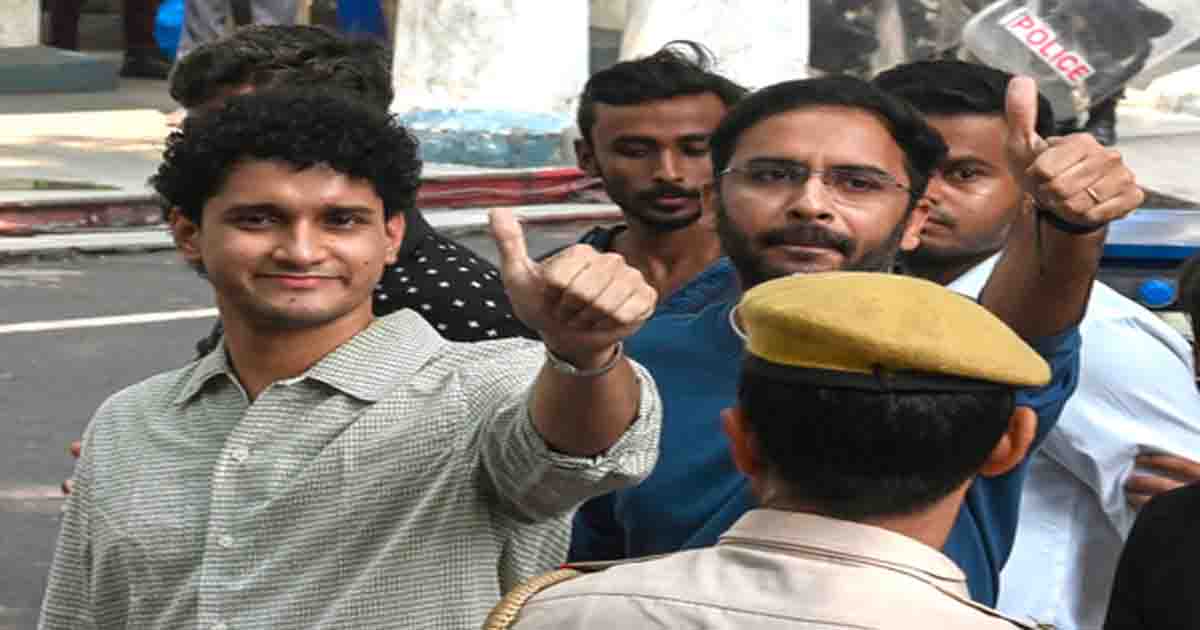
Cockroach Janta Party (CJP) leaders Saurav Das, Ashutosh Ranka and Ajinkya Shinde have sought more time to appear before the Delhi Police Crime Branch for questioning.
Das, Ranka, and Shinde were asked to appear before the Delhi Police Crime Branch at its office in Rajouri Garden at noon on Thursday. However, they requested more time from the Delhi Police.
The police will now issue fresh summons to them.
This comes a day after Das and Ranka were released from Tihar Jail following a week in judicial custody.
Earlier this week, Delhi Police transferred protest cases against the CJP leaders to the Crime Branch.
The cases are in connection with the incident on October 13, when Das, Ranka and Shinde, along with 11 others, trespassed into Jantar Mantar, which has been de-notified as the designated protesting site.
All were detained by the Delhi Police. While Shinde was released on bail bond, Das and Ranka remained in judicial custody for a week.
The CJP members were protesting against alleged irregularities in the Special Intensive Revision (SIR) of electoral rolls and raised slogans against Chief Election Commissioner (CEC) Gyanesh Kumar.
Das and Ranka were released on Wednesday after submitting written undertakings before a Special Executive Magistrate (SEM), assuring that they would maintain peace and refrain from calling for protests at Jantar Mantar until the site is de-notified in accordance with law.
SEM Ritu Raj directed the release of the two activists after they furnished personal bonds and surety bonds of Rs 50,000 each until the conclusion of the inquiry in connection with the Jantar Mantar trespassing case.
In their written undertakings, both activists promised not to commit any breach of peace and expressed full faith in the judiciary and all its instruments, including the SEM court.
The SEM court observed that the immediate measures required under Section 135(3) of the Bharatiya Nagarik Suraksha Sanhita (BNSS) to prevent a breach of peace or disturbance of public tranquillity could be adequately secured through the execution of bonds, supported by the written undertakings.
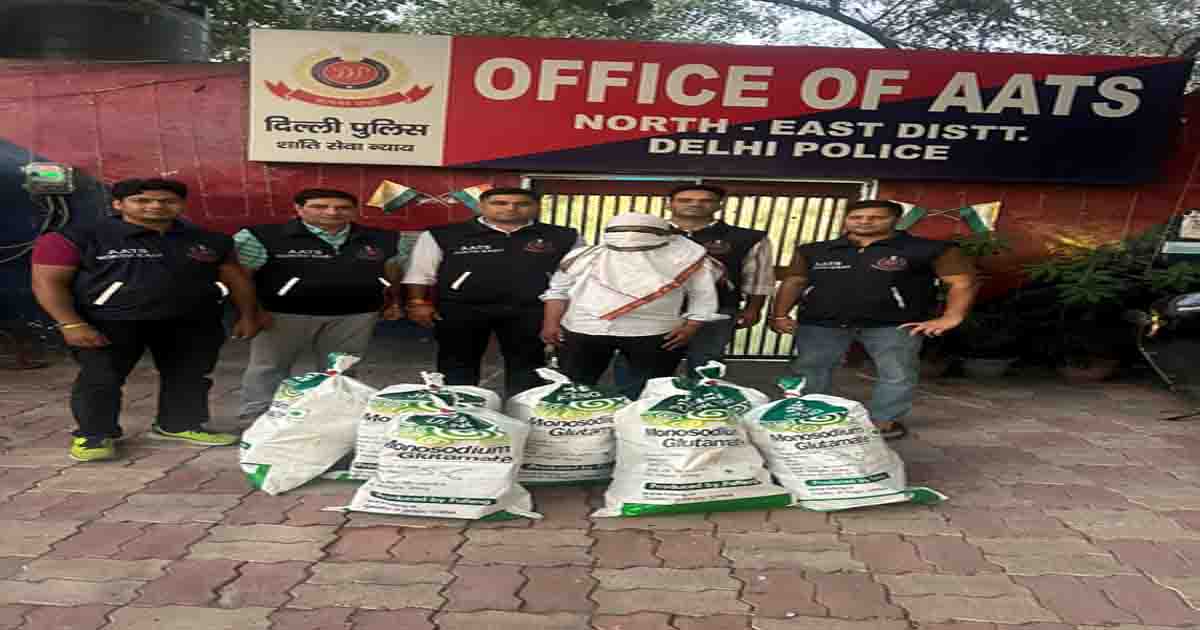
The Anti-Auto Theft Squad (AATS) of Delhi Police’s North-East District has apprehended a supplier of banned firecrackers and recovered 57.8 kg of the prohibited material from his possession, police said on Thursday.
The accused, identified as Vishal (35), a resident of Ashok Nagar in Delhi, was apprehended on October 21 following a targeted operation to curb the illegal supply of banned firecrackers in the district.
According to the police, the operation was conducted on the directions of senior officers by an AATS team led by Inspector Deepak Pandey, in-charge of AATS, North-East District. Acting on secret information, the team laid a trap in the Ashok Nagar area and apprehended the accused while he was carrying multiple sacks containing banned firecrackers weighing 57.8 kg.
Following the recovery, a case was registered under FIR No. 466/26, dated October 21, at Jyoti Nagar police station under Section 223(b) of the Bharatiya Nyaya Sanhita (BNS) and Section 9B of the Explosives Act. An investigation into the matter has been initiated.
Police said the accused had previously been involved in three criminal cases registered under Sections 188 and 286 of the Indian Penal Code (IPC), Sections 223(A) and 288 of the BNS, and Sections 115(2), 126(2) and 3(5) of the BNS.
In a separate incident earlier this month, a joint team of the Delhi Police’s Anti-Auto Theft Squad and Harsh Vihar police station uncovered an illegal storage facility for firecrackers in Mandoli village and recovered 567.30 kg of firecrackers and related material. One person was apprehended in connection with the case, police said on Wednesday.
According to the police, the incident came to light on October 12 when a police team conducting area patrol received information about firecrackers being stored at a premises in Mandoli. The information was immediately shared with Harsh Vihar police station, following which a team reached the location.
At the premises, located on the first floor of a house in Gali No. 12, near Government Senior Secondary School in Mandoli, police found a large quantity of firecrackers and materials used in their manufacture stored in cartons and sacks.
The recovered material was inspected, weighed, sampled and seized following the prescribed procedure.
An FIR (No. 315/2026) was subsequently registered at Harsh Vihar police station under Section 288 of the BNS and Section 9B of the Explosives Act, 1884.
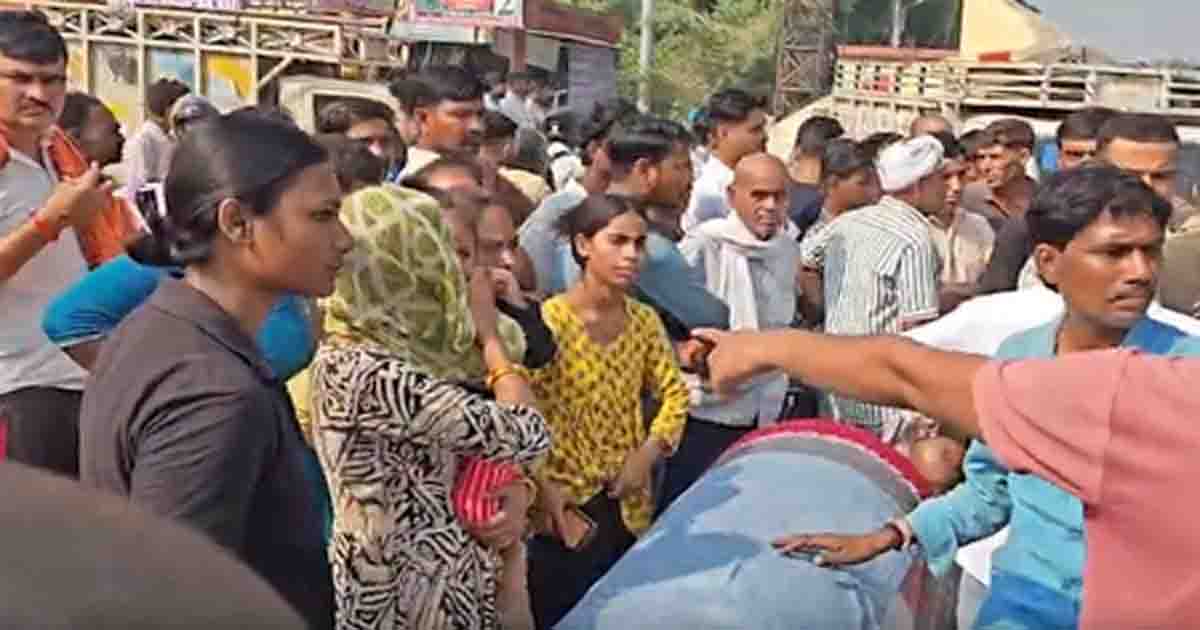
The death of 37-year-old Biru Singh Bhadauria in the Hanumant Vihar police station area of Uttar Pradesh’s Kanpur has triggered a major controversy, as his family rejected the police account that he died in a road accident and alleged instead that he was murdered.
On Thursday, the family staged a protest by placing his body on the highway leading towards Hamirpur, demanding the immediate arrest of those allegedly responsible for his death.
The case has taken a fresh turn after an eyewitness, identified as Rahul, questioned the police version of events and claimed that Biru’s death was not accidental but the result of a deliberate act.
According to the victim’s family, Biru Singh Bhadauria worked as a salesman for a food products company. They alleged that he had a dispute a few days earlier with Rajveer and Mewalal, both residents of Khadepur Nai Basti, following which tensions had reportedly continued between the two sides.
The family claimed that on Tuesday night, Biru was returning home after visiting a Dussehra fair when Mewalal arrived at the spot in a car.
According to their account, three other men, including Rajveer, were also travelling in the vehicle. The group allegedly stopped Biru and assaulted him. When he attempted to escape, they hit him with the car. The family further alleged that the men then placed him on the roof of the vehicle and drove away.
Speaking to Media, the victim’s wife rejected the suggestion that her husband had died in an accident, and said, “I am saying that it was not an accident. It was murder, committed by five people. They are saying it was an accident, but it was not an accident; it was murder committed by five people.”
Eyewitness Rahul has also challenged the police’s account, alleging that the circumstances surrounding the incident point towards a deliberate act rather than a routine road accident. He claimed to have personally seen the men place Biru on the roof of the car before driving away.
“The police are misrepresenting the sequence of events. This was not a routine road accident, but a case of murder. I have personally witnessed individuals placing the man on the roof of the car and driving away,” Rahul said.
He further alleged that Biru’s hands had become trapped in the openings of the car’s front windows as the vehicle moved forward.
“Both of the man’s hands were trapped inside the car’s front window openings. The vehicle was driven forward, and the man was subsequently thrown off before the accused fled the scene,” Rahul added.
However, the allegations made by the family and the eyewitness remain to be established, and their veracity can only be determined through a thorough investigation by the police.
Meanwhile, a video circulating on social media purportedly shows a car travelling at high speed. It is alleged that Rahul was pursuing the vehicle on a motorcycle at the time of the incident.
CCTV footage related to the case has also emerged, with the family claiming that the entire sequence of events was captured by more than 12 surveillance cameras installed in the area.
The family has alleged that despite the availability of potential evidence, the police initially registered the case as a death caused by an “unknown vehicle”, treating it as a hit-and-run incident.
They have expressed dissatisfaction with the initial handling of the matter and are demanding that the case be investigated from the perspective of murder, with strict legal action taken against all those found responsible.
Following the incident, Biru was taken to a hospital, where doctors declared him dead at around 3 p.m. on Wednesday. His death subsequently led to demands from the family for a thorough investigation and action against the people they accuse of being involved.
The family alleged that the police were not taking effective action, prompting them to block the highway with Biru’s body in protest. During the demonstration, they remained firm on their demand for the immediate arrest of the accused and strict action, refusing to withdraw until their concerns were addressed.
The highway blockade was eventually lifted after police personnel intervened and assured the family that appropriate action would be taken. Following the assurance, the family removed the body from the road, allowing traffic movement to resume.
At present, both the victim’s family and eyewitness Rahul maintain that Biru’s death was the result of murder rather than a road accident.

Shahid Kapoor ‘promptly breaks out of character’ after wrapping up ‘Farzi 2’ shoot

Jantar Mantar protest: Saurav Das, Ranka, Shinde seek more time to appear before police

Delhi Police arrests supplier of banned firecrackers, recovers 57.8 kg from his possession

Kanpur man’s death: Family alleges murder, blocks highway with body

Indian national among two people killed in attack on Saudi Arabia’s airport, two Indians injured

Rahul, Cong ecosystem want to force regime change: BJP after Neha Bora praises B’desh Gen-Z protest

Attack on democratic rights: INDIA Bloc leaders on detentions of anti-ECI protestors

BJP pays tribute to ex-President Abdul Kalam, recalls his enduring influence on generations of India’s youth

INDIA bloc begins protest march against ECI

Maha Congress stages agitation against Gyanesh Kumar
-

 Crime4 years ago
Class 10 student jumps to death in Jaipur
-

 Maharashtra2 years ago
Mumbai Local Train Update: Central Railway’s New Timetable Comes Into Effect; Check Full List Of Revised Timings & Stations
-

 Maharashtra2 years ago
Mumbai To Go Toll-Free Tonight! Maharashtra Govt Announces Complete Toll Waiver For Light Motor Vehicles At All 5 Entry Points Of City
-

 Maharashtra2 years ago
False photo of Imtiaz Jaleel’s rally, exposing the fooling conspiracy
-

 National News2 years ago
Ministry of Railways rolls out Special Drive 4.0 with focus on digitisation, cleanliness, inclusiveness and grievance redressal
-

 Maharashtra2 years ago
Maharashtra Elections 2024: Mumbai Metro & BEST Services Extended Till Midnight On Voting Day
-

 National News2 years ago
J&K: 4 Jawans Killed, 28 Injured After Bus Carrying BSF Personnel For Poll Duty Falls Into Gorge In Budgam; Terrifying Visuals Surface
-

 Crime2 years ago
Baba Siddique Murder: Mumbai Police Unable To Get Lawrence Bishnoi Custody Due To Home Ministry Order, Says Report