
Maharashtra
Mumbai: Muslim Advocates & Clerics Propose Regulated SOP For Loudspeakers During Ramzan 2026

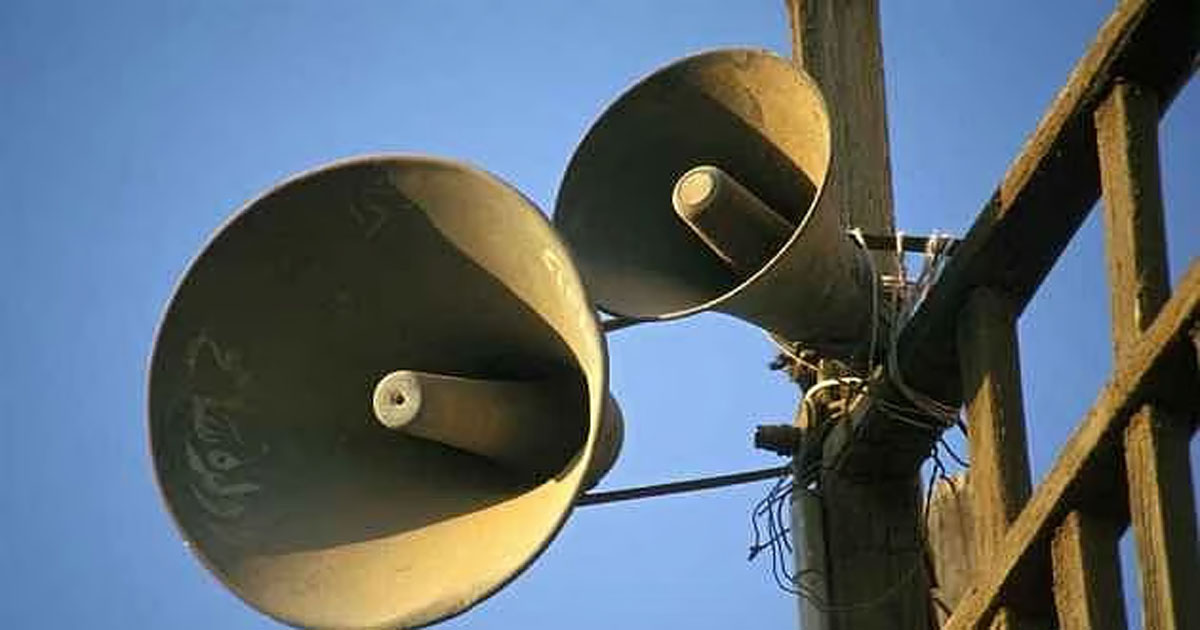
Mumbai: Muslim advocates and law students have submitted a representation to the Government of Maharashtra, Mumbai Police, Brihanmumbai Municipal Corporation (BMC), and the Maharashtra Pollution Control Board (MPCB), seeking the formulation of a regulated, city-specific Standard Operating Procedure (SOP) for the use of sound equipment during the Muslim holy month of Ramzan, which will start on February 17, subject to the sighting of the moon.
The representation, led by advocate Faiyaz Alam and endorsed by religious leaders, civil liberties groups, and social activists, seeks a special, time-bound executive notification for the controlled use of decibel-regulated religious audio systems during the period.
The representation says that Mumbai’s dense urban character and mixed residential profile necessitate a clear, uniform, and predictable regulatory framework, in order to avoid arbitrary enforcement, ground-level confusion, repeated controversies, and avoidable litigation that recur every Ramzan.
The advocates have categorically clarified that the representation does not seek any exemption from law, nor does it challenge existing judicial precedents. Instead, it proposes a law-compliant, technology-driven, and uniformly regulated mechanism, strictly within the framework of the Noise Pollution (Regulation and Control) Rules, 2000, as interpreted by constitutional courts.
“Courts have consistently held that loudspeakers are not an essential or fundamental religious right. Our representation is therefore not based on religious entitlement, but on the constitutional principle of reasonable accommodation through regulation,” the advocates stated.
According to the group, a regulated SOP with objective technical safeguards would assist both citizens and enforcement agencies, while ensuring public order, environmental compliance, and communal harmony.
Key safeguards proposed in the representation include the use of box-type or directional speakers, and locked and pre-calibrated decibel limits in accordance with prescribed norms. The representation said that the SOP should be operational only within permissible timings and applicable exclusively to the month of Ramzan.
The representation suggested monitoring mechanisms with provisions for immediate withdrawal of permission in case of violation, ensuring that the SOP is not breached.
The lawyers also urged the authorities to initiate stakeholder consultations and issue a Mumbai-specific executive notification or SOP, applicable strictly within city limits, to bring clarity, transparency, and legal certainty to the regulatory process.
“We believe that regulation, not confrontation, is the constitutional way forward. A clear SOP will reduce friction, protect lawful religious practice, and strengthen public confidence in governance,” the advocates added.
The representation also sought the help of the government in notifying a list or specification of decibel-capped, limiter-locked speakers easily available in the market, instead of leaving citizens to face ad-hoc enforcement.
In 2025, Mumbai police started enforcing The Noise Pollution (Regulation and Control) Rules, 2000, in response to a Bombay High Court order on January 25, 2025, which stated that places of worship cannot violate noise pollution rules. The Noise Pollution (Regulation and Control) Rules, 2000, allow noise levels up to 55 decibels during the day and 45 dB at night in residential areas. Noise from loudspeakers can vary between 75 and 200 dB.
The month of Ramzan will end with Ramzan Eid which is expected to take place on March 19 or 20.
Regulatory Framework: Muslim advocates and students are seeking a city-specific Standard Operating Procedure (SOP) for audio equipment during Ramzan to ensure transparency and avoid arbitrary enforcement.
Legal Compliance: The proposal explicitly states it does not seek exemptions from the Noise Pollution (Regulation and Control) Rules, 2000, or judicial precedents.
Technical Safeguards: Suggested measures include the use of directional speakers and locked, pre-calibrated decibel limiters to remain within prescribed noise levels.
”Regulation, Not Confrontation”: The advocates emphasise that loudspeakers are not a fundamental religious right, basing their request instead on the principle of reasonable accommodation.
Collaborative Governance: The representation urges authorities to provide specifications for decibel-capped speakers and to consult stakeholders to ensure communal harmony and environmental compliance.

Veteran lyricist and former Rajya Sabha member Javed Akhtar on Saturday voiced concerns over the proposed Delimitation Bill, questioning the fairness of reallocating parliamentary seats based on population growth and pointing to a lack of clarity in the government’s final blueprint.
Speaking in Pune, Akhtar noted that crucial details regarding the execution of the delimitation process remain undisclosed, making it premature to evaluate its full impact.
”First, the final plan has not yet been revealed—how it will be executed, whether new constituencies will be created, what criteria will be considered, and how the country will be divided into various constituencies,” Akhtar said.
Highlighting a key point of contention in the national debate over delimitation, Akhtar questioned the equity of rewarding higher population growth with increased political representation at the expense of states that successfully controlled their population.
”Second, I find it somewhat strange that regions that did not prioritise family planning are being granted more seats, while those that followed family planning are being allocated fewer seats… How does this create any balance?” he remarked.
Akhtar stated that a clearer assessment will only be possible once the official framework is made public. He also indicated that the broader political response across party lines will be closely watched as the debate unfolds.
“We will examine the details once they are released… We will also observe which members of the opposition, beyond our own government, come forward to endorse or reject this,” he added.
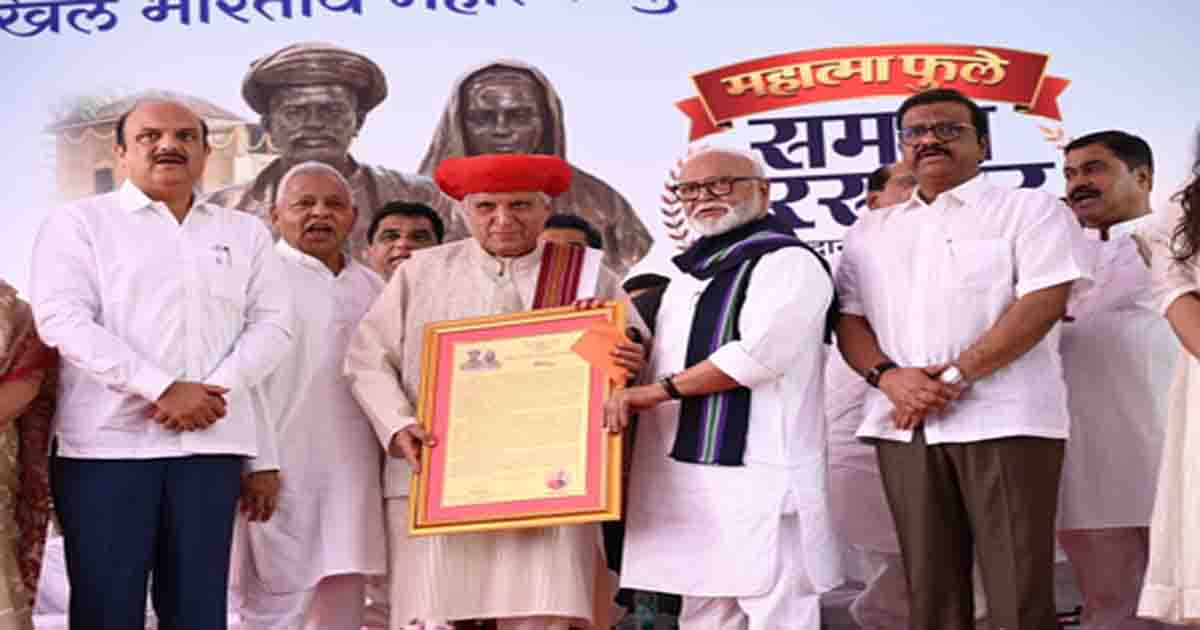
Earlier, Javed Akhtar was conferred the Mahatma Phule Samata Award by Akhil Bharatiya Mahatma Phule Samata Parishad at Mahatma Phule Wada in Pune to mark the death anniversary of Mahatma Jyotirao Phule. The award was presented by Maharashtra Food, Civil Supplies and Consumer Protection Minister and Samata Parishad national president Chhagan Bhujbal.
Accepting the award, Akhtar said the light of knowledge that rose from Mahatma Phule Wada has reached across the world, and hailed Mahatma Phule and Savitribai Phule for opening the doors of education to marginalised groups denied access to it.
Expressing concern over the closure of government schools and rising education costs, he said education is a core state responsibility, vital for every section of society, and even more essential than food.
Addressing the gathering, Minister Bhujbal said the ideals of equality, education, and social justice championed by Mahatma Phule and Krantijyoti Savitribai Phule remain relevant as caste and religious divides persist.
He stressed that their vision can guide the nation and the world toward freedom from discrimination and called for carrying the fight for equality forward more vigorously.
Maharashtra
‘Pawar’s Jantar-Mantar’: Raj Thackeray calls NCP-SP chief’s support for delimitation bill

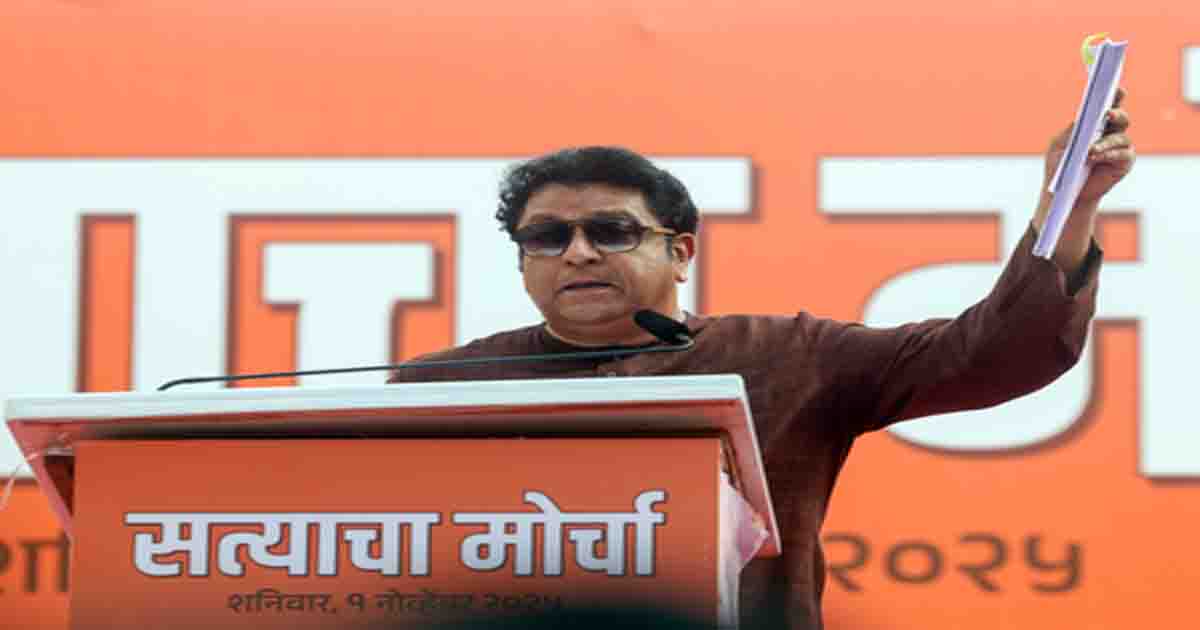
Maharashtra Navnirman Sena (MNS) Chief Raj Thackeray on Saturday took a sharp jibe at the Nationalist Congress Party- Sharadchandra Pawar (NCP-SP) Chief Sharad Pawar following the latter’s decision to back the Bharatiya Janata Party (BJP)-led National Democratic Alliance (NDA) on the Delimitation Bill.
In a social media post, the MNS Chief suggested that the move was part of a pre-planned political strategy rather than a sudden shift.
The development comes amid intense national debate over the Delimitation (Constituency Reorganisation) Bill, for which the Central government has convened a special session of Parliament.
Sharad Pawar’s faction broke ranks with the Opposition INDIA bloc to support the NDA on this legislation, drawing widespread criticism from several political quarters.
Reacting to the political realignment on Facebook, Raj Thackeray recalled his past predictions regarding the split within the Nationalist Congress Party (NCP).
“When one team of the NCP split and moved towards the BJP on July 2, 2023, I had spoken about this,” Thackeray said in a social media post.
“For the next three years, both factions of the NCP staged a convincing charade of conflict; and now, just as I had predicted, another faction is on the move—seeking to climb the rungs of power. I once remarked that this is all part of Pawar’s ‘Jantar Mantar’. Something only a very few people truly understand. Anyway,” the MNS Chief remarked.
“Of course, for the next three years, both NCP factions put on a proper act of fighting each other, and just as I had said, the second team has now set out in the pursuit of power.”
Thackeray characterised Maharashtra’s current political climate as a “muddy mess” and questioning whether voters will put an end to such power-driven politics in upcoming elections.
Uploading his social media statement posted on July 2, 2023, Raj Thackeray drew a comparison between the day’s political events and the character ‘Digu Tipnis’ from the final scene of the classic Marathi film ‘Sinhasan’.
Raj Thackeray said that Sharad Pawar wanted to shed the burden of Uddhav Thackeray, and the “first act” of that plan unfolded today.
He added that the “first team” of Pawar’s Nationalist Congress Party (NCP) has departed toward power, predicting that the second team will eventually follow suit to join the corridors of power.
Commenting on the ruling NDA alliance in Maharashtra, Thackeray noted that the Maharashtra Bharatiya Janata Party (BJP) was already uncomfortable with the “unrealistic” importance being given to Shiv Sena chief leader Eknath Shinde, and the currency developments have provided an effortless antidote to that situation.
Expressing deep anguish, the MNS Chief lamented that a state (Maharashtra) that once enlightened the nation has seen its politics stoop to such a low level.
He said that the image being projected to the country is one of political mire, expressing fear over what lies ahead for Maharashtra.
Concluding his statement, Raj Thackeray questioned whether these games for the throne of power will continue unchecked because politicians take the alertness and tolerance of Maharashtra’s citizens for granted, or if the public will put a stop to this “disgusting politics of power” in the upcoming elections.
Maharashtra
Shiv Sena backs the Delimitation Bill, passes resolution under Eknath Shinde’s leadership, MPs directed to reach Delhi by Sunday.
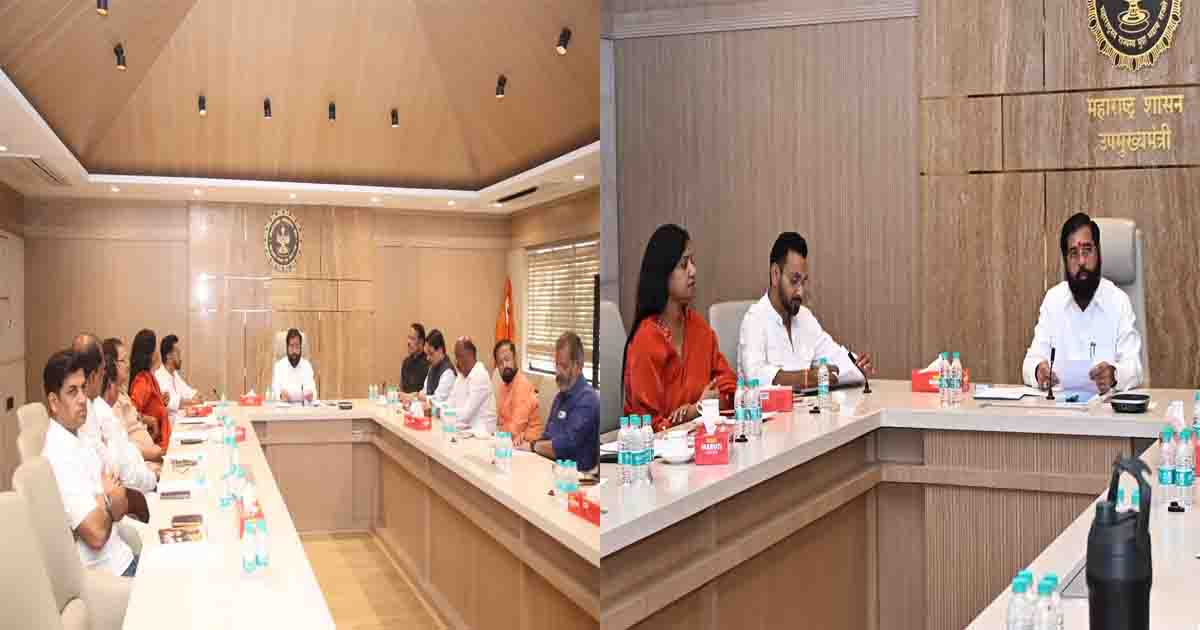
Mumbai: A resolution was unanimously passed today during a meeting of the Shiv Sena parliamentary party, extending support to the ‘Delimitation Bill’—which pertains to the reservation of seats for women—set to be introduced in the upcoming special session of Parliament. All 15 Shiv Sena Members of Parliament (MPs) attended the meeting, which was presided over by a key party leader and the Deputy Chief Minister of Maharashtra, Eknath Shinde. Deputy Chief Minister Shinde instructed all the MPs to reach Delhi by Sunday to demonstrate full support for this historic decision.
Copies of the resolution passed during today’s meeting will be sent to Lok Sabha Speaker Om Birla, Prime Minister Narendra Modi, Union Minister for Parliamentary Affairs Kiren Rijiju, Union Law Minister Arjun Ram Meghwal, and prominent leaders of the NDA. The meeting, held at the ‘Nandanvan’ residence in Mumbai, was attended by Dr. Shrikant Shinde, Shrirang Appa Barne, Sandipan Bhumre, Naresh Mhaske, Ravindra Waikar, Dhairyasheel Mane, Om Raje Nimbalkar, Nagesh Patil Ashtikar, Sanjay Deshmukh, Sanjay Jadhav, Bhausaheb Wakchaure, and Dr. Jyoti Waghmare. Additionally, Union Minister Prataprao Jadhav and Members of Parliament Milind Deora and Sanjay Dina Patil participated in the meeting via video conferencing. A special session of the Lok Sabha has been convened for Monday, November 30, while a special session of the Rajya Sabha will be held on Wednesday, December 2. During these sessions, the government will introduce a constitutional amendment and a ‘Delimitation Bill.’ These legislative measures will pave the way for reserving 33 percent of seats for women. The total number of seats in the Lok Sabha will increase from 543 to 815, while the number of Lok Sabha seats for Maharashtra will rise from 48 to 72. Deputy Chief Minister Eknath Shinde expressed confidence that this would further strengthen Maharashtra’s voice in Parliament. Shinde stated that within the Shiv Sena-BJP alliance, the late Balasaheb Thackeray always prioritized the national interest above all else. Following his ideals, the Shiv Sena also remains committed to the ‘Nation First’ stance. The Shiv Sena has always been accorded a significant position in NDA meetings. Under the leadership of Prime Minister Narendra Modi, the country’s economy is advancing rapidly; the nation is growing at a GDP rate of 7 percent, and even US President Trump has praised India. He remarked that India is on the path to becoming an economic superpower. To strengthen Prime Minister Modi’s position, all 15 Shiv Sena Members of Parliament—comprising 13 from the Lok Sabha and 2 from the Rajya Sabha—will vote in favor of these bills in both houses. Shinde pointed out that the number of Lok Sabha seats has remained capped (frozen) since 1976. Currently, a single Member of Parliament represents approximately 2 million to 2.5 million people. In this context, the redrawing of electoral constituencies is essential to ensure fair representation—consistent with the democratic principle of ‘one person, one vote, one value’—and to foster development in both rural and urban areas. This would facilitate the work of Members of Parliament and make it easier for citizens to connect with their representatives. He assured that the Shiv Sena would vote in favor of these constitutional amendment bills, adding that this historic decision would play a significant role in further strengthening and broadening democracy.

Javed Akhtar questions fairness of proposed delimitation exercise

Rahul Gandhi escalates electoral manipulation charges linking proposed Delimitation Bill

‘Pawar’s Jantar-Mantar’: Raj Thackeray calls NCP-SP chief’s support for delimitation bill

Shiv Sena backs the Delimitation Bill, passes resolution under Eknath Shinde’s leadership, MPs directed to reach Delhi by Sunday.

Goods seized from unauthorised lodges along Ghatkopar-Mankhurd Link Road and in Chembur and Mankhurd; water and electricity meters disconnected.

Congress trying to protect 3 crore Bangladeshi infiltrators in voter list: HM Shah

Red Fort car blast probe exposes blueprint for spread of terror modules across India

Trump flags Iran targets as talks continue

‘Conspiracy, not accident’: NCP on Ajit Pawar death

BJP, Shiv Sena slam Mallikarjun Kharge for terming Diwali ‘Khushiyon ka Eid’
-

 Crime4 years ago
Class 10 student jumps to death in Jaipur
-

 Maharashtra2 years ago
Mumbai Local Train Update: Central Railway’s New Timetable Comes Into Effect; Check Full List Of Revised Timings & Stations
-

 Maharashtra2 years ago
Mumbai To Go Toll-Free Tonight! Maharashtra Govt Announces Complete Toll Waiver For Light Motor Vehicles At All 5 Entry Points Of City
-

 Maharashtra2 years ago
False photo of Imtiaz Jaleel’s rally, exposing the fooling conspiracy
-

 National News2 years ago
Ministry of Railways rolls out Special Drive 4.0 with focus on digitisation, cleanliness, inclusiveness and grievance redressal
-

 Maharashtra2 years ago
Maharashtra Elections 2024: Mumbai Metro & BEST Services Extended Till Midnight On Voting Day
-

 National News2 years ago
J&K: 4 Jawans Killed, 28 Injured After Bus Carrying BSF Personnel For Poll Duty Falls Into Gorge In Budgam; Terrifying Visuals Surface
-

 Crime2 years ago
Baba Siddique Murder: Mumbai Police Unable To Get Lawrence Bishnoi Custody Due To Home Ministry Order, Says Report