
National News
Mumbai BMC Elections 2026: Know Your Ward, Candidates, Key Battlegrounds & More Details Here

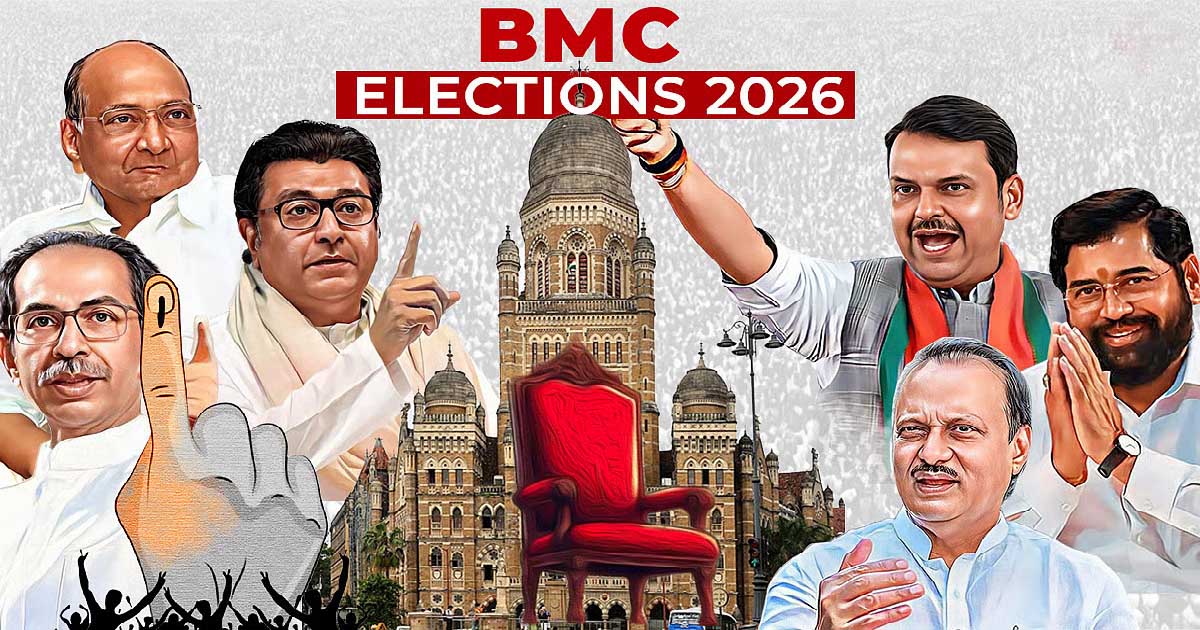
Mumbai: is set to witness a major political event tomorrow, January 15, as voters are set to vote for the crucial Brihanmumbai Municipal Corporation (BMC) elections 2026. The crucial polls have seen shifting alliances, reunion of brothers, with shifting alliances, aggressive push on Marathi identity reshaping the city’s civic battle—while the race for the powerful mayor’s post dominates the discourse. This will also be Shiv Sena’s first BMC election since the 2022 split, when Eknath Shinde broke away with a majority of the party’s legislators, along with its name and symbol. The undivided Shiv Sena had held sway over the country’s richest civic body for 25 years.
In Mumbai, the BJP is contesting 137 seats, the Eknath Shinde-led Shiv Sena 90, while the NCP is fighting separately on 94 seats. The Shiv Sena (UBT) has fielded 163 candidates, the MNS 52, the Congress 143 and the VBA 46 in the city.
The voting will be held on January 15 from 7.30 am to 5.30 pm. The counting of votes will be done on Jnaury 16
Ward 199
Kishori Pednekar (Shiv Sena – UBT)
Sashi kala Jaiswar (BSP)
Nandini Jadhav (VBA)
Kusale Rajesh (Shinde Sena)
Independent Candidates: Neelam Chiplunkar, Avanti Talekar, Sakshi Patole, Pooja Pandey, Sheela Shinde, Sangeeta Shetode, Anjali Sakhare
Ward 2 (Dahisar, Borivali)
Tejasvee Ghosalkar (BJP)
Dhanashree Kolage (Sena UBT)
Shingh Meneka Girish (Congress)
Sunita Bhatia (Independent)
Ward 185
Ravi Raja (BJP)
Kamlesh Lalaji Chiroda (Congress)
T. M. Jagdish (Sena UBT)
Paul Rafael (AAP)
Imran Mohammed Sheikh (BSP)
Nadar Michael Selvan (CPI-M)
Swati Yellappa Kunchikorve (CPI)
Nirmal Ramdulare Mewalal (SP)
Jyoti Trigriya (RPI)
Parthiyaraj Anbalagan (Independent)
Mohammed Irfan Ishtiyaq Khan (Independent)
Kamlesh Murji Nadiyapara (Independent)
Ponnarasi Shekhar Nadar (Independent)
Subhash Parvati Krishna Pandhare (Independent)
Vikas Maruti Rokade (Independent)
Ward 224
Yogita Arun Gawli
Number of Candidates and Voters in Mumbai
The polls are set to be held across 227 civic wards, with 1,700 candidates in the fray, including 878 females and 822 males. As many as 1,03,44,315 eligible voters, comprising 55,15,707 males, 48,26,509 females and 1,099 others, can exercise their right to vote.
Security On Polling Day
On polling day, the Mumbai Police will deploy over 3,000 police officers including 10 Additional Commissioners of Police, 33 Deputy Commissioners of Police, and 84 Assistant Commissioners of Police, along with more than 25,000 police personnel across the city.
In addition to local police, specialised units such as SRPF platoons, Quick Response Teams (QRT), Bomb Detection and Disposal Squad (BDDS), Riot Control Police (RCP) platoons, and Home Guards will also be stationed at sensitive and high-risk locations to maintain strict vigilance. The police have appealed to citizens to immediately contact the helpline numbers 100 or 112 for emergency assistance or to report any suspicious activity.
Key Promises by Political Parties
The Mahayuti has promised a 50 per cent concession for women in BEST bus travel, while the Thackeray cousins have assured a Rs 1,500 monthly allowance for women domestic helps and a property tax waiver on houses up to 700 sq ft.
The UBT-MNS in its manifesto promised affordable housing, infrastructure upgrades, Rs 1,500 monthly aid for domestic and Koli women, scrapping property tax on homes up to 700 sq ft, reduce bus ticket prices and restarting old bus routes among others
The Congress manifesto, by contrast, prioritises combating Mumbai’s pollution, upgrading the BEST fleet, and strengthening the city’s financial health.

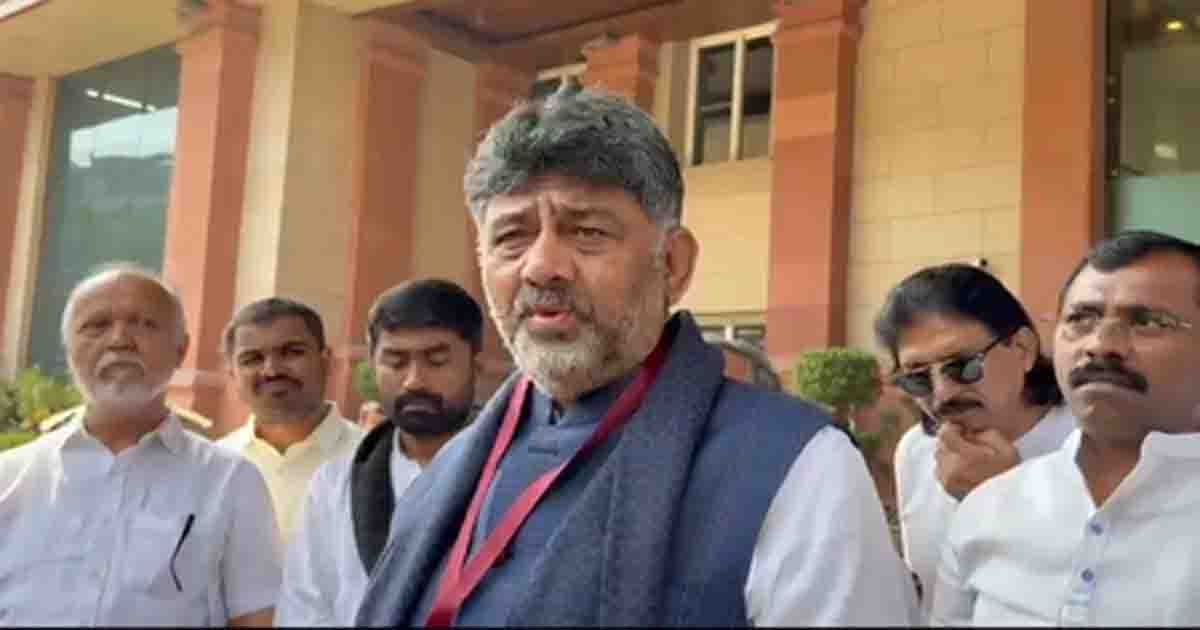
New Delhi/Bengaluru, Oct 8: Karnataka Chief Minister D.K. Shivakumar on Thursday claimed that an attempt was made to trap him through a sting operation after he became CM and said he had photographs and documents to substantiate his allegations.
Addressing reporters in Delhi, CM Shivakumar said several people had approached him after he assumed office and claimed that he knew who was behind the alleged sting operations.
“An attempt was made to trap me after I became the Chief Minister. A few people approached me. I have photographs. I know who the father of these sting operations is,” he said.
Referring to a Kannada proverb about thieves behaving smartly after committing a crime, even as their act is evident, Shivakumar said he was aware of the people involved and had informed the police about the developments.
“I know all of them. I have informed the police and kept all the documents regarding certain persons approaching me after I became the Chief Minister,” he said.
The Chief Minister said he could not reveal all details of the matter, but claimed he knew how the people approached him, whom they had met and who was behind the alleged operation.
“They came to discuss some matter. How they came and approached me, who they met, I know every detail. Who is planning all of this, I know,” he said.
Shivakumar said he had instructed officials to remain cautious as government officers could be trapped unnecessarily in such operations.
“I do not want to answer to other persons. I have asked my officers to be careful, as our officers are trapped unnecessarily. So, I have given a word of caution,” he said.
He further claimed that there were three circles of people around him and alleged that some persons had been hired as part of the alleged operation.
“I have three circles around me. They have hired some people. A few leaders have done it, and I have exact information,” Shivakumar said.
The Chief Minister alleged that he himself had been targeted as part of an attempt to launch sting operations and said similar operations were also being conducted against others.
“They have targeted me, and they want to start the sting operations from me. I have all the proof to prove it. I do not speak just like that. I have all the proof. I am talking about targeting me after I became the Chief Minister,” he said.
Shivakumar also claimed he knew who was behind the alleged sting operations and who was financing them.
“They are also carrying out stings on others. I know who is behind it and who is financing the sting operations,” he said.
It may be noted that the issue of possible sting operations targeting Congress ministers came to the forefront after CM Shivakumar allegedly expressed apprehension at a Cabinet meeting that the BJP and JD(S) could target the ministers and conduct sting operations against them.
Union Minister for Heavy Industries and Steel H.D. Kumaraswamy on Wednesday questioned CM Shivakumar over the alleged sting operations against Congress ministers, saying Shivakumar himself had warned his Cabinet colleagues to be cautious about their movements and interactions.
Karnataka Bharatiya Janata Party (BJP) President B.Y. Vijayendra on Wednesday alleged that Congress has a history of conducting sting operations and using them to blackmail people, and said this could be confirmed by speaking to the party’s own Ministers and legislators.
Senior BJP leader and Leader of Opposition in the Karnataka Legislative Assembly R. Ashoka on Wednesday claimed that CM Shivakumar was worried about alleged sting operations targeting Congress ministers because he had been involved in such activities earlier.
Crime
Delhi Police to probe ‘premeditated’ angle, involvement of criminal elements in CJP’s July protest

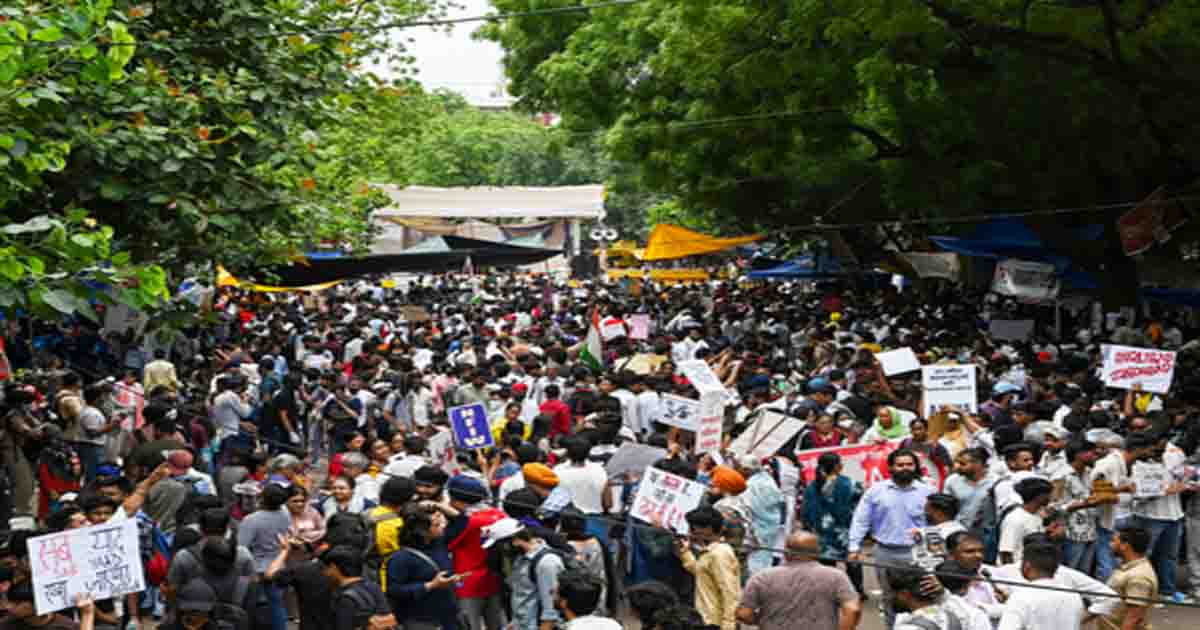
New Delhi, Oct 8: The Delhi Police Crime Branch has started investigating the violence that broke out during the Cockroach Janata Party (CJP) protest in the national capital in July and has registered a case under relevant sections of the law, according to sources on Thursday.
The Crime Branch sources said the probe will focus on the role of those responsible for the violence that broke out in New Delhi on July 20.
The Crime Branch will specifically investigate whether the violence was “premeditated” or whether “criminal elements” entered the protest sites when the CJP called for a march to Parliament.
On the directions of the Supreme Court, Delhi Police has already cancelled 17 FIRs related to the violence.
The Crime Branch will now specifically probe the violence, which involved assaults on police personnel, vandalism and destruction of public property, including police vehicles.
On July 20, a large number of protesters gathered in and around Jantar Mantar in Delhi. Around 30,000 people took to the streets and attempted to march toward Parliament demanding action against the paper leaks and other examination-related irregularities.
As the situation deteriorated, clashes broke out between the police and the protesters. The police used force, leading to widespread criticism.
Following this incident, the police’s intelligence system was reviewed. Officials felt that they lacked adequate and accurate prior input regarding the number of protesters, their mobilisation, and the role of various organisations.
Therefore, the Delhi Police Special Branch was instructed to develop more detailed and usable intelligence inputs, rather than simply gathering information about the location of the protest and estimated crowd.
However, in September, the Supreme Court quashed FIRs registered against student protesters in Delhi, Bihar, Maharashtra, West Bengal, and Assam in connection with protests held between July 20 and 25, and directed that similar cases registered across the country will not be pursued or investigated.
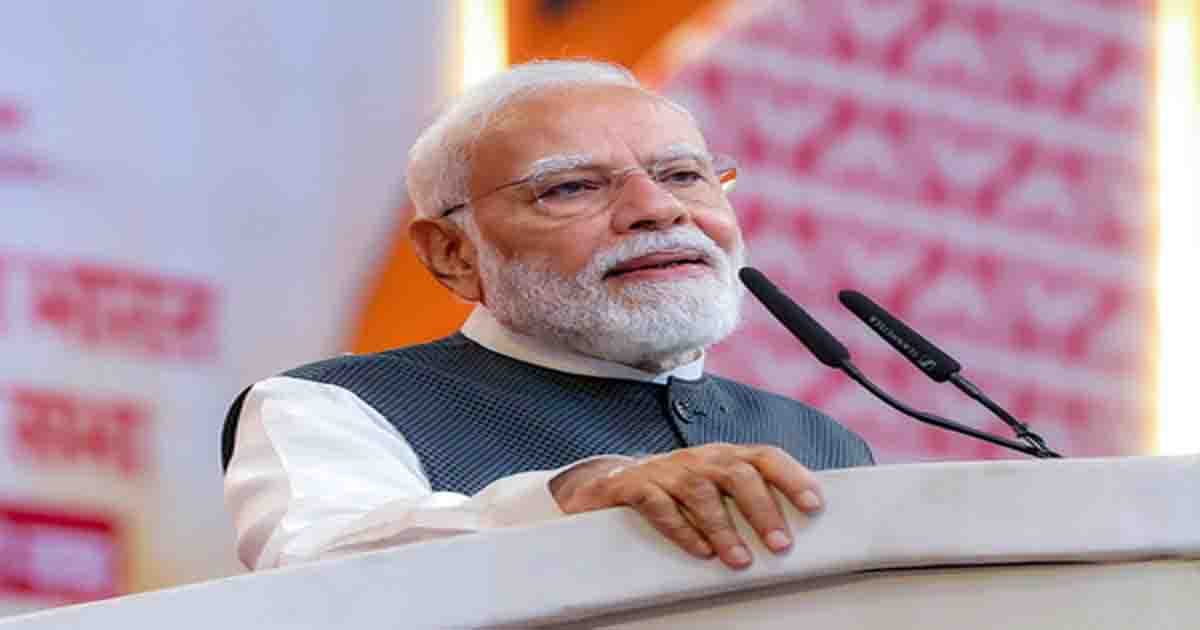
New Delhi, Oct 8: Prime Minister Narendra Modi on Thursday thanked world leaders for their warm wishes as greetings continue to pour in following his completion of 25 years as the head of the government.
While thanking Trinidad and Tobago’s Prime Minister Kamla Persad-Bissessar, PM Modi highlighted the close ties between the two countries and expressed confidence in further deepening bilateral cooperation in the years ahead.
“Thank you, Prime Minister Kamla Persad-Bissessar, for your warm wishes and kind words. The friendship between India and Trinidad and Tobago continues to scale new heights. We look forward to strengthening our partnership in the years to come,” PM Modi posted on X.
In a post on X on Thursday, Prime Minister Bissessar congratulated Prime Minister Modi on completing 25 years as head of government, calling it a “significant milestone” in his public service.
“Celebrating a Remarkable Milestone: Prime Minister Narendra Modi Marks 25 Years of Distinguished Public Leadership. Today, I join the people of India and friends around the world in celebrating a truly significant milestone in the public service of my dear friend, Prime Minister Narendra Modi – 25 years of continuous service as a Head of Government, spanning leadership at both the state and national levels,” she stated.
PM Modi also thanked Grenada’s Prime Minister Dickon Mitchell for his warm wishes, saying, “I deeply value the friendship between India and Grenada and look forward to further strengthening our close ties.”
Mitchell had extended his warm greetings to PM Modi on 25 years of continuous service, while expressing hope to continue deepening the partnership between India and Grenada.
“Grenada celebrates with you and looks forward to the continued strengthening of the friendship between our nations,” Mitchell posted on X.
Meanwhile, Prime Minister Modi further expressed gratitude to Ethiopian Prime Minister Abiy Ahmed Ali for his warm wishes and conveyed greetings on the latter’s assumption of office for another term.
Recalling his visit to Ethiopia last December and his recent meeting with Ali in New Delhi, PM Modi underlined the importance India attaches to its Strategic Partnership with Ethiopia.
“India greatly values its Strategic Partnership with Ethiopia, and I look forward to working closely with you to further deepen our cooperation and friendship,” PM Modi posted on X.
Congratulating PM Modi, Ali in a post on X had said, “I express my warmest congratulations to you, dear friend Prime Minister Narendra Modi, as you mark a key milestone: 25 years as Head of Government, first as Chief Minister of Gujarat from 2001 and as Prime Minister of India since 2014.”
PM Modi also thanked Zambian President Hakainde Hichilema for his congratulatory greetings, saying, “India deeply values its friendship with Zambia, and I look forward to further strengthening our close partnership.”
Taking to X, President Hichilema extended his wishes to PM Modi and said: “We congratulate Prime Minister Narendra Modi as he marks 25 years in public office, having first been sworn in as Chief Minister of Gujarat on 7 October 2001. We wish him continued good health and prosperity.”
Thanking Kazakhstan’s Qasym-Jomart Toqayev, PM Modi said, “I deeply value our close friendship and strategic partnership with Kazakhstan. Look forward to working together to further strengthen and deepen our bilateral ties.”
While congratulating Prime Minister Modi on the “remarkable milestone” of 25 years as Head of Government, the Kazakh President took to X and posted: “Under his strong and wise leadership, India continues to advance its sustainable development, scientific and technological progress, while further strengthening its role on the global stage.”
PM Modi also thanked Japanese Prime Minister Sanae Takaichi for her warm wishes and expressed confidence that India-Japan ties would reach new heights as the two countries prepare to mark the 75th anniversary of their diplomatic relations.
“Prime Minister Takaichi, thank you very much. Your visit to India in July this year will remain unforgettable for me as well. It has further strengthened the India-Japan partnership. Both countries, building on their longstanding friendship, will continue to work together for global peace, stability, and prosperity. I am confident that on the 75th anniversary of our diplomatic relations, bilateral ties will reach new heights,” PM Modi posted on X.
Prime Minister also thanked former Serbian President Aleksandar Vucic for his “warm words and friendship”, saying, “I deeply appreciate your personal contribution to strengthening the India-Serbia partnership. Under your leadership, Serbia has undergone an extraordinary transformation. You have served Serbia with determination and dedication. I look forward to taking the India-Serbia partnership to even greater heights.”
PM Modi also thanked South Korean President Lee Jae-myung for his warm wishes.
“I fondly recall your visit to India in April, which gave fresh momentum to our Special Strategic Partnership. I am confident that together we will deepen our multifaceted cooperation and advance our shared vision for global peace, stability and prosperity,” PM Modi posted on X.
The congratulatory messages from world leaders came as PM Modi on Wednesday marked 25 years of uninterrupted leadership as head of government. He began his tenure as Gujarat Chief Minister on October 7, 2001, and became Prime Minister of India in 2014.

38-year-old man dies in police custody in Navi Mumbai

Attempt was made to trap me through sting operation after I became CM: Shivakumar

‘Welcome’ director Anees Bazmee requests privacy after Nana Patekar demise, says ‘not in a condition to talk’

Delhi Police to probe ‘premeditated’ angle, involvement of criminal elements in CJP’s July protest

PM Modi thanks world leaders for wishes on completing 25 years as head of govt

Gift to President Putin part of PM Modi bid to globally display India’s heritage

PM Modi’s warm camaraderie with Putin, Xi on full display at BRICS Summit

Complaint against Netflix & Mukesh Chhabra for inappropriate language on ‘India’s Got Latent 2’

INDIA bloc begins protest march against ECI

Maha Congress stages agitation against Gyanesh Kumar
-

 Crime4 years ago
Class 10 student jumps to death in Jaipur
-

 Maharashtra2 years ago
Mumbai Local Train Update: Central Railway’s New Timetable Comes Into Effect; Check Full List Of Revised Timings & Stations
-

 Maharashtra2 years ago
Mumbai To Go Toll-Free Tonight! Maharashtra Govt Announces Complete Toll Waiver For Light Motor Vehicles At All 5 Entry Points Of City
-

 Maharashtra2 years ago
False photo of Imtiaz Jaleel’s rally, exposing the fooling conspiracy
-

 National News2 years ago
Ministry of Railways rolls out Special Drive 4.0 with focus on digitisation, cleanliness, inclusiveness and grievance redressal
-

 Maharashtra2 years ago
Maharashtra Elections 2024: Mumbai Metro & BEST Services Extended Till Midnight On Voting Day
-

 National News2 years ago
J&K: 4 Jawans Killed, 28 Injured After Bus Carrying BSF Personnel For Poll Duty Falls Into Gorge In Budgam; Terrifying Visuals Surface
-

 Crime2 years ago
Baba Siddique Murder: Mumbai Police Unable To Get Lawrence Bishnoi Custody Due To Home Ministry Order, Says Report