
Maharashtra
Mumbai 26 July 2005 Floods: When City Was Submerged With 944 mm Of Rain In 24 Hours Leaving 914 Dead, Thousands Displaced

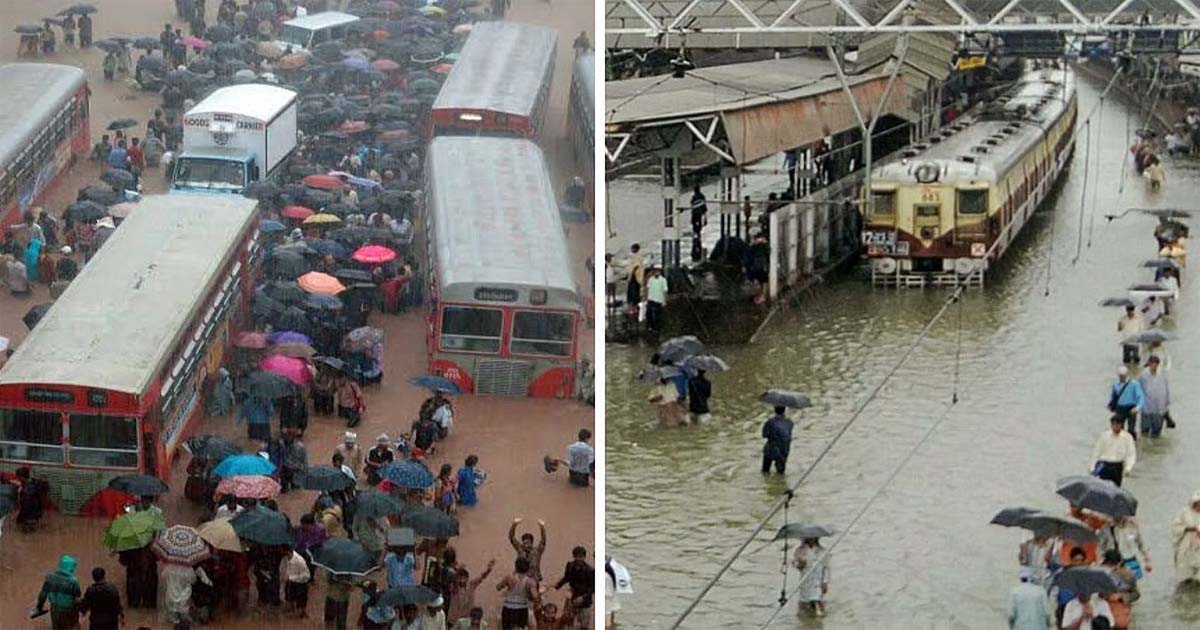
Every year, the monsoon season disrupts life across Indian cities with heavy rainfall, waterlogging and traffic chaos. But July 26, 2005, stands out as a day that etched itself into Mumbai’s history as one of its darkest and most devastating.
On that day, Mumbai received an unprecedented 944 mm of rain in just 24 hours, nearly half of its annual average. Between 8 am and 8 pm alone, 644 mm poured down. It remains the eighth-highest 24-hour rainfall ever recorded anywhere in the world. The city, unprepared for such intensity, was brought to a grinding halt.
Internet Flooded With Old Visuals, Still Haunting Mumbaikars
Several netizens took to social media to share haunting visuals from the 2005 Mumbai floods, recalling the day when the city came to a complete standstill. Many described it as an unforgettable chapter in Mumbai’s history, marked by chaos, resilience and unity.
While some reflected on the overwhelming scale of the disaster, others remembered how the crisis revealed the undying spirit of Mumbai, with strangers helping each other and communities coming together in the face of adversity.
Mumbai’s Lifeline Took Serious Hit, 52 Local Trains Damaged
As floodwaters rose, roads vanished beneath torrents of water. Local trains, the city’s lifeline, stopped completely, with tracks submerged and 52 trains damaged. Thousands were stranded in stations, schools and offices overnight. Low-lying areas like Dharavi and the Bandra-Kurla Complex were heavily inundated, while vehicles were swept away or immobilised.
The scale of disruption was staggering. Over 37,000 auto-rickshaws, 4,000 taxis, 900 BEST buses and 10,000 trucks and tempos were either damaged or rendered unusable. Even the skies were no refuge. For the first time ever, Mumbai’s airports shut down, with Chhatrapati Shivaji International Airport and the Juhu airstrip closed for more than 30 hours. More than 700 flights were cancelled or delayed, creating nationwide ripples in air traffic.
Over 900 Killed, Property Worth ₹5.5 Billion Destroyed
The economic loss was estimated at Rs 5.5 billion (around 100 million USD). But the cost in human lives and suffering was far greater. According to official reports, 914 people lost their lives, many due to drowning, electrocution and landslides. More than 14,000 homes were destroyed, leaving thousands without shelter, food or drinking water.
Communication networks also failed. Around 5 million mobile users and 2.3 million landline connections went dead for several hours, hampering emergency rescue operations. Emergency services were overwhelmed, as the city grappled with a disaster it had never imagined.
The 2005 floods served as a harsh wake-up call, exposing Mumbai’s vulnerability to extreme weather. In the years since, the government has worked on improving disaster preparedness, such as creating specialised disaster management units, upgrading early warning systems and installing floodgates and dewatering pumps at critical points.
Yet, even two decades later, as visuals from 2005 resurface each year, a haunting question persists: Is Mumbai truly prepared to face another flood of that magnitude?

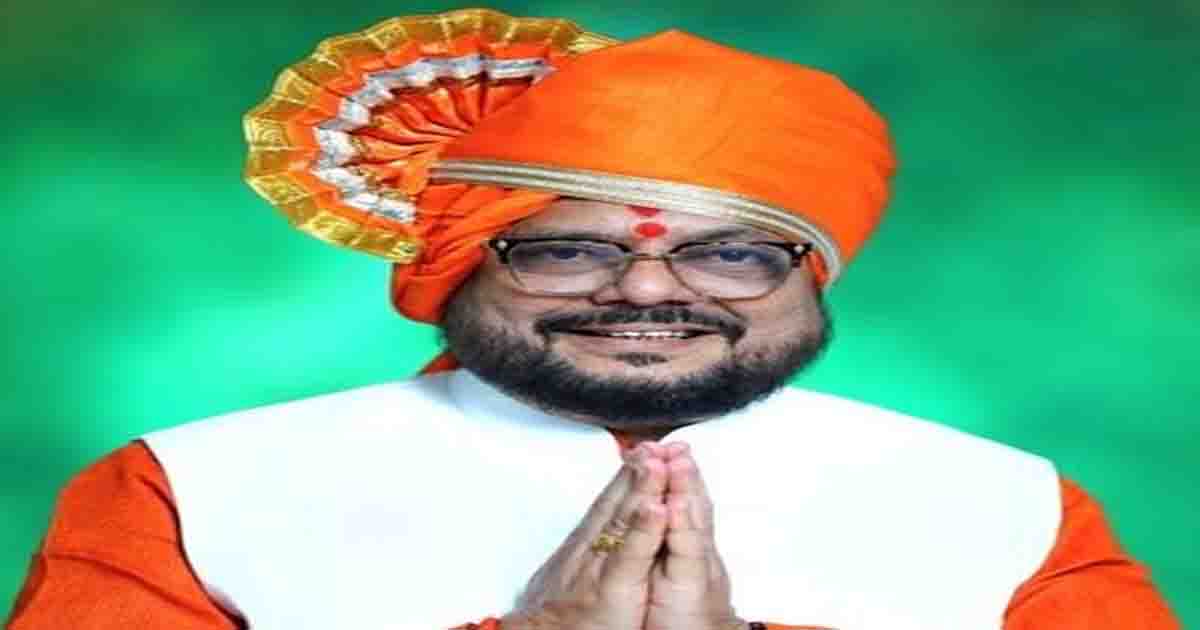
Maharashtra Water Supply and Sanitation Minister Gulabrao Patil on Monday directed the administration to prepare and submit realistic, village-wise action plans for potential water scarcity across all stages in the Nagpur, Amravati, and Konkan divisions by October 25.
Minister Patil also instructed officials to prioritise the completion and operationalisation of drinking water supply projects under the Jal Jeevan Mission that have reached between 75 per cent and 99 per cent progress.
The minister’s directives come after the state government has already announced drought in 304 talukas following scanty rainfall and launched 12 mitigation measures.
Addressing a high-level review meeting, Minister Patil evaluated the water supply status, groundwater levels, and mitigation measures for potential water scarcity in Nagpur, Amravati, and Konkan regions. While noting that there is currently no severe water scarcity in these regions, the Minister emphasised the need for administrative preparedness ahead of upcoming months.
“The administration must remain proactive. Action plans should be framed based on ground-level inspections and extensive consultations with public representatives, sarpanches, gram panchayats, and local officials,” he said.
Minister Patil instructed that pending works such as pipeline laying, pump installation, electrical connections, and transformer setups for projects in their final stages must be completed on a priority basis.
Schemes exceeding 75 per cent completion must have their package details verified and certified promptly to ensure smooth funding releases. He said that a dedicated plan for strengthening local water sources must be created for potential tanker-dependent villages.
Authorities should utilise 2 per cent of the District Planning Committee (DPC) funds primarily for source augmentation. Groundwater recharge works, including well recharging, farm ponds, cement bandharas, cement plugs, continuous contour trenches (CCT), and repairs of older bunds—must be carried out by tapping into District Planning, Mining, and Corporate Social Responsibility (CSR) funds, he stated.
Minister Patil reiterated that deploying water tankers should only serve as an ultimate last resort. Prior to that, officials must enforce cleaning and disinfection of available public wells. He asked the administration to focus on the rejuvenation of local water sources and efficient water budget planning and disciplined water conservation practices.
He strictly instructed officers to immediately visit villages and take necessary action whenever complaints regarding water scarcity surface or media reports highlight local distress.
To ensure long-term operational success, Minister Patil said that fixed timelines must be established to hand over completed and successfully tested water supply schemes to Zilla Parishads or Gram Panchayats. In cases of delay by local bodies in accepting projects, formal proceedings will follow state policy guidelines.
Zilla Parishads and Gram Panchayats are expected to handle operation, maintenance, and electricity billing effectively. Local officials were advised to coordinate directly with District Collectors and Zilla Parishad Chief Executive Officers (CEOs) to resolve any persistent transformer or power connection hurdles, he said.
Maharashtra
Public will never accept this: NDA on Uddhav Thackeray ‘saffron identity’, ‘regime change’ remarks

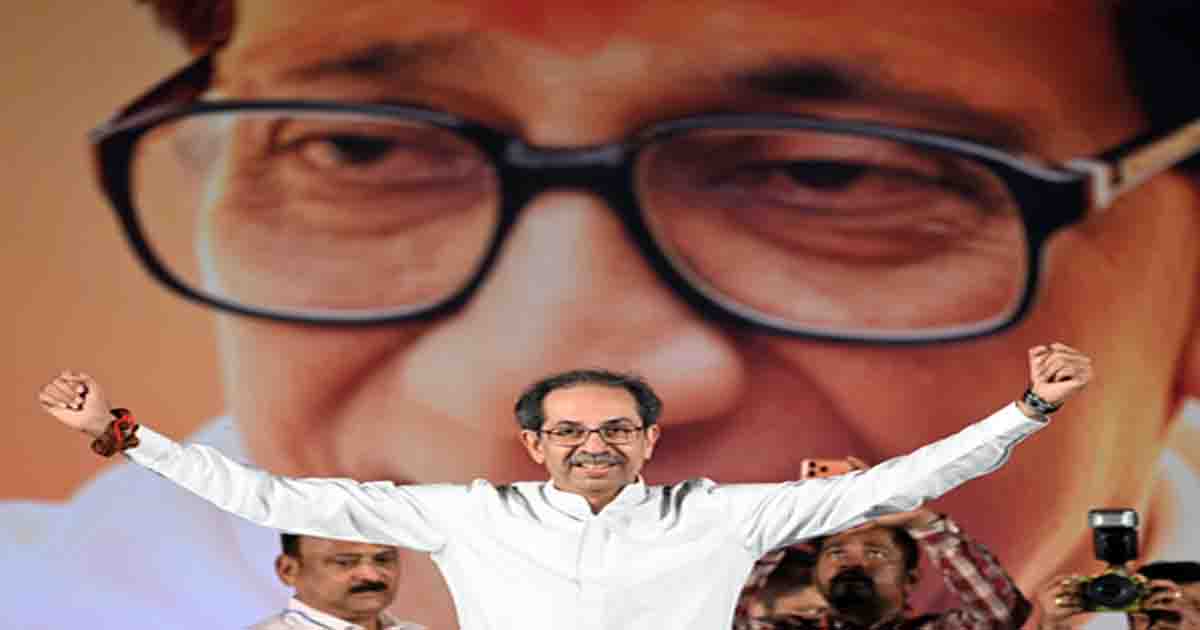
The National Democratic Alliance (NDA) leaders on Wednesday strongly hit back at Shiv Sena (UBT) chief Uddhav Thackeray following his recent assertions regarding a “saffron identity” and “regime change” and said that the public will reject this rhetoric.
While addressing a massive gathering during the annual Dussehra rally at the historic Chhatrapati Shivaji Maharaj Park in Mumbai, Thackeray openly asserted that they were present to change the regime, arguing that any government failing to serve public interest must be replaced.
Reiterating his party’s claim to the saffron identity, Thackeray said, “Bhagwa (saffron) is our identity; no one can steal our identity.”
Thackeray remarked that a saffron atmosphere is currently present everywhere, and emphasised that this sacred saffron flag must be hoisted not only at the Maharashtra Legislative Assembly but also on the throne of Delhi.
Reacting sharply to these statements, Maharashtra Bharatiya Janata Party (BJP) MLA, Ram Kadam, speaking to media, stated, “The fear of ‘Operation Tiger 3’ was clearly visible in Thackeray’s speech.”
He claimed that the deep regret of ‘abandoning’ Hindutva was thoroughly evident. “Because of this very regret, Thackeray repeatedly pronounced the word Bhagwa and continuously took the name of Chhatrapati Shivaji Maharaj throughout his address,” Ram Kadam alleged.
Kadam further questioned what he termed as the “double standards” of Thackeray, claiming that the “nation has witnessed how individuals accused of riots like Umar Khalid, who chant praises for Afzal Guru, are embraced and supported by Thackeray, and how he walks hand in hand with Rahul Gandhi, who repeatedly attacks Sanatan Dharma and links saffron with terrorism.”
Joining the criticism, Shiv Sena spokesperson Shaina NC told media, “Uddhav says that he doesn’t want ‘scarf-wearing’ Hindutva. But in 2019, when he formed an alliance with the Congress, he embraced ‘cap-wearing’ Hindutva.”
“Balasaheb Thackeray always urged people to say with pride that they are Hindus, whereas Uddhav Thackeray now advises people to say with pride that they are for regime change. The only difference is that one represents real Hindutva while the other stands for fake secularism,” she claimed.
Meanwhile, Shiv Sena Rajya Sabha member, Milind Deora, acknowledged that every citizen and every Opposition party possesses the democratic and constitutional right to protest; however, he strongly objected to the language used by Thackeray to compare situations with countries like France, Albania, Bangladesh, and Nepal.
“Every citizen and every Opposition party has the right to contest elections against the government and to make statements against the government. This is their constitutional, democratic right. However, the language used to compare things with France, Albania, Bangladesh and Nepal is clearly an attempt to spread anarchy and violence,” Deora alleged.
“The people of India will never accept this. If they want to bring about the so-called change, do it through elections, by earning people’s vote; not like this,” he told media.

A 19-year-old second-year Chemical Engineering student at the Institute of Chemical Technology (ICT), Mumbai, has committed suicide in his hostel room in Matunga.
The student, identified as Siddhesh Patil, was a native of Nashik and resided at the ICT College hostel. According to preliminary information, the incident occurred at around 10:30 p.m. when he hanged himself from the ceiling fan in his room.
Mumbai Police have registered an Accidental Death (AD) report and initiated an investigation into the circumstances surrounding the incident.
According to information received in connection with the case, Patil had reportedly been experiencing mental health difficulties over the past few days and was undergoing treatment.
On the day of the incident (Tuesday), he reportedly sent a message to his doctor expressing emotional distress. The doctor promptly informed the student’s family after receiving the message.
Following this communication, the family contacted Patil’s friends at the hostel and asked them to reach his room immediately to check on him.
However, the friends reportedly arrived after the suicide had taken place.
The Matunga Police are investigating the case and gathering information to establish the sequence of events. Further details are awaited as the investigation continues.
The incident has drawn attention to the mental well-being of students pursuing higher education away from their families. It also underscores the importance of accessible mental health support and timely intervention when students experience emotional distress.
Earlier in September, a second-year student of the Indian Institute of Technology (IIT) Bombay died by suicide after he was found using a mobile phone during an examination, triggering protests by students on the institute’s Powai campus.
The incident marked the third reported suicide at the IIT-Powai campus in the past six months.
The deceased student was identified as Sahil Wakode, who was pursuing his second year in the Department of Energy Science and Engineering. According to the institute, Wakode had uploaded an examination question paper to ChatGPT in an attempt to obtain answers while the test was underway.
IIT-Bombay said no disciplinary proceedings had been initiated against him following the incident. The matter was discussed with the student by the examination instructor and the Head of the Department. They counselled him and assured him that the incident would not have an adverse impact on his academic career, the institute said.

Adani Energy Solutions profit more than doubles to Rs 1,364 crore in Q2, revenue rises 51 pc

Mika Singh recalls gatecrashing Amitabh Bachchan’s party, Big B says Jaya Bachchan has kept doors open for all

Shahid Kapoor ‘promptly breaks out of character’ after wrapping up ‘Farzi 2’ shoot

Jantar Mantar protest: Saurav Das, Ranka, Shinde seek more time to appear before police

Delhi Police arrests supplier of banned firecrackers, recovers 57.8 kg from his possession

Rahul, Cong ecosystem want to force regime change: BJP after Neha Bora praises B’desh Gen-Z protest

Attack on democratic rights: INDIA Bloc leaders on detentions of anti-ECI protestors

BJP pays tribute to ex-President Abdul Kalam, recalls his enduring influence on generations of India’s youth

INDIA bloc begins protest march against ECI

Maha Congress stages agitation against Gyanesh Kumar
-

 Crime4 years ago
Class 10 student jumps to death in Jaipur
-

 Maharashtra2 years ago
Mumbai Local Train Update: Central Railway’s New Timetable Comes Into Effect; Check Full List Of Revised Timings & Stations
-

 Maharashtra2 years ago
Mumbai To Go Toll-Free Tonight! Maharashtra Govt Announces Complete Toll Waiver For Light Motor Vehicles At All 5 Entry Points Of City
-

 Maharashtra2 years ago
False photo of Imtiaz Jaleel’s rally, exposing the fooling conspiracy
-

 National News2 years ago
Ministry of Railways rolls out Special Drive 4.0 with focus on digitisation, cleanliness, inclusiveness and grievance redressal
-

 Maharashtra2 years ago
Maharashtra Elections 2024: Mumbai Metro & BEST Services Extended Till Midnight On Voting Day
-

 National News2 years ago
J&K: 4 Jawans Killed, 28 Injured After Bus Carrying BSF Personnel For Poll Duty Falls Into Gorge In Budgam; Terrifying Visuals Surface
-

 Crime2 years ago
Baba Siddique Murder: Mumbai Police Unable To Get Lawrence Bishnoi Custody Due To Home Ministry Order, Says Report