
Maharashtra
Mira Road Violence: 65 Booked After Violent Clash Over Parking In Dachkul-Pada, Several Injured & 30 Autos Damaged

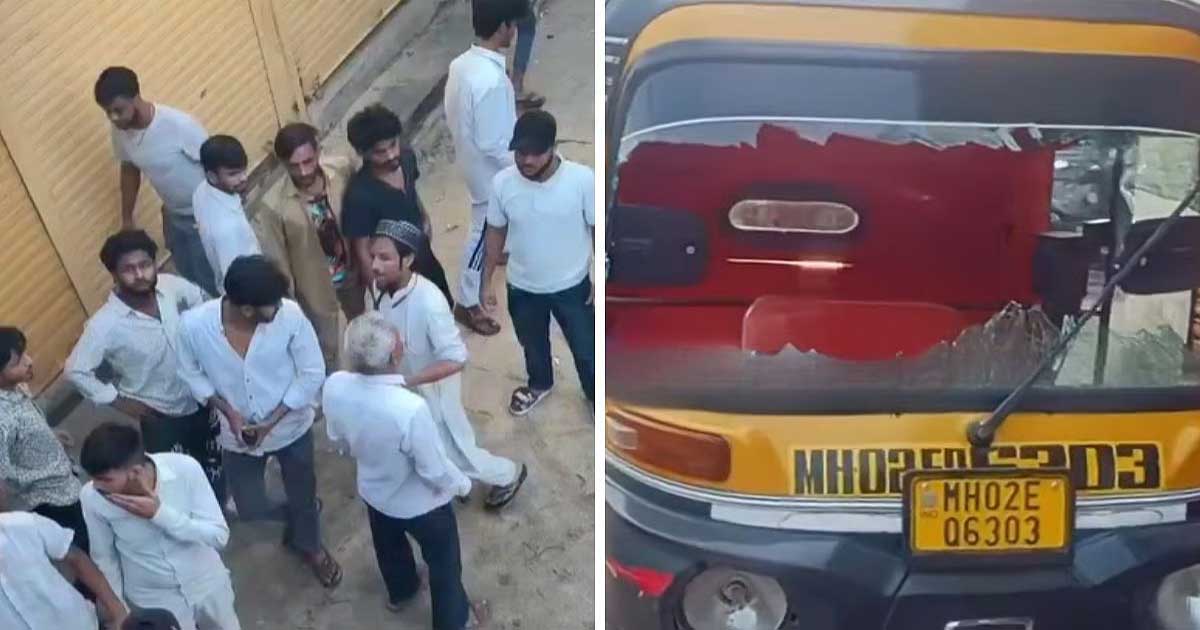
Mira Road: Tensions flared in Mira Road’s Dachkul-Pada area early Tuesday morning after a violent clash broke out over a parking dispute, leading to multiple injuries and extensive property damage.
The Kashigaon police have booked 15 identified individuals and around 50 unidentified others for their involvement in the attack, which left at least three to four people injured and nearly 30 to 35 autorickshaws damaged.
According to officials, the incident occurred around 6 am on Tuesday when a group of locals got into an argument with a few autorickshaw drivers who were washing their vehicles by blocking the road. The situation quickly escalated when one of the complainants, who had objected to the road being blocked, was allegedly attacked. Within minutes, the accused reportedly called in reinforcements from nearby areas, and around 50 men armed with axes, bamboo sticks, and sickles stormed into the lane.
“They attacked the complainant and a few others with sharp weapons and sticks. One of the victims suffered a head injury requiring stitches, while others escaped with bruises and scratches,” a police officer said. The crowd also went on a rampage, damaging several autorickshaws parked in the vicinity.
Locals alleged that the police arrived at the scene nearly an hour after the assault, by which time the attackers had fled. They also claimed that a group of miscreants regularly create nuisance in the area under the pretext of cleaning their autos and have been involved in drug-related activities. Residents have urged for stricter patrolling and police presence in the locality to prevent further incidents.
In response, Transport Minister Pratap Sarnaik and MLA Narendra Mehta visited the site of the clash and assured residents that swift and strict action would be taken against those responsible for the violence.
Senior Police Inspector Mahesh Togarwad of Kashigaon Police Station confirmed that around 65 people have been booked under serious charges, including attempt to murder (Section 307), causing grievous hurt with weapons, rioting, unlawful assembly, and relevant sections of the Maharashtra Police Act for carrying prohibited weapons.

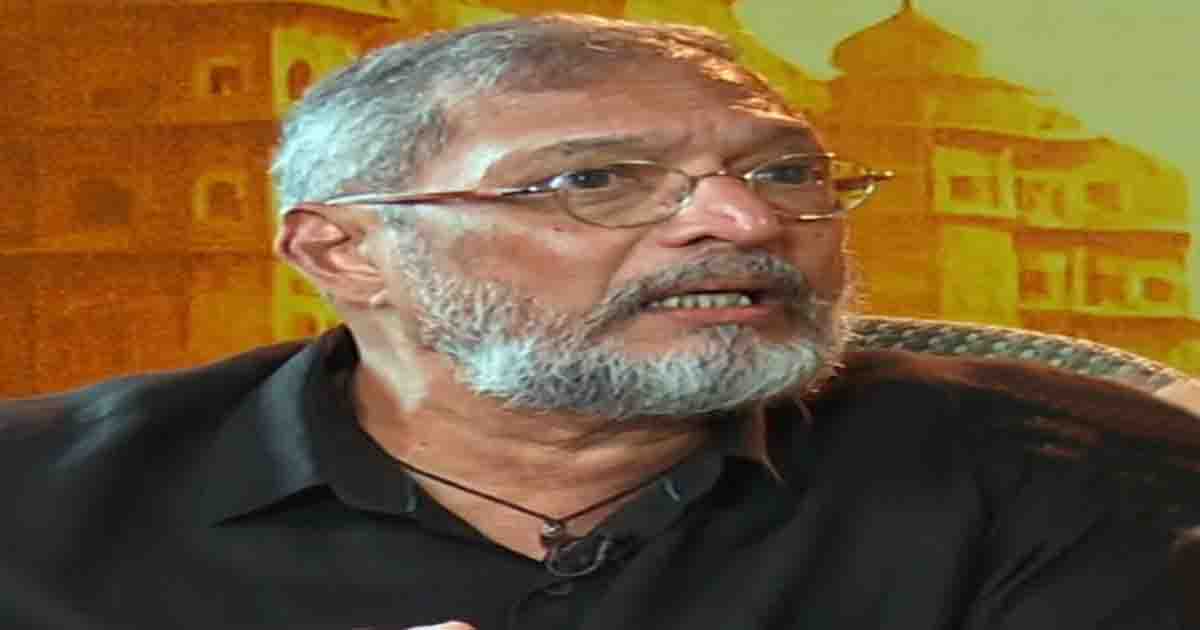
Mumbai, Oct 11: The final post-mortem report in the death case of veteran actor Nana Patekar has clarified the cause of death to be natural. A team of doctors at the Goa Medical College and Hospital (GMCH), Bambolim, in its report, has clarified that his death was a natural death, caused by a massive heart attack.
It was confirmed by the Goa Police to media. As per the police, the family has also been informed about the report and the family has also agreed to the medical report and has not raised any objection so far.
As per the final post-mortem report by GMC, the blood supply to the heart was stopped due to a blood clot in the main coronary artery, which led to a cardiac arrest. At around 2:30 am on October 8, the actor informed his family friend about his ill health on WhatsApp, after which he was brought to Manipal Hospital, Dona Paula, where doctors declared him dead even after about 45 minutes of CPR .
For the unversed, the Panaji police had registered a case of unnatural death under section 194 of the BNSS under UD No. 62/2026. Now that the post-mortem has confirmed natural death and ruled out any foul play by son Malhar Patekar and nephew Prasad Patekar, the case will be closed soon.
The late actor Nana Patekar was cremated with full state honours at his farmhouse in Donje in Pune district on Thursday. The actor was given a 3-gun salute.
The late actor’s friends and members of the film fraternity including Jackie Shroff, directors Anil Sharma, Aneez Bazmee, and producer Firoz nadiadwala arrived at Donje village to attend the last rites of Nana Patekar.
A huge crowd also turned up to bid adieu to the departed soul. Maharashtra Chief Minister Devendra Fadnavis also paid his last respects to Nana Patekar at Pune airport before leaving for Mumbai. Maharashtra Deputy Chief Minister Eknath Shinde went to the actor’s Pune farmhouse to pay his respects.
Maharashtra
Show proof for your claims before spreading anarchy: Ram Kadam on ongoing protests in Delhi

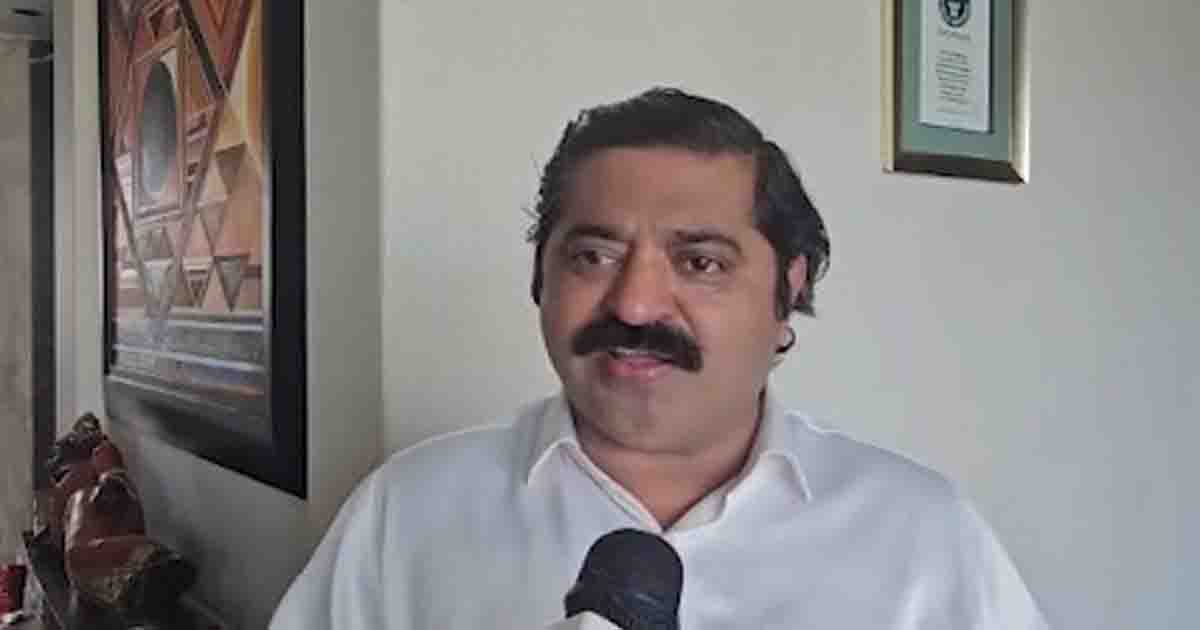
Mumbai, Oct 11: Condemning the ongoing protests that engulf the national capital and other major cities, Bharatiya Janata Party (BJP) leader Ram Kadam said on Sunday that evidence or facts should be presented before spreading anarchy in the state for just the sake of it.
Speaking to media, the BJP leader added, “Congress leaders carry the Constitution in their hands and speak about it, but their actions are aimed at undermining it. Are they above the law and administrative procedures, including the requirement to obtain permission?”
“Ever since he (Rahul Gandhi) returned from the US, it is unclear what has come over him and what is driving his actions. Is foreign funding behind his attempts to create unrest here? The voter list purification process has been carried out during the tenures of several Prime Ministers, from Jawaharlal Nehru to Manmohan Singh,” Kadam said.
“The electoral roll has not been reviewed since 2004 till 2025. That job is being done now. Is a dead person above the 2.8 crore voters. More than one crore voters’ names are repeated in the electoral rolls. Is removing those names a crime?” the BJP leader added.
“More than 6.3 crore voters have left their original homes. It’s a transparent process. If you have concrete proof and evidence, present it, but spreading anarchy in the state in the form of protests owing to foreign funding can’t be supported,” he said.
Reacting to the comments made by NCP-SP MLA Rohit Pawar on former Nationalist Congress Party (NCP) Chief and Deputy Chief Minister Ajit Pawar’s death, Kadam said, “Rohit Pawar has engaged in political theatrics by claiming that he would reveal the mystery behind the muffler on October 10. Ajit Dada Pawar has passed away, and 15 days ago, Rohit Pawar said he would reveal the mystery, but October 10 has passed without any revelation. This shows that he is engaging in cheap political stunts.”
Previously, NCP-SP leader Rohit Pawar had expressed his doubts about the plane crash that killed former Deputy Chief Minister Ajit Pawar and sought intervention of the probe agencies for further investigation.
Pune, Oct 11: An unknown person posing as an official of the Election Commission of India (ECI) defrauded a 78-year-old Pune resident of Rs 8 lakh, officials said on Sunday.
The victim, Jitendra Kumar Ahuja, is a resident of Pune’s Ghorpadi. He was cheated of Rs 8,00,015.34. A case was registered at the Mundhwa police station on October 10.
According to the police, the accused gained Ahuja’s trust by posing as an ECI official. He told Ahuja that his documents did not match. He then sent Ahuja a link and asked him to fill in his information.
It is alleged that the accused gained access to Ahuja’s mobile phone through the link and defrauded him of over Rs 8 lakh. This incident occurred between October 1 and 3.
The police have registered a case against the unidentified accused under sections 319(2), 318(4), 3(5) of the Indian Penal Code and sections 66(C) and 66(D) of the Information Technology Act.
This is the second such case that came to light on Sunday.
Earlier in the day, the police said that a person posing as an official of the Election Commission of India (ECI) cheated an 80-year-old man of Rs five lakh online under the guise of updating his voter card in Pune.
A case regarding this incident has been registered at the Lakshminagar Police Station in Pune.
According to the police, the complainant, Kanjasheri Vaidyanathan Venkatesan (80), is a retired employee of an automotive manufacturing company, residing in the Yerwada area of Pune. The accused called him, claiming to be from the ECI’s office, and stated that he needed to update his voter card.
Subsequently, the accused instructed him to download an APK file. After the file was downloaded, the accused gained access to the victim’s mobile screen, compromised his banking passwords, and fraudulently siphoned off Rs. 5 lakh.
A case has been registered at the Lakshminagar Police Station under Sections 308, 318(4), and 319(2) of the Bharatiya Nyaya Sanhita (BNS), as well as Sections 66(D) and 66(C) of the IT Act.
The full name and address of the accused have not yet been ascertained.
Investigations into both cases are currently underway, and further details are awaited, officials said.

Regime change certain in 2027: Akhilesh lashes out at BJP, Election Commission

Newlywed poisons husband, 3 family members in Maharashtra Jalgaon

Nana Patekar death: Final post-mortem report out, rules out foul play

Gujarat Police nab three more accused in Punjab’s Mad Sandhu murder case

FairPoint: Rahul-Priyanka aggressive street shows in Oppn power game

Gift to President Putin part of PM Modi bid to globally display India’s heritage

PM Modi’s warm camaraderie with Putin, Xi on full display at BRICS Summit

INDIA bloc begins protest march against ECI

Complaint against Netflix & Mukesh Chhabra for inappropriate language on ‘India’s Got Latent 2’

School bus driver shot at in MP’s Dabra; 50 terrified children on board witness crime
-

 Crime4 years ago
Class 10 student jumps to death in Jaipur
-

 Maharashtra2 years ago
Mumbai Local Train Update: Central Railway’s New Timetable Comes Into Effect; Check Full List Of Revised Timings & Stations
-

 Maharashtra2 years ago
Mumbai To Go Toll-Free Tonight! Maharashtra Govt Announces Complete Toll Waiver For Light Motor Vehicles At All 5 Entry Points Of City
-

 Maharashtra2 years ago
False photo of Imtiaz Jaleel’s rally, exposing the fooling conspiracy
-

 National News2 years ago
Ministry of Railways rolls out Special Drive 4.0 with focus on digitisation, cleanliness, inclusiveness and grievance redressal
-

 Maharashtra2 years ago
Maharashtra Elections 2024: Mumbai Metro & BEST Services Extended Till Midnight On Voting Day
-

 National News2 years ago
J&K: 4 Jawans Killed, 28 Injured After Bus Carrying BSF Personnel For Poll Duty Falls Into Gorge In Budgam; Terrifying Visuals Surface
-

 Crime2 years ago
Baba Siddique Murder: Mumbai Police Unable To Get Lawrence Bishnoi Custody Due To Home Ministry Order, Says Report