
Maharashtra
Maharashtra Govt’s Mukhyamantri Majhi Ladki Bahin Yojana Sees 14 Lakh New Beneficiaries Since Assembly Polls

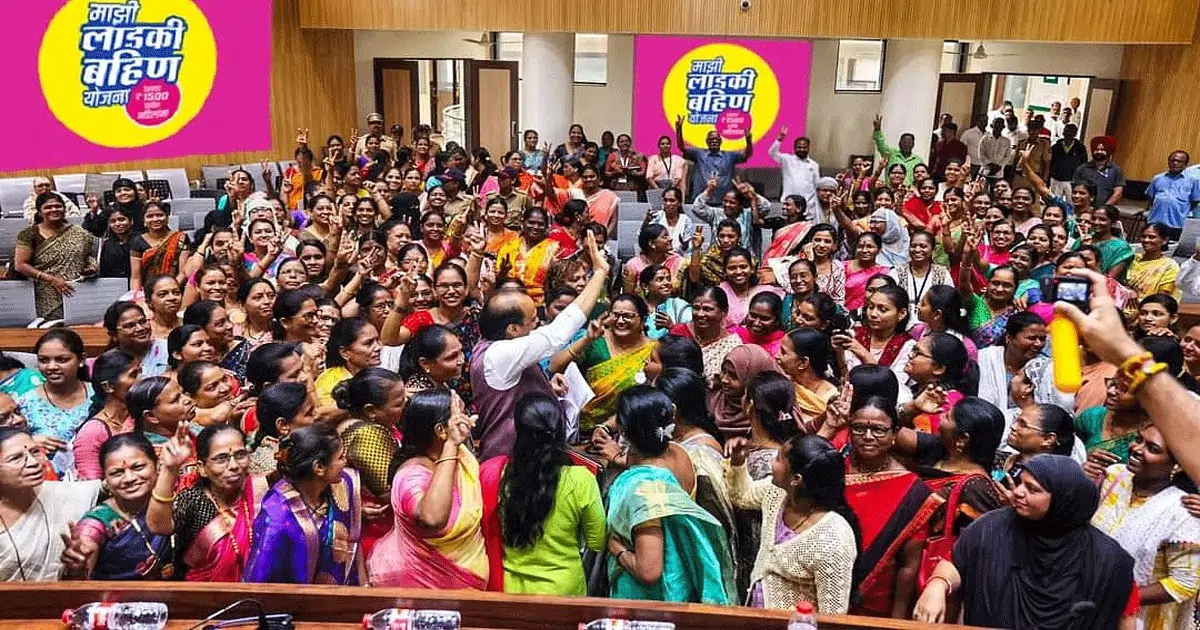
Mumbai: The number of beneficiaries under the Mukhyamantri Majhi Ladki Bahin Yojana has risen by 14 lakh since the Maharashtra Assembly elections, Women and Child Development Minister Aditi Tatkare informed the Legislative Assembly on Wednesday.
According to officials, the surge in beneficiaries was due to the completion of pending application scrutiny, which had been delayed because of the model code of conduct during the elections. As a result, the total number of beneficiaries increased from 2.33 crore before the elections to 2.47 crore in February.
However, the Opposition staged a protest and walkout from the Assembly, accusing the government of delaying the promised increase in financial aid under the scheme. Opposition leaders criticised the government for failing to raise the assistance amount to Rs 2,100, as pledged.
During the question hour, NCP (SP) MLA Rohit Pawar questioned the delay, asking, “When will you provide Rs 2,100 as promised in the manifesto?” He was joined by Shiv Sena (UBT) MLA Varun Sardesai, who also pressed for clarity on the issue.
Tatkare responded that the current amount provided under the scheme is Rs 1,500 per month, and a decision regarding the increase to Rs 2,100 will be taken by the Chief Minister and Deputy Chief Ministers. Additionally, she mentioned that Anganwadi workers receive Rs 50 per application they process under the scheme.
Despite the explanation, the Opposition continued its protest, alleging that the government was misleading women and failing to deliver on its promises. They also raised concerns over scrutiny of ineligible beneficiaries, questioning whether genuine applicants were being excluded.
Officials clarified that while scrutiny of ineligible applicants is ongoing, the recent increase in beneficiaries is due to the clearance of applications that had been on hold due to election-related restrictions. The government maintains that the scheme’s implementation is progressing, and any changes to financial aid will be decided at the highest level.


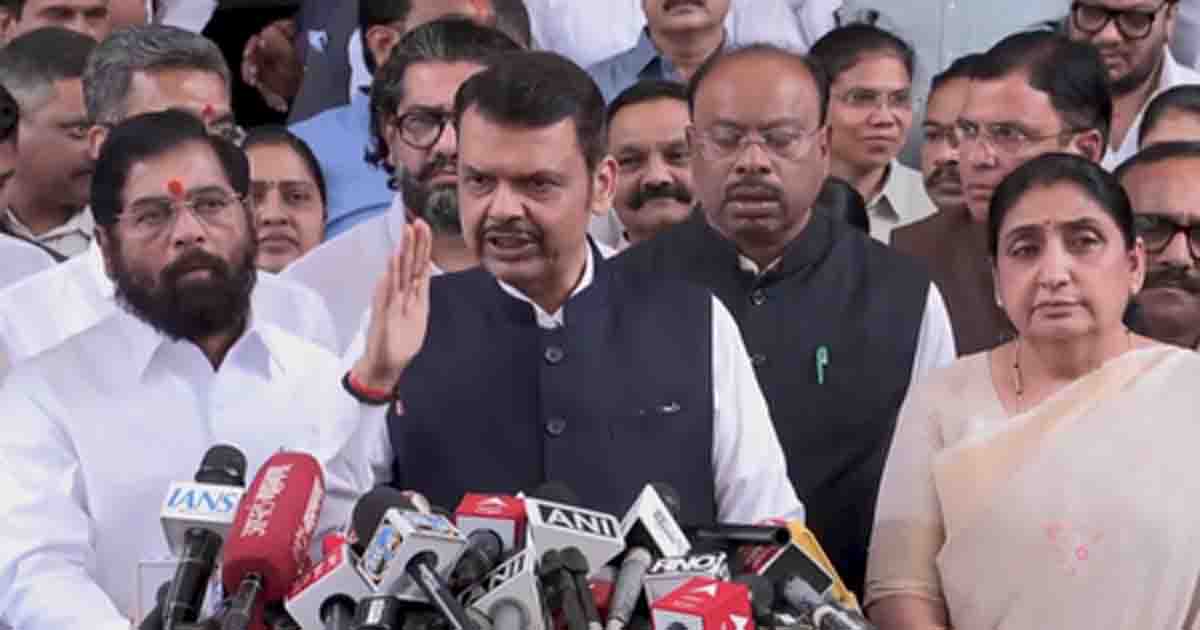
Mumbai, Oct 14: The Maharashtra Cabinet, chaired by Chief Minister Devendra Fadnavis, on Wednesday passed a unanimous resolution congratulating Prime Minister Narendra Modi on completing an unbroken 25 years of public service as head of government, spanning his tenures as Chief Minister and Prime Minister from October 7, 2001, to October 7, 2026.
The cabinet lauded PM Modi’s leadership in driving national transformation across good governance, inclusive development, infrastructure expansion, social empowerment, and national security.
Highlighting his philosophy of serving as “Pradhan Sevak”, the resolution emphasised how his policies have prioritised the welfare of the poor, exploited, deprived, and vulnerable sections of society.
Acknowledged the national goal of reaching a USD 5 trillion economy by 2029 and highlighted Maharashtra’s concurrent objective of building a USD 1-trillion economy backed by robust central support.
The resolution noted that infrastructure projects worth approximately Rs 12 lakh crore are currently underway in the state with central collaboration.
The 701 km Hindu Hrudaysamrat Balasaheb Thackeray Maharashtra Samruddhi Mahamarg expressway was completed, boosting economic development across Vidarbha, Marathwada, and North Maharashtra. There has been accelerated momentum for metro projects in Mumbai, Pune, and Nagpur, including the 33.5-km underground Mumbai Metro Line 8 (Colaba-Bandra-SEEPZ). The 22-km Mumbai Trans Harbour Link (Atal Setu) and the Navi Mumbai International Airport have become operational, while the construction of the Vadhavan Port in Palghar district and the Mumbai-Ahmedabad Bullet Train project are underway.
PM Modi-led government took the historic decision granting Classical Language status to Marathi on October 3, 2024, alongside the establishment of the Centre of Excellence for Classical Marathi Language Studies in Pune.
The resolution also recognised central initiatives, including celebrating Chhatrapati Shivaji Maharaj (including naval insignia inspired by the Rajmudra and UNESCO World Heritage status for 12 hill forts), the development of Panchteerth sites, land allocation for the Dr Babasaheb Ambedkar National Memorial at Indu Mill, and the nationwide celebrations for Mahatma Phule’s bicentenary alongside the Bhide Wada memorial project.
The resolution cited the implementation of 29 major and medium irrigation projects under the Pradhan Krishi Sinchayee Yojana (creating 4.49 lakh hectares of irrigation capacity by July 2026), the Baliraja Jal Sanjeevani Yojana (allocating Rs 15,000 crore for drought-prone regions), and the installation of 11.80 million solar agricultural pumps under the PM-KUSUM scheme alongside PM Surya Ghar free electricity initiatives.
Further, the resolution highlighted the reach of Ayushman Bharat (benefitting 4.40 crore citizens in Maharashtra), PM Kisan Samman Nidhi (supporting 91 lakh farmers), Jeevan Mission water connections, and extensive coverage under rural housing, Mudra loans, and financial inclusion schemes.
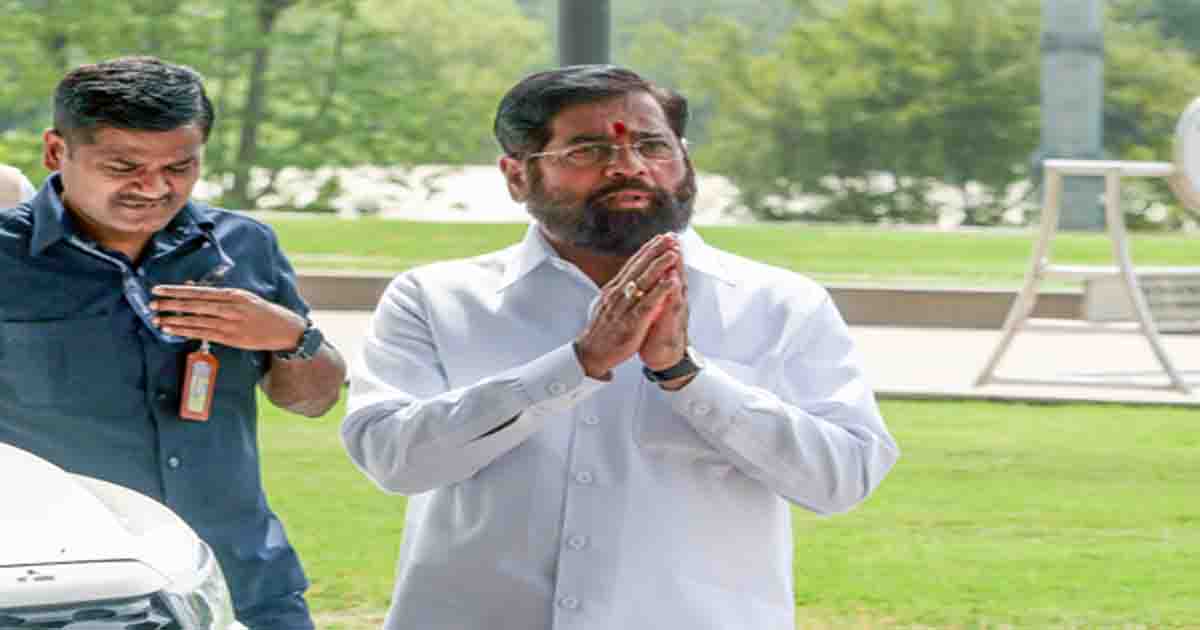
Mumbai, Oct 14: Launching a scathing attack on the Opposition INDIA Bloc, Maharashtra Deputy Chief Minister, Eknath Shinde, on Wednesday alleged that marching towards the Supreme Court to exert pressure on the judiciary is a direct insult to constitutional institutions.
Addressing the media after a weekly Cabinet meeting, he claimed, “Holding the Constitution in one hand while pressuring constitutional bodies with the other, is a clear attempt to create anarchy in the country, which will strictly not be tolerated.”
Shinde emphasised that organising protests to pressurise an apex constitutional body like the Supreme Court is a serious matter.
He noted that the Constitution provides independent status to institutions such as the Supreme Court and the Election Commission, and any attempt to undermine them amounts to disrespecting the constitutional framework itself.
“The possibility of foreign powers conspiring behind these demonstrations cannot be ruled out,” he alleged, warning the public to stay vigilant against forces attempting to instigate instability. He further stated that creating distrust against constitutional bodies to build false narratives is detrimental to national interest.
Shinde further informed that the Maharashtra Cabinet passed a congratulatory resolution honouring Prime Minister Narendra Modi on completing 25 years in public leadership (serving as Chief Minister and Prime Minister), which will be formally sent to him.
He highlighted that under PM Modi’s leadership, India’s global stature has soared, with 36 nations conferring their highest civilian honours upon him. Contrasting India’s economic trajectory, he noted that prior to 2014, India was counted among the ‘Fragile Five’ economies, whereas today it stands among the top five global economies and is advancing toward the fourth spot.
With the vision of Viksit Bharat by 2047, over 25 crore people have risen out of multidimensional poverty, and nearly 80 crore citizens receive food grain support.
Taking a swipe at the Congress, Shinde remarked that late Balasaheb Thackeray’s dreams of abrogation of Article 370 and building the Ram Mandir in Ayodhya remained pending under the Congress’ rule but were fulfilled under PM Modi.
“During Congress rule, terror attacks were met with mere diplomatic letters. Following Pahalgam, PM Modi’s leadership ensured the destruction of terror launchpads inside Pakistan, showing the world a new India that does not write letters but delivers a direct response,” he alleged.
Turning to the agricultural crisis in the state, Shinde informed that the severe drought situation led the government to expand the list of declared drought-hit talukas from 265 to 305. The state is offering 12 major relief concessions, including loan recovery stays, debt restructuring, student fee waivers, and fodder and water supply assistance. He announced that Rs 5,000 financial aid each will be deposited directly into the accounts of drought-affected farmers before Diwali.
“The primary right over the state treasury belongs to the farmers and we will not leave them in the lurch,” he assured.
A central team has already conducted inspections across affected areas, and PM Modi held a 30-minute discussion with Shinde, assuring full central support alongside Union Home Minister Amit Shah.
Questioning the Opposition’s priorities, Shinde asked, “In times of drought, what is more important—the farmers or protests against the Supreme Court?”
Concluding his address, he remarked, “Modi doesn’t care about detractors; he keeps working. A lion is not frightened by the noise of jackals,” reiterating that the nation’s path remains focussed on development, national security, and farmer welfare.

Mumbai: During a patrol, the Ghatkopar Unit of the Anti-Narcotics Cell detained an individual standing near the garden outside Lokmanya Tilak Terminus Railway Station—close to the Santacruz-Chembur Link Road bridge in Tilak Nagar, Chembur (East), Mumbai—on suspicion of selling narcotics.
Upon searching him, 22.960 kg of ‘ganja’ (cannabis) was recovered from his possession. He was subsequently arrested, and a case was registered against him under Sections 8(c) and 20(c) of the NDPS Act, 1985. Interrogation revealed that the accused had brought the contraband from the state of Odisha to Mumbai for sale. The arrested individual has been identified as Manish Kumar Baijnath Chaudhary, aged 25.
A total of 22.960 kg of ganja, valued at approximately ₹11,48,000, was seized from the accused.
This successful operation was carried out under the supervision of Joint Commissioner of Police (Crime) Deven Bharti, along with Anil Kumbhare, Krishnakant Upadhyay, and DCP Purnima Chougule-Shringi.

Hyderabad Police cautions citizens against digital arrest fraud

Delhi court summons Dhruv Rathee in 2018 defamation case

Fake RTO app used to hack phone, siphon Rs 24.40 lakh; Gujarat Police nab account provider in Bengal

Drugs worth Rs 1 crore seized in Greater Noida, three arrested

Israeli military says killed Hamas Commander in Gaza City

INDIA bloc begins protest march against ECI

Maha Congress stages agitation against Gyanesh Kumar

Complaint against Netflix & Mukesh Chhabra for inappropriate language on ‘India’s Got Latent 2’

Delhi court grants three-week interim bail to influencer Swatantra Bhardwaj

Bombay HC warns Vijay Mallya against posting court documents on social media
-

 Crime4 years ago
Class 10 student jumps to death in Jaipur
-

 Maharashtra2 years ago
Mumbai Local Train Update: Central Railway’s New Timetable Comes Into Effect; Check Full List Of Revised Timings & Stations
-

 Maharashtra2 years ago
Mumbai To Go Toll-Free Tonight! Maharashtra Govt Announces Complete Toll Waiver For Light Motor Vehicles At All 5 Entry Points Of City
-

 Maharashtra2 years ago
False photo of Imtiaz Jaleel’s rally, exposing the fooling conspiracy
-

 National News2 years ago
Ministry of Railways rolls out Special Drive 4.0 with focus on digitisation, cleanliness, inclusiveness and grievance redressal
-

 Maharashtra2 years ago
Maharashtra Elections 2024: Mumbai Metro & BEST Services Extended Till Midnight On Voting Day
-

 National News2 years ago
J&K: 4 Jawans Killed, 28 Injured After Bus Carrying BSF Personnel For Poll Duty Falls Into Gorge In Budgam; Terrifying Visuals Surface
-

 Crime2 years ago
Baba Siddique Murder: Mumbai Police Unable To Get Lawrence Bishnoi Custody Due To Home Ministry Order, Says Report