
Maharashtra
Maharashtra Elections 2024: Dy CM Devendra Fadnavis Likely To Claim CM’s Post If Mahayuti Forms Govt Again

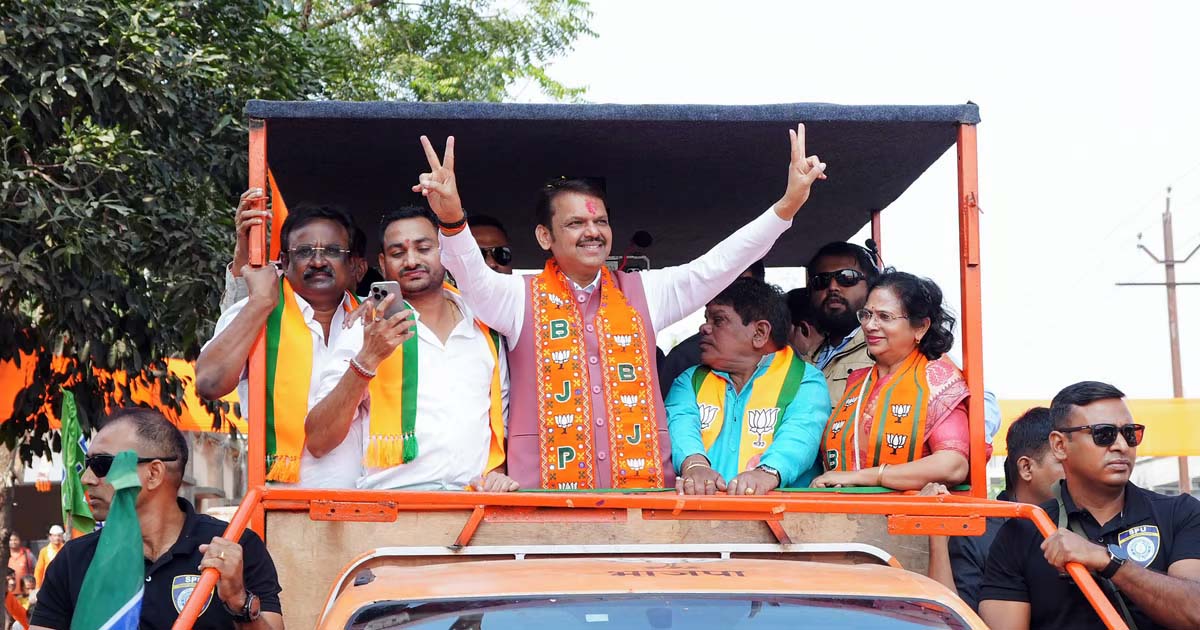
With most of the exit polls predicting a majority for the Mahayuti led by the BJP, the saffron party is preparing to occupy a central position post the results which will be declared on Saturday. The main question is who will be the BJP’s candidate for chief ministership. The party had assiduously avoided projecting anyone as the CM candidate and has preferred to wait for the results to be declared. However, considerable significance is assigned to Fadnavis’ meeting with RSS chief Mohan Bhagwat at the Sangh’s headquarters in Mahal, Nagpur, on Thursday. Officially it is being said Fadnavis called on Bhagwat to thank for the massive voter mobilisation that the Sangh Parivar did during the assembly poll of November 20.
Sources in the BJP told that in June, 2022 the party made a big blunder in agreeing to have Eknath Shinde, the rebel Shiv Sena leader, as the CM. Fadnavis (54) had played a crucial role behind the scenes in vertically splitting the Shiv Sena and pulling down the Uddhav Thackeray government. He staged a coup right under the nose of Thackeray by weaning away Shinde and his pack of 36 MLAs away from Uddhav Thackeray. For all his efforts, it was widely assumed in BJP circles that Fadnavis would be rewarded with the CM’s post, especially since the party had the maximum number of MLAs at 105.
However, the cadres and Fadnavis himself was stunned when the BJP high command wanted Shinde to be the CM. In fact, Fadnavis publicly made his disappointment public by asserting that he was not interested in joining the Shinde-led government. It required a lot of cajoling from PM Modi and home minister Amit Shah to get him to work under Shinde.
The central leadership’s calculation was that by anointing Shinde as the CM the Sena led by Uddhav Thackeray would be politically emaciated. However, the past two years’ experience has proved the BJP central leaderships’ calculations wrong. The Shiv Sena (UBT) is not only strong but in fact put up a rather impressive performance in the Lok Sabha elections early this year at the cost of the BJP.
Several persons in the BJP are saying, in retrospect, that had Fadnavis been made the CM after the eclipse of the MVA government led by Thackeray the party would have politically become stronger and done well in the LS polls. “We hope that the central leadership of our party will learn a lesson from the mistakes committed by it in the past and this time around recommend Fadnavis for the CM’s post. He has already served as CM from 2014 to 2019 and acquitted himself well as a good administrator,” a senior BJP leader observed.
There are a few other contenders for the CM’s post like Pankaja Munde, Chandrakant Patil and Vinod Tawde. But none of them have the political stature of Fadnavis who is keen on working only in Maharashtra. The only minus point is that he belongs to the Brahmin caste which is traditionally distrusted by the Marathas. But then it was Fadnavis who took the initiative to pass a law providing for reservation for Marathas.
All these calculations are based on the surmise that the psephologists have got it right this time around vis-a-vis the assembly poll outcome. Also, the increase in voting percentage is expected to help the BJP. However, the BJP has kept a Plan B ready lest its calculations go awry. The party is not averse to taking the help of Sharad Pawar if the Mahayuti falls short of numbers. The Central government has already put tremendous pressure on Pawar’s daughter Supriya Sule in the Rs 250 cr bitcoin case. It might politically weaponise the case to make Pawar fall in line. It may even agree to accommodate Supriya as the deputy CM.
It may be recalled that Pawar, for all his secular posturings, has as early as 1978 joined hands with the Janata Party (of which the major component was the Bharatiya Jana Sangh) to become the CM. More recently, he was part of the plot to let his nephew Ajit Pawar join hands with the BJP to form a government in November, 2019. Also, industrialist Gautam Adani is a common link between Pawar Sr and the BJP.


Maharashtra
Mumbai Police recover five empty shells, two live cartridges in Tiger Shroff firing case

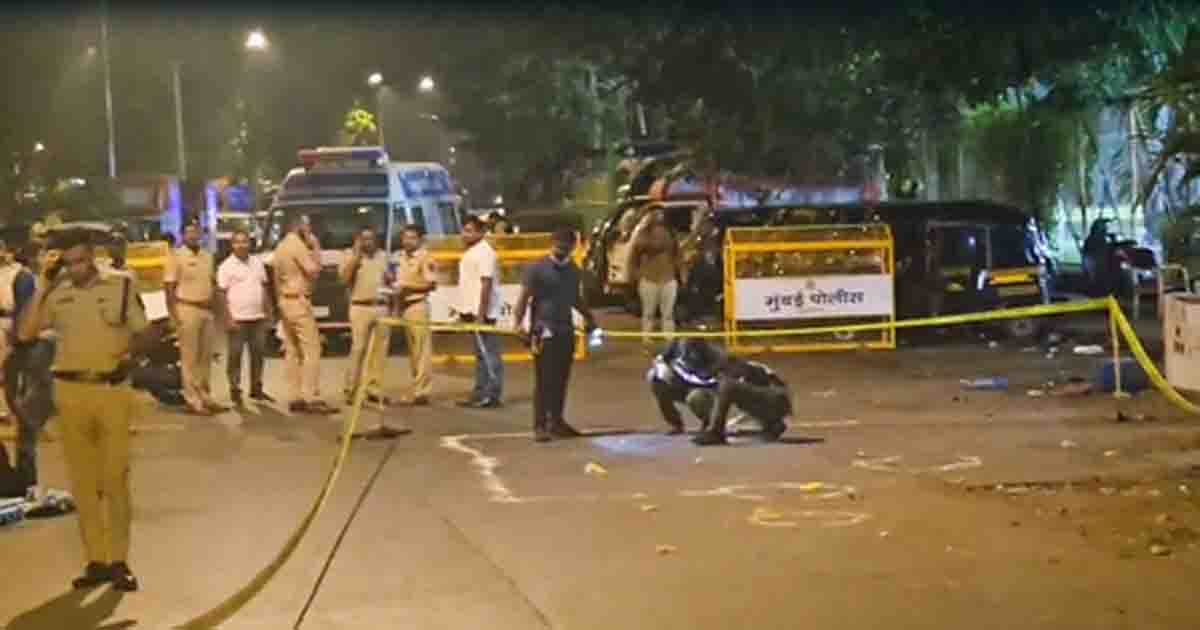
Mumbai Police have recovered five empty bullet shells and two live cartridges from the site of the firing incident involving Bollywood actor Tiger Shroff in Mumbai’s Juhu area. According to police, the live cartridges fell out of the firearm used by the accused, Rehan, after his gun jammed.
Phool Singh, who was initially described as a minor, has also been confirmed to be an adult by Mumbai Police. He allegedly fired five rounds during the incident.
A senior Mumbai Police official said investigators have been examining CCTV footage from the football ground and surrounding areas over the past several weeks to establish the accused’s movements and determine whether they had conducted reconnaissance before the incident.
Some CCTV footage reportedly shows the accused conducting a recce of the location. Police are also examining footage to identify any other suspicious individuals who may have visited the Juhu football ground to conduct reconnaissance.
Investigators are gathering information about Tiger Shroff’s daily routine and the people who were aware of his movements, particularly his schedule related to public appearances and events. The police are examining whether this information could have helped the accused plan the attack.
The Mumbai Police Crime Branch is scheduled to bring the three arrested accused from Rajasthan to Mumbai on Tuesday after obtaining transit remand from a court in Kota on Monday.
In view of the security concerns, the police team decided to remain in Rajasthan overnight and travel to Mumbai with the accused on Tuesday. The Mumbai and Rajasthan Police conducted a security assessment before finalising the arrangements.
The accused were kept overnight in the lock-up of the Kota Railway Colony police station under tight security amid concerns about a possible escape.
Rehan, Phool Singh and Hrithik Kumar were arrested in Rajasthan’s Kota on Monday in connection with the firing incident involving Tiger Shroff.
The three men have been charged with an attempt to murder and are accused of firing multiple rounds at the actor’s car on Sunday evening as he was leaving after playing a football match in Mumbai’s Juhu area.
Investigators are also probing the suspects’ movements following the incident. According to sources, the accused allegedly planned to travel by train to Jaipur, continue to Delhi by bus and, then escape to Nepal.
However, Kota Police intercepted them at the railway station before they could proceed with the alleged plan.
The Mumbai Police Crime Branch is continuing its investigation to establish the sequence of events, determine the motive behind the firing and identify whether anyone else was involved in planning or executing the attack.
Maharashtra
Bollywood in the Crosshairs After Firing at Tiger Shroff; Legal Action Initiated Against Bishnoi Gang, Three Shooters Arrested
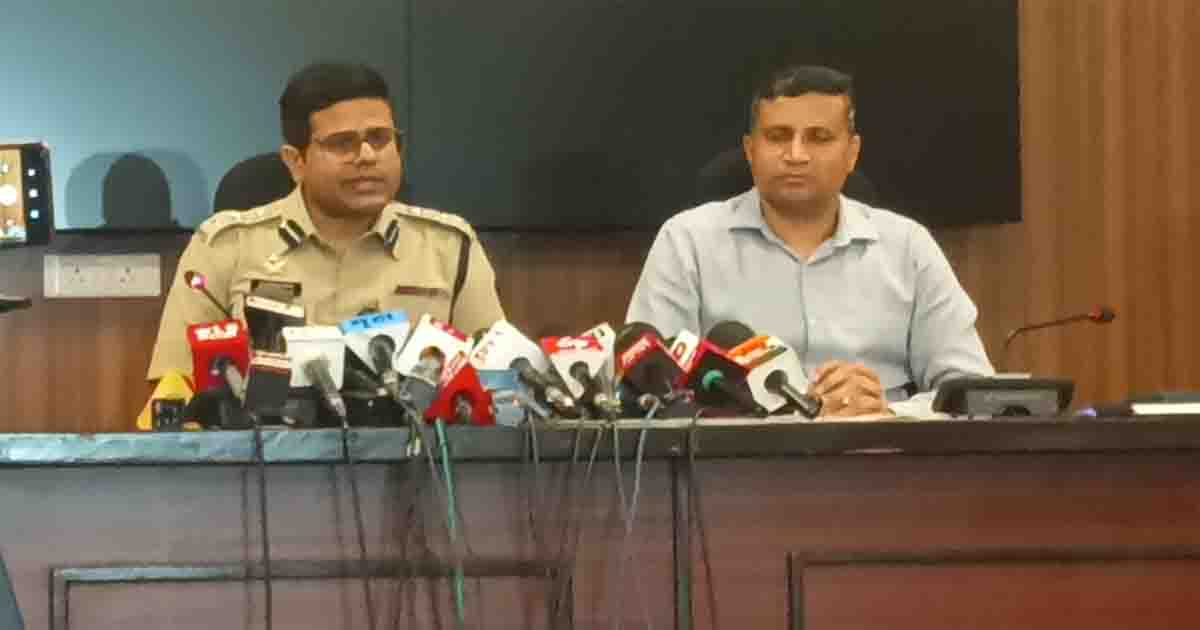
Mumbai: The Crime Branch has claimed to have solved the case involving a shooting incident targeting Tiger Shroff in the Juhu area of Mumbai. Addressing a press conference, Mumbai Crime Branch DCP Raj Tilak Roshan stated that two unidentified individuals on a motorcycle carried out the shooting. The Crime Branch received information that, following the incident, the shooters abandoned their Pulsar motorcycle at Andheri station and traveled by train toward Kota. The Crime Branch alerted the Kota police, who subsequently arrested three suspects. The police have now taken all three individuals into custody. Additionally, Anil Pandit had circulated a post online referencing the ‘Bishnoi gang,’ a matter that is currently under police investigation. Regarding the targeting of Bollywood figures by the Bishnoi gang, DCP Raj Tilak Roshan noted that action has been taken against the group—including in the earlier case involving the shooting incident at Salman Khan’s residence. In the current case, the Crime Branch has registered a case under charges of attempted murder and the Arms Act. Legal proceedings are also underway concerning the Lawrence and Anmol Bishnoi gang, with efforts being made to secure the custody of Lawrence Bishnoi. The DCP explained that comprehensive information was provided to the Kota police, as Crime Branch teams had been actively pursuing the shooters. To date, no weapons have been recovered from the suspects. Authorities are currently verifying a post circulating on social media to determine whether it originated from the Bishnoi gang, and action is being taken against those involved. The suspects spent 10 to 15 minutes surveying the scene before carrying out the shooting. One of the suspects, 22-year-old Ritik (alias Roshan), has completed his education up to the 12th grade. None of the three suspects are minors; therefore, they will all be held in custody for further interrogation. Five rounds were fired. Prior to this incident, no complaints regarding threats against Tiger Shroff had been received; the police are investigating every aspect of the case and have already begun questioning the three suspects while they remain in custody. The three individuals—Ritik (alias Roshan), Rehan Rashiduddin, and Paul Singh—have been arrested. Rehan, who previously worked as a ‘Rapido’ (ride-hailing) driver in Mumbai, eventually became a shooter. The suspects were apprehended from the general compartment of a train; they were attempting to flee toward Delhi and Nepal. DCP Raj Tilak Roshan stated that, in light of their involvement in past shooting incidents and their ties to the Bishnoi gang, the MCOCA (Maharashtra Control of Organised Crime Act) has been invoked against these shooters.
Maharashtra
E-Office System Implemented in Mumbai Municipal Corporation; 14,000 Users to Be Integrated in Phases to Make Administration More Transparent and Efficient
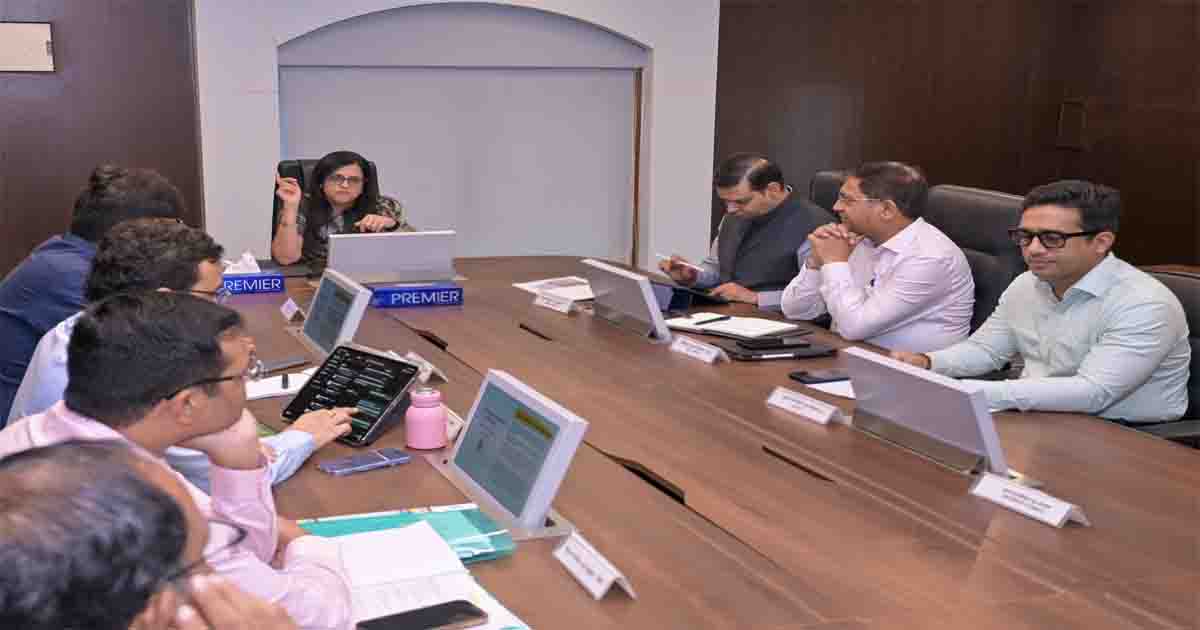
Mumbai – The Brihanmumbai Municipal Corporation (BMC) is implementing an ‘E-Office’ system to make its administrative operations more dynamic, transparent, and efficient through the effective use of modern technology. This system will facilitate the digitalization of various administrative processes, including the management of official files, correspondence, and the processing of proposals. Municipal Commissioner Ashwini Bhide stated that the system will be rolled out across the entire corporation in a phased manner, encompassing approximately 14,000 users. This initiative is expected to reduce paper consumption and render the decision-making process smoother, faster, and more transparent.
On October 17, 2026, a monthly review meeting involving various BMC departments was held at the ‘Command and Control Centre’ in Worli. During the meeting, preparations for the implementation of the ‘E-Office’ system—including technical infrastructure, training requirements, and administrative planning—were reviewed. Ashwini Bhide addressed the meeting in this regard.
The meeting was attended by Additional Municipal Commissioner (Western Suburbs) Dr. Vipin Sharma, Additional Municipal Commissioner (Projects) Abhijit Bangar, Additional Municipal Commissioner (Eastern Suburbs) Dr. Avinash Dhakne, Joint Commissioner (Vigilance) Dr. M. Devender Singh, and Deputy Commissioner (Commissioner’s Office) Prashant Gaikwad. Additionally, all Joint Commissioners, Deputy Commissioners, Assistant Commissioners, and heads of various departments were also present.
Digitalization of Administrative Affairs via ‘e-Office’
Providing information about the ‘e-Office’ system, Municipal Commissioner Ashwini Bhide explained that ‘e-Office’ is an office management system developed by the National Informatics Centre (NIC). In accordance with a government resolution issued by the Government of Maharashtra, the Brihanmumbai Municipal Corporation (BMC) has initiated the implementation of this system. The ‘e-Office’ system will enable the execution of administrative tasks digitally, thereby reducing reliance on paper-based files. Processes such as recording notes (note sheets), drafting documents, submitting proposals, and granting approvals can now be completed online, following a defined workflow. Consequently, this will not only accelerate the pace of work but also ensure transparency and accountability within administrative procedures.
Managing File Movement and Monitoring Pending Matters
The ‘e-Office’ system facilitates the creation and management of electronic files, as well as their routing to the relevant officers or departments. It allows for the systematic recording of inward and outward correspondence, the integration of scanned documents into the system, and the tracking of subsequent actions taken. Furthermore, the system enables the approval of notes, drafts, and orders through the use of digital signatures. Furthermore, it enables the monitoring of file movement, pending cases, decisions taken, and official correspondence. The ability to save and archive electronic records—along with the existence of a centralized repository for documents—makes information management highly organized and efficient. Phased Onboarding of 14,000 Users.
The implementation of the e-Office system across the Brihanmumbai Municipal Corporation (BMC) will take place in phases. This process will involve approximately 14,000 users, with specific roles and responsibilities defined at every level to ensure the effective use of the system. Municipal Commissioner Ashwini Bhide stated that a circular has been issued regarding the re-implementation of the e-Office system and its effective application in administrative affairs.
Focus on Training, Technical Facilities, and Digital Signatures
To ensure the effective implementation of the e-Office system, the Information Technology Department will conduct ‘Train-the-Trainer’ sessions for nodal officers. A central help desk will be established to resolve any technical issues that may arise during the use of the system. Additionally, a core team—led by the heads of the respective departments—will be formed to oversee the implementation process.
Emphasis is being placed on providing the necessary computing facilities and technical infrastructure, as well as ensuring that the relevant officers and staff receive appropriate training. Ms. Bhade stated that ‘Digital Signature Certificates’ (DSC) have been provided to the officers authorized to sign documents. She further explained that the effective implementation of the ‘e-Office’ system will promote digital operations within the BMC administration. This will expedite office tasks, reduce paper usage, and make the decision-making process more transparent and accountable.

Tiger Shroff firing case: Three suspects to be taken to Mumbai from Kota under tight security

Vijayadashmi: Ravan effigy to be burnt at 35 locations across Noida amid tight security

Mumbai Police recover five empty shells, two live cartridges in Tiger Shroff firing case

‘People of India will not tolerate anarchy’: BJP leaders slam Sanjay Raut for supporting Albania protests

Indian stock markets closed on account of Dussehra

Rahul, Cong ecosystem want to force regime change: BJP after Neha Bora praises B’desh Gen-Z protest

BJP pays tribute to ex-President Abdul Kalam, recalls his enduring influence on generations of India’s youth

Attack on democratic rights: INDIA Bloc leaders on detentions of anti-ECI protestors

INDIA bloc begins protest march against ECI

Maha Congress stages agitation against Gyanesh Kumar
-

 Crime4 years ago
Class 10 student jumps to death in Jaipur
-

 Maharashtra2 years ago
Mumbai Local Train Update: Central Railway’s New Timetable Comes Into Effect; Check Full List Of Revised Timings & Stations
-

 Maharashtra2 years ago
Mumbai To Go Toll-Free Tonight! Maharashtra Govt Announces Complete Toll Waiver For Light Motor Vehicles At All 5 Entry Points Of City
-

 Maharashtra2 years ago
False photo of Imtiaz Jaleel’s rally, exposing the fooling conspiracy
-

 National News2 years ago
Ministry of Railways rolls out Special Drive 4.0 with focus on digitisation, cleanliness, inclusiveness and grievance redressal
-

 Maharashtra2 years ago
Maharashtra Elections 2024: Mumbai Metro & BEST Services Extended Till Midnight On Voting Day
-

 National News2 years ago
J&K: 4 Jawans Killed, 28 Injured After Bus Carrying BSF Personnel For Poll Duty Falls Into Gorge In Budgam; Terrifying Visuals Surface
-

 Crime2 years ago
Baba Siddique Murder: Mumbai Police Unable To Get Lawrence Bishnoi Custody Due To Home Ministry Order, Says Report