
International News
ISI uses Bhatti to build anti-Bharat perception network in India

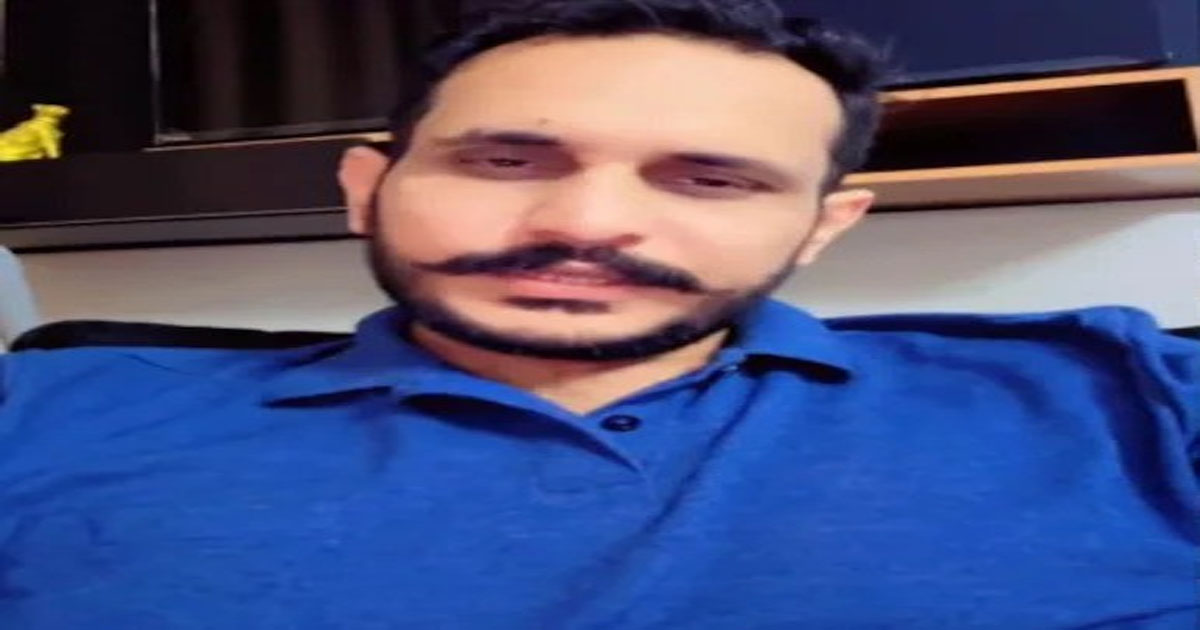
New Delhi, July 15: For Shehzad Bhatti, the social media has become a major platform to recruit Indians and make them carry out anti-national acts. The police of various states have cracked down on these networks, but as each day passes more such modules are cropping up.
Bhatti who is backed by the ISI has not just been tapping people who are in need of money. There are a variety of persons who are being watched by Bhatti and his aides who are based in Pakistan.
Comments, opinions and content on social media that the people share is being closely monitored by the Bhatti syndicate. There are certain posts where people have made comments or posted their opinion against the establishment or authorities governing it.
An official said that such persons are under Bhatti’s radar and could become potential recruits if not acted upon.
Such persons are being contacted by Bhatti’s aides and once they fall into the trap they are given minor tasks, the official added.
The official further stated that the minor tasks would include posting against the establishment and also commenting on incidents that take place within the country.
These recruits have been told to indulge in a perception battle. The idea is to create a perception that goes against the country. On his part, Bhatti uses all tools at his disposal to ensure that these posts go viral in various parts of the world.
Getting people to engage with the post and reach a wider audience is the Bhatti network’s responsibility, the official added.
Shehzad Bhatti who is an ISI stooge has set up multiple modules in India. He had adopted multiple strategies where recruitment is concerned. There are some modules that he has set up, which are only meant to make attacks.
There are others which only undertake surveillance activity which includes gathering information about sensitive locations.
There are also modules which are meant to gather information about crowded locations and also instal solar powered CCTV cameras.
This module that Bhatti has set up is only meant to post content against the establishment and speak about incidents that take place which have not been good for the country.
An Intelligence Bureau official says that this module is extremely dangerous as it is intended at carrying out a perception battle against India.
The idea is to defame and create an anti-India perception across the globe. Bhatti who himself was a social media influencer before being roped in by the ISI, knows the tricks of the trade.
He is aware on how to get a huge audience to engage with such content. He also has a dedicated team in Pakistan which knows how to keep tabs on social media.
Another official said that for now, Bhatti and his aides want these social media handles to keep posting content on their own. Once things are set, the content would be provided by Bhatti and his associates and the recruits would be told to use their social media handles to post the same.
While the Maharashtra ATS has bust a module that indulged in an anti-India perception battle, officials warn that Bhatti would look to set up more such networks in different parts of the country.
The ATS had raided over 200 locations in Maharashtra in connection with the Shehzad Bhatti case.
An agency official said that apart from Bhatti, the Pakistani handlers who were controlling this module include Abu Musa, Amjal Gujjar, Abit Jat, Rana Husen, Abdul Memon, Munna Jhingada, Farooq Khokar, Zafar Supari, Shani Tiger, Sheikh Salman and Sarfaraz Dongar.
Each one of them have individual social media handles through which they would recruit Indian youth, the official also added.
Officials also point out that Bhatti’s next big operation could be in Punjab and this would be linked to the Khalistan issue. The ISI has been desperately trying to revive the movement and will get Bhatti to commence operations in the state, officials also say.

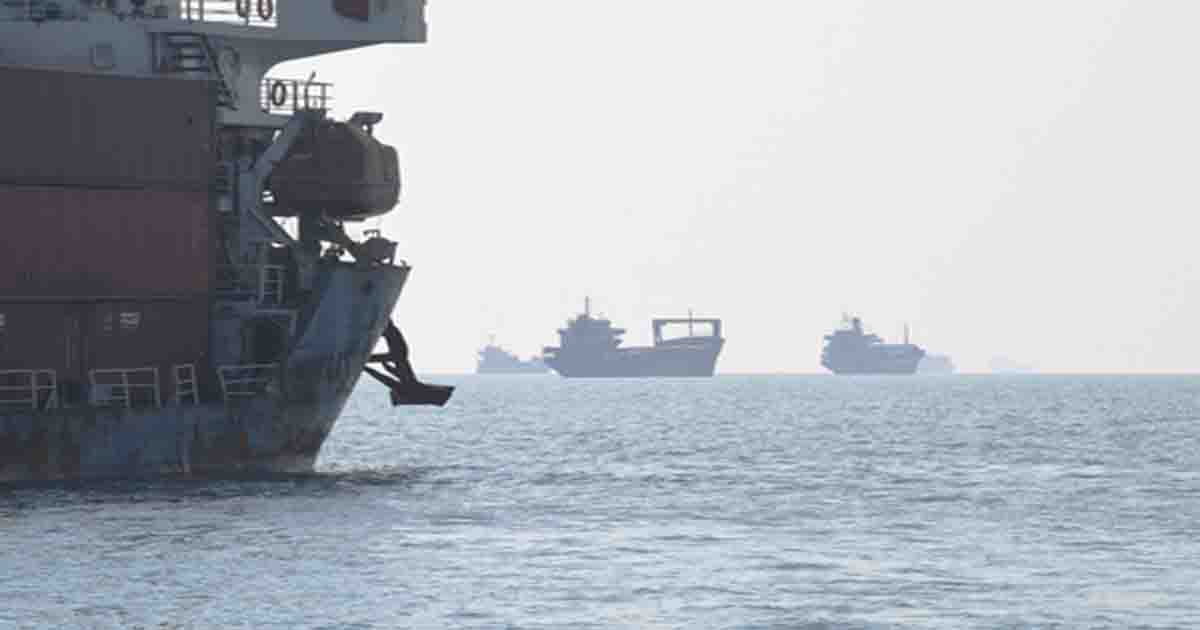
The navy of Iran’s Islamic Revolutionary Guard Corps (IRGC) said Saturday that two “violating” oil tankers exploded and caught fire after hitting naval mines in the Strait of Hormuz earlier in the day.
One tanker collided with the mines off Oman’s Khasab port, and the other hit mines on the “unauthorised” route east of the Strait of Hormuz, the navy said in a statement on the IRGC’s official news outlet, Sepah News.
The vessels had turned off their GPS systems and tried to cross the strait’s “illegitimate” route stealthily, it added.
The navy warned that the “unauthorised” route in the waterway is entirely mined, and oil tankers’ attempts and the “terrorist” U.S. military’s aerial support will not prevent collision with the “highly devastating” mines, Xinhua News Agency reported.
Meanwhile, the US military has disabled a commercial vessel in the Gulf of Oman after it allegedly attempted to breach the US naval blockade of Iran despite repeated warnings, while Tehran has vowed to keep the strategically important Strait of Hormuz shut and break the embargo.
The US Central Command (CENTCOM) said the incident took place on November 26, after the Palau-flagged bulk carrier M/V Pacific Archer departed from the Iranian port city of Bandar Abbas and attempted to transit regional waters.
In a statement, CENTCOM said: “A U.S. military aircraft launched precision munitions that struck the stern of Palau-flagged M/V Pacific Archer. The ship’s propulsion was ultimately disabled and the civilian crew was unharmed.”
The military command said the vessel had attempted to run the US naval blockade despite receiving multiple warnings from American forces.
“US Central Command (CENTCOM) disabled a commercial vessel in the Gulf of Oman, Nov. 26, after the crew attempted to run the US naval blockade, despite multiple warnings, following departure from an Iranian port,” the statement said.
It further asserted that American forces were continuing to strictly enforce the blockade, adding that 158 commercial vessels had been redirected after complying with instructions, while six vessels had been disabled for refusing to comply.
“All mariners operating in the Gulf of Oman and approaches to the Strait of Hormuz are urged to heed blockade warnings issued by CENTCOM forces,” it added.
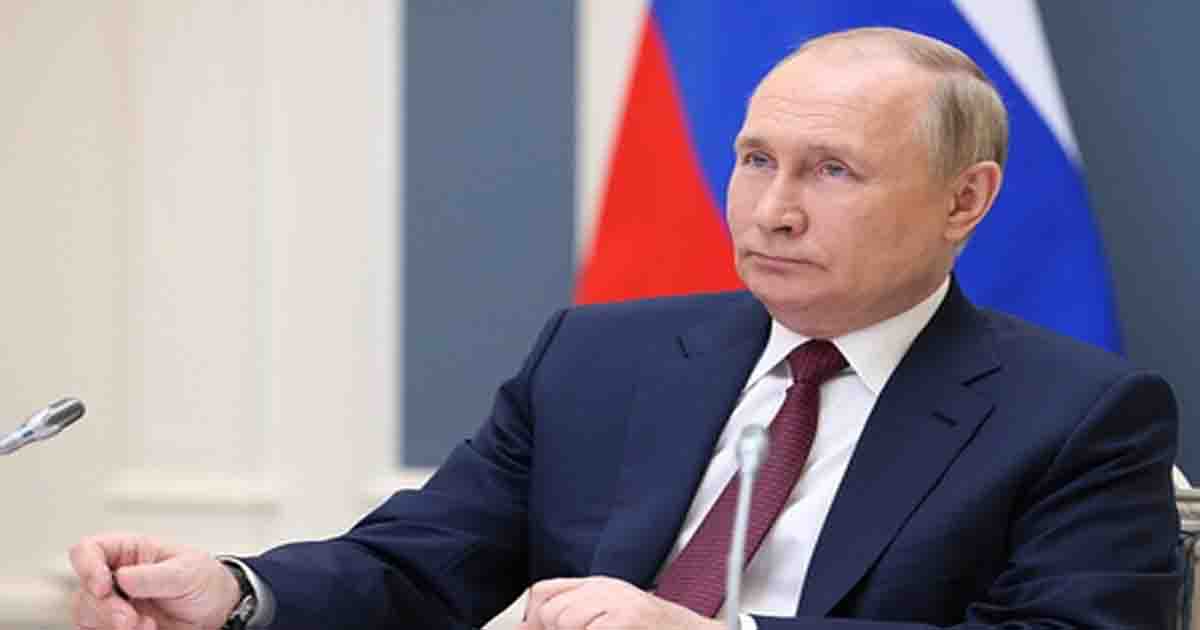
Russian President Vladimir Putin said that the new nuclear-powered submarine Perm will join Russia’s Pacific Fleet and undertake combat duty.
Putin made the remarks on Friday while attending a ceremony to raise the Russian naval flag on the Perm at the Sevmash shipyard in Severodvinsk, a major shipbuilding center in northwestern Russia, the Kremlin said in an official statement.
The Perm was the fifth Yasen-M-class nuclear-powered submarine delivered to the Russian Navy over the past six years, Putin said, adding that Russia is one of the few countries in the world capable of building such advanced nuclear-powered submarines, which are weapons systems of global strategic significance, Xinhua new agency reported.
According to the Kremlin, the Perm is a fourth-generation, multipurpose nuclear-powered submarine, and also the first Russian Navy submarine equipped with Zircon hypersonic cruise missiles as standard armament.
Submarines of the Yasen-M class are designed to operate in different parts of the world’s oceans while remaining undetected. In the near future, the Perm will join Russia’s Pacific Fleet to protect Russia’s maritime borders, Putin said.
Russia plans to continue expanding and modernizing its Navy, particularly its submarine fleet, according to Putin. He said that the Sevmash shipyard is continuing construction of several types of nuclear-powered submarines, with five missile-carrying submarines scheduled for delivery to the Navy by 2030, including three of the Yasen-M class.
Putin said measures to expand serial ship production and modernize weapons systems would help ensure stable operations in the shipbuilding and defense industries, promote advanced technologies and strengthen Russia’s defense capabilities and technological sovereignty.
International News
India says attacks on maritime shipping and seafarers unacceptable, calls for global response

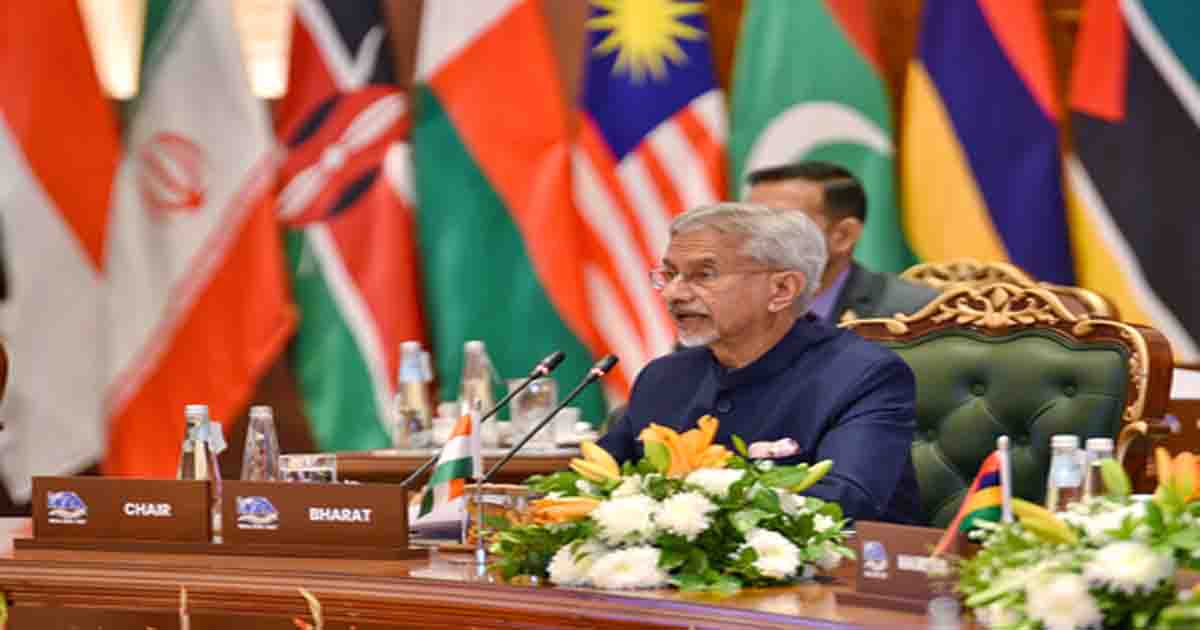
Calling for a global response, External Affairs Minister (EAM) S Jaishankar on Friday termed attacks on maritime shipping and seafarers as “unacceptable”.
In his remarks at the Indian Ocean Rim Association’s (IORA) General Debate on ‘A Stronger Regional Voice: Positioning IORA in a Changing Global Order’ in New Delhi on Friday, EAM Jaishankar highlighted the volatile aspects of a transforming global order, particularly conflicts, frictions and disruptions.
“We are understandably focused on the volatile aspects of a transforming global order, especially conflicts, frictions and disruptions. It is equally imperative to appreciate the promising aspects: deep interdependence, strong globalisation and the benefits of international cooperation,” EAM Jaishankar said.
He emphasised that the Indian Ocean is particularly poised to address its challenges. Recognising the criticality of maritime trade to global growth, EAM Jaishankar called on nations to deliver on safety and security of the Indian Ocean and stated that international law, especially the United Nations Convention on the Law of the Sea (UNCLOS), must be respected.
“Whether it is to counter terrorism, narcotics trade or illegal, unreported, and unregulated fishing, or indeed response to climate events and disaster situations, we have to become more self-reliant as well as more enthusiastic about cooperating with partners,” EAM Jaishankar said.
The meeting is being held under India’s IORA 2025-2027 chairship with the theme of ‘Innovation, Openness, Resilience and Adaptability in the Indian Ocean Region’.
The 23-member states of IORA are India, Australia, Bangladesh, Indonesia, Iran, Kenya, Madagascar, Comoros, France, Malaysia, Maldives, Mauritius, Mozambique, Oman, Seychelles, Singapore, Somalia, South Africa, Sri Lanka, Tanzania, Thailand, the United Arab Emirates, and Yemen.
The 12 dialogue partners are China, Egypt, the European Union, Germany, Italy, Japan, South Korea, Russia, Saudi Arabia, Turkey, the United Kingdom, and the United States.
The Council of Ministers is the Association’s highest decision-making body and comprises the Ministers of Foreign Affairs of IORA Member States. It provides the overall policy and strategic direction of the organisation. Its key responsibilities include formulating policies, reviewing progress in cooperation among member states, and identifying and deciding on new areas of collaboration to further advance the objectives of the Association.

Goods seized from unauthorised lodges along Ghatkopar-Mankhurd Link Road and in Chembur and Mankhurd; water and electricity meters disconnected.

Major action by Ghatkopar Police: Fake Sub-Inspector (PSI) arrested.

‘Deeply saddening’: Prez Murmu condoles loss of lives in Pauri Garhwal accident

Delimitation ‘threat to democracy’, BJP wants take power into their own hands forever, says Congress chief Kharge

DGGI busts Rs 88 crore GST refund fraud linked to cigarette syndicate

Congress trying to protect 3 crore Bangladeshi infiltrators in voter list: HM Shah

Red Fort car blast probe exposes blueprint for spread of terror modules across India

Trump flags Iran targets as talks continue

‘Conspiracy, not accident’: NCP on Ajit Pawar death

BJP, Shiv Sena slam Mallikarjun Kharge for terming Diwali ‘Khushiyon ka Eid’
-

 Crime4 years ago
Class 10 student jumps to death in Jaipur
-

 Maharashtra2 years ago
Mumbai Local Train Update: Central Railway’s New Timetable Comes Into Effect; Check Full List Of Revised Timings & Stations
-

 Maharashtra2 years ago
Mumbai To Go Toll-Free Tonight! Maharashtra Govt Announces Complete Toll Waiver For Light Motor Vehicles At All 5 Entry Points Of City
-

 Maharashtra2 years ago
False photo of Imtiaz Jaleel’s rally, exposing the fooling conspiracy
-

 National News2 years ago
Ministry of Railways rolls out Special Drive 4.0 with focus on digitisation, cleanliness, inclusiveness and grievance redressal
-

 Maharashtra2 years ago
Maharashtra Elections 2024: Mumbai Metro & BEST Services Extended Till Midnight On Voting Day
-

 National News2 years ago
J&K: 4 Jawans Killed, 28 Injured After Bus Carrying BSF Personnel For Poll Duty Falls Into Gorge In Budgam; Terrifying Visuals Surface
-

 Crime2 years ago
Baba Siddique Murder: Mumbai Police Unable To Get Lawrence Bishnoi Custody Due To Home Ministry Order, Says Report