
International News
Iran imposes $2 million transit fee on select ships in Strait of Hormuz

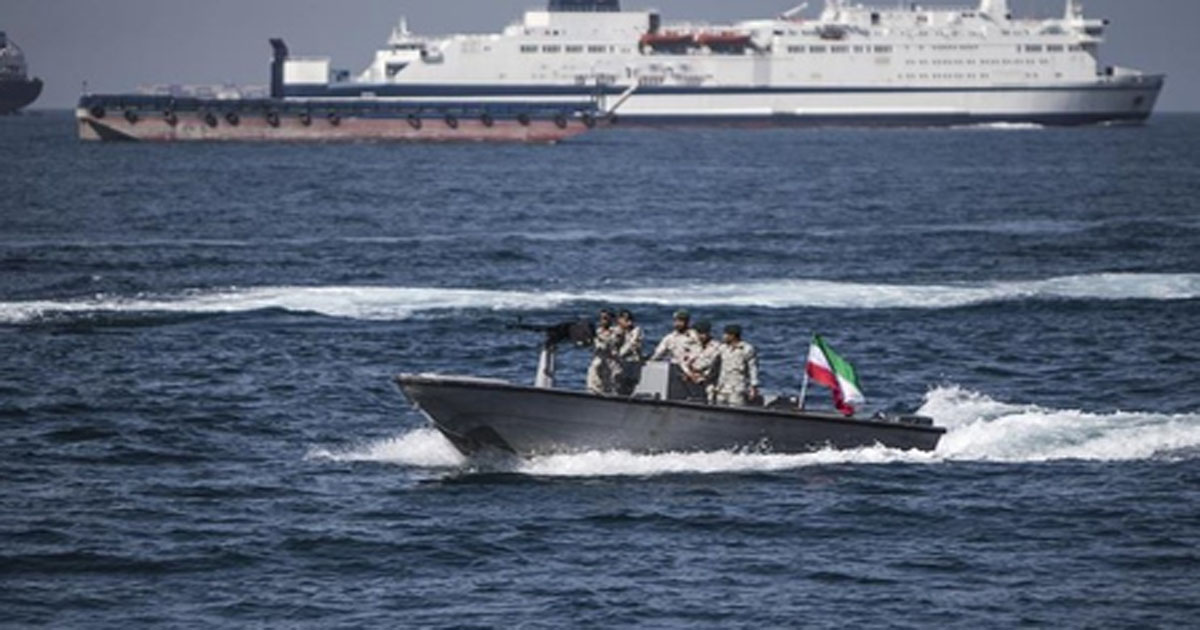
Tehran, March 23: Iran has begun charging certain vessels a transit fee of $2 million (approximately Rs 18.8 crore) to pass through the strategically vital Strait of Hormuz, in what officials describe as a new assertion of control amid its ongoing conflict with the United States and Israel.
Iranian President Masoud Pezeshkian stated on X that the strait remains “open to everyone” — except for Iran’s adversaries — outlining Tehran’s latest stance on access to the crucial maritime route.
The policy has already been implemented, according to Iranian lawmaker Alaeddin Boroujerdi, who spoke to state broadcaster Islamic Republic of Iran Broadcasting (IRIB), as cited by Iran International. Boroujerdi said the move represents a shift toward what he called a new “sovereign regime” governing the waterway.
“Collecting $2 million as transit fees from some vessels crossing the strait reflects Iran’s strength,” Boroujerdi said.
“Now, because war has costs, naturally we must do this and take transit fees from ships passing through the Strait of Hormuz,” he added, claiming the policy demonstrates the Islamic Republic’s “authority.”
Earlier, Iran’s Foreign Ministry said that the Strait of Hormuz is not blocked and navigation continues in the waterway, with necessary measures being taken due to wartime conditions.
In a statement elaborating on Iran’s positions amid ongoing US and Israeli attacks, the ministry said that Iran has always respected the freedom of navigation and maritime security and safety, adding that it has worked to uphold those principles over the years.
The ministry noted that following the US and Israeli military “aggression” against Iran, a dangerous situation has been imposed on the Gulf and the Strait of Hormuz, directly impacting regional shipping safety and security.
Claiming its legitimate right to self-defence against the “aggressors,” Iran has targeted US military bases and facilities in the region while adopting a series of measures to ensure that the “aggressors” and their supporters do not exploit the strait to advance their aggressive goals against the country, it said.
The announcement comes amid heightened tensions following a warning from former US President Donald Trump, who said the United States could strike Iran’s power infrastructure if the strait is not reopened within 48 hours.
Trump stated that if Iran failed to comply, the US would destroy its “various POWER PLANTS, STARTING WITH THE BIGGEST ONE FIRST!”

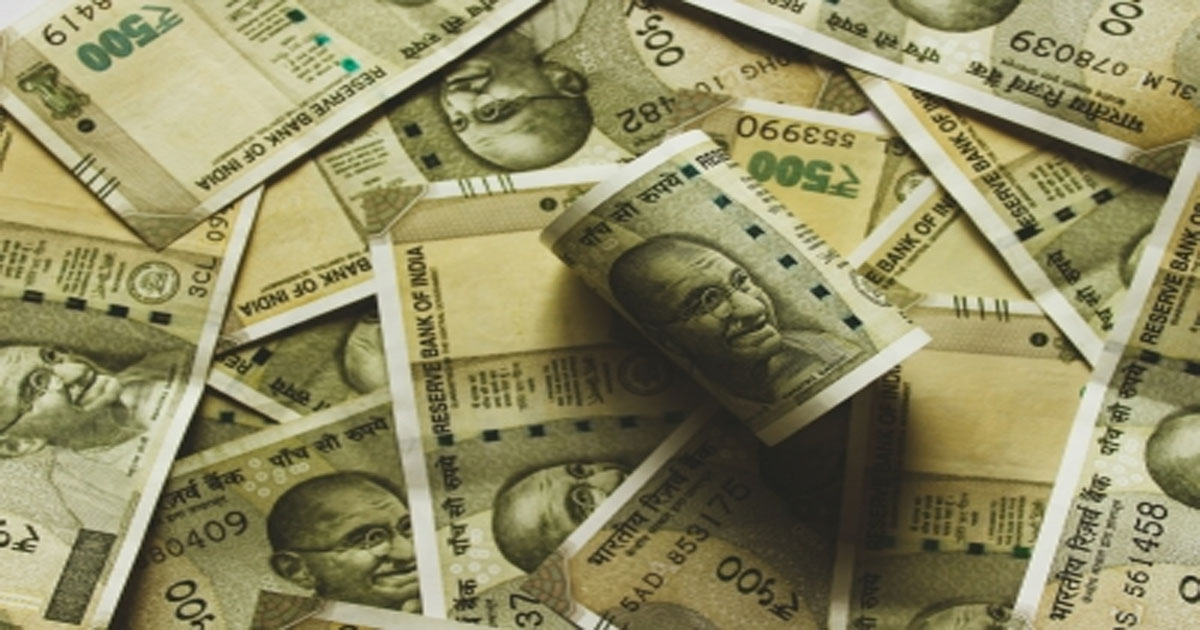
New Delhi, April 14: Indian agencies have reported a sharp rise in counterfeit currency seizures, pointing to a renewed push by organised networks to expand operations.
Investigators say the syndicate linked to Dawood Ibrahim, operating from Pakistan, is increasingly directing operatives in India to print fake notes locally instead of relying on cross-border smuggling routes through Pakistan and Bangladesh.
The trend points to a deliberate attempt to scale up production, with signs of a coordinated effort to undermine the Indian economy. Recent months have seen multiple seizures in border regions due to tighter security. At the same time, attempts to drop counterfeit currency using drones are being detected and intercepted with increasing frequency.
An Intelligence Bureau official said that the syndicate is now directing its operatives in India to print fake notes locally and circulate them within the market. They have been advised to keep operations small but frequent to maintain overall volume while avoiding attention.
“To reduce the risk of detection, members are also shifting bases regularly, making it difficult for agencies to track and pin down a single location,” the official added.
The route through the Bangladesh border has also become increasingly difficult for smugglers to use. Enhanced security measures have tightened surveillance, making it harder for operatives to push counterfeit currency into India.
Another official said the strategy now is to expand printing across multiple states, including Gujarat, Uttar Pradesh, Rajasthan, and Punjab. In the past, the syndicate had set up a localised unit in Malda, West Bengal, where high-quality counterfeit notes were produced and were difficult to detect.
“However, after the unit was uncovered, intensified action by agencies led to a sharp decline in operations,” the official said.
Another official said printing capacity in Malda has dropped by more than half after agencies, including the National Investigation Agency (NIA), intensified investigations and enforcement.
Officials added that efforts are underway to push in raw materials needed to set up fresh units to expand local production. If these consignments reach operatives in India, output could increase again. Even as the focus shifts to domestic printing, attempts to move counterfeit currency across the border using drones are expected to continue.
Last month, the Border Security Force (BSF) and Amritsar Police seized counterfeit currency worth Rs 2.5 lakh, which officials believe may have been a trial run. While drones have been intercepted carrying drugs, arms, and ammunition on several occasions, their use for moving fake currency has emerged as a growing concern.
Agencies said the syndicate is now relying on smaller consignments that are harder to detect on radar and surveillance systems. An official noted that operatives are adopting varied methods to increase the circulation of counterfeit notes.
Even as local production gathers pace, the use of drones is expected to continue. The broader objective, officials said, is to generate funds for terror activities and to inflict economic damage through the sustained circulation of fake currency.
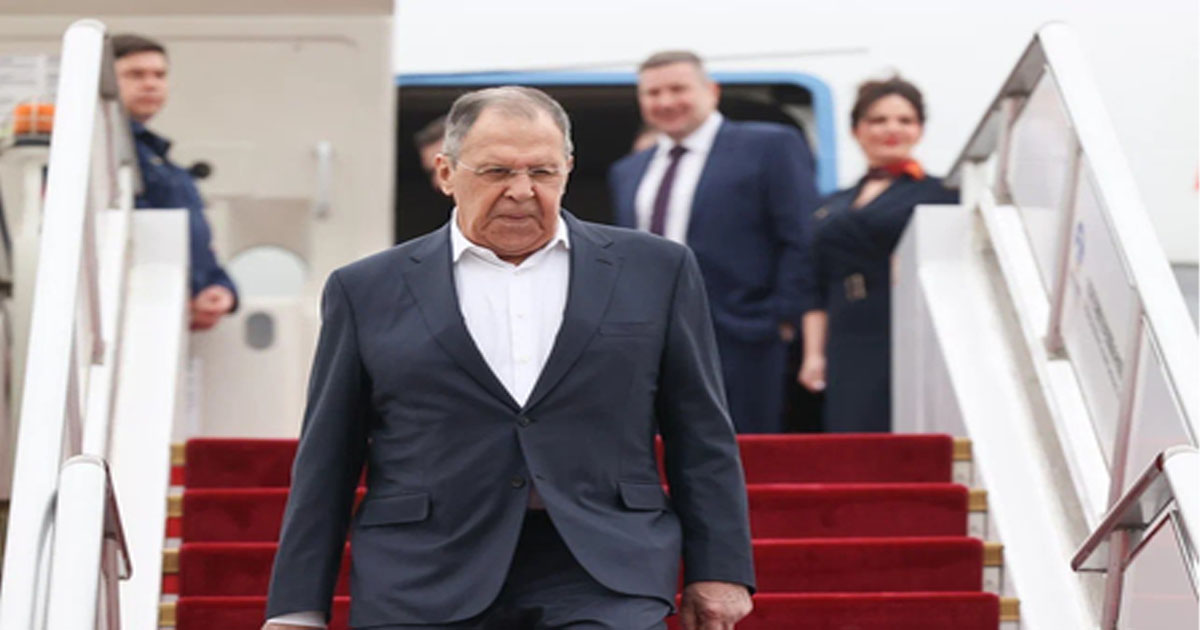
Beijing, April 14: Russian Foreign Minister Sergei Lavrov arrived in China on Tuesday for a two-day official visit to discuss the bilateral cooperation across key sectors, as well as the ongoing conflicts in Ukraine and West Asia.
Earlier on Monday, the Russian Foreign Ministry announced that during his visit to China from April 14-15, the Foreign Minister will hold talks with his Chinese counterpart, Wang Yi.
“The two countries’ foreign ministers will discuss a wide range of bilateral cooperation issues, prospects for contacts at various levels, and international collaboration, with a focus on joint work within the UN, BRICS, SCO, G20, APEC, and other multilateral mechanisms and forums. A detailed exchange of views is expected on a number of hot topics and regional issues, including the Ukrainian crisis and the situation in the Middle East,” it added.
Meanwhile, Chinese Foreign Ministry Spokesperson Guo Jiakun said at a regular press briefing that during this visit, the foreign ministers of the two countries will exchange views and coordinate positions on the development of bilateral ties, cooperation in various fields, and international and regional issues of mutual concern, according to Xinhua news agency.
This also came as Russian presidential spokesperson Dmitry Peskov on Monday admitted that the US blockade of the Strait of Hormuz is likely to impact international markets negatively.
“Most likely, such actions will continue to negatively impact international markets; this can be assumed with a high degree of certainty,” the Kremlin spokesman was quoted as saying by Russia’s leading Tass news agency during a regular media briefing in Moscow.
Responding to another question, he asserted that details on the US blocking of the Strait of Hormuz remain unclear.
“Many details here remain unclear and incomprehensible, so I would refrain from any substantive comments at this time,” Peskov commented on the US threat of blocking the strait.
On Sunday, the United States made it clear that it will begin enforcing a sweeping maritime blockade of vessels entering or exiting Iranian ports from April 13, escalating tensions after high-stakes talks between Washington and Tehran failed to yield agreement on key issues, including Iran’s nuclear programme.
International News
Gaining Iran’s trust sole way for US to find exit from current situation: Iranian parliament speaker

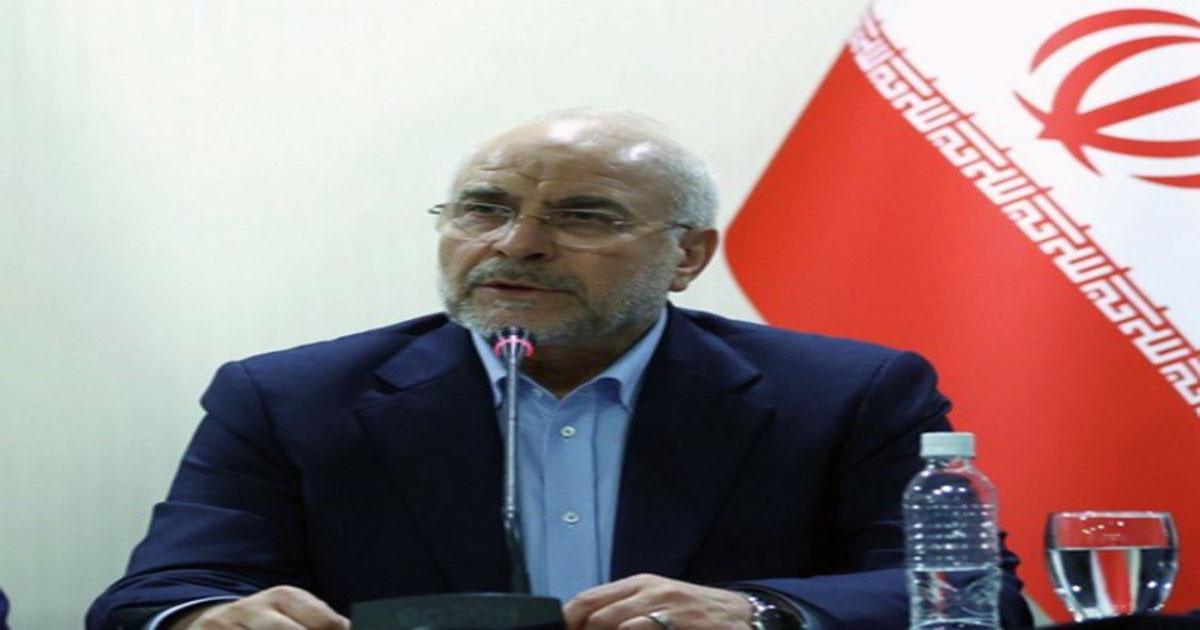
Tehran, April 13: Iran’s Parliament Speaker Mohammad Baqer Qalibaf said that the only way for the United States to find an exit from the current situation is to make its decision and gain the Iranian nation’s trust.
He made the remarks in an address to reporters on the way back to Iran from his trip to Pakistan, where he, along with his accompanying team, took part in peace talks with the US delegation, Xinhua news agency reported.
“The United States is indebted to Iranian people and needs to work hard to indemnify them,” Qalibaf said.
“If they fight, we will fight; and if they come forth with logic, we will react with logic. We will not surrender to any threat,” the parliament speaker added. “They can test our will once again and we will teach them a greater lesson.”
Qalibaf described the talks with the US delegation in Pakistan’s capital Islamabad as very “intensive, serious and challenging,” saying benefiting from capable experts and with a comprehensive and diverse perspective, Iran’s delegation designed “excellent initiatives” to demonstrate the country’s goodwill, “which led to progress in the negotiations.”
“We announced from the very beginning that we do not trust the Americans. Our wall of distrust dates back to 77 years ago. This comes as in less than 12 months, they attacked us two times in the middle of negotiations. Thus, they are the ones who must earn our trust,” he stressed.
Qalibaf dismissed recent threats by US President Donald Trump against Iran, saying such threats fail to have any impact on Iranian people.
Delegations from Iran and the United States held lengthy negotiations in Islamabad on Saturday and early Sunday. The talks, which failed to lead to an agreement, took place after a ceasefire was announced on Wednesday between Iran, the United States and Israel following 40 days of fighting.

The Constitution of India has protected the oppressed and the Muslims. Abu Asim Azmi

Dr. Babasaheb Ambedkar, the creator of modern India, Governor Jashnudevarma’s address at Chetiya Bhoomi in Mumbai, tributes

NESCO Drugs Party Crackdown: Kalyan-Based Builder Arrested After Hour-Long Police Standoff

Dawood-linked fake currency syndicate goes local as border routes tighten

Muslim Leaders Meet Mumbai Police Commissioner Deven Bharti, Seek Crackdown On Attackers Of Anti-Drug Campaigner; Demand Probe

Dhurandhar 2 Box Office Collection Day 1: Ranveer Singh Starrer Takes An Exceptional Opening; Crosses ₹100 Crore Mark

Mumbai Police Busts Fake Apple Accessories Racket In Ghatkopar, ₹16.33 Lakh Goods Seized; Six Booked

Dhurandhar 2 Box Office Collection Day 9: Ranveer Singh Starrer Earns ₹41.55 Crore On Its Second Friday; Enters ₹700 Crore Club

Mumbai: 28-Year-Old Ghatkopar Woman Killed By Speeding Tanker While Crossing Road, Driver Arrested

Thane Horror: Man Slashed With Chopper In Naupada For Refusing ‘Vargani’, Caught On Camera
-

 Crime4 years ago
Class 10 student jumps to death in Jaipur
-

 Maharashtra2 years ago
Mumbai Local Train Update: Central Railway’s New Timetable Comes Into Effect; Check Full List Of Revised Timings & Stations
-

 Maharashtra1 year ago
Mumbai To Go Toll-Free Tonight! Maharashtra Govt Announces Complete Toll Waiver For Light Motor Vehicles At All 5 Entry Points Of City
-

 Maharashtra2 years ago
False photo of Imtiaz Jaleel’s rally, exposing the fooling conspiracy
-

 National News2 years ago
Ministry of Railways rolls out Special Drive 4.0 with focus on digitisation, cleanliness, inclusiveness and grievance redressal
-

 Maharashtra1 year ago
Maharashtra Elections 2024: Mumbai Metro & BEST Services Extended Till Midnight On Voting Day
-

 National News2 years ago
J&K: 4 Jawans Killed, 28 Injured After Bus Carrying BSF Personnel For Poll Duty Falls Into Gorge In Budgam; Terrifying Visuals Surface
-

 Crime1 year ago
Baba Siddique Murder: Mumbai Police Unable To Get Lawrence Bishnoi Custody Due To Home Ministry Order, Says Report