
Business
India’s trend GDP growth to move closer to 6.5-7 pc in FY25: Crisil

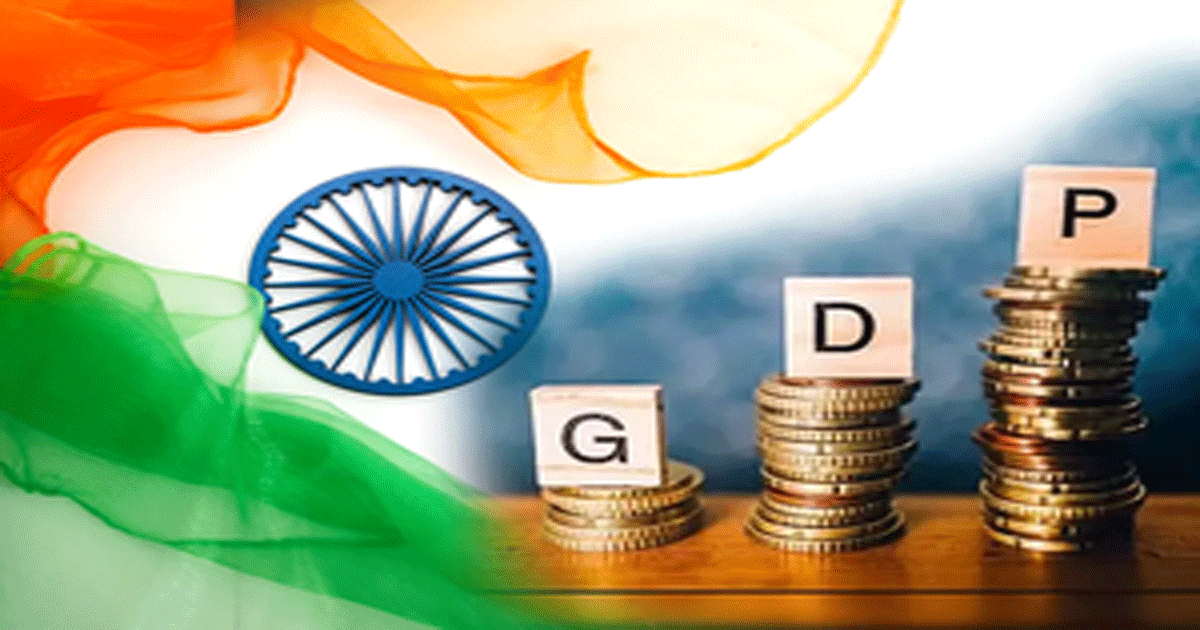
New Delhi, Dec 16: The main macro drivers remain healthy and India’s GDP growth is likely to move closer to the trend growth of 6.5-7 per cent this fiscal, a Crisil Insight report said on Monday.
Trend GDP growth is the average sustainable rate of economic growth over time.
Private consumption growth in the country has fared better than last year in the first half of the current fiscal (FY25).
“While investment growth has moderated relative to last year, its share of GDP remains higher than the pre-pandemic decade,” the report mentioned.
Technical factors contributed to an above-trend GDP growth last year. They are expected to have a moderating effect on GDP growth this current fiscal as they normalise.
“GDP growth had averaged 6.6 per cent in the pre-pandemic decade. This fiscal is likely to see GDP growth move closer to trend growth of 6.5-7 per cent,” according to the report.
It is worth noting that the main macro drivers of growth remain healthy. Private consumption grew 6.7 per cent on average in the first half of this fiscal, compared with 4.1 per cent in the corresponding period last year. Its share in GDP at 56.3 per cent this fiscal has been higher than 56.1 per cent in the pre-pandemic decade.
The Wholesale Price Index (WPI) inflation has also been normalising. The last fiscal saw a decline in WPI inflation to -0.7 per cent.
This fiscal WPI inflation has averaged 2.7 per cent, closer to the pre-pandemic 5-year average of 3.2 per cent. In November, India’s annual rate of inflation based on WPI eased to 1.89 per cent, compared to 2.36 per cent in October, as the rise in food prices slowed during the month with the fresh crop arriving in the market.
“We expect improving consumption demand to drive growth momentum this fiscal. In particular, agriculture and rural demand are poised to improve after a healthy monsoon. This means growth will be more balanced this fiscal, even if it is lower than last year,” said the Crisil report.


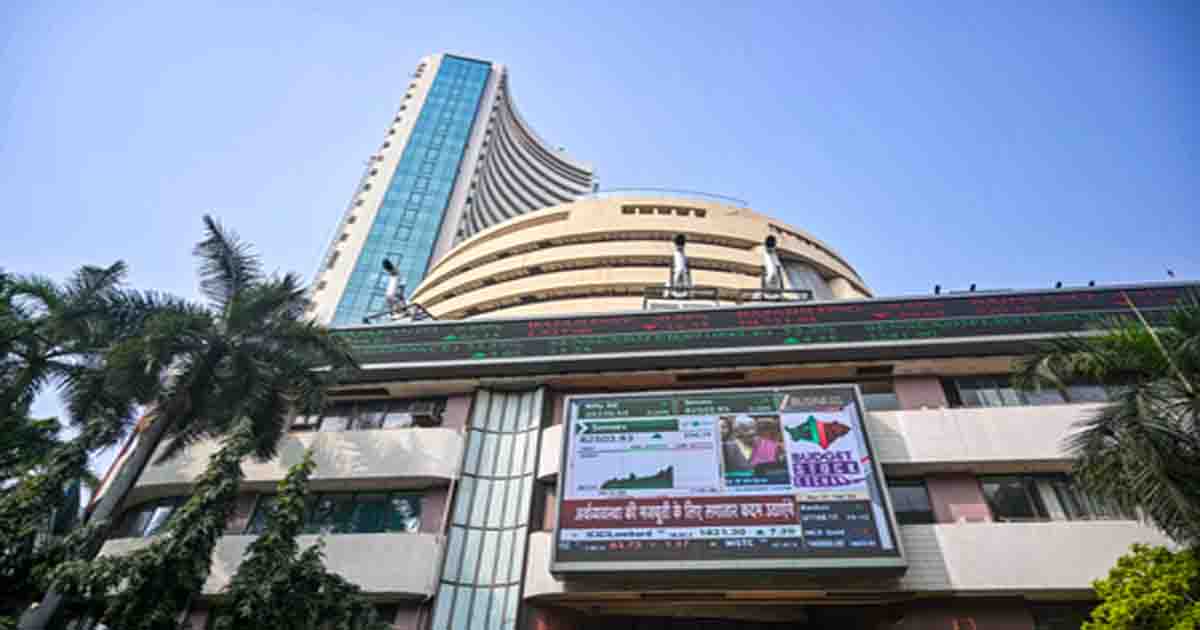
Indian stock markets will remain closed on Tuesday on account of Dussehra with trading suspended across major segments on the Bombay Stock Exchange (BSE) and National Stock Exchange (NSE).
Trading in equities, equity derivatives, securities lending and borrowing (SLB), currency derivatives and interest rate derivatives will remain closed for the day on both exchanges, according to them.
Notably, normal trading on NSE and BSE will resume on Wednesday.
However, the commodity derivatives segment will follow a different schedule. Trading will remain suspended during morning session from 9 am to 5 pm before resuming in evening. The session will continue till 11:30 pm or 11:55 pm depending on contract.
Multi Commodity Exchange of India (MCX) will not remain closed for entire day. Exchange will suspend trading during morning session from 9 am to 5 pm and reopen for evening session from 5 pm.
Investors will be able to trade commodities such as gold, silver, crude oil and base metals during evening session.
Meanwhile, National Commodity and Derivatives Exchange (NCDEX) will remain closed for both sessions on account of Dussehra.
Following Dussehra holiday, three regular trading holidays remain on NSE and BSE calendars for rest of 2026 — November 10, Tuesday, Diwali-Balipratipada; November 24, Tuesday, Prakash Gurpurb Sri Guru Nanak Dev; and December 25, Friday, Christmas.
In addition, exchanges have also scheduled a special Muhurat Trading session for November 8, 2026 on occasion of Diwali Laxmi Pujan. Timings for special session will be announced separately.
Notably, in the last session equity benchmarks closed in negative territory amid selling pressure in the banking and information technology (IT) sector stocks.
Sensex decreased over 850 points or 1 per cent to settle at 73,852.90 on Monday. Similarly, Nifty closed 257.20 points or 1.11 per cent lower at 22,888.95.
The Ministry of Electronics and Information Technology (MeitY) has asked technology giant firm Meta to review the content recommendation and ranking systems that power Facebook and Instagram, stepping up regulatory scrutiny of how social media algorithms amplify information in India, according to multiple reports.
In an advisory issued to the company, the ministry had asked Meta to ensure that its recommendation systems do not lead to the disproportionate exposure of users to a single or limited set of narratives and instead provide greater access to diverse, relevant and credible information, according to them.
The ministry also directed Meta to strengthen mechanisms for rapidly identifying, reviewing and escalating content that gains significant reach through recommendation systems when such material has the potential to contribute to public confusion, violence or disruption of public order.
Apart from that, the US-based company has been asked to implement the measures immediately and inform the government of the action taken.
The advisory specifically highlights photographs, videos and graphics related to ongoing public events where the authenticity, timing, location or surrounding circumstances may be unclear.
It calls for additional context where old or unrelated visuals are presented as current, where footage has been selectively edited or where unverified claims are made regarding emergencies, police action or other official measures.
Additionally, this marks the latest escalation in the government’s scrutiny of Meta’s moderation and recommendation systems.
Earlier in August, government officials questioned Meta executives over content recommendation algorithms, deepfakes, synthetic media and safeguards against unlawful content.
Meta has separately tightened content and advertising safeguards following concerns related to child sexual exploitation material.
The company said earlier this month it deployed new AI-driven advertising review systems and removed 5.3 million pieces of child sexual exploitation content in India during January-June 2026, with more than 98% detected proactively.
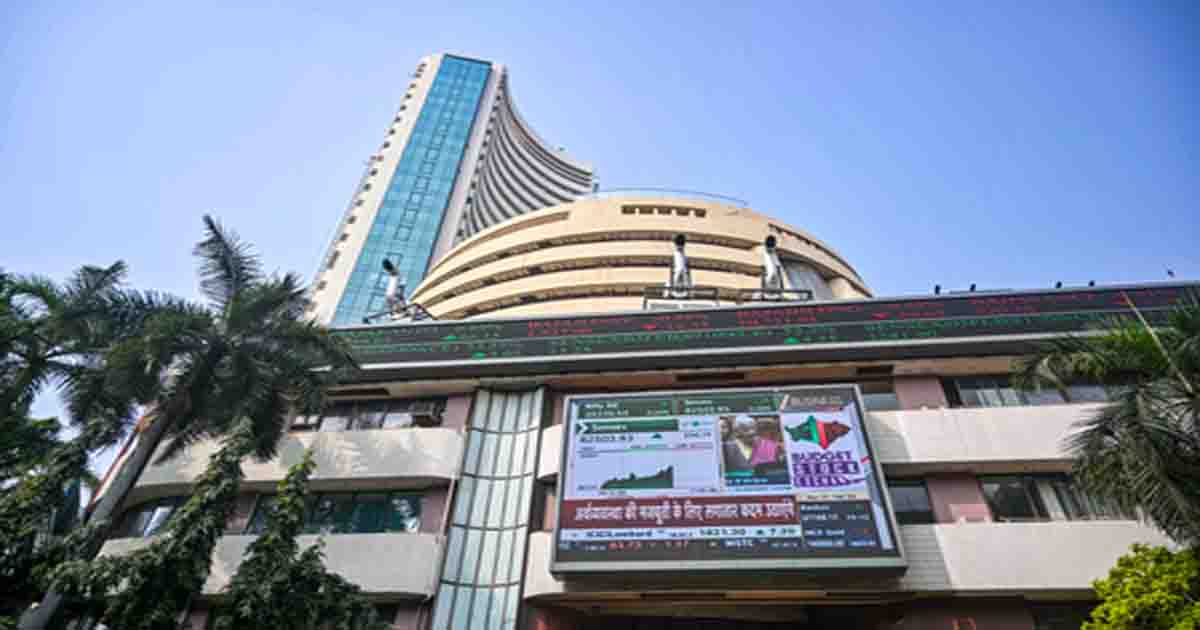
Domestic equity benchmarks opened on a flat note on Monday tracking mixed global cues and momentum from last week’s gains.
Sensex opened at 74,849.30, up 120.03 points or 0.16 per cent, while Nifty began trading at 23,150.85, up 4.70 points or 0.02 per cent.
Sectorally, Nifty PSU Bank led gains and rose over 1 per cent, followed by Nifty Oil & Gas which surged 0.6 per cent.
In contrast, Nifty Private Bank, Nifty IT and Nifty Chemicals dropped up to 1 per cent.
Market experts said momentum from Nifty’s 2.8 per cent surge last week and good results from banking majors after better-than-expected IT earnings could keep the market resilient.
“However, escalation of tensions in Hormuz and consequent surge in Brent crude to $109 will act as a strong headwind,” according to them.
They further said that attractive large-cap valuations and rupee appreciation turned FII stance slightly positive, though unlikely to sustain at high crude prices. Large-caps outperforming mid and small-caps is likely to continue, with stock-specific action on Q2 results.
For Nifty, immediate support is placed at 22,950–23,000, while resistance is seen at 23,250–23,300, the experts said and added that RSI strengthened to 52.81 above its average of 34.70, while PCR stood at 1.08.
In the previous session on October 16, FIIs turned net buyers after 15 straight sessions of selling, buying equities worth about Rs 1,166 crore, while DIIs ended their 45-session buying streak with net sales of around Rs 3,661 crore.
On commodities, Brent crude traded nearly 2 per cent lower at around $107.76 per barrel, while US WTI declined about 1 per cent to $100.43.
In Asia, markets were mixed. Japan’s Nikkei traded 0.84 per cent lower, while Hong Kong’s Hang Seng and South Korea’s KOSPI rose up to 0.83 per cent. Indonesia’s Jakarta Composite fell over 5 per cent.

Tiger Shroff firing case: Three suspects to be taken to Mumbai from Kota under tight security

Vijayadashmi: Ravan effigy to be burnt at 35 locations across Noida amid tight security

Mumbai Police recover five empty shells, two live cartridges in Tiger Shroff firing case

‘People of India will not tolerate anarchy’: BJP leaders slam Sanjay Raut for supporting Albania protests

Indian stock markets closed on account of Dussehra

Rahul, Cong ecosystem want to force regime change: BJP after Neha Bora praises B’desh Gen-Z protest

BJP pays tribute to ex-President Abdul Kalam, recalls his enduring influence on generations of India’s youth

Attack on democratic rights: INDIA Bloc leaders on detentions of anti-ECI protestors

INDIA bloc begins protest march against ECI

Maha Congress stages agitation against Gyanesh Kumar
-

 Crime4 years ago
Class 10 student jumps to death in Jaipur
-

 Maharashtra2 years ago
Mumbai Local Train Update: Central Railway’s New Timetable Comes Into Effect; Check Full List Of Revised Timings & Stations
-

 Maharashtra2 years ago
Mumbai To Go Toll-Free Tonight! Maharashtra Govt Announces Complete Toll Waiver For Light Motor Vehicles At All 5 Entry Points Of City
-

 Maharashtra2 years ago
False photo of Imtiaz Jaleel’s rally, exposing the fooling conspiracy
-

 National News2 years ago
Ministry of Railways rolls out Special Drive 4.0 with focus on digitisation, cleanliness, inclusiveness and grievance redressal
-

 Maharashtra2 years ago
Maharashtra Elections 2024: Mumbai Metro & BEST Services Extended Till Midnight On Voting Day
-

 National News2 years ago
J&K: 4 Jawans Killed, 28 Injured After Bus Carrying BSF Personnel For Poll Duty Falls Into Gorge In Budgam; Terrifying Visuals Surface
-

 Crime2 years ago
Baba Siddique Murder: Mumbai Police Unable To Get Lawrence Bishnoi Custody Due To Home Ministry Order, Says Report