
Business
India ranked among world’s top 3 countries for Green Building Certification in 2024


New Delhi, Feb 6: India retained its third spot on the US Green Building Council’s (USGBC) annual list of top 10 countries and regions for LEED (Leadership in Energy and Environmental Design) in 2024 with 370 projects, across both buildings and spaces, being certified for LEED in the country covering 8.50 million gross square metres (GSM).
India has consistently ranked among the top three countries for LEED certifications, underscoring its dedication to achieving the United Nations’ Sustainable Development Goals (SDGs) for 2030.
The ranking reflects India’s focus on combating climate change and promoting environmentally conscious practices through green development initiatives. LEED certifications in India are managed by the Green Business Certification Inc (GBCI), which works to accelerate the adoption of green buildings nationwide.
China topped the rankings with over 25 million GSM certified followed by Canada with 10 million GSM. The annual ranking by USGBC highlights the significant progress made by countries and regions outside the United States in adopting healthy, sustainable and resilient building design, construction and operations.
GBCI MD, Southeast Asia & Middle East, Gopalakrishnan Padmanabhan, said: “India’s remarkable achievement of 370 LEED-certified projects in 2024 highlights the country’s steadfast commitment to sustainable development and climate action. With 8.50 million GSM of green-certified space, India is not only addressing the growing need for sustainable urban infrastructure but also making significant strides towards achieving the United Nations’ SDGs for 2030. As the nation continues to expand its urban footprint, the adoption of green building practices will be central to improving community well-being and mitigating climate change. India’s ongoing push for net-zero emissions by 2070 further solidifies its leadership in the global movement for a sustainable future.”
India’s growing real estate market is increasingly aligned with sustainable practices. The expansion of LEED certifications beyond commercial spaces to industrial, residential, and educational sectors underscores the country’s commitment to its net-zero targets and sustainable growth. As LEED continues to evolve, India remains a global leader in green building practices, inspiring other nations to prioritise sustainability in their built environments, according to a GBCI statement.
This year marks the 25th anniversary since the USGBC launched the LEED rating system. Since its establishment in 2000, USGBC’s LEED metrics-based system has set the standard for rating and promoting healthy, resilient, sustainable, and efficient buildings. It has become the world’s most widely used green building program aimed at empowering the sector to decarbonise.
USGBC is finalising its later iteration of the rating system–LEED v5. The final version will be released later this year and will reflect the feedback received from the community.


Mumbai, Oct 12: Domestic equity benchmark indices opened higher on Monday amid positive factors like gains in Asian markets and a decline in crude oil prices.
Nifty began trading session at 22,593.20, up 72.75 points or 0.32 per cent.
Meanwhile, Sensex opened at 72,771.32, up 298.99 points or 0.41 per cent.
In early deals, mostly sectoral indices were trading in positive territory. Nifty Media, Nifty Auto and Nifty Chemicals jumped up to 1 per cent.
Similarly, Nifty Realty, Nifty Oil & Gas, Nifty Cement, Nifty Metal and Nifty IT surged between 0.81 per cent to 0.64 per cent. However, other sectoral indices were also trading marginally higher.
On the downside, Nifty PSU Bank just slipped 0.01 per cent.
Market experts said external headwinds are dominating domestic tailwinds, adding that the market is going through a stage wherein external headwinds are dominating domestic tailwinds.
Elevated crude prices and high US bond yields will continue to impact market. FIIs will continue to sell in the near term, and DIIs will continue to absorb FII selling, according to them.
Moreover, an impressive GDP growth estimate of 7.1 per cent for FY27 and improving corporate profitability provide strong fundamental support to the market, the experts said.
“Therefore, investors can accumulate fairly valued growth stocks ignoring uncertainty and volatility in market. For investors with medium-to-long-term horizon, this market provides value buying opportunities. Patience is key,” they added.
They further noted that if crude declines sharply following favourable developments in the Middle East, the market can rally significantly from current levels.
Technically, Friday’s bounce and inside bar formation set up an environment for a rise to 22,800-23,200. However, inability to close above 22,575 will keep trend within bear grip. Downside marker for day may be kept at 22,295, Friday’s reaction low, another analyst said.
In addition, asian markets opened cautiously today in early hours as investors braced for earnings season which could test elevated technology valuations.
Oil prices eased on prospects of higher Russian supplies following agreement to halt attacks on energy facilities.
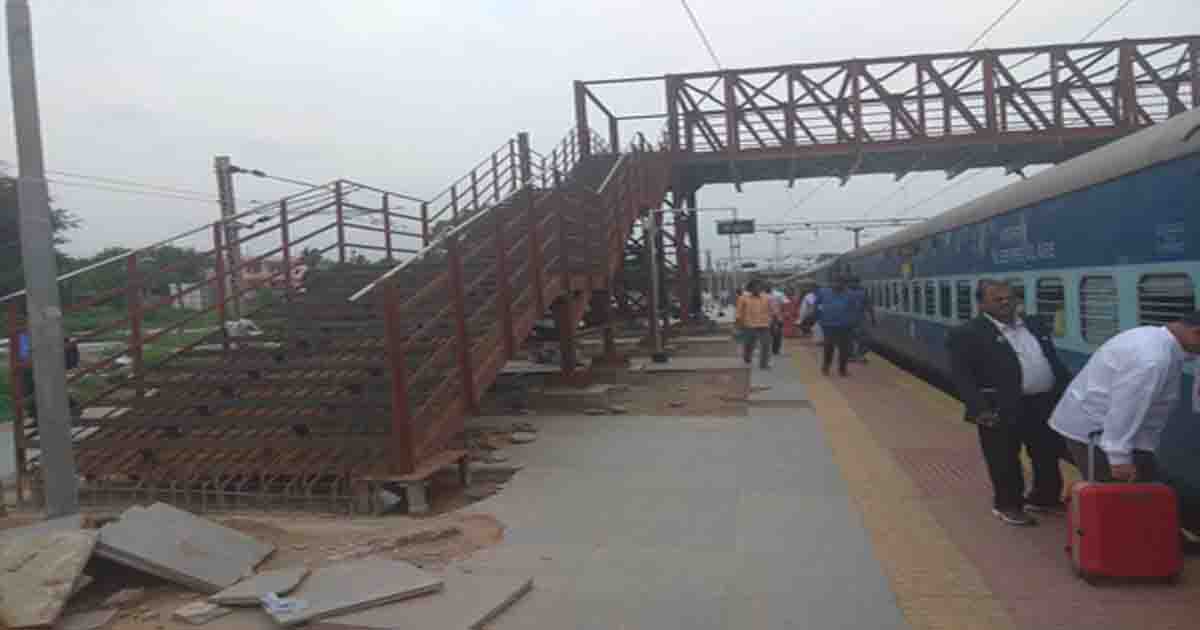
New Delhi, Oct 11: Indian Railways has announced 3,548 graduate-level vacancies for jobs under the Non-Technical Popular Categories (NTPC–Graduate), which provide opportunities for graduates to work across different functional areas of railway operations and administration, according to an official statement issued on Sunday.
The recruitment through Centralised Employment Notification issued by the Railway Recruitment Boards (RRBs) covers four categories of posts, including Chief Commercial Cum Ticket Supervisor, Goods Train Manager, Junior Accounts Assistant Cum Typist, and Senior Clerk Cum Typist. These positions offer career opportunities across commercial services, train operations, accounts and administration, supporting the efficient functioning of railway services across the country, the statement said.
Of the total 3,548 vacancies, as many as 2,750 are for Goods Train Manager, followed by 371 for Senior Clerk Cum Typist, 300 for Junior Accounts Assistant Cum Typist, and 127 for Chief Commercial Cum Ticket Supervisor.
The posts offer initial basic pay under the Seventh Central Pay Commission. Chief Commercial Cum Ticket Supervisor carries an initial basic pay of Rs 35,400 per month at Pay Level 6, while the other three categories carry an initial basic pay of Rs 29,200 per month at Pay Level 5. Applicable allowances and service conditions will be governed by the relevant rules.
The online application process commenced on October 8, and eligible candidates can submit their applications until 11:59 p.m. on November 6. The last date for payment of the examination fee is November 8, while the application modification window is scheduled from November 9 to 18 November.
Candidates must possess a degree from a recognised university or its equivalent and fulfil the prescribed post-specific eligibility conditions. The notified age limit is 18-33 years as on January 1, 2027, with applicable age relaxations for eligible categories under the prescribed rules.
The selection process comprises a first-stage Computer-Based Test (CBT), a second-stage CBT, followed by document verification and medical examination, as applicable. The recruitment framework also provides applicable reservation and age-relaxation benefits, along with scribe assistance and compensatory time for eligible candidates with disabilities, in accordance with the prescribed provisions.
Another provision under CEN No. 06/2026 is the dispensation of the Computer-Based Typing Skill Test (CBTST) for the posts of Junior Accounts Assistant Cum Typist and Senior Clerk Cum Typist. Candidates are nevertheless expected to possess basic computer and typing proficiency, which will be assessed after joining, as specified in the notification, the statement said.
Candidates can access the detailed notification, vacancy distribution, eligibility criteria and recruitment updates through the official Railway Recruitment Boards website:https://rrb.indianrailways.gov.in
Business
BMC to crack down on illegal debris disposal, impose Rs 25,000 fine for tracking violations

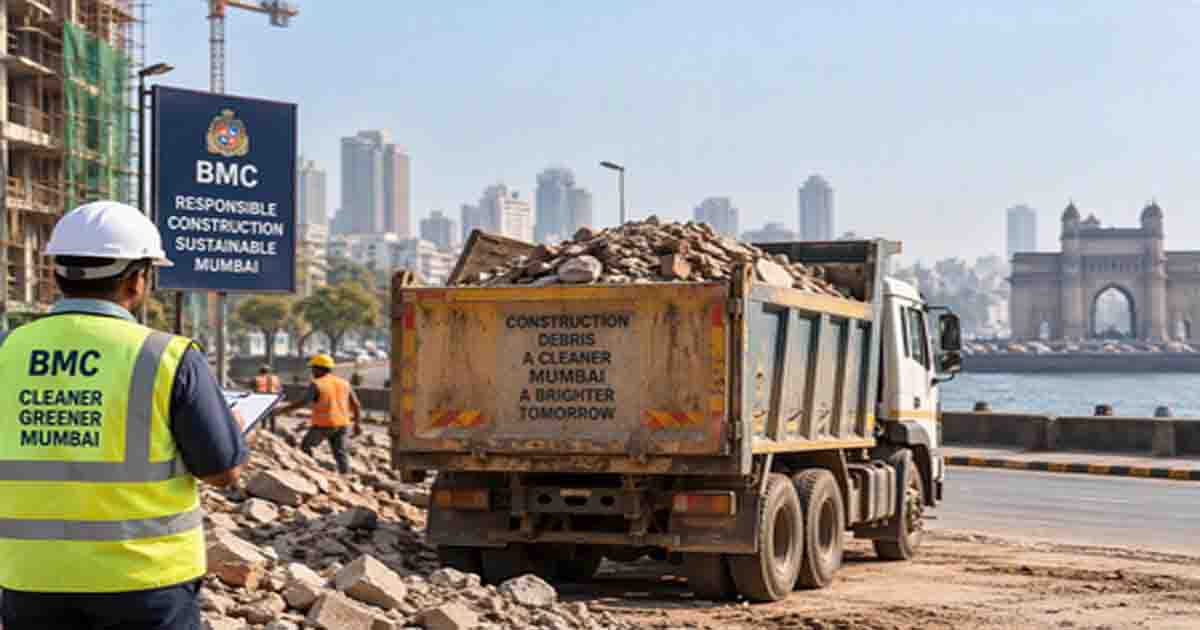
Mumbai, Oct 11: As air quality concerns begin to resurface following the withdrawal of the monsoon, the Brihanmumbai Municipal Corporation (BMC) is reportedly set to tighten enforcement of construction and demolition (C&D) waste management rules across the city.
Starting Monday, the civic body will levy a penalty of Rs 25,000 on every vehicle found transporting construction debris or excavation material without an active and authorised Vehicle Tracking and Monitoring System (VTMS).
Construction sites that fail to register on the BMC’s Mumbai Debris Control and Tracking System (MDCTS) portal will also face a fine of Rs 25,000 for each violation.
The move comes amid growing concerns over illegal dumping of construction waste and its impact on Mumbai’s environment and air quality. In a circular issued to all 26 municipal wards, the BMC has directed officials to begin inspections and enforcement drives immediately.
Mumbai generates more than 8,000 tonnes of construction and demolition waste every day, significantly exceeding the city’s treatment capacity.
The two processing facilities at Dahisar and Shilphata can collectively handle only around 1,200 tonnes of debris daily, creating a large gap that has led to rampant illegal dumping.
Civic officials said debris is frequently discarded along roadsides, vacant plots, drains, creeks, water bodies and mangrove areas, as per the report.
To improve monitoring and accountability, the BMC launched the MDCTS portal on August 24. The digital platform is designed to track C&D waste from its point of generation to authorised disposal or processing facilities.
It also allows civic authorities to monitor debris-carrying vehicles in real time, detect route deviations and identify suspected cases of illegal dumping.
The civic body has made registration on the portal mandatory for contractors, government agencies and private developers undertaking construction activities.
Registered entities are required to submit detailed waste management plans, while vehicles transporting debris must be fitted with GPS-enabled VTMS devices and follow approved transportation routes.
According to BMC data, the MDCTS portal recorded 220 registrations between August 24 and October 9. These included 109 builders and developers, 44 transporters, 19 BMC contractors, 17 external buyers of debris and soil, 15 corporate entities and four government agencies. No registrations were received from individual citizens during the period.

MP Congress leaders join Rahul Gandhi Delhi protest

Riyadh airport attack: Embassy officials visit hospital, provide support to injured Indians

Protests not similar to ordering food from delivery apps: Shiv Sena blasts Rahul Gandhi

Security won’t return to Strait of Hormuz as long as US continues war: Iran

Maha CM accuses Rahul Gandhi, INDIA bloc of trying to weaken judiciary through protests

INDIA bloc begins protest march against ECI

Maha Congress stages agitation against Gyanesh Kumar

Complaint against Netflix & Mukesh Chhabra for inappropriate language on ‘India’s Got Latent 2’

Delhi court grants three-week interim bail to influencer Swatantra Bhardwaj

Bombay HC warns Vijay Mallya against posting court documents on social media
-

 Crime4 years ago
Class 10 student jumps to death in Jaipur
-

 Maharashtra2 years ago
Mumbai Local Train Update: Central Railway’s New Timetable Comes Into Effect; Check Full List Of Revised Timings & Stations
-

 Maharashtra2 years ago
Mumbai To Go Toll-Free Tonight! Maharashtra Govt Announces Complete Toll Waiver For Light Motor Vehicles At All 5 Entry Points Of City
-

 Maharashtra2 years ago
False photo of Imtiaz Jaleel’s rally, exposing the fooling conspiracy
-

 National News2 years ago
Ministry of Railways rolls out Special Drive 4.0 with focus on digitisation, cleanliness, inclusiveness and grievance redressal
-

 Maharashtra2 years ago
Maharashtra Elections 2024: Mumbai Metro & BEST Services Extended Till Midnight On Voting Day
-

 National News2 years ago
J&K: 4 Jawans Killed, 28 Injured After Bus Carrying BSF Personnel For Poll Duty Falls Into Gorge In Budgam; Terrifying Visuals Surface
-

 Crime2 years ago
Baba Siddique Murder: Mumbai Police Unable To Get Lawrence Bishnoi Custody Due To Home Ministry Order, Says Report