
Business
India Lost ₹22,842 Crore To Cybercriminals & Fraudsters In 2024: DataLEADS


India lost Rs 22,842 crore to cybercriminals and fraudsters in 2024, DataLEADS, a Delhi-based media and tech company, said in its report on widespread digital financial frauds in the country. The amount stolen by digital criminals and fraudsters last year was nearly three times more than the Rs 7,465 crore in 2023 and almost 10 times more than the Rs 2,306 in 2022, DataLEADS said in ‘Contours of Cybercrime: Persistent and Emerging Risk of Online Financial Frauds and Deepfakes in India.
Prediction For Cyber-Crime Frauds
The Indian Cybercrime Coordination Centre, I4C, a federal agency that liaises between state and central law enforcement, predicts Indians will lose over Rs 1.2 lakh crore this year. The number of cybercrime complaints has spiked similarly; nearly twenty lakh were reported in 2024, up from around 15.6 lakh the year before and ten times more than were logged in 2019.
The surge in the number of cybercrime complaints and the volume of money lost points to one inescapable conclusion – India’s digital crooks are getting smarter and more efficient, and, in a country with a staggering nearly 290 lakh unemployed people, their ranks are increasing.
Bank-related frauds have increased dramatically; the Reserve Bank of India reported a nearly eightfold jump in the first half of FY 2025/26 compared to the same period last year. And the amount of money lost was staggering – Rs 2,623 crore to Rs 21,367 crore. Private sector banks accounted for nearly 60 per cent of all such incidents. But it was customers in public sector banks who were worst-hit; they lost Rs 25,667 crore in all.
Why have these numbers jumped so much over the past three years?
Because of the increased use of digital payment modes – i.e., smartphone-enabled services like Paytm and PhonePe – and the sharing and processing of financial details online – via (what many believe are encrypted and fail-safe) messaging platforms like WhatsApp and Telegram.
Federal data says there were over 190 lakh UPI, or unified payment interface, transactions in June 2025 alone, and these were worth a combined Rs 24.03 lakh crore. Digital payments’ value has grown from roughly Rs 162 crore in 2013 to Rs 18,120.82 crore in January 2025, and India accounts for nearly half of all such payments worldwide.
COVID-19
Much of this increase can be attributed to the pandemic and the subsequent lockdowns.
During COVID-19, the government pushed for a switch to UPI apps like Paytm to ensure social distancing and minimise contact with currency notes, via which the virus could be transmitted.
Digital Payment Tools In Rural Areas
The government also reasoned that digital payment tools would ensure greater penetration of financial services, particularly in rural areas. By 2019, India already had 440 million smartphone users and data rates were among the cheapest in the world – 1 GB cost Rs 200, or less than $3.
Insurance sector scams were also common. These included life, health, vehicle, and general, and are becoming an increasingly lucrative option for cybercriminals, particularly as insurance companies urge customers to opt for app-based services.



Mumbai, July 26: The benchmark equity indices are likely to remain under pressure in the coming week, with the Sensex facing immediate resistance around the 76,300 level and the Nifty expected to find crucial support near 23,600 after both indices extended losses in a volatile trading week marked by rising crude oil prices, geopolitical tensions and weak banking stocks, analysts said on Sunday.
According to experts, the Sensex surrendered the gains made in the previous week and slipped below the psychologically important 77,000 mark as geopolitical concerns and earnings-related pressures weighed on investor confidence.
“From a technical perspective, the 76,300 zone now acts as immediate resistance. On the downside, the 75,800–75,700 zone is likely to offer immediate support; a break below could open the door towards 75,500–75,400,” a market expert mentioned.
For the Nifty, analysts said the index slipped below the lower end of its month-long consolidation band of 23,800-24,400 and tested support near the rising trendline around the 23,600 level before ending the week at 23,767.45.
“A decisive breach below the 23,600 support zone could accelerate the correction towards the previous swing low of 23,100. On the upside, the 24,000–24,100 region is expected to act as the first resistance, followed by a stronger hurdle around the 24,400 mark,” a market expert mentioned.
Meanwhile, in the previous week, the Indian stock market witnessed heightened volatility as investors turned cautious amid a spike in global crude oil prices and renewed geopolitical uncertainties.
Mixed first-quarter earnings from banking companies further weighed on sentiment, while a weakening rupee and a broader risk-off mood restricted buying despite resilient domestic macroeconomic indicators and stock-specific opportunities emerging during the ongoing earnings season.
The Sensex fell 2.68 per cent over the week to settle at 76,059.77, while the Nifty declined 2.33 per cent to close at 23,767.45.
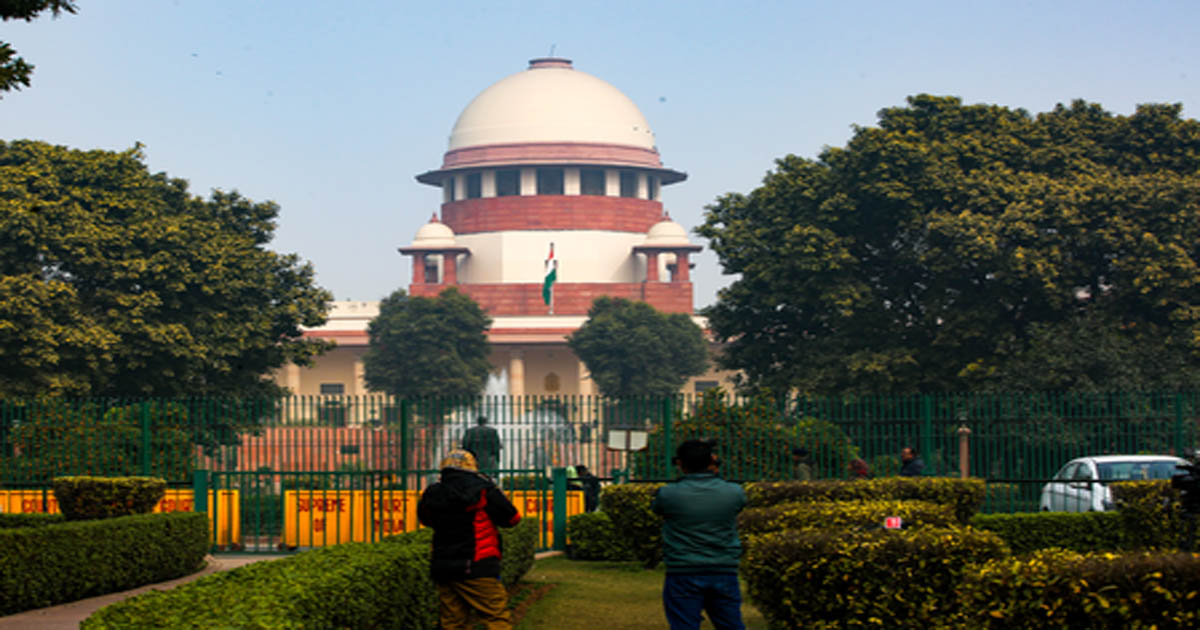
New Delhi, July 26: The government has allocated Rs 2,010 crore to boost judicial infrastructure and digitisation of courts, including necessary training and capacity building programmes.
According to Law Minister Arjun Ram Meghwal, under the Centrally Sponsored Scheme (CSS) for Development of Infrastructure Facilities for the District and Subordinate Courts, a sum of Rs 810 crore has been allocated in the Union Budget 2026 for judicial infrastructure.
In addition, sum of Rs 1,200 crore has been allocated in the Budget for the eCourts Project Phase-III being implemented for digitisation of courts including necessary training and capacity building programmes, he said in a written reply to a question in the Lok Sabha.
Adequate budgetary provisions are made under these Schemes based on approved outlays and availability of funds.
“However, the expeditious disposal of cases depends on multiple factors including complexity of case, quality of investigation, availability of relevant evidence and presentation thereof by the Advocates, timely delivery of the court processes, active participation of the parties, judicial procedures, etc,” said the minister.
The government, in coordination with states and the judiciary, has taken several measures to ensure accessible, speedy and effective justice across the country.
Meanwhile, a Centrally Sponsored Scheme to set up Fast Track Special Courts (FTSCs), including exclusive POCSO (ePOCSO) courts was launched in October 2019, for the expeditious trial and disposal of pending cases related to rape and offences under the Protection of Children from Sexual Offences (POCSO) Act, 2012.
The scheme was extended twice, with the last extension valid up to March 31, 2026 for establishment of 790 FTSCs. The scheme has been temporarily extended upto September 30, 2026.
As per the information made available by the High Courts, as of April 30, 775 FTSCs, including 398 exclusive POCSO (e-POCSO) Courts were functional in 29 States/UTs, informed the minister.
New Delhi, July 24: Shares of India’s largest private sector lender, HDFC Bank, fell more than 1 per cent in early trade on Friday after three US law firms announced separate investigations into whether the bank may have violated federal securities laws.
The investigations were announced by the Law Offices of Howard G. Smith, the Law Offices of Frank R. Cruz and Glancy Prongay Wolke & Rotter through separate press releases.
According to the law firms, the investigations are focused on whether HDFC Bank and certain of its executives made materially misleading statements or failed to disclose information relevant to investors, potentially violating US federal securities laws.
The probes stem from a May 27 report by The Indian Express — which alleged that HDFC Bank made payments of about Rs 45 crore (Rs 450 million or around $4.7 million) to the Maharashtra State Road Development Corporation (MSRDC) to attract large institutional deposits.
The report also alleged that the payments were booked as marketing expenses and that the bank’s Chief Executive Officer was aware of them.
According to the law firms, HDFC Bank’s American Depositary Receipts (ADRs) fell $1.02, or 4.1 per cent, to close at $23.78 on May 27 following the publication of the report.
The firms have invited investors who suffered losses in HDFC Bank ADRs to contact them and share relevant information as they assess whether there are sufficient grounds to pursue securities-related claims.
However, no securities class action lawsuit has been filed against HDFC Bank at this stage. The investigations are preliminary and are intended to determine whether legal action is warranted.
However, the lender has not issued any statement on the matter to the stock exchanges — the NSE and the BSE — till 10:30 am.
On Friday, HDFC Bank shares fell as much as 1.44 per cent during early trade on the BSE. The stock has declined more than 25 per cent over the past one year, nearly 20 per cent in the last six months, and around 25 per cent so far this calendar year.

Delhi Police seize 1,600 quarter bottles of illicit liquor, arrest interstate bootlegger

Iran, Oman discuss arrangements for safe navigation through Strait of Hormuz

Kanpur man detained for hoax bomb threat at Lucknow airport

Sensex may face resistance at 76,300, Nifty support seen at 23,600: Analysts

Make ‘Har Ghar Tiranga’ people’s movement again: PM Modi

BJP’s patriotism, Hindutva a sham: Shiv Sena(UBT) in ‘Saamana’

Delhi Police bust ‘digital arrest’ cyber fraud syndicate, nab three from Bengal

Gold, silver trade lower amid weak global cues

Venezuela places quake-hit La Guaira state under military control

Left stone on our head while we slept, Sanjay Raut blasts Sachin Ahir’s defection; calls for introspection
-

 Crime4 years ago
Class 10 student jumps to death in Jaipur
-

 Maharashtra2 years ago
Mumbai Local Train Update: Central Railway’s New Timetable Comes Into Effect; Check Full List Of Revised Timings & Stations
-

 Maharashtra2 years ago
Mumbai To Go Toll-Free Tonight! Maharashtra Govt Announces Complete Toll Waiver For Light Motor Vehicles At All 5 Entry Points Of City
-

 Maharashtra2 years ago
False photo of Imtiaz Jaleel’s rally, exposing the fooling conspiracy
-

 National News2 years ago
Ministry of Railways rolls out Special Drive 4.0 with focus on digitisation, cleanliness, inclusiveness and grievance redressal
-

 Maharashtra2 years ago
Maharashtra Elections 2024: Mumbai Metro & BEST Services Extended Till Midnight On Voting Day
-

 National News2 years ago
J&K: 4 Jawans Killed, 28 Injured After Bus Carrying BSF Personnel For Poll Duty Falls Into Gorge In Budgam; Terrifying Visuals Surface
-

 Crime2 years ago
Baba Siddique Murder: Mumbai Police Unable To Get Lawrence Bishnoi Custody Due To Home Ministry Order, Says Report