
Business
India, Japan can diversify trade basket, open new frontiers with renewed efforts: PM Modi

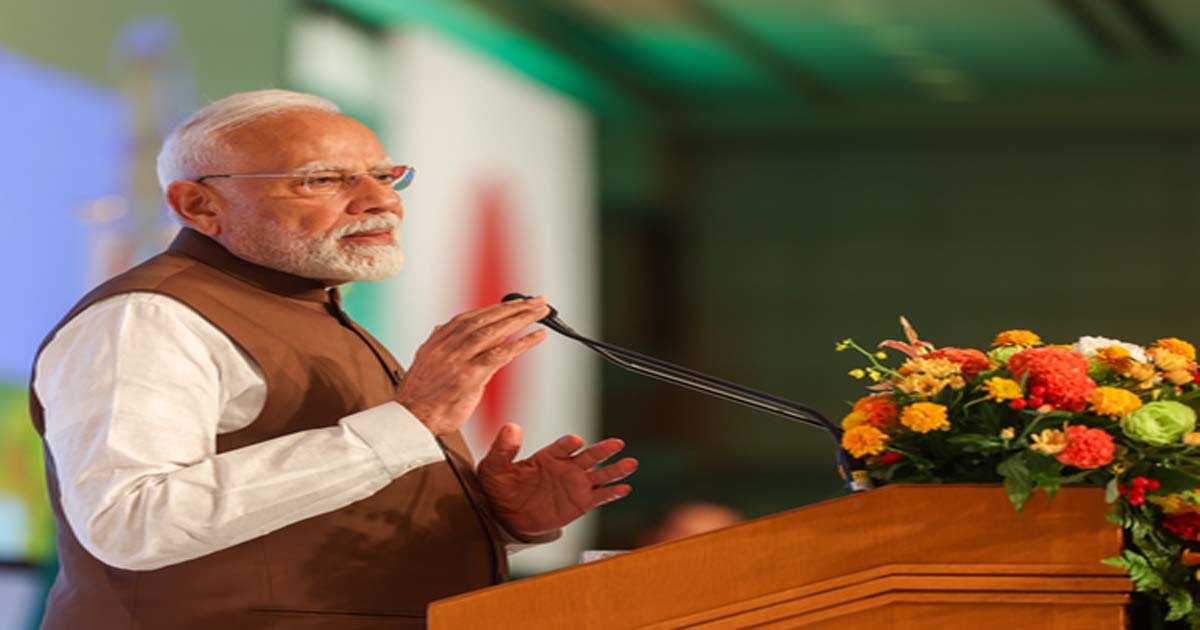
Tokyo, Aug 29: Hailing the robust India-Japan economic and trade partnership, Prime Minister Narendra Modi on Friday said with renewed efforts, both nations can diversify their trade basket, make it more balanced, and open up new frontiers as well.
In an interview with Japanese newspaper The Yomiuri Shimbun, the Prime Minister said we must aim bigger and remain ambitious.
“The synergies across governments, businesses and people can create scale and speed in our economic partnership. As the world’s leading economies, we have been contributing to each other’s growth, competitiveness and dynamism,” PM Modi told the publication.
Japan has been a trusted partner in India’s infrastructure development across generations. The country has also been a leading source of foreign direct investment (FDI) for India in key sectors, including automobiles, electronics, telecom, chemicals, finance, and pharmaceuticals.
According to PM Modi, the number of Japanese firms in India has grown steadily to around 1,500, while more than 400 Indian companies operate in Japan.
“Clearly, this is only the beginning — the real potential is much higher,” he noted.
“We maintain important trade relations, but it has not yet reached the levels envisaged under our CEPA (Comprehensive Economic Partnership Agreement)… The 20th century saw Japan emerge as a major partner in India’s infrastructure development. I am confident that the 21st century will see Japan as a major partner in India’s innovation, manufacturing, and global value chains,” the Prime Minister emphasised.
On semiconductors, PM Modi told the publication that India’s semiconductor sector is on the cusp of transformation.
“We have put in place a comprehensive regulatory and policy framework, backed by incentives, to build a strong semiconductor and display ecosystem. Already, six semiconductor units are taking root in India, with four more on the way. By the end of this very year, ‘Made in India’ chips will be in the market, a clear demonstration of India’s design and manufacturing capabilities,” the Prime Minister said.
Japanese companies, with their technological strengths and global leadership, can play a pivotal role in this journey, he said, adding that a strong beginning has already been made.
“By combining India’s scale and capabilities with Japan’s advanced technologies, we can build a resilient and trusted semiconductor value chain,” PM Modi stressed, adding that this collaboration will support the technological ambitions of both our countries and enhance global supply chain security.
“I see semiconductor cooperation emerging as a major pillar of the India–Japan partnership. After all, in this digital century, chips are not just about computers, they are about competitiveness, credibility and confidence in the future,” he mentioned.
Some Japanese companies are positioning their production bases in India as hubs for third-country markets such as Africa.
According to PM Modi, India has seen multi-faceted reforms which make manufacturing in India easier than ever before.
“We have removed compliance burdens, rolled out incentives and ensured a large skilled workforce for companies to set base in India. Many global companies, including those from Japan, are setting up their production in India not only to cater to our domestic market, but also for the world,” he highlighted in his response.
Japanese automaker Suzuki Motor Corporation this week announced it will invest Rs 70,000 crore in India over the next five to six years. The investment will be used to increase production, introduce new car models, and protect its leadership position in the world’s third-largest automobile market.
“Just a couple of days back, I was at the Suzuki plant in India where we flagged off electric vehicles to be exported to a hundred countries, including Japan,” said PM Modi.


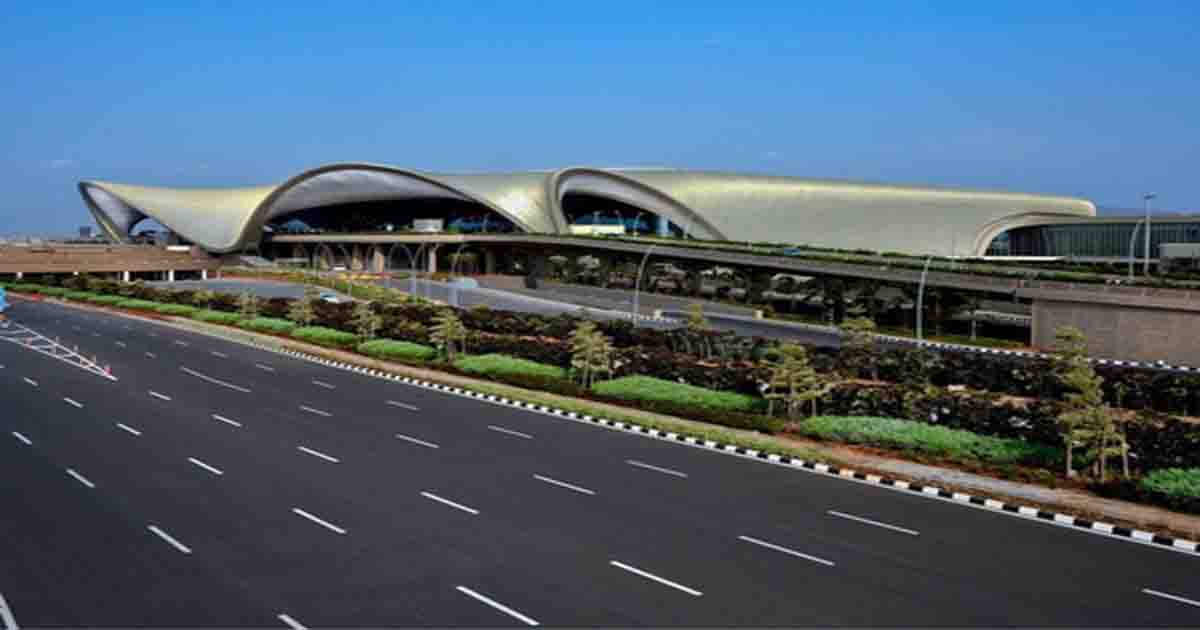
Ahmedabad, Oct 5: Navi Mumbai International Airport (NMIA) is strengthening its public transport and ground mobility infrastructure ahead of the Winter Schedule 2026-27, with a wider network of buses, taxis, autorickshaws, car rentals, and airport shuttles aimed at improving connectivity across Mumbai, Navi Mumbai, Pune and the wider Mumbai Metropolitan Region, it was announced on Monday.
The airport, operated by Adani Airport Holdings Limited (AAHL), is preparing for the Winter Schedule that will run from October 25, 2026, to March 27, 2027.
As part of the expansion, the Maharashtra State Road Transport Corporation (MSRTC) will launch e-Shivai electric bus services from NMIA on October 7.
The first phase of MSRTC services will connect the airport with Dadar, Borivali and Pune. Fares from NMIA have been set at Rs 450 for Pune, Rs 210 for Borivali, and Rs 170 for Dadar East. Children below 12 years and women travelling with a National Common Mobility Card will be eligible for a 50 per cent fare concession.
The Dadar-NMIA service will operate through Sion and Atal Setu, while the Borivali-NMIA route will connect CSMIA Terminal 1, Bandra, and Atal Setu. The Pune route will have two daily services, with one operating in the morning and another in the afternoon. MSRTC also plans to introduce services connecting NMIA with Thane and Nashik by mid-November.
Private bus operator Chalo Bus is already providing 21 daily services connecting NMIA with Marol in Andheri East, Bandra, Dadar, and the World Trade Centre in Colaba. The operator is also adding capacity during peak periods to cater to passenger and airport employee movement.
Within Navi Mumbai, Navi Mumbai Municipal Transport (NMMT) is operating seven dedicated airport routes, A1 to A7, linking Terminal 1 with Kharkopar, Targhar, Belapur, Nerul, Panvel, Khandeshwar and the Airport Project Office. Services between Belapur and Nerul are available every 15-20 minutes during peak hours, while further connectivity to Vashi and Panvel is planned.
The airport is also expanding taxi and last-mile connectivity. Uber Go and Uber Premier will provide app-based cab services, while Uber Auto will cater to passengers seeking on-demand autorickshaw services for shorter journeys. Prepaid taxi and autorickshaw facilities, along with car rental services, are also being introduced at the airport.
Bharat Taxi is scheduled to begin operations at NMIA from October 10 with a dedicated fleet of up to 40 vehicles, adding another option for passengers travelling to and from the airport.
A complimentary inter-airport shuttle service is also being introduced between NMIA and Chhatrapati Shivaji Maharaj International Airport (CSMIA). Operated by Cityflo, Aarya and Chalo, the shuttle will run every hour and provide passengers with a direct transfer option between Mumbai’s two airports.
Overall ground transport capacity at NMIA is being scaled up to 4,594 vehicles and services, including 3,787 app-based taxis, 184 car rentals, 171 autorickshaws and 547 buses. The airport is also deploying mobility signage, improved wayfinding systems and on-ground passenger assistance, with designated areas for buses, shuttles, arrivals, departures and private vehicles.

Mumbai, Oct 5: Indian equity benchmarks opened sharply higher on Monday, tracking gains across Asian markets after softer-than-expected US jobs data tempered expectations of an immediate Federal Reserve rate hike.
Nifty opened at 22,532.40, an increase of more than 100 points or 0.49 per cent.
Similarly, Sensex began the trading session up over 400 points or 0.6 per cent at 72,340.95.
Moreover, the broader market sentiment was positive with most sectoral indices trading in the green in early deals. Nifty PSU Bank, Nifty Media, and Nifty Metal gained up to 1 per cent.
Nifty Realty advanced 0.93 per cent, while Nifty Chemicals, Nifty FMCG and Nifty Oil & Gas gained between 0.8 per cent and 0.85 per cent.
Nifty Private Bank and Nifty Consumer Durables were also trading higher in morning trade. While Nifty IT, Nifty Auto and Nifty Pharma were seen flat.
On the other hand, healthcare stocks were only trading marginally lower as Nifty 500 Healthcare and Nifty Healthcare Index declined 0.07 per cent and 0.12 per cent, respectively.
Market experts said markets could see a near-term rebound after eight consecutive weeks of declines.
However, elevated crude oil prices, high US bond yields and continued foreign institutional investor selling remain key headwinds, they said.
“Valuations have turned attractive, particularly for large-caps,” the experts said and added that the market may be better placed to withstand the prevailing headwinds.
Positive September automobile sales data also point to continued resilience in the domestic economy, according to them.
The Reserve Bank of India is widely expected to raise its policy rate by 25 basis points on Wednesday with the move largely priced into the market, according to the experts.
Banks could benefit from the rate hike as higher floating lending rates may support margins, they added.
In addition, foreign institutional investors (FIIs) remained net sellers in the previous trading session with a net outflow of Rs 9,484 crore, while domestic institutional investors (DIIs) continued to provide support with net purchases of Rs 10,041 crore.
Additionally, crude oil prices eased with international benchmark Brent crude trading nearly 1 per cent lower at $101.27 a barrel.
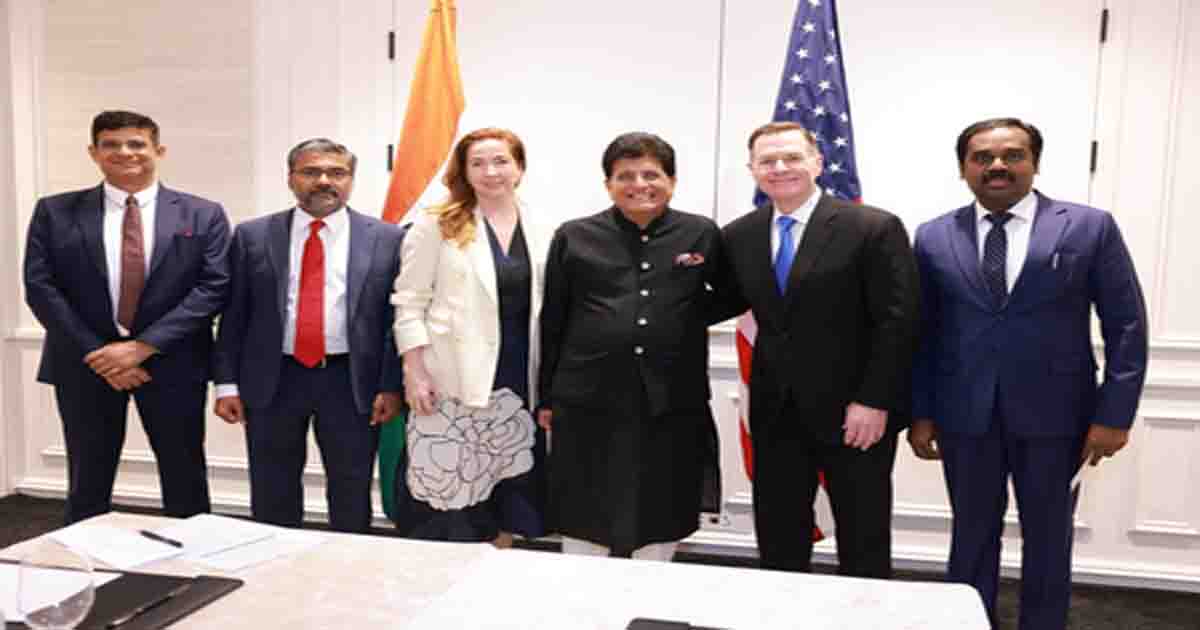
New Delhi, Oct 3: Commerce and Industry Minister Piyush Goyal on Saturday said he highlighted India’s growing strengths as a global hub for talent, innovation and business services, and the potential for deeper India-US business partnerships.
During his US visit, the minister met several global leaders and CEOs.
“Met Greg Case, CEO of Aon, and discussed the company’s operations in India and the opportunities for further expansion,” Goyal posted on social media platform X.
He also met Paul Grewal, Chief Legal and Global Affairs Officer at Cognition, and exchanged views on leveraging Cognition’s pioneering AI solutions and deepening its presence in India.
“Highlighted how India’s rich engineering ecosystem and dynamic startup culture provide a strong launchpad for building and deploying next-generation technologies for the world,” said Goyal.
During an engaging interaction with the Institute of Chartered Accountants of India (ICAI) leadership and members from Chicago, Michigan, and Ohio Chapters, the minister discussed the expanding opportunities in the India-US economic partnership and “highlighted how India’s economic momentum, marked by record FDI inflows and strong GDP growth, reflects PM Narendra Modi’s vision of a confident, self-reliant and globally competitive India”.
“Chartered Accountants have a pivotal role in strengthening this partnership by helping businesses navigate cross-border taxation, regulatory compliance and financial governance, while making Indian enterprises investment-ready for global capital,” the minister noted.
Goyal also delivered the keynote address at the USIBC Roundtable in Chicago.
“Discussed venture investment, commercialisation, and corporate partnerships to help Indian and US startups scale across markets. Explored opportunities to deepen India–US innovation linkages and foster the next generation of high-growth enterprises,” Goyal said.
He met Juan Ricardo Luciano, Chair of the Board and CEO of Archer Daniels Midland (ADM).
They discussed avenues to expand ADM’s presence and investment opportunities in India.
“With our rapidly expanding food processing sector, modernising agricultural value chains, and massive consumer base, India offers tremendous potential for sustainable growth and long-term collaboration,” said Goyal.

Navi Mumbai Airport expands multimodal transport network ahead of winter flight schedule

Bihar: SI recruitment protest turns tense as candidates clash with police

Man arrested in Mumbai for defrauding senior citizens and others using fake APK files.

MPSC paper leak row: Maha CM seeks Guv’s nod for judicial probe

Mumbai: NCW chief Vijaya Rahatkar holds POSH workshop, reviews security with top cop

Gift to President Putin part of PM Modi bid to globally display India’s heritage

PM Modi’s warm camaraderie with Putin, Xi on full display at BRICS Summit

Corporators of all parties in trouble! Corporators of all major parties including Shiv Sena (UBT), BJP and Congress are facing legal challenges.

Complaint against Netflix & Mukesh Chhabra for inappropriate language on ‘India’s Got Latent 2’

Maha Congress stages agitation against Gyanesh Kumar
-

 Crime4 years ago
Class 10 student jumps to death in Jaipur
-

 Maharashtra2 years ago
Mumbai Local Train Update: Central Railway’s New Timetable Comes Into Effect; Check Full List Of Revised Timings & Stations
-

 Maharashtra2 years ago
Mumbai To Go Toll-Free Tonight! Maharashtra Govt Announces Complete Toll Waiver For Light Motor Vehicles At All 5 Entry Points Of City
-

 Maharashtra2 years ago
False photo of Imtiaz Jaleel’s rally, exposing the fooling conspiracy
-

 National News2 years ago
Ministry of Railways rolls out Special Drive 4.0 with focus on digitisation, cleanliness, inclusiveness and grievance redressal
-

 Maharashtra2 years ago
Maharashtra Elections 2024: Mumbai Metro & BEST Services Extended Till Midnight On Voting Day
-

 National News2 years ago
J&K: 4 Jawans Killed, 28 Injured After Bus Carrying BSF Personnel For Poll Duty Falls Into Gorge In Budgam; Terrifying Visuals Surface
-

 Crime2 years ago
Baba Siddique Murder: Mumbai Police Unable To Get Lawrence Bishnoi Custody Due To Home Ministry Order, Says Report