
International News
India bans all imports from Pakistan amid rising tensions


New Delhi, May 3: India has banned all imports – direct and indirect – from Pakistan amid rising tensions with the neighbouring country over the barbaric Pahalgam terror attack.
According to a notification by the Commerce Ministry, “Direct or indirect import or transit of all goods originating in or exported from Pakistan, whether or not freely importable or otherwise permitted, shall be prohibited with immediate effect, until further orders.”
“This restriction is imposed in the interest of national security and public policy. Any exception to this prohibition shall require prior approval of the Government of India,” said the notification.
A provision in this regard has been added in the Foreign Trade Policy (FTP) 2023 “to prohibit direct or indirect import or transit of all goods originating in or exported from Pakistan,” it said in the notification dated May 2.
As per official data, India’s exports to Pakistan fell 56.91 per cent year-on-year between April 2024 and February 2025 to $491 million, while there were no imports. Top exports to Pakistan in FY25 included drug formulations, sugar, bulk drugs, residual chemicals and auto components.
The Attari-Wagah border, the sole trade route between India and Pakistan, had already been closed in the aftermath of the Pahalgam attack.
At least 26 civilians, including a Nepalese tourist and a local pony guide operator, were massacred by terrorists in the scenic Baisaran meadow in Jammu and Kashmir on April 22. The relations between the two nations soured as terror links to Pakistan emerged.
As per official data, India’s exports to Pakistan fell 56.91 per cent year-on-year between April 2024 and February 2025 to $491 million, while there were no imports.
Top exports to Pakistan in FY25 included drug formulations, sugar, bulk drugs, residual chemicals and auto components.
Meanwhile, the ongoing tension with India has shaken the confidence of investors in Pakistan badly, setting the country on course to record its worst performance in dollar bonds and stocks since 2023.
The investors have lost at least four per cent during April, while equities are down by three per cent. In comparison, India’s assets have largely been invulnerable.
Global powers, including the United States, have called on both parties to show restraint and de-escalate tensions.


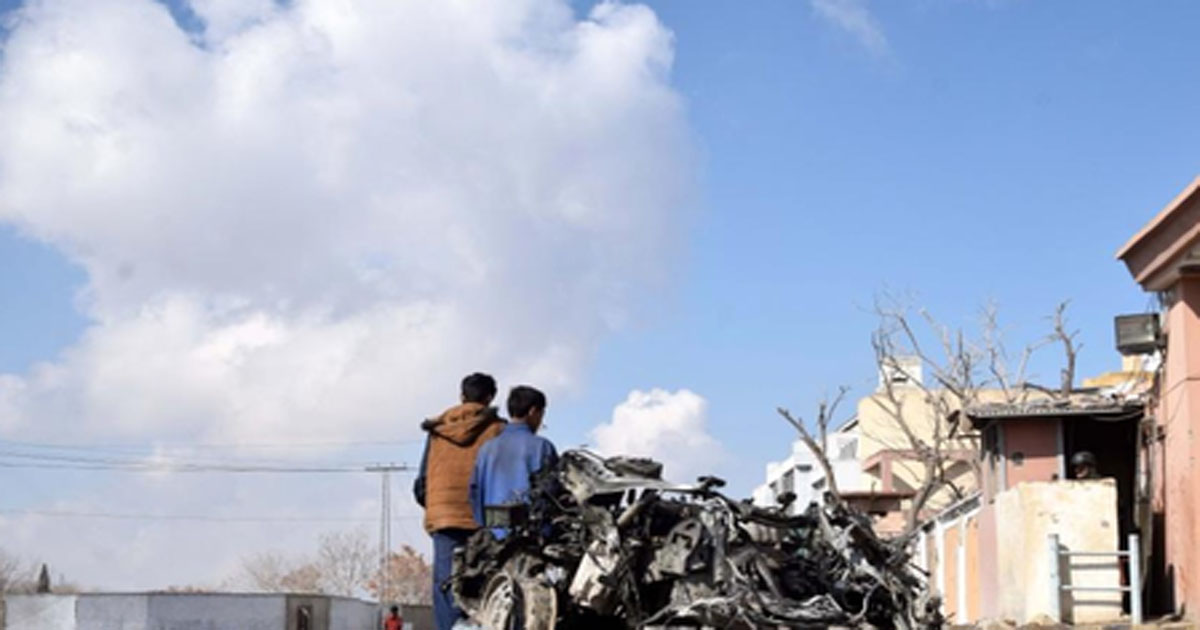
Quetta, April 9: At least one young man was killed, and several women were injured in a drone strike carried out by Pakistani forces in the Mastung district of Balochistan, local media reported on Thursday.
Citing reports, The Balochistan Post stated that Pakistani forces targeted a house in the Kurdgap area of Mastung with a drone, fatally injuring Abdul Samad, while women in the house were also wounded.
Abdul was transferred to Quetta for medical treatment when he succumbed to his injuries on the way.
Additionally, the women injured in the attack were shifted to Quetta for further medical care, following initial treatment at a local hospital.
In recent days, several Pakistani forces and Special Service Groups personnel were reportedly killed in attacks by Baloch armed groups in the area, prompting the forces to launch a large-scale operation, which is underway.
Reports suggest that this is not the first time that civilians were impacted by drone attacks by Pakistani forces in Balochistan, and underscores a recurring concern.
Several human rights organisations, including the Human Rights Commission of Pakistan, as well as Baloch political parties, have voiced grave concern over the targeting of civilians in these attacks, calling on the government to act immediately to prevent further incidents in Balochistan.
Last week, at least three members of a Baloch family, including a child, were killed in mortar fire by Pakistani forces in Balochistan, according to leading human rights organisations.
Paank, the Baloch National Movement’s Human Rights Department, mentioned that the tragic incident occurred on the evening of March 31 in the Bungul Bazar area of Awaran district.
It added that Pakistani security forces deployed heavy weaponry, including mortar shelling, in areas close to civilian populations following an attack on a nearby military camp carried out by Baloch armed groups.
During this exchange, one mortar shell struck a residential house in Bungul Bazar, killing three members of the same family on the spot.
The deceased were identified as 60-year-old Muhammad Umar, 57-year-old Faiza, and their daughter, Mahzaib Baloch, a fifth-grade student.
Condemning the incident, the Baloch Voice for Justice (BVJ) said, “The incident highlights potential violations of international humanitarian law, particularly the principles of distinction and proportionality, which obligate all parties to protect civilians and civilian objects.”
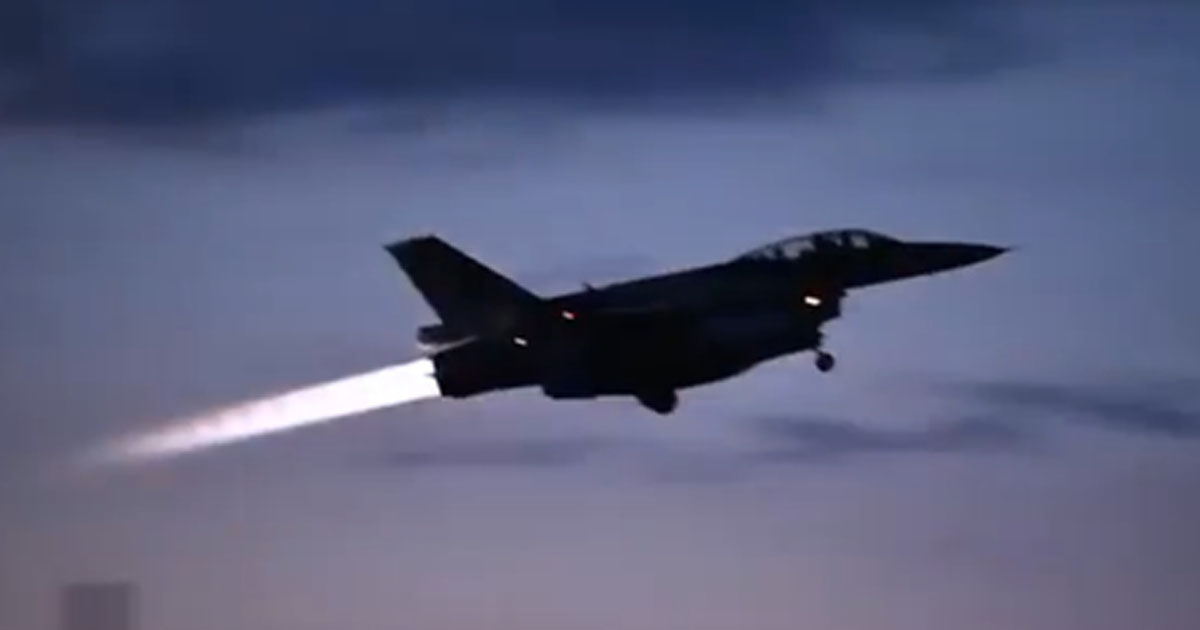
Jerusalem, April 9: The Israel Defence Forces (IDF) said on Thursday that it has killed Ali Yusuf Harshi, personal secretary of Hezbollah Secretary-General Naim Qassem, in Beirut. Harshi was also nephew of the Hezbollah chief who heads the Lebanese group backed by Iran.
In a statement shared on X, the IDF said that it has also hit two key crossings used by Hezbollah for moving weapons south of the Litani River and 10 weapons storage sites, launchers and command centres in southern Lebanon.
“ELIMINATED: Ali Yusuf Harshi, the personal secretary to Hezbollah Secretary-General Naim Qassem in Beirut. A close associate and personal advisor, Harshi played a key role in managing and securing Qassem’s office. The IDF also struck two key crossings used by Hezbollah to move weapons south of the Litani River, along with 10 weapons storage sites, launchers and command centers in southern Lebanon,” IDF posted on X.
The development comes a day after the US and Iran announced a two-week ceasefire agreement.
Earlier, IDF claimed it has killed a Hamas terrorist operating under the guise of a journalist. The IDF claimed that Muhammad Samir Muhammad Washah was actively involved in planning attacks against IDF troops and posed a threat to forces in the area.
In a post on X, IDF stated, “ELIMINATED: Muhammad Samir Muhammad Washah, a Hamas terrorist operating under the guise of an Al Jazeera journalist. Washah, a key terrorist in Hamas’ rocket & weapons production HQ, was also involved in the production and transfer of weapons through Gaza. The terrorist was actively involved in planning attacks against IDF troops & posed a concrete threat to forces in the area.”
On Wednesday, IDF Chief of the General Staff LTG Eyal Zamir, overseeing the wave of strikes against Hezbollah, said that Israel will continue to strike Hezbollah and use every operational opportunity, according to his statement shared by IDF on X.
He further said, “We will not compromise the security of the residents of northern Israel. We will continue to strike with determination.”
The IDF said on Wednesday that it has completed the largest coordinated strike in Lebanon since the start of Operation Roaring Lion. According to the statement, IDF hit more than 100 Hezbollah headquarters, military arrays and command-and-control centers in Beirut, Beqaa and southern Lebanon.
“In 10 minutes, the IDF completed the largest coordinated strike across Lebanon since the start of Operation Roaring Lion. The strike targeted 100+ Hezbollah headquarters, military arrays, and command-and-control centers in Beirut, Beqaa and southern Lebanon, including: Intelligence command centers and central headquarters used planning terror attacks, Infrastructure of firepower and naval arrays, responsible for launching missiles, Assets of the Radwan Force, and the Aerial unit—Hezbollah’s elite units,” IDF posted on X.
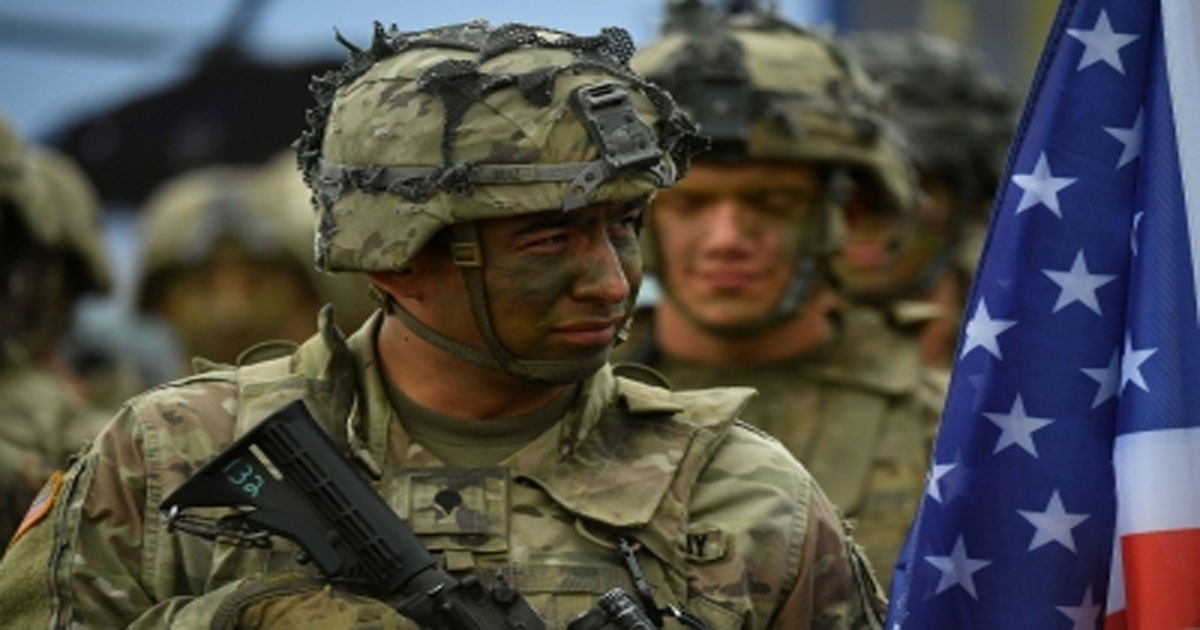
Washington, April 9: The United States will maintain full military readiness in the Middle East despite a two-week ceasefire with Iran, the White House said, signalling that Washington is prepared for a rapid escalation if negotiations falter.
Officials said no immediate drawdown of US forces is planned, even as diplomatic efforts begin following weeks of intense military operations.
Asked what to expect from US troops during the ceasefire window, a reporter queried: “What we should expect from U.S. troops in theatre for the next two weeks and beyond?”
White House Press Secretary Karoline Leavitt said the administration is taking a cautious approach.
“We’re not going to move anything immediately… in the meantime, we’re going to ensure that our military is always at the ready of the commander in chief,” she said.
She referred operational specifics to the Pentagon but made clear that US forces will remain in place as negotiations proceed.
The posture reflects concerns within the administration that the ceasefire could break down, particularly given ongoing regional tensions and uncertainty over Iran’s internal command structures.
“This is a fragile truce. Ceasefires are fragile by nature,” Leavitt said, warning that implementation could face disruptions in the coming days.
The ceasefire, announced after 38 days of US military operations against Iran, has opened a two-week diplomatic window aimed at securing a longer-term agreement.
However, Washington has emphasised that military preparedness remains central to its strategy, both as a deterrent and as leverage in negotiations.
The White House has argued that sustained military pressure forced Iran to accept the ceasefire in the first place.
“The President’s maximum pressure and the leverage created by the success of Operation Epic Fury led to the Iranian regime asking for and ultimately agreeing to a ceasefire proposal,” Leavitt said.
At the same time, officials acknowledged that the operational impact of US strikes on Iran could complicate the ceasefire’s early stages.
One reporter raised concerns about reports of renewed activity inside Iran, asking about explosions and air defence activation in multiple cities.
Leavitt said she had not yet verified those reports but pointed to a broader issue.
“One of the results of Operation Epic Fury was that we completely dismantled Iran’s command and control center, which makes it difficult for them to pass messages up and down the chain,” she said.
The disruption, she suggested, could affect Iran’s ability to coordinate compliance with the ceasefire, at least in the short term.
The administration has also said that many of Iran’s remaining leaders are operating under constraints following the strikes, further complicating internal coordination.
In addition to military effects, questions were raised about the political consequences inside Iran, particularly whether the conflict had led to greater freedoms for its population.
Asked directly whether “regime change has led to more freedoms for the Iranian people,” Leavitt said it was too early to draw conclusions.
“I think that’s a question that’s being asked a little bit too early… ” It’s something that has yet to be seen,” she said.

Create a war room to ensure cleanliness, focus on field visits, instructions for cleanliness in Mumbai area: Municipal Commissioner

Pakistani forces’ drone strike kills one, injures dozens in Balochistan

‘Respected Modi ji, please save West Bengal’ poster at PM’s Asansol rally draws attention

Passengers Fume After 15-Coach Virar-Dadar Fast Local Fails To Stop At Bhayandar Station During Peak Hour Travel: Mumbai Local

Major Crackdown On Illegal Hawkers In Mumbai; Video Shows Clean-Up Drive Near Infiniti Mall In Oshiwara

Married Mumbai Woman Mocked In Andheri Society Over ‘Lift Kissing’ CCTV Video, Files Police Complaint

LPG Crisis In Maharashtra: Cyber Crime On Rise Amid Shortage, 2 Women Lose ₹4 Lakh In ‘Gas Update’ Online Scam In Kalyan-Dombivli

Dhurandhar 2 Box Office Collection Day 1: Ranveer Singh Starrer Takes An Exceptional Opening; Crosses ₹100 Crore Mark

Mumbai Police Busts Fake Apple Accessories Racket In Ghatkopar, ₹16.33 Lakh Goods Seized; Six Booked

Thane Horror: Man Slashed With Chopper In Naupada For Refusing ‘Vargani’, Caught On Camera
-

 Crime4 years ago
Class 10 student jumps to death in Jaipur
-

 Maharashtra2 years ago
Mumbai Local Train Update: Central Railway’s New Timetable Comes Into Effect; Check Full List Of Revised Timings & Stations
-

 Maharashtra1 year ago
Mumbai To Go Toll-Free Tonight! Maharashtra Govt Announces Complete Toll Waiver For Light Motor Vehicles At All 5 Entry Points Of City
-

 Maharashtra2 years ago
False photo of Imtiaz Jaleel’s rally, exposing the fooling conspiracy
-

 National News1 year ago
Ministry of Railways rolls out Special Drive 4.0 with focus on digitisation, cleanliness, inclusiveness and grievance redressal
-

 Maharashtra1 year ago
Maharashtra Elections 2024: Mumbai Metro & BEST Services Extended Till Midnight On Voting Day
-

 National News2 years ago
J&K: 4 Jawans Killed, 28 Injured After Bus Carrying BSF Personnel For Poll Duty Falls Into Gorge In Budgam; Terrifying Visuals Surface
-

 Crime1 year ago
Baba Siddique Murder: Mumbai Police Unable To Get Lawrence Bishnoi Custody Due To Home Ministry Order, Says Report