
Business
How Adani’s Rs 30,000 crore Bhagalpur power project will change Bihar’s fortunes forever

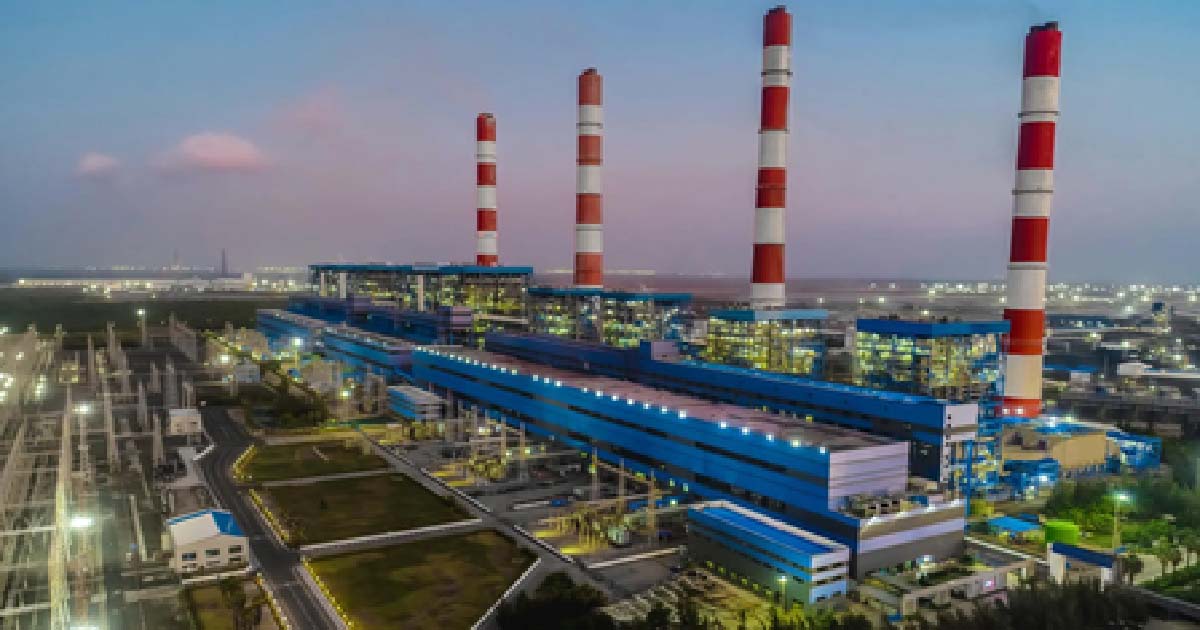
Ahmedabad/New Delhi, Nov 7: The 2,400 MW Bhagalpur Power Project, being developed by the Adani Group with an outlay of Rs 30,000 crore, marks a turning point in Bihar’s economic story — bridging its energy gap, reviving industry, and creating opportunities for its 13.5 crore citizens.
For the first time in decades, the state is witnessing a wave of serious private investment.
The plain fact is that for over half a century, Bihar has remained on the margins of India’s industrial story. Despite its demographic strength and strategic location, the state has struggled to attract private investment or build a sustainable industrial base.
The data tell a sobering truth: Bihar’s per capita GDP stands at barely $776, while its per capita power consumption — 317 kilowatt hours (kWh) — is the lowest among major Indian states.
In contrast, Gujarat consumes over 1,980 kWh per capita and has a GDP per capita of $3,917.
This is not a mere coincidence. Power and prosperity move together. Where there is reliable electricity, industries grow, jobs are created, and incomes rise.
Where there isn’t, human potential migrates — literally. Bihar today supplies nearly 34 million workers to other states; its youth are forced to seek livelihoods elsewhere because industry within the state has no power to thrive.
It is against this backdrop that the Bhagalpur (Pirpainti) Power Project, being developed by the Adani Group with an investment commitment of Rs 30,000 crore, takes on historic significance. It is not just a project — it is Bihar’s opportunity to plug into India’s growth grid and finally claim its share of industrial progress.
Bihar has seen little private industrial activity in half a century. In the past five years alone, it has recorded virtually no new large-scale projects. The state’s dependence on agriculture remains high — nearly 50 per cent of its working population is engaged in farming, forestry, or fishing, while only 5.7 per cent are employed in manufacturing.
The 2,400 MW Bhagalpur Power Project, originally conceived by the Bihar State Power Generation Company Ltd (BSPGCL) in 2012, was revived by the government in 2024 through a transparent e-bidding process after earlier attempts failed.
Four credible bidders — Adani Power, Torrent Power, Lalitpur Power Generation, and JSW Energy — participated. Adani Power emerged as the lowest bidder at Rs 6.075 per kWh, a tariff lower than comparable bids in Madhya Pradesh (Rs 6.22–Rs 6.30 per kWh).
Notably, no land transfer was involved. The land, acquired over a decade ago for the project, remains fully owned by the Bihar government, leased at a nominal rent under the Bihar Industrial Investment Promotion Policy 2025. After the project term, it reverts automatically to the state.
In an era where investor confidence depends on transparency and governance, the Bhagalpur model stands out as a template for responsible investment — balancing public ownership with private efficiency.
Bihar’s electricity demand has grown sharply in recent years, but supply has not kept pace. The state’s installed generation capacity of about 6,000 MW lags behind its peak demand of 8,908 MW (FY25), forcing it to import power from the national grid.
According to the Central Electricity Authority (CEA), the demand is projected to almost double to 17,097 MW by FY35. Without new generation projects, the state risks widening its energy deficit — limiting industrial expansion, weakening job creation, and constraining overall growth.
The Bhagalpur project can help fill this critical gap. By adding 2,400 MW to Bihar’s grid, it will supply nearly one-fourth of the state’s projected additional power needs over the next decade, according to people close to the development.
Moreover, infrastructure investments of this magnitude generate vast employment. As housing and infrastructure expert V. Suresh notes, every Rs 1 crore invested in infrastructure creates 200–250 man-years of employment across 70 trades.
By that metric, the Bhagalpur project alone could create millions of man-days of work — offering Bihar’s unskilled and semi-skilled workers local opportunities in construction, logistics, operations, and allied services.
According to people in the know, a reliable power supply will also open the door to downstream industries, expansion of manufacturing zones, and the development of logistics and transport corridors—unlocking Bihar’s potential in food processing, textiles, engineering, and MSMEs.
Bihar’s challenge has never been its people — it has been its power. The Bhagalpur project signals a crucial shift in the state’s development trajectory: from subsidy-driven survival to investment-led growth. It embodies what Bihar needs most — confidence from credible investors, infrastructure that scales, and energy that empowers.
For too long, Bihar’s youth have left home to light up other states’ factories and cities. The Bhagalpur project could finally begin to reverse that flow — bringing power, purpose, and prosperity back to where they belong.


New Delhi, April 17: A high-level government committee, supported by the Petroleum and Natural Gas Regulatory Board (PNGRB), has recommended removing excise duty on Compressed Natural Gas (CNG) to lower prices and promote consumption of the green fuel to meet India’s target of achieving a 15 per cent share of natural gas in the fuel mix by 2030.
The key recommendations include removing the 14 per cent excise duty to make CNG a more attractive fuel option and also lowering GST on CNG vehicles to 5 per cent to bring them on par with electric vehicles to accelerate adoption.
The recommendations favour maintaining a competitive price difference between CNG and petrol so that consumers are encouraged to switch to the green fuel.
The tax relief on natural gas is anticipated to impact roughly 1.9 crore households and 38.41 lakh potential users.
These proposals aim to address the currently high taxes, such as the 14 per cent excise duty and state VAT, which have made CNG less competitive in certain regions, particularly in the southern states.
Meanwhile, the government has also been encouraging households to switch to piped natural gas (PNG) from LPG as the West Asia crisis has disrupted supply chains. The expansion of piped natural gas (PNG) has gained momentum, with about 4.58 lakh new PNG connections being gasified and about 5.1 lakh additional customers registering for new connections since March this year.
Till April 15, about 35,000 PNG consumers have surrendered their LPG connections via MYPNGD.in website. States have been advised to facilitate new PNG connections for domestic and commercial consumers.
The government is encouraging natural gas adoption through synergy between the PNGRB and states as part of India’s transition toward a cleaner and more sustainable energy future. As part of the strategy to increase the share of natural gas in the country’s energy mix, the expansion of the City Gas Distribution (CGD) network through Piped Natural Gas (PNG) connections has emerged as one of the key performing areas.
Spearheaded by entities authorised by the PNGRB, the CGD network now spans 307 geographical areas (GAs), covering nearly 100 per cent of the country’s geographical area except islands, touching around 784 districts across 34 states and Union Territories. The government has undertaken a series of policy and regulatory measures to catalyse growth in this sector.
These measures range from allocating administered price domestic gas and easing supply mechanisms to mandating PNG provisions in government and defence residential complexes, granting Public Utility status to CGD projects, and directing the CPWD and the NBCC to include PNG provisions in all government residential complexes.

Mumbai, April 16: The Indian stock markets opened on a higher note on Thursday, with the equity benchmarks mirroring global cues amid hopes of easing geopolitical tensions between Washington and Tehran.
Sensex opened 566 points or 0.73 per cent higher at 78,677 in opening trade, while Nifty began the session at 24,385, up 154 points or 0.64 per cent. Sectorally, gains were led by realty, media, consumer durables and financial stocks.
Category-wise, small-cap and mid-cap stocks were the top gainers, with the Nifty Smallcap 100, Nifty Smallcap 250 and Nifty Midcap 100 rising up to 1 per cent in early trade.
On Wednesday, FIIs remained net buyers to the tune of approximately Rs 666 crore, while DIIs turned net sellers with outflows of around Rs 569 crore.
According to analysts, volatility could pick up again depending on global developments and upcoming triggers.
After the recent sharp rally, the market may witness some consolidation or profit booking at higher levels, they added.
In contrast, oil commodities traded on a firm note, with Brent crude futures at $94.92 per barrel, down 0.03 per cent, while US WTI crude traded at $91.52, up 0.25 per cent.
On the global front, both US and Asian markets showed positive momentum. Japan’s Nikkei was trading over 2 per cent higher, Hang Seng climbed more than 1 per cent, and South Korea’s KOSPI was up about 2 per cent.
In the US overnight, Wall Street’s major indices — the S&P 500 and the Nasdaq — ended 0.80 per cent and 1.6 per cent higher, respectively.
Meanwhile, the US President said that China is ‘very happy’ with the permanent opening of the Strait of Hormuz.
“I am doing it for them also – and the world. This situation will never happen again. They have agreed not to send weapons to Iran,” he said on his social media platform, Truth Social.
However, the war has resulted in the largest-ever disruption of global oil and gas supplies by choking traffic through the strait, pushing crude prices to nearly $120 per barrel.

Mumbai, Gold prices remained largely steady on Wednesday as improving prospects of easing geopolitical tensions between the United States and Iran kept investor sentiment in check.
During early trade, MCX gold May futures were marginally higher by 0.02 per cent at Rs 1,53,305 per 10 grams.
Commenting on gold technical outlook, experts said that a sustained move above Rs 1,55,000 could revive momentum toward Rs 1,57,000-Rs 1,58,000.
“On the downside, a break below Rs 1,54,000 may lead to a corrective move toward Rs 1,52,000 and further to Rs 1,50,000,” an analyst stated.
Silver prices, however, saw stronger buying interest, with MCX silver May futures rising 0.83 per cent to Rs 2,54,842 per kg.
“Resistance is placed at Rs 2,60,000–Rs 2,63,000, with further upside toward Rs 2,68,000–Rs 2,70,000,” a market expert said.
“A sustained move above these levels could strengthen momentum and support further gains. On the downside, a break below Rs 2,48,000 may lead to a corrective move toward the Rs 2,44,000–Rs 2,40,000 range,” as per an analyst.
In the previous session, gold had ended flat at Rs 1,53,216 per 10 grams, while silver futures slipped 0.1 per cent to Rs 2,25,499 per kg.
Globally, the yellow metal held on to its recent gains amid optimism that Washington and Tehran could move towards a negotiated settlement to the conflict that began on February 28.
The easing of tensions has reduced fears of a sharp energy-supply shock, which had earlier raised concerns about inflationary pressures.
Spot gold hovered near $4,850 an ounce after rising as much as 0.6 per cent during the session. The metal had surged over 2 per cent in the previous trading session on expectations that the US and Iran may soon hold a second round of ceasefire talks.
US President Donald Trump has indicated that negotiations could resume “over the next two days,” further boosting hopes of a diplomatic breakthrough.
Despite the recent stability, gold has faced pressure in recent weeks, falling nearly 8 per cent since the conflict began.
Early in the crisis, a liquidity squeeze prompted investors to offload bullion holdings to cover losses in other asset classes.

Municipal Commissioner (Western Suburbs) Dr. Vipin Sharma reviewed Manohar Wiman Desai Hospital in Malad

Mumbai: Head of gang who made children dress up as girls arrested, major operation by Crime Branch

BJP leader Nazia Elahi’s misbehavior in Mumbai Lenskart store, appeal to reveal religious identity

Mumbai: Demand to stop unnecessary rounding of animals before Eid-ul-Azha, Abu Asim Azmi also demands action from DGP Sadanandate

Massive Blaze Erupts Inside Bus At Mumbai Wadala RTO; No Injuries Reported

Dhurandhar 2 Box Office Collection Day 9: Ranveer Singh Starrer Earns ₹41.55 Crore On Its Second Friday; Enters ₹700 Crore Club

Bharti Airtel Receives ₹1,74,000 Penalty Notice From DoT For Subscriber Verification Lapses

Mumbai: 28-Year-Old Ghatkopar Woman Killed By Speeding Tanker While Crossing Road, Driver Arrested

Thane Horror: Man Slashed With Chopper In Naupada For Refusing ‘Vargani’, Caught On Camera

Chilling Highway SCAM In Maharashtra! Mumbai Man Cornered By Fake Recovery Agents Claiming ₹10 Lakh Dues Near Lonavala
-

 Crime4 years ago
Class 10 student jumps to death in Jaipur
-

 Maharashtra2 years ago
Mumbai Local Train Update: Central Railway’s New Timetable Comes Into Effect; Check Full List Of Revised Timings & Stations
-

 Maharashtra2 years ago
Mumbai To Go Toll-Free Tonight! Maharashtra Govt Announces Complete Toll Waiver For Light Motor Vehicles At All 5 Entry Points Of City
-

 Maharashtra2 years ago
False photo of Imtiaz Jaleel’s rally, exposing the fooling conspiracy
-

 National News2 years ago
Ministry of Railways rolls out Special Drive 4.0 with focus on digitisation, cleanliness, inclusiveness and grievance redressal
-

 Maharashtra1 year ago
Maharashtra Elections 2024: Mumbai Metro & BEST Services Extended Till Midnight On Voting Day
-

 National News2 years ago
J&K: 4 Jawans Killed, 28 Injured After Bus Carrying BSF Personnel For Poll Duty Falls Into Gorge In Budgam; Terrifying Visuals Surface
-

 Crime2 years ago
Baba Siddique Murder: Mumbai Police Unable To Get Lawrence Bishnoi Custody Due To Home Ministry Order, Says Report