
International News
Hamas releases Israeli-American hostage, third on Saturday


Gaza Strip, Feb 1: A 65-year-old Israeli-American hostage, Keith Siegel, was freed by Hamas on Saturday after 484 days in captivity, marking the third release of the day.
The Israeli Defense Forces (IDF) confirmed his release, stating that medical officials were assessing his condition at an initial reception point in southern Israel.
Siegel was abducted along with his wife, Aviva, from Kibbutz Kfar Aza during Hamas’ attack on October 7, 2023. While Aviva was freed in a November 2023 ceasefire-hostage deal, Keith remained in captivity until now.
“After 484 days, Keith has finally been released from captivity,” the IDF stated in a post on X.
Earlier in the day, Hamas also released two other hostages — 54-year-old Israeli-French citizen Ofer Calderon and 35-year-old Israeli civilian Yardan Bibas. The Red Cross facilitated their transfer from Hamas custody to the Israeli military.
Following their release, all three hostages were taken to the IDF’s Reim base near the Gaza border, where they reunited with their families before being flown to hospitals in central Israel for further medical assessments. Emotional videos of these reunions were shared by the IDF.
The latest releases follow the return of three other hostages — Agam Berger, Arbel Yehud, and Gadi Moses — on Thursday.
Earlier in the day, Israeli Prime Minister Benjamin Netanyahu welcomed them home and credited Israel’s military efforts and firm stance in negotiations for their safe return.
“This release was achieved, first of all, thanks to our heroic soldiers, and it was also achieved thanks to the steadfast and determined stand that we took during the negotiations,” Netanyahu stated.
The hostage releases were part of the fourth batch under a negotiated prisoner exchange and ceasefire deal. The transfer was coordinated with international mediators to ensure safe passage.

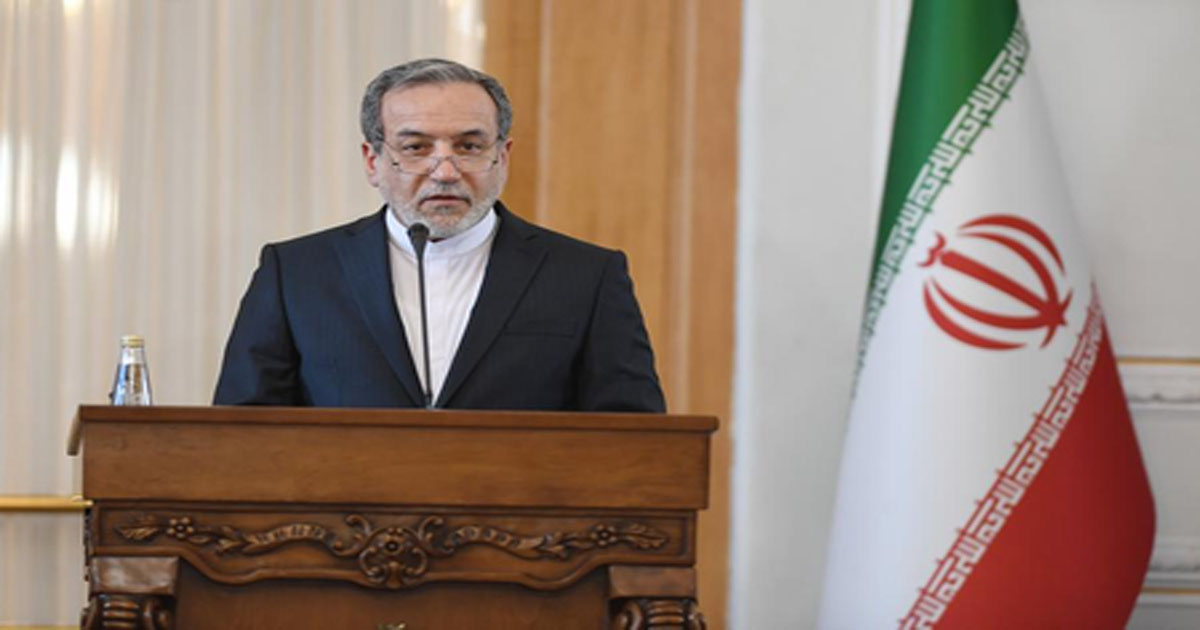
Tehran, April 8: Iran on Wednesday indicated its willingness to halt its military response provided that attacks against it are stopped, while also announcing a temporary opening of the strategically vital Strait of Hormuz for a period of two weeks.
In a statement, Iranian Foreign Minister Seyed Abbas Araghchi said the development comes at a time when ceasefire negotiations are currently underway, signalling a possible de-escalation in ongoing tensions.
He further stated that a two-week window would be provided during which vessels would be allowed to safely pass through the Strait of Hormuz, subject to proper coordination with Iranian authorities and adherence to operational conditions.
Explaining the context of the move, the Iranian Foreign Minister said that the decision was taken “considering the request by the US for negotiations based on its 15-point proposal as well as announcement by POTUS about acceptance of the general framework of Iran’s 10-point proposal as a basis for negotiations.”
He added that Iran’s position remains conditional and dependent on reciprocal actions.
“If attacks against Iran are halted, our Powerful Armed Forces will cease their defensive operations. For a period of two weeks, safe passage through the Strait of Hormuz will be possible via coordination with Iran’s Armed Forces and with due consideration of technical limitations,” Araghchi said, citing the stance of Iran’s Supreme National Security Council.
Meanwhile, Trump also announced that he has agreed to suspend planned military strikes on Iran for two weeks.
“Subject to the Islamic Republic of Iran agreeing to the complete, immediate, and safe opening of the Strait of Hormuz, I agree to suspend the bombing and attack of Iran for a period of two weeks,” he said, describing the move as part of “a double-sided ceasefire”.
The announcement signals a temporary halt in what had been shaping up as a major escalation in the Gulf, with Trump asserting that US military goals had already been achieved.
“The reason for doing so is that we have already met and exceeded all Military objectives, and are very far along with a definitive Agreement concerning long-term peace with Iran, and peace in the Middle East,” he said.
Trump said Washington had received “a 10-point proposal from Iran,” which he described as “a workable basis on which to negotiate”.
“Almost all of the various points of past contention have been agreed to between the United States and Iran,” he added, suggesting that the pause would allow both sides to finalise terms.
“A two-week period will allow the Agreement to be finalised and consummated,” Trump said.
He framed the development as a breakthrough in efforts to stabilise the region, saying it was “an honour to have this long-term problem close to resolution.”
Trump’s post on Truth Social media came less than 90 minutes before his 8 p.m. EST deadline, wherein he had asked Iran to agree to a deal or face consequences to be bombed to the “Stone Age”.

Washington, April 8: Oil prices dropped sharply after US President Donald Trump said he would pause planned military strikes on Iran for two weeks, easing fears of a wider conflict in the energy-rich Gulf region.
US crude futures fell below $100 a barrel, reversing recent gains driven by weeks of tensions around the Strait of Hormuz, a key global oil transit route, The Wall Street Journal said on Tuesday (Local time).
The decline followed Trump’s announcement that he would suspend attacks on Iran, subject to Tehran reopening the strait, according to the Journal.
Stock markets also reacted positively. Futures tied to major US indexes rose more than 2 per cent, signalling investor relief after days of volatility linked to the crisis, it reported.
“Stock futures are surging and oil prices falling after President Trump posted on Truth Social that he would suspend attacks on Iran for two weeks,” the report said.
The Strait of Hormuz, through which roughly a fifth of global oil flows, has been at the centre of the conflict. Iran had restricted passage for several weeks, contributing to rising prices and supply concerns, according to reports by The Hill.
Markets had been on edge ahead of Trump’s deadline for Iran to reach a deal, with traders fearing a major escalation could disrupt shipments across the Gulf and send prices sharply higher, the Journal noted.
Instead, the announcement of a potential ceasefire triggered a broad rally across global markets. Asian stocks also climbed, with Japan’s Nikkei and South Korea’s Kospi advancing after the news.
Investors had largely treated Trump’s earlier threats as negotiating tactics. “Some investors had bet that Trump… could extend the deadline to reopen the Strait of Hormuz, something he has done multiple times in the past month,” the daily reported.
Oil prices had surged in recent weeks amid fears that the strait could be closed or severely restricted. The waterway handles shipments critical to global supply chains, including crude oil and liquefied natural gas.
The easing of tensions also lifted other asset classes. Gold prices rose, reflecting continued uncertainty, while equities gained as the risk of immediate conflict receded, according to the Journal.
However, analysts cautioned that the situation remains fragile. The proposed two-week ceasefire depends on Iran agreeing to fully reopen the strait and on both sides refraining from further escalation.
Even after the announcement, reports of missile and drone activity in parts of the Gulf raised questions about how durable the pause would be, according to The New York Times.
The broader conflict has already disrupted energy markets for weeks. Limited shipping access and uncertainty over supply have driven price swings and heightened volatility across global markets.
The two-week window now offers a chance for diplomacy to stabilise the situation, but traders remain wary of sudden shifts in policy or military action.
The Strait of Hormuz remains one of the world’s most critical energy chokepoints. Any disruption can have immediate global consequences, particularly for large importers.
For India, which relies heavily on crude imports from the Gulf, sustained volatility in oil prices could impact inflation, currency stability and overall economic growth.
International News
Iran rejects US ceasefire offer, issues 10-point plan calling for permanent end to war

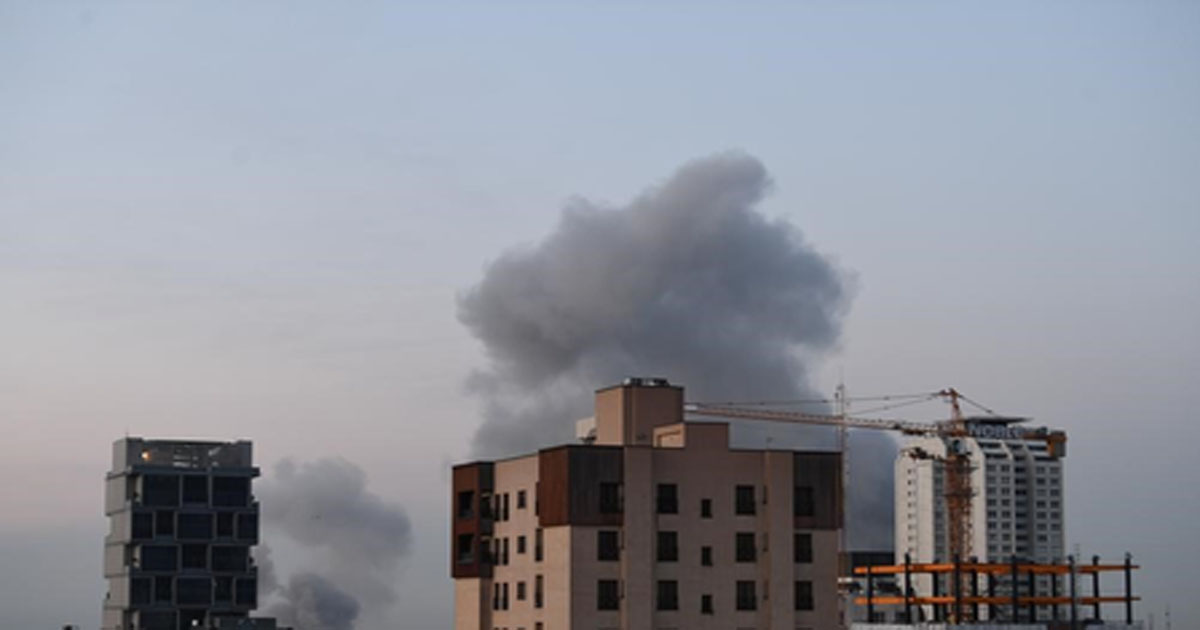
Tehran, April 7: Iran has rejected a US-proposed 15-point peace plan, calling instead for a permanent end to the conflict, the official news agency IRNA reported.
Tehran delivered its response in a 10-point document, citing past experiences as the reason it would not accept a ceasefire, Xinhua news agency reported.
The response outlines Iran’s demands, including ending regional conflicts, establishing safe passage through the Strait of Hormuz, reconstructing war-affected areas, and lifting international sanctions.
The IRNA claimed the text was presented following recent developments in Iran’s western and central regions and the unsuccessful outcome of a US heliborne operation, with US President Donald Trump extending a previously set deadline again and adjusting earlier threats.
In a press conference on Monday, Trump called Iran’s 10-point response a “significant step” but said it was “not good enough.”
Also on Monday, Iran’s Foreign Ministry spokesperson Esmaeil Baghaei said a ceasefire would only give opponents time to regroup and commit further crimes, and “no sane” person would accept it.
In late March, US media reported that Washington sent a 15-point plan to Iran through Pakistan to try to end the war. Iran later rejected the plan, calling it “excessive and disconnected from the realities on the battlefield.”
The Islamic Republic set several preconditions for peace. These include ending US and Israeli aggression, creating mechanisms to prevent future attacks, compensating for war damage, stopping fighting across all fronts in West Asia, and recognizing Iran’s sovereignty over the Strait of Hormuz.
On February 28, Israel and the United States launched joint attacks on Tehran and other Iranian cities, killing Supreme Leader Ali Khamenei, senior military commanders, and civilians. Iran retaliated with missile and drone strikes targeting Israeli and US assets in the Middle East.

Samajwadi Party Appoints Abu Farhan Azmi as Mumbai Maharashtra General Secretary

Maha youth arrested for defamatory video targeting CM Fadnavis over Ajit Pawar plane crash

Iran agrees to open Strait of Hormuz after Trump’s 14-day ceasefire announcement

Oil falls after Trump signals Iran pause

Crude oil prices tank up to 20 pc over Iran ceasefire announcement

Married Mumbai Woman Mocked In Andheri Society Over ‘Lift Kissing’ CCTV Video, Files Police Complaint

LPG Crisis In Maharashtra: Cyber Crime On Rise Amid Shortage, 2 Women Lose ₹4 Lakh In ‘Gas Update’ Online Scam In Kalyan-Dombivli

Dhurandhar 2 Box Office Collection Day 1: Ranveer Singh Starrer Takes An Exceptional Opening; Crosses ₹100 Crore Mark

Thane Horror: Man Slashed With Chopper In Naupada For Refusing ‘Vargani’, Caught On Camera

Mumbai Police Busts Fake Apple Accessories Racket In Ghatkopar, ₹16.33 Lakh Goods Seized; Six Booked
-

 Crime4 years ago
Class 10 student jumps to death in Jaipur
-

 Maharashtra2 years ago
Mumbai Local Train Update: Central Railway’s New Timetable Comes Into Effect; Check Full List Of Revised Timings & Stations
-

 Maharashtra1 year ago
Mumbai To Go Toll-Free Tonight! Maharashtra Govt Announces Complete Toll Waiver For Light Motor Vehicles At All 5 Entry Points Of City
-

 Maharashtra2 years ago
False photo of Imtiaz Jaleel’s rally, exposing the fooling conspiracy
-

 National News1 year ago
Ministry of Railways rolls out Special Drive 4.0 with focus on digitisation, cleanliness, inclusiveness and grievance redressal
-

 Maharashtra1 year ago
Maharashtra Elections 2024: Mumbai Metro & BEST Services Extended Till Midnight On Voting Day
-

 National News2 years ago
J&K: 4 Jawans Killed, 28 Injured After Bus Carrying BSF Personnel For Poll Duty Falls Into Gorge In Budgam; Terrifying Visuals Surface
-

 Crime1 year ago
Baba Siddique Murder: Mumbai Police Unable To Get Lawrence Bishnoi Custody Due To Home Ministry Order, Says Report