
Business
FIIs to resume equity purchases in India as bulls roar: Analysts

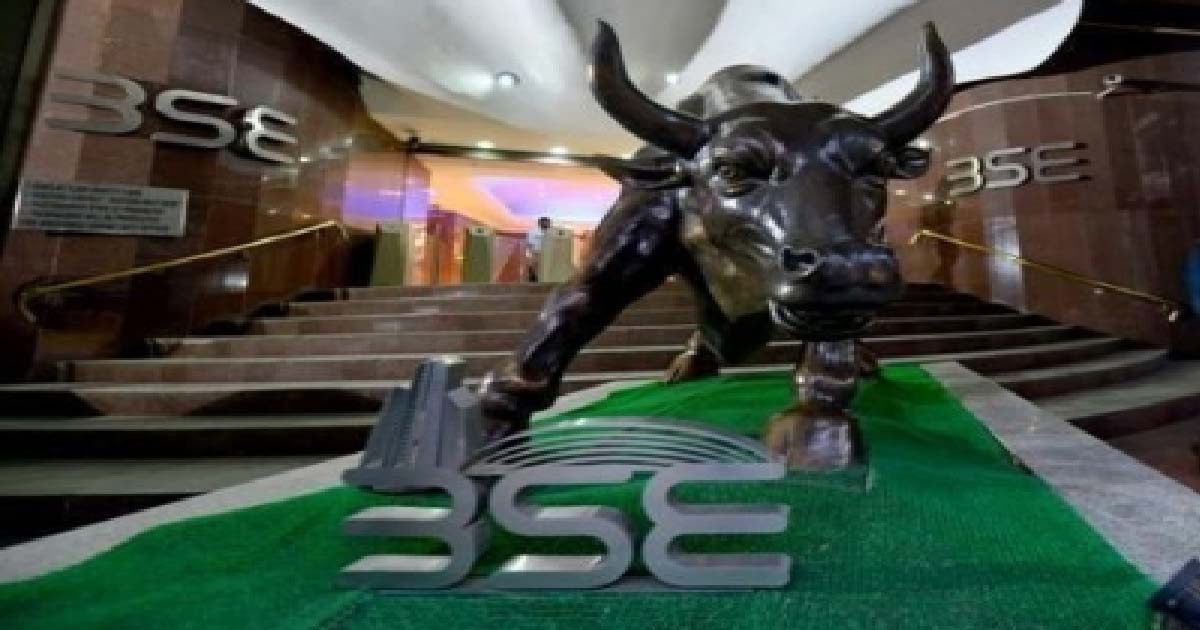
Mumbai, May 12: The ceasefire between India and Pakistan has paved the way for a sharp rally in the market and with this, foreign institutional investors (FIIs) are likely to resume their equity purchases in India, analysts said on Monday.
Sensex and Nifty surged more than 2.7 per cent in the morning trade.
According to market watchers, the prime mover of the rally will now be the FII buying, which has been sustained for 16 continuous days except last Friday when the conflict escalated.
“Domestic macros like expectations of high GDP growth and revival of earnings growth in FY26 and declining inflation and interest rates augur well for the resumption of a rally in the market,” said Dr VK Vijayakumar, Chief Investment Strategist, Geojit Investments Limited.
FIIs favour large caps like ICICI Bank, HDFC Bank, Bajaj Finance, L&T, Bharti, Ultratech, M&M and Eicher. Midcap IT and digital stocks are other segments to watch.
Pharma stocks may come under near-term pressure from US President Donald Trump’s latest announcement regarding reducing prices of drugs in the US.
“There are rumours of impending US deal with China on trade but details are yet to come. If a deal materialises that would be good for the global economy,” said Vijayakumar.
The hallmark of FPI investment in recent days has been the sustained buying by FIIs. FIIs bought equity through the exchanges consecutively for 16 trading days ending 8th May for a cumulative amount of Rs 48,533 crore.
“They sold for Rs 3,798 crore on 9th May when the India-Pak conflict got escalated. Now that ceasefire has been declared, FIIs are likely to resume their equity purchases in India,” said analysts.
It is important to understand that FIIs were continuous sellers in India in the first three months of this year. The big selling began in January (Rs 78,027 crore) when the dollar index peaked at 111 in mid-January.
Thereafter, the intensity of selling declined. FIIs turned buyers in April with a buy figure of Rs 4,243 crore.



Mumbai, Oct 15: Domestic equity benchmarks opened higher on Thursday, defying fragile sentiment amid weakness in technology stocks across the US and Asian markets.
Sensex opened at 72,965.80, up 183.91 points or 0.25 per cent, while Nifty started at 22,671.30, up 48.60 points or 0.21 per cent.
In early trade, sectoral performance was mixed. Nifty IT, Nifty FMCG, Nifty Auto and Nifty Private Bank were top gainers and increased up to almost 2 per cent.
On the other hand, Nifty Metal was the top laggard which declined 1 per cent. Similarly, PSU bank, consumer durables, pharmaceuticals and healthcare indices were traded lower.
Market experts said hotter-than-expected US inflation — which spiked to 3.7 per cent in September from 3.4 per cent in August — has increased the possibility of another rate hike by the US Federal Reserve in October.
The concern triggered big selling in US markets, with tech-heavy Nasdaq correcting 1.88 per cent, they added.
“The fear has spread to South Korea and Japan. Nikkei is down above 4 per cent and Kospi down more than 7 per cent. From the Indian market perspective, the correction in AI stocks is a positive,” according to the experts.
FIIs who have been selling Indian stocks and buying AI stocks will halt this trend.
Technically, Nifty formed a bearish-leaning candle, while RSI stood at 41.66, above its average of 32.01, indicating some recovery in momentum, according to analysts.
On Wednesday, FIIs remained net sellers and offloaded equities worth approximately Rs 1,857 crore, while DIIs provided strong support with net purchases of around Rs 2,670 crore.
Additionally, Wall Street ended lower on Wednesday as US inflation fueled rate-hike concerns, weighing on the Nasdaq and AI. Asian markets were also trading in red zone.
In addition, crude oil prices declined nearly 2 per cent as investors weighed Strait of Hormuz supply risks against US moves to ease shipping costs.
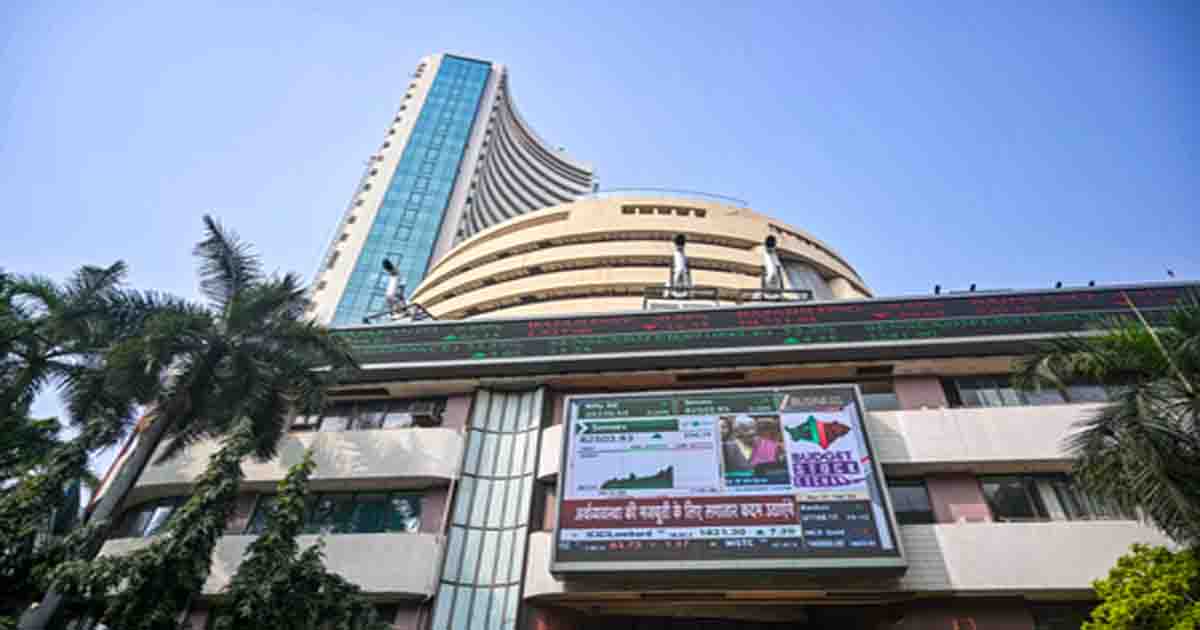
Mumbai, Oct 14: Domestic equity benchmarks opened on a muted note on Wednesday with investors weighing supportive domestic cues against persistent global headwinds.
Nifty began the session at 22,715.75, down 6.20 points or 0.03 per cent. Similarly, Sensex opened at 73,049.76, up 15.98 points or 0.02 per cent.
However, sectoral performance remained mixed with technology stocks leading gains.
Nifty IT emerged as the top gainer, rising more than 1 per cent, followed by Nifty MidSmall IT & Telecom and Nifty FMCG which surged up to 0.38 per cent.
Nifty Media and Nifty Private Bank were also in positive territory.
Meanwhile, Nifty Consumer Durables fell 0.67 per cent. Healthcare-related indices remained under pressure with shedding up to 0.6 per cent.
According to market experts, Tuesday’s sharp rally in the Nifty came as a surprise in an otherwise weak and downtrending market, largely driven by short-covering activity.
The trigger for the upswing was Finance Minister Nirmala Sitharaman’s remarks that the government would carefully review stakeholder feedback on the long-term capital gains (LTCG) tax and securities transaction tax (STT), they added.
The comments raised hopes of potential policy changes, boosting investor sentiment.
Analysts also highlighted the RBI’s recent measures to curb currency market speculation which helped the rupee appreciate nearly 1.5 per cent over the past two trading sessions.
However, caution persists as the US 10-year Treasury yield remains around 5.2 per cent and Brent crude trades near $106 per barrel, both of which are viewed as significant headwinds for equities.
While these factors could limit the sustainability of the rally, analysts believe sectors such as financials, telecom, metals and automobiles could remain relatively resilient on expectations of healthy second-quarter earnings.
Technically, analysts note that the recent surge has revived hopes of a move towards the 23,200 level.
They further noted that the index is approaching a congestion zone that could challenge further upside momentum. Immediate support is seen around 22,550, while a decisive move above the 22,787-22,880 hurdle could strengthen bullish momentum.
Additionally, Asian equities rebounded after two consecutive sessions of losses, supported by expectations that the US Federal Reserve may adopt a less aggressive approach to interest rate hikes next year.
Crude oil prices advanced as traders assessed supply risks stemming from clashes involving Yemen’s Iran-aligned Houthis and Saudi Arabia, while also monitoring the prospect of increased Russian diesel supplies to global markets.
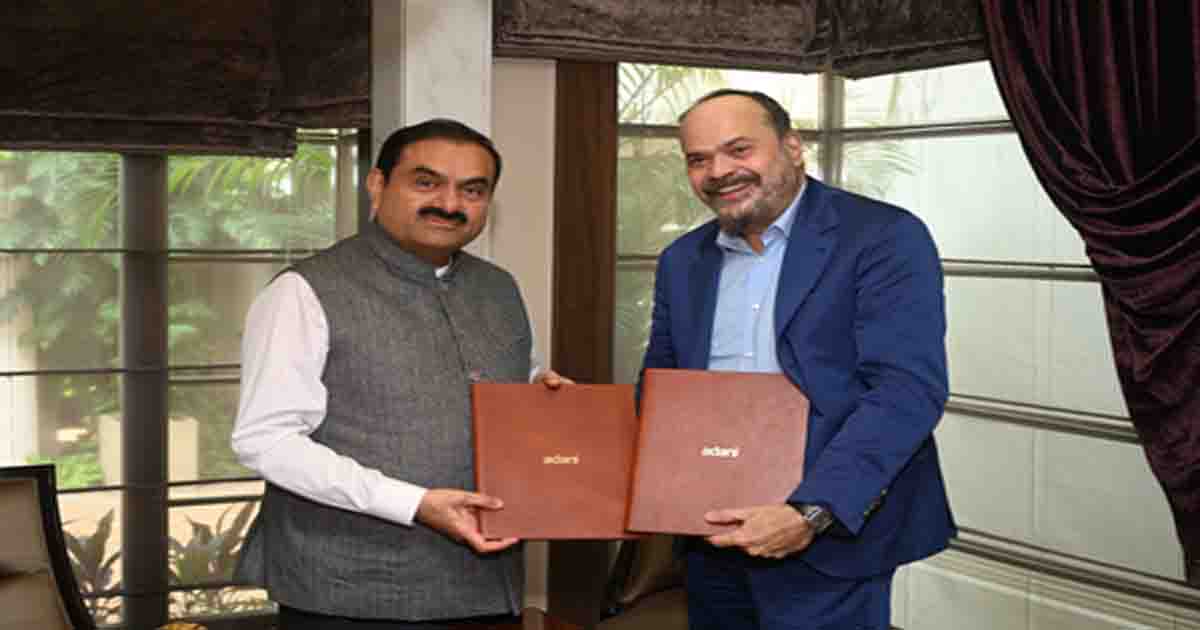
New Delhi, Oct 13: Adani Enterprises Limited (AEL) and global engineering, supply chain and manufacturing company Jabil Inc. on Tuesday said they have signed a non-binding Memorandum of Understanding (MoU) for a proposed 50:50 joint venture to manufacture and assemble artificial intelligence (AI) and data centre equipment in India.
The MoU follows the June 2026 announcement of Adani Group and Jabil’s intent to establish a strategic alliance to develop an AI and data centre infrastructure manufacturing ecosystem in India.
“The AI revolution will demand far more than just breakthroughs in algorithms. It will require an entire new industrial architecture where energy, hyperscale infrastructure, advanced computing and precision manufacturing converge to power the intelligence economy,” Adani Group Chairman Gautam Adani said.
At Adani, “our vision is to expand up the AI value chain evolving from powering and hosting AI infrastructure to engineering and manufacturing the critical systems that will define the next generation of computing”, the billionaire industrialist said.
According to a statement, the proposed joint venture remains subject to execution of definitive agreements, receipt of applicable approvals, and satisfaction of customary conditions.
“Our proposed joint venture with Jabil marks a strategic step towards this future, combining Jabil’s world-class engineering and manufacturing capabilities with Adani’s integrated strengths in energy, infrastructure and data centres to help build the physical backbone of the global AI economy,” said Gautam Adani.
The venture would provide a manufacturing base in India to serve domestic demand and support exports.
The companies estimate the global market opportunity at more than $3 trillion over the next seven years, driven by investment in AI computing.
“The signing of this MoU is the next step forward in our shared efforts to establish a scaled AI infrastructure manufacturing platform in India, a market we believe will become increasingly important for both domestic and global AI infrastructure demand,” Jabil Inc. Chief Executive Officer Mike Dastoor said.
“Integrating Jabil’s 60 years of engineering and manufacturing expertise with Adani’s significant infrastructure and energy capabilities, we can bring our rack-level data centre solutions to more hyperscalers in India and around the world,” he added.
The venture is aligned with Adani Group’s $100 billion commitment to develop 5 GW of green-energy-powered, hyperscale AI-ready data centres by 2035. The proposed venture would add hardware manufacturing to the Group’s presence across infrastructure, energy, logistics and data centres.
The joint venture would manufacture and assemble AI racks, servers, storage and networking equipment used in data centres. The racks would house high-performance computing systems for AI applications and other digital services, the statement said.

BJP pays tribute to ex-President Abdul Kalam, recalls his enduring influence on generations of India’s youth

Rahul, Cong ecosystem want to force regime change: BJP after Neha Bora praises B’desh Gen-Z protest

17 children, one teacher killed after school’s roof collapses in Pakistan’s Peshawar

‘Illegal, ineffective’: Trump under fire for Russia oil deal as Graham Act deadline nears

Salman Khan shares pic with Salim Khan, says he’s the real monster at 91: God’s been kind

INDIA bloc begins protest march against ECI

Maha Congress stages agitation against Gyanesh Kumar

Complaint against Netflix & Mukesh Chhabra for inappropriate language on ‘India’s Got Latent 2’

Delhi court grants three-week interim bail to influencer Swatantra Bhardwaj

Mumbai Cyber Cell arrests 6 members of organized gang in major operation; Beware of cyber fraudsters; Digital arrest has no legal status; DCP Bajrang Bansode
-

 Crime4 years ago
Class 10 student jumps to death in Jaipur
-

 Maharashtra2 years ago
Mumbai Local Train Update: Central Railway’s New Timetable Comes Into Effect; Check Full List Of Revised Timings & Stations
-

 Maharashtra2 years ago
Mumbai To Go Toll-Free Tonight! Maharashtra Govt Announces Complete Toll Waiver For Light Motor Vehicles At All 5 Entry Points Of City
-

 Maharashtra2 years ago
False photo of Imtiaz Jaleel’s rally, exposing the fooling conspiracy
-

 National News2 years ago
Ministry of Railways rolls out Special Drive 4.0 with focus on digitisation, cleanliness, inclusiveness and grievance redressal
-

 Maharashtra2 years ago
Maharashtra Elections 2024: Mumbai Metro & BEST Services Extended Till Midnight On Voting Day
-

 National News2 years ago
J&K: 4 Jawans Killed, 28 Injured After Bus Carrying BSF Personnel For Poll Duty Falls Into Gorge In Budgam; Terrifying Visuals Surface
-

 Crime2 years ago
Baba Siddique Murder: Mumbai Police Unable To Get Lawrence Bishnoi Custody Due To Home Ministry Order, Says Report