
Crime
ED Dossier: Former VVMC Chief Anil Pawar’s Family, Front Companies And Cash Trails Allegedly Laundered Bribes Into Real Estate


Mumbai: The Enforcement Directorate’s (ED) money-laundering investigation into alleged illegal construction and bribery at the Vasai–Virar City Municipal Corporation (VVCMC) has unearthed a complex web of corporate fronts, cash dealings, and layered financial trails allegedly linked to former Vasai-Virar Municipal Commissioner Anil Pawar, his family, and long-time associates. According to the ED’s prosecution complaint (PC), the proceeds of crime (POC) generated through alleged systematic bribe collections for municipal approvals were laundered through a dense network of family-owned firms, benami partnerships, and investment vehicles, ultimately transformed into high-value real estate and warehousing assets.
The agency’s PC, backed by statements recorded under Section 50 of the Prevention of Money-Laundering Act (PMLA), reveals that Pawar’s immediate family including his wife Bharti Pawar, daughters Shrutika and Revti as well as close associates Janardan Pawar, Amol Patil, and Jayesh Patil functioned as the façade of a three-tier laundering system of placement, layering, and integration. This process allegedly involved the direct conversion of illicit cash into share capital, property investments, and corporate inflows camouflaged as legitimate transactions.
The investigation details a complex financial architecture, wherein illicit cash was converted into share capital, property stakes, and corporate inflows camouflaged as legitimate transactions. The ED’s forensic analysis indicates that at least eight corporate entities are allegedly linked to Bharti Pawar through direct investments or partnership stakes. Her declared investments across these firms range between Rs 2.5 crore and Rs 3 crore, excluding substantial unaccounted cash components. The ED has flagged several high-value transactions, including a Rs 2.81 crore worth of land purchased in Alibaug and nearly Rs 3.9 crore in cash investments for warehousing assets. Her immovable holdings include the Shrutika Heights project in Nashik, which reportedly generated Rs 4–5 crore in revenue, land at Ambivali sold for Rs 70 lakh, two Pune flats, agricultural lands in Deola and Sinnar, and a Rs 3.5 crore flat purchased in her mother’s name.
Taking into account both declared and undisclosed assets, investigators estimate the total value of properties linked directly or indirectly to Bharti Pawar and her family at Rs 40–50 crore. Officials allegedly suspect that this intricate pattern of wealth accumulation is tied to illicit proceeds of municipal bribery and other irregular financial dealings during Pawar’s tenure as commissioner.
At the centre of the network lies BSR Realty Pvt Ltd, the Pawar family’s principal real estate firm, registered in the names of Bharti Pawar and her mother, Kumudini Pagar. The company executed projects such as Saidham Apartments and Shrutika Heights, though operational control reportedly rested with Anil Pawar’s associate Janardan Arun Pawar. In her statement, Bharti admitted to providing signed cheque books and OTP access to Janardan while exercising “nominal oversight,” a pattern the ED describes as “proxy directorship and beneficial concealment.”
The ED’s complaint alleges that the Shrutika Heights project alone generated around Rs 4–5 crore in revenue, a substantial portion of which was absent from BSR Realty’s official books. Investigators believe this unaccounted income stemmed from so-called “municipal facilitation fees,” a euphemism for bribe proceeds collected for building permissions. Contracts for projects in Nashik and Satana were routed through J.A. Pawar Builders & Developers, owned by Janardan Pawar, which maintained parallel cash accounts. A search at Janardan’s residence recovered Rs 1.32 crore in unaccounted cash, allegedly indicating partial cash settlements on Pawar’s behalf.
The ED also identified Shrutika Enterprises, ostensibly a stone-crushing and material supply firm with Bharti pawar holding a 25% stake (Rs 52.50 lakh) as a placement channel for funneling cash receipts from Janardan’s accounts into real estate and other investments.
The agency also identified Triquetra Constrotech LLP as another crucial entity, with shareholding distributed among Bharti (40%), Shrutika (25%), Revti (25%), Janardan (9%), and Milind Pagar (1%). ED investigations revealed that the firm, despite having no actual business operations or project execution, maintained active bank accounts, indicating it allegedly acted as a “pass-through entity” to formalise family wealth.
Similarly, Vithai (Vithal) Weaves Pvt. Ltd., a Jalgaon-based textile firm, also came under scrutiny. Shrutika Pawar, the director, claimed her Rs 55 lakh investment came from grandparents’ gifts and jewellery sales, but the ED found no supporting documentation. Despite limited operational involvement, Shrutika received Rs 33 lakh as remuneration, while the firm reported an inflated annual turnover of Rs 40 crore, a discrepancy investigators flagged as “inconsistent with business fundamentals.”
The ED’s investigation has identified Antonov Warehousing Parks Pvt. Ltd. and Dhwaja Warehouses Pvt. Ltd. as key channels for parking unaccounted capital. Subscription records seized by the agency revealed square-foot allocations and payments made in the names of Bharti, Shrutika, and Revti, reflecting a deliberate layering of family wealth through real estate. Payments connected to the Pawar family, totaling Rs 5.2 crore, were traced to these projects, with nearly 75% reportedly routed in cash. The transactions were allegedly coordinated by Anil Pawar through his associate Amol Patil, a practice the ED termed “a textbook case of placement and layering.”
Further scrutiny of the Pawar family’s network revealed systematic use of multiple corporate fronts. Janardan Agri Services Ltd., where Bharti held 90%, was flagged as a “fictitious trading front,” as her declared annual income of Rs 25–30 lakh bore no correlation with actual business activity, inventory, or turnover. A similar scheme emerged in SAPP Ventures and New Front Realty, where Bharti made an investment of Rs 43.21 lakh via cheque. Both companies displayed negligible commercial activity but maintained active financial transactions, underscoring their use as investment placeholders.
Further scrutiny revealed a network of corporate fronts such as Anmol Buildcon, Aadit Asset Holdings Pvt. Ltd., and Aaria Realty, linked to family associates Amol Patil and Jayesh Patil. These entities maintained minimal business activity but facilitated fund routing for family-controlled projects. Notably, consultancy payments to Aadit Asset Holdings were allegedly diverted into warehousing and land acquisitions benefitting the Pawars.
In a recorded statement, Amol Patil admitted receiving Rs 1.37 crore in cash at his Dadar office via Y.S. Reddy, under Anil Pawar’s instructions, to facilitate the Rs 2.81 crore Alibaug land purchase, a transaction in which a significant portion was routed entirely in cash.
Statements from Tushar Pawar, Niranjan Nikam, and Ravindra Nikam corroborated cash movements within the network. Tushar confirmed that he gifted a flat to Shrutika on Anil Pawar’s instructions in Thane, while Niranjan and Ravindra admitted facilitating RTGS transactions and cash deliveries up to Rs 34 lakh. ED recovered handwritten ledgers, blank signed cheques, and digital OTP records linking Bharti’s credentials to Janardan’s execution of transactions, pointing to clear proxy control.
The ED has provisionally attached assets totaling around Rs 71 crore, with approximately Rs 44 crore directly linked to Anil Pawar. The agency has framed the alleged laundering as consequential to predicate offences of extortion and bribery in the municipal approval process. The investigation continues to trace additional undisclosed assets, bank routing, and cross-jurisdictional payment pathways.

Crime
‘Create fear among criminals’: SC tells Delhi Police in suo motu case on recent rape incidents

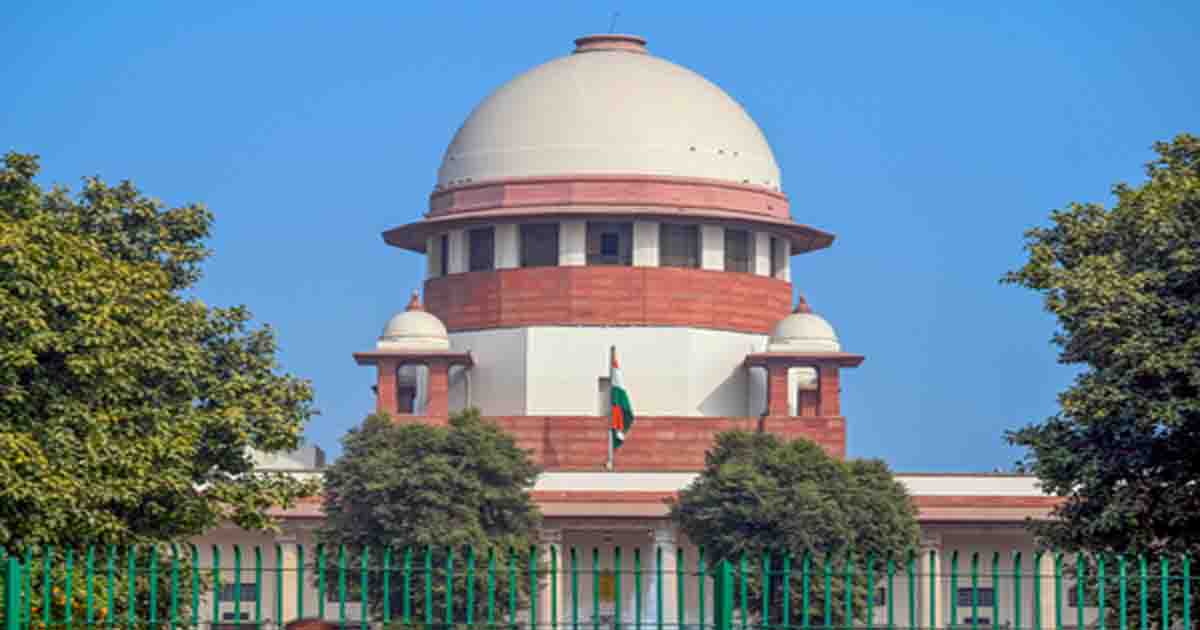
New Delhi, Oct 5: The Supreme Court on Monday directed the Delhi Police and the Union Ministry of Home Affairs (MHA) to place their responses on record within four weeks in its suo motu proceedings concerning recent rape and sexual assault incidents in Delhi-NCR, orally observing that it was important to prevent crimes rather than taking follow-up action.
A Bench of Justices J.B. Pardiwala and K. Vinod Chandran stressed the need for effective preventive measures and continuous monitoring of vulnerable public spaces to ensure the safety of women and children.
The apex court orally remarked that merely putting measures on paper would not be sufficient and said that authorities must take concrete action to prevent crimes.
“We have to work together. We must ensure that every woman in Delhi-NCR should feel safe even at 11 p.m. whether travelling on the roads or the metro,” the Justice Pardiwala-led Bench observed.
It further said that the focus should be on preventing crime rather than merely acting after an offence has taken place.
“What is important is to prevent a crime, not what you do after a crime is committed,” the top court said, stressing that the police must create fear among “goons and anti-social elements” who are prone to committing such crimes.
The Supreme Court also questioned the Delhi Police on the effectiveness of CCTV surveillance in the absence of continuous monitoring and asked whether there was a mechanism for continuous monitoring of vulnerable areas.
It also questioned the absence of a dedicated “war room” for monitoring and responding to incidents, asking how crime could be prevented without such a mechanism.
“You have to create fear in the mind of a person who is ready to commit a crime,” the bench observed, adding that the police were required to instil the fear that committing such offences would have severe consequences.
The proceedings arise from the Supreme Court’s suo motu cognisance of a series of disturbing reports of rape and sexual assault across Delhi-NCR.
In its order passed on September 28, the apex court had expressed serious concern over the safety of public spaces, including parks, roads, buses, metro stations, subways and footbridges, observing that such places could not be allowed to become high-risk zones due to inadequate lighting, poor surveillance, or lax patrolling.
The bench had also sought a comprehensive status report on the safety arrangements in public places, the use of the National Database on Sexual Offenders (NDSO), the Investigation Tracking System for Sexual Offences (ITSSO), the Mission Shakti programme, emergency response systems, women’s helplines, CCTV coverage, women help desks and One Stop Centres.
It had directed the Delhi Police to constitute dedicated teams for each police district to identify vulnerable locations and prepare district-wise vulnerability maps. It had further ordered audits of lighting and CCTV infrastructure and intensified patrolling in identified vulnerable areas.
The proceedings came against the backdrop of several reported sexual offences, including the alleged gang rape of a 17-year-old girl at Aastha Kunj Park and the alleged sexual assault of a minor inside a moving sleeper bus travelling from Greater Noida to Delhi. The apex court had observed that the latter incident raised painful parallels with the 2012 Nirbhaya case.
The matter is now tentatively listed for further hearing on November 16.
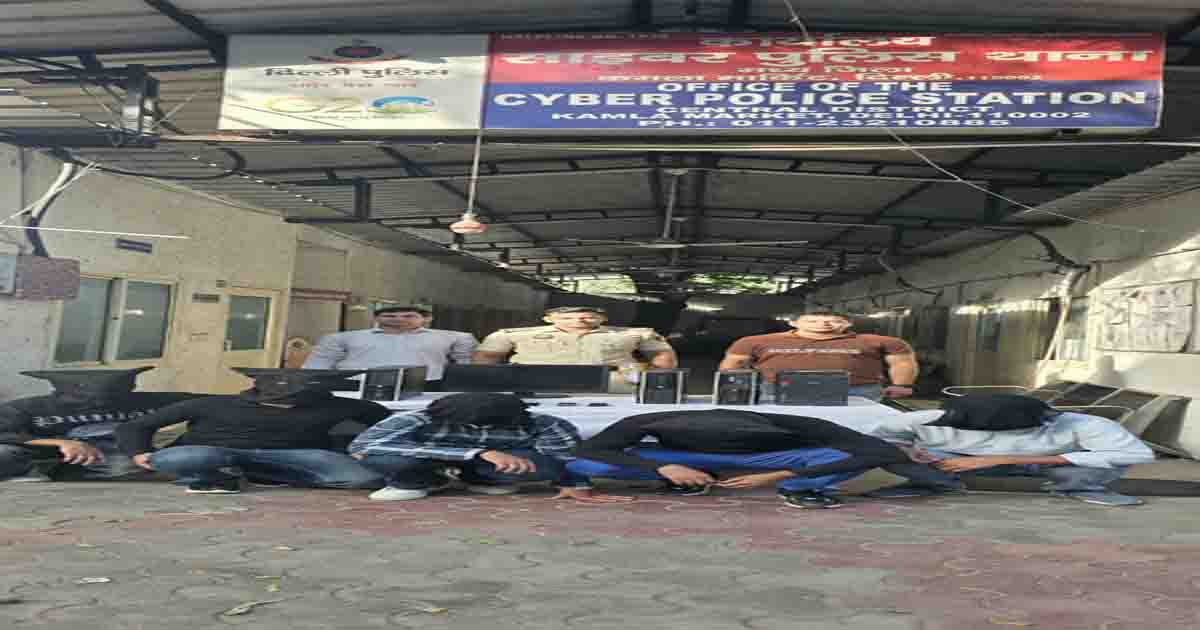
New Delhi, Oct 5: Delhi Police have busted two fake job-placement call centres operating from Lal Ratan Building near Shadipur Metro Station in Ranjit Nagar and apprehended 11 operatives in separate raids.
According to police, the two operations were carried out by teams of Special Staff, Ranjit Nagar Police Station and Cyber Police Station, Central District. The accused targeted unemployed job seekers by obtaining their personal data from online job-search and recruitment platforms and using it to make targeted calls.
The fraudsters posed as recruiters and offered attractive employment opportunities to prospective candidates. They subsequently demanded registration and processing fees under different pretexts. Police said amounts of Rs 3,500, Rs 1,400 and Rs 1,200 were demanded from job seekers under different packages.
The first operation was conducted on October 3 after police received information about a suspected fake job-placement centre functioning in the area. Technical analysis and field verification indicated that a significant number of calls linked to the suspected recruitment activity were originating from the location.
A police team subsequently raided the premises and apprehended six persons, including four women and two men. During the search, police examined computer systems, calling applications and digital material allegedly being used to contact job seekers.
Police said the suspects were using job-seeker data and contact details to approach prospective candidates and offer them employment. After collecting registration fees, the callers allegedly continued communicating with the candidates for a few days, assuring them about the proposed employment and further formalities. Communication was then allegedly discontinued without providing the promised jobs.
In a separate operation, a joint team of Special Staff and Police Station Cyber, Central District, raided another suspected fake job-placement call centre in the same building based on specific intelligence. Five male operatives were allegedly found actively working from calling cubicles and were apprehended.
When questioned, the operatives failed to produce corporate authorisation letters, placement agreements or records establishing that candidates had actually been placed in jobs. Police also found “Xlite” VoIP calling software installed on computers, along with job-seeker data and other digital evidence.
The two raids resulted in the apprehension of 11 persons in total.
Those apprehended from the first centre have been identified as Arpit, 38; Sakina, 29; Karishma, 27; Meenakshi, 28; Chanchal, 27; and Ashok, 36. All are residents of different parts of Delhi.
The five operatives apprehended in the second centre have been identified as Asim, 32; Sandeep, 29; Gaurav Malik, 34; Gyan Singh, 32; and Rohit, 34.
Police seized 13 computer systems, five mobile phones, calling applications, job-seeker data, contact details, communication records and digital evidence related to suspected financial transactions from the two premises.
According to police, the accused allegedly obtained job-seeker information from online recruitment platforms, including Shine.com in one case, and used the data to make targeted calls. They lured candidates with attractive job offers before demanding registration or processing fees.
Further investigation is underway to identify the alleged owners and masterminds behind the two operations, trace the source of the job-seeker data, examine financial transactions and identify other persons involved in the suspected network.
A case under Sections 319(2), 318(4), and 3(5) of the Bharatiya Nyaya Sanhita (BNS) has been registered in the case investigated by Police Station Ranjit Nagar. The seized electronic devices and digital data are being examined as per the law.

New Delhi, Oct 5: Delhi Police’s North District has arrested five accused in connection with a Rs 19.50 lakh robbery case registered at Kashmere Gate Police Station. Police have recovered Rs 9 lakh in cash and an iPhone purchased with the looted money.
The incident took place on September 30, when two men travelling on separate motorcycles were robbed of approximately Rs 19.50 Lakh in cash on the Rani Jhansi flyover in Delhi.
According to police, the victims worked for a businessman in Chandni Chowk and were carrying the cash after leaving the area. A man working in Chandni Chowk tracked their movements and subsequently planned the robbery with four associates from Ghaziabad.
The accused initially intercepted the victims near Kashmere Gate, assaulted them and attempted to rob them. However, the victims managed to escape with the help of members of the public. They did not make a PCR call at that time.
The accused later followed the victims and intercepted them again on the Rani Jhansi flyover, where they assaulted them and robbed them of the cash.
A team led by North Delhi Deputy Commissioner of Police Niharika Bhatt subsequently launched an investigation and arrested five accused in connection with the case. Police recovered Rs 9 lakh in cash and an iPhone bought using the stolen money. Efforts are underway to identify and apprehend other suspected accomplices.
In a separate case, also linked to Kashmere Gate, police on September 30 had arrested a 21-year-old man and his 24-year-old associate and apprehended a juvenile for their alleged involvement in the killing of a cash collection agent during an armed robbery at an underpass in north Delhi.
Joint Commissioner of Police (Central Range) Madhur Verma had said that the victim, identified as Prabhat, was returning home with his nephew, Sachin, after collecting payments from shops in Gandhi Nagar Market when four armed men intercepted their e-rickshaw at around 7.20 p.m. on September 24.
According to police, the assailants had snatched their cash bag and stabbed Prabhat, Sachin and another passenger when they resisted. Prabhat was declared dead at a hospital, while two others sustained injuries.
DCP Niharika Bhatt had said the investigation team traced a Maruti Swift that had made a sharp U-turn near the underpass. However, the registration number displayed on the vehicle was found to be fake.

Navi Mumbai Airport expands multimodal transport network ahead of winter flight schedule

Bihar: SI recruitment protest turns tense as candidates clash with police

Man arrested in Mumbai for defrauding senior citizens and others using fake APK files.

MPSC paper leak row: Maha CM seeks Guv’s nod for judicial probe

Mumbai: NCW chief Vijaya Rahatkar holds POSH workshop, reviews security with top cop

Gift to President Putin part of PM Modi bid to globally display India’s heritage

PM Modi’s warm camaraderie with Putin, Xi on full display at BRICS Summit

Corporators of all parties in trouble! Corporators of all major parties including Shiv Sena (UBT), BJP and Congress are facing legal challenges.

Complaint against Netflix & Mukesh Chhabra for inappropriate language on ‘India’s Got Latent 2’

Maha Congress stages agitation against Gyanesh Kumar
-

 Crime4 years ago
Class 10 student jumps to death in Jaipur
-

 Maharashtra2 years ago
Mumbai Local Train Update: Central Railway’s New Timetable Comes Into Effect; Check Full List Of Revised Timings & Stations
-

 Maharashtra2 years ago
Mumbai To Go Toll-Free Tonight! Maharashtra Govt Announces Complete Toll Waiver For Light Motor Vehicles At All 5 Entry Points Of City
-

 Maharashtra2 years ago
False photo of Imtiaz Jaleel’s rally, exposing the fooling conspiracy
-

 National News2 years ago
Ministry of Railways rolls out Special Drive 4.0 with focus on digitisation, cleanliness, inclusiveness and grievance redressal
-

 Maharashtra2 years ago
Maharashtra Elections 2024: Mumbai Metro & BEST Services Extended Till Midnight On Voting Day
-

 National News2 years ago
J&K: 4 Jawans Killed, 28 Injured After Bus Carrying BSF Personnel For Poll Duty Falls Into Gorge In Budgam; Terrifying Visuals Surface
-

 Crime2 years ago
Baba Siddique Murder: Mumbai Police Unable To Get Lawrence Bishnoi Custody Due To Home Ministry Order, Says Report