
Crime
DRI Seizes 1,319 Kg Gold Across India In FY 2023-24; Smuggling Tactics Evolve With ‘Mules’ And New Routes


Mumbai: During the financial year 2023-24, DRI seized 1,319kg gold across the country in multiple cases, with the land route contributing 55% of the seizures and the air route around 36%. According to DRI data, smuggling syndicates have increasingly employed carriers to transport smaller quantities of gold, reducing potential losses in case of interception.
“Gold smuggling in India has evolved with smuggling syndicates now employing ‘mules’ with diverse profiles, including foreign nationals and families, alongside insiders. Smuggling syndicates even leverage international departure gates, where airport workers and other staff collude in smuggling gold from transit passengers. Air routes into India also remain a prominent method smugglers use, with Middle East and Southeast Asian countries traditionally being the major points of origin. Recently, airports in certain African and Central Asian countries have also emerged as key locations for smuggling operations,” the DRI stated in its report.
“India has become a major destination for illicit gold imports, with gold and silver predominantly originating from Gulf states such as the UAE and Saudi Arabia, where these metals are sourced and available at lower prices. Smuggling through India’s porous eastern borders, particularly with Bangladesh and Myanmar, has also emerged as a major concern for law enforcement agencies. Gold is smuggled into India through two primary methods: commercial smuggling, where export and import schemes are exploited to evade duties, and outright smuggling, where gold is concealed to avoid detection. Smuggling networks are highly organised, and the use of complex routes and well-coordinated operations makes gold smuggling into India a persistent challenge for enforcement agencies,” the report stated.
“Smugglers frequently use passengers to conceal gold innovatively, including hiding it in their clothing, luggage, or even within their bodies, to evade customs detection. Gold in bar and solid form remains a prevalent method of smuggling into India. Smuggling gold in paste form continues to be a significant challenge. Smugglers melt pure gold, adulterate it with impurities, transform it into a solution, dry it, and then convert it into a paste. This paste form is easier to smuggle, often disguised as harmless substances or hidden within legitimate goods,” the report stated.



Surendranagar, Oct 7: Nine people, including two women, have been arrested in Gujarat’s Surendranagar district after a married woman was allegedly assaulted, illegally confined and gang-raped during a purported “purification” ritual over her relationship with another man, with videos of the incident later circulated on social media, police said.
The case came to light after videos showing the woman being subjected to violence and humiliation surfaced online.
Police said the woman had not initially approached them, but officers acted after receiving information from community members and began searching for her.
Surendranagar SP Premsukh Delu said several police teams were deployed to trace the woman after the videos came to their attention.
The woman was eventually located and brought to the police station, where her statement was recorded, and she was provided protection.
According to the police complaint, the woman had left her husband and gone to live with another man. Her husband and relatives allegedly traced her and brought her to a house, where she was confined using locks and chains.
She subsequently escaped, but the accused allegedly caught her again and tied her to a tree with ropes.
The accused allegedly subjected the woman and the man she had been living with to physical assault and humiliation in the name of carrying out a “shuddhikaran” or purification ritual.
Police said the woman was allegedly sexually assaulted by multiple people, with the ordeal being recorded on a mobile phone. The videos were subsequently circulated on social media.
Police are also investigating the circumstances in which the recordings were made and circulated.
A-Division police Inspector R.M. Sangada said the role of those who recorded and disseminated the videos was also being examined.
The accused have been booked under various provisions of the Bharatiya Nyaya Sanhita, including provisions relating to sexual offences, voluntarily causing hurt, wrongful confinement, wrongful concealment or keeping of an abducted person and acts carried out by several people in furtherance of a common intention, besides provisions of the Information Technology Act.
Police have arrested all nine accused, including two women who are alleged to have aided or participated in the offence.
Investigators are also examining the backgrounds and roles of the arrested persons as part of the ongoing probe. Police said further investigation was underway.

Hyderabad, Oct 7: Election authorities in Telangana have intensified investigation into false Form-7 applications seeking deletion of voters from the electoral rolls during the Special Intensive Revision (SIR), even as Hyderabad Police have booked a booth-level agent (BLA) of the BJP for allegedly submitting 30 pre-printed Form-7 applications.
S. Balachander, a Booth Level Agent (BLA) of the BJP in Musheerabad constituency in Hyderabad, has been booked for submitting pre-printed Form-7 applications seeking deletion of voters from the electoral roll at a polling station.
A case under Sections 217 and 318(2) of the Bharatiya Nyaya Sanhita (BNS) and Section 31 of the Representation of the People Act, 1950, has been registered against him at Chikkadpally Police Station.
This followed a complaint lodged by T. Praveen Kumar, Electoral Registration Officer (ERO) of the Musheerabad Assembly constituency.
The ERO complained that Balachander brought 30 digitally pre-printed Form-7 applications to Polling Station No. 210 on September 28. The applications sought the deletion of the names of 30 electors, including a Congress BLA and his family members, from the electoral roll.
Balachander, who had signed the forms, tried to submit them to the Booth Level Officer (BLO) at the polling station. When the BLO refused to receive the bulk submission and did not issue any acknowledgement for the 30 forms, Balachander left the forms at the polling station premises before the BLO and left the place.
After the verification, election authorities found that all 30 electors whose names were mentioned in the Form-7 applications were residing at the respective premises recorded in the electoral records.
This was the first case filed in Telangana after Chief Electoral Officer C. Sudharsan Reddy, on October 5, ordered action against applicants who knowingly made false statements of declaration in Forms 6, 6A, 7 & 8 under provisions of Section 31 of the Representation of the People Act, 1950. The CEO had asked DEOs to conduct an inquiry under Rule 20 of the Registration of Electors Rules, 1960, before taking the action.
Similar pre-printed forms had surfaced in the Bahadurpura and Goshamahal constituencies in Hyderabad. All the names mentioned in the forms were Muslims, leading to allegations about a deliberate attempt to target the community.
After Telangana Pradesh Congress Committee (TPCC) lodged a complaint, the CEO issued an order to the Commissioner of the Greater Hyderabad Municipal Corporation, the District Election Officer, Hyderabad and all collectors and DEOs of districts across the state to “take appropriate action” against individuals found knowingly filing false claims or declarations in electoral-roll forms.
Election authorities across Telangana have received 28,753 Form-7 applications, including around 5,000 from Hyderabad.
TPCC electoral office had filed a complaint with the Commissioner of Police, Hyderabad, seeking FIRs over alleged misuse of Form 7s.
All India Majlis-e-Ittehadul Muslimeen (AIMIM) on Tuesday complained to the Chief Electoral Officer of Telangana, Sudharsan Reddy, regarding the misuse of Form 7 for the targeted deletion of Muslim voters in the Goshamahal Assembly constituency.
In a letter to the CEO, AIMIM president and Hyderabad MP Asaduddin Owaisi complained that at polling station number 28, one Thudumu Janardhan submitted 122 Form 7 applications. In these forms, the names of the voters against whom deletion is sought are pre-printed, while the applicant has written his own name and contact number as the person filing the Form 7, he said.
Owaisi alleged that there is a deep conspiracy to delete Muslim voters through fraudulent and bulk submission of Form 7 applications.
The Claims and Objections phase of the SIR process will end on October 7, and the deadline for disposal is November 5. Final electoral rolls will be published on November 9, 2026.
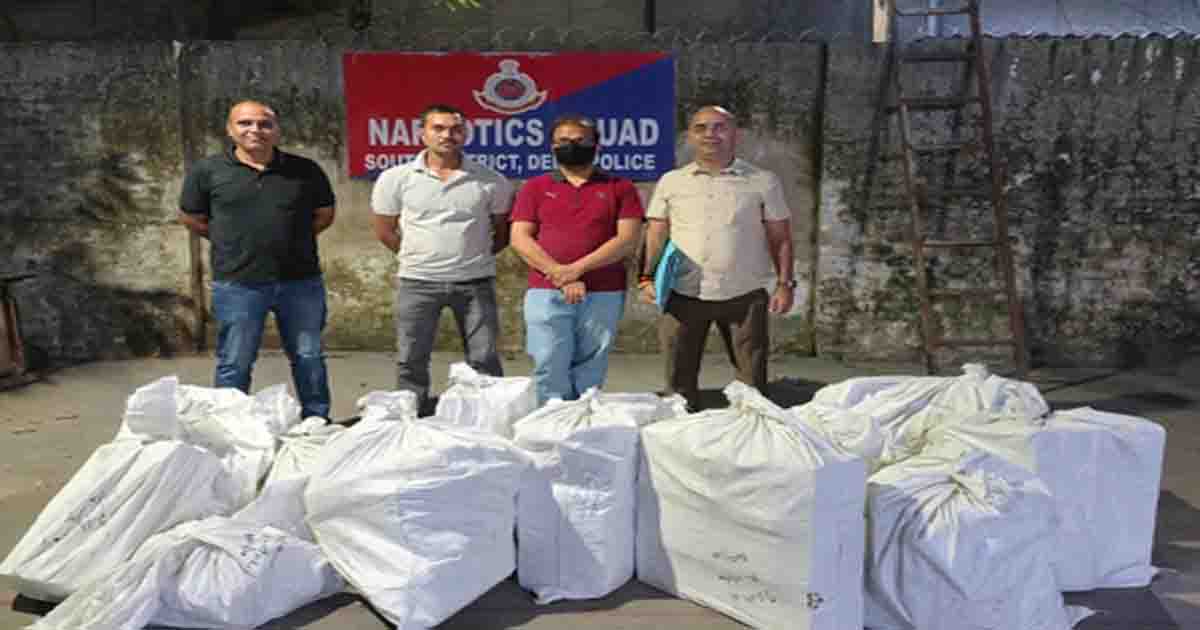
New Delhi, Oct 6: The Anti-Narcotics Squad of Delhi Police’s South District has seized 265 kg of illegal and banned firecrackers and arrested a 39-year-old man for storing and selling them during the festive season.
Acting on specific information regarding the illegal sale and storage of firecrackers, the police team conducted a raid in Madangir on October 5 and recovered a substantial quantity of firecrackers from the premises.
The accused was identified as Vipin Garg, a resident of Neb Sarai, Delhi. He was apprehended from the spot and arrested in connection with the case.
According to the police, the Anti-Narcotics Squad had been maintaining close surveillance over the illegal sale, storage and use of banned firecrackers in the national capital and had been taking strict action against violators.
Following the receipt of the information, the police team verified the input and conducted a raid at the identified premises. During the operation, Garg was found in possession of a large quantity of firecrackers intended for discreet sale during the festive season.
A total of 265 kg of illegal firecrackers was recovered and taken into police possession. A case under relevant sections was registered at Ambedkar Nagar Police Station, following which the accused was arrested.
The operation was conducted by a dedicated police team and was led by Inspector Anuj Chaudhary, under the close supervision of ACP/Operations Balram Beniwal.
The police said further investigation is underway.
The recovery of the banned firecrackers is expected to prevent their illegal sale and potential use during the festive season. Delhi Police said the action reaffirms its commitment to public safety and strict enforcement against the illegal storage and sale of banned firecrackers.

Fan murder case: B’luru court issues notices to YouTube, Facebook, Instagram, X

Gujarat woman tied to tree, gang-raped under ‘purification’ guise; nine arrested

‘Golden, epoch-making day in history of Indian democracy’: HM Shah on PM Modi’s 25 years in public service

After 2014, India went from ‘policy paralysis’ to ‘reform express’, says PM Modi

Satyagraha for SIR injustice draws FIR: Congress on case against Rahul, Priyanka

Gift to President Putin part of PM Modi bid to globally display India’s heritage

PM Modi’s warm camaraderie with Putin, Xi on full display at BRICS Summit

Corporators of all parties in trouble! Corporators of all major parties including Shiv Sena (UBT), BJP and Congress are facing legal challenges.

Complaint against Netflix & Mukesh Chhabra for inappropriate language on ‘India’s Got Latent 2’

Maha Congress stages agitation against Gyanesh Kumar
-

 Crime4 years ago
Class 10 student jumps to death in Jaipur
-

 Maharashtra2 years ago
Mumbai Local Train Update: Central Railway’s New Timetable Comes Into Effect; Check Full List Of Revised Timings & Stations
-

 Maharashtra2 years ago
Mumbai To Go Toll-Free Tonight! Maharashtra Govt Announces Complete Toll Waiver For Light Motor Vehicles At All 5 Entry Points Of City
-

 Maharashtra2 years ago
False photo of Imtiaz Jaleel’s rally, exposing the fooling conspiracy
-

 National News2 years ago
Ministry of Railways rolls out Special Drive 4.0 with focus on digitisation, cleanliness, inclusiveness and grievance redressal
-

 Maharashtra2 years ago
Maharashtra Elections 2024: Mumbai Metro & BEST Services Extended Till Midnight On Voting Day
-

 National News2 years ago
J&K: 4 Jawans Killed, 28 Injured After Bus Carrying BSF Personnel For Poll Duty Falls Into Gorge In Budgam; Terrifying Visuals Surface
-

 Crime2 years ago
Baba Siddique Murder: Mumbai Police Unable To Get Lawrence Bishnoi Custody Due To Home Ministry Order, Says Report