
National News
Disability percentage recorded in UDID card cannot be altered; Delhi HC restores PwBD status of 2 NEET-UG candidates

New Delhi, Sep 25: The Delhi High Court has held that Medical Assessment Boards assessing candidates for admission to the MBBS course cannot interfere with or reduce the percentage of disability recorded in a valid Unique Disability Identity (UDID) card, and must confine themselves to assessing the candidate’s functional competency.
A single-judge Bench of Justice Jasmeet Singh made the observation while allowing two petitions filed by NEET-UG 2026 candidates, whose disability percentages were reduced by Medical Assessment Boards during the admission process, resulting in their removal from the Persons with Benchmark Disabilities (PwBD) category.
The High Court set aside the assessment and eligibility certificates issued in both cases and directed the authorities to permit the petitioners to participate in the third round of NEET-UG 2026 counselling and the mop-up round, if any, according to their rank and entitlement under the PwBD category, treating their disabilities as recorded in their respective UDID cards.
One of the petitioners, an 18-year-old candidate with permanent visual disability, possessed a Disability Certificate and UDID card recording 60 per cent permanent disability. His NEET-UG 2026 admit card also recorded his disability as blindness and granted him compensatory time. He secured 398 out of 720 marks in the examination and had a PwBD rank of 409. However, after appearing before the Medical Assessment Board at Lady Hardinge Medical College, his disability was assessed at 30 per cent, although the Board certified him as eligible to pursue the MBBS course, capable of undertaking it and not posing a threat to patients.
The Appellate Medical PwBD Assessment Board at Vardhman Mahavir Medical College and Safdarjung Hospital subsequently concurred with the 30 per cent assessment. His candidature was thereafter shifted from the PwBD category to the General category, resulting in his exclusion from the first round of counselling under the PwBD category.
The other petitioner, Aashiya, had a permanent locomotor disability of 61 per cent recorded in her Disability Certificate and UDID card. She had secured 363 out of 720 marks in NEET-UG 2026, with a PwBD rank of 638. Her disability was re-quantified at 16 per cent by the Primary Disability Assessment Medical Board, and the appellate board subsequently confirmed the same, rendering her ineligible for PwBD reservation. She too could not participate in the first round of counselling under the category.
The petitioners contended that the UDID card is the primary document for establishing the extent of disability and that the Medical Assessment Boards were required only to undertake a functional assessment and did not have the power to reassess the percentage of disability.
On the other hand, the respondent authorities relied on the Guidelines on Assessment of Persons with Benchmark Disabilities for Admission to the MBBS Course, 2026, contending that the Medical Assessment Boards were empowered to determine the candidates’ functional competency.
In its judgment, the High Court observed that the Guidelines specifically provide that the UDID card “shall serve as the primary documentary evidence of the existence, nature and extent of the specified disability” and that while the Medical Assessment Board has to independently determine the candidate’s functional competency, eligibility cannot be based solely on the category or percentage recorded in the UDID card.
Justice Singh held that the provisions “do not empower the Board to revisit the percentage of disability recorded in the UDID card”.
“A combined reading of these provisions shows that eligibility for reservation under the PwBD category is determined by the benchmark disability prescribed under the Rights of Persons with Disabilities Act, 2016. The UDID card issued under the Act is therefore the primary document for that purpose,” the High Court said.
It further observed that the Medical Assessment Board is empowered to assess whether a candidate can complete the MBBS curriculum and subsequently undertake the profession of medicine, but “it cannot interfere with the disability recorded in the UDID card”.
The High Court also referred to Sections 56, 57 and 59 of the Rights of Persons with Disabilities Act, 2016, stating that the statutory framework provides for certification of disability by designated authorities and an appellate remedy against such certification.
“If any of the respondents is aggrieved by the UDID card, the remedy is to appeal against the decision of the certifying authority. It is not open to a Medical Assessment Board to disregard or reduce the recorded percentage at the stage of admission,” the judgment held.
Referring to the Supreme Court’s judgment in Om Rathod vs. Director General of Health Services, the High Court reiterated that disability assessment boards must focus on functional competence rather than merely quantifying disability.
The Supreme Court had observed that “Disability Assessment Boards must focus on the functional competence of persons with disabilities and not merely quantify the disability”.
The Delhi High Court said that permitting Medical Assessment Boards to alter the disability percentage recorded in a valid UDID card would render it a “mere paper formality” and “meaningless”, which was not the mandate of the Rights of Persons with Disabilities Act.
Setting aside the assessments and eligibility certificates issued by the Medical Assessment Boards in both cases, the High Court directed the authorities to permit the petitioners to participate in the third round of NEET-UG 2026 counselling and the mop-up round, if any, treating their disabilities as recorded in their respective UDID cards.
However, it declined the petitioners’ request to create supernumerary seats, observing that the first two rounds of counselling had already concluded and seats had been allotted. Allowing the writ petitions, Justice Singh observed that the petitioners could still be accommodated in the third and mop-up rounds, distinguishing their case from those where counselling had already concluded with no remaining round.

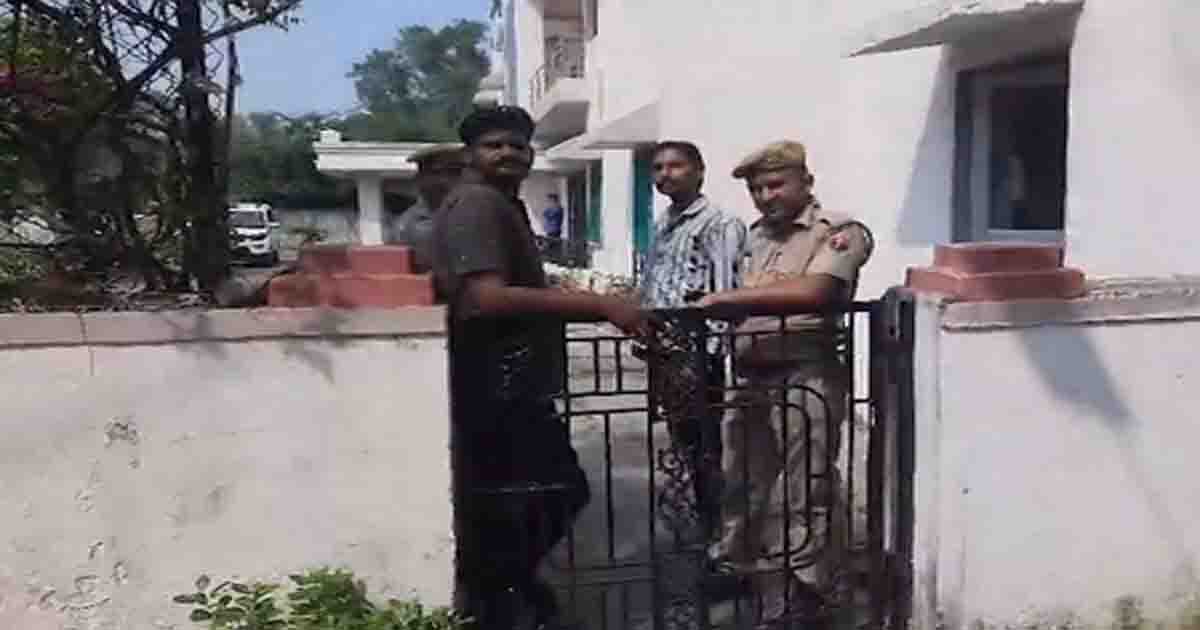
Three alleged shooters involved in the assassination attempt on Bollywood actor Tiger Shroff have been caught at Rajasthan’s Kota railway station while travelling by train, sources said.
All three were detained during a joint operation by the Rajasthan Anti-Gangster Task Force (AGTF) and the Kota City Police and are currently being interrogated.
According to the sources, a juvenile is among those detained.
One of the accused has been identified as Hritik Kumar alias Roshan (22), a resident of Piprai village in Bihar’s Begusarai district, currently residing near the Urdu School in Mumbai’s Andheri West and working as a bike rider.
The third accused is identified as Rehan (18), a resident of Haryana’s Sonipat.
Earlier, Mumbai’s Juhu Police have registered a case against three unidentified persons in connection with the firing incident involving the actor, in which his caretaker and driver, Firdos Ibrahim Baloch, sustained injuries.
The FIR has been registered under Sections 109(1) and 3(5) of the Bharatiya Nyaya Sanhita (BNS), along with relevant provisions of the Arms Act. Police are investigating the incident to identify and apprehend the assailants and establish the roles of the other suspected individuals involved in the attack.
According to the complaint, the incident took place on the evening of October 18, 2026, at around 7 p.m., when Tiger Shroff was returning by car after playing football.
Two unidentified assailants allegedly opened fire at the vehicle using pistols, injuring Baloch. Another person present in the area was also hit by a bullet during the shooting, police said.
The complaint states that the attack took place while they were returning after the game. As their car exited the school grounds and turned left, two unidentified men allegedly approached and opened fire at the vehicle from the front and its left side.
After the shooting, the assailants fled from the spot.
Meanwhile, interrogation of the detained individuals is underway at Kota City Police Station and further details are underway.
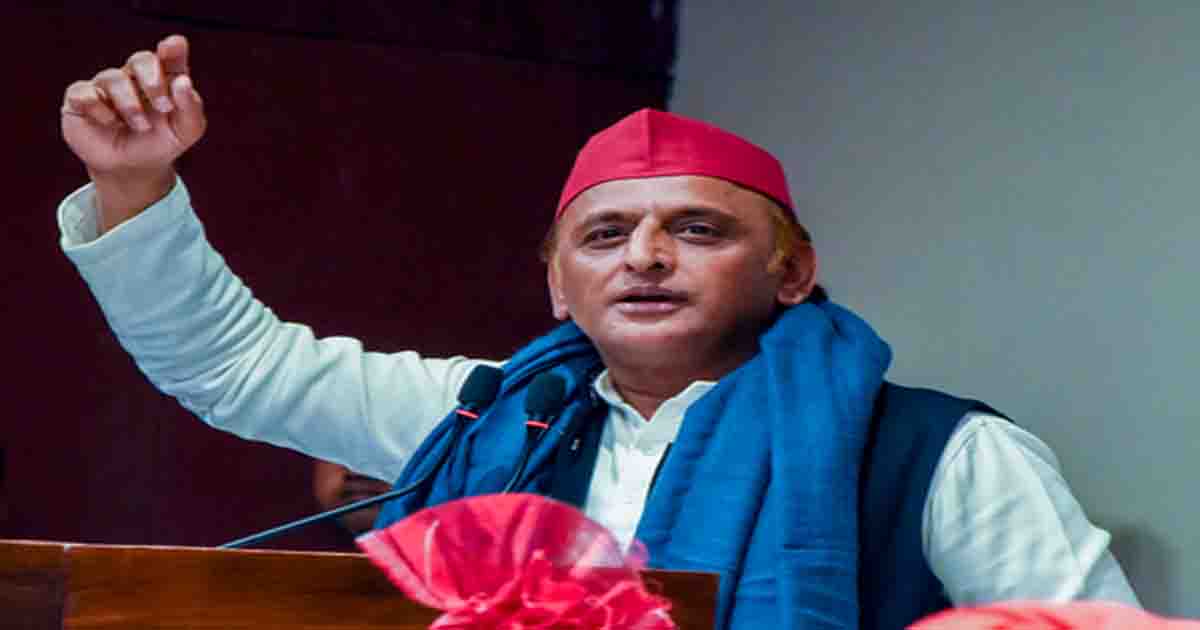
The Samajwadi Party (SP) will release its manifesto for the 2027 Uttar Pradesh Assembly elections on November 26, which is marked as Constitution Day, party Chief Akhilesh Yadav announced on Monday.
In a post on X, Yadav said, “The Resolve of ’27: The PDA’s Manifesto. On the sacred democratic occasion of ‘Constitution Day’ on November 26, 2026, we will release the ‘Jan-Man Manifesto’.”
Uttar Pradesh is scheduled to go to polls in 2027.
The announcement came as political parties are gearing up for the upcoming Assembly elections amid the controversy over the Election Commission of India’s (ECI) Special Intensive Review (SIR) process.
Earlier on Sunday, Yadav asked his party workers to remain vigilant at their respective polling booths, while accusing the ruling Bharatiya Janata Party (BJP) of “conspiring to create fake votes”.
He also accused the BJP-led state government of destroying the education and examination system in Uttar Pradesh.
On the other hand, Chief Minister Yogi Adityanath on Saturday took a jibe at the previous SP government in the state, saying that the SP and education are like the “two banks of a river that can never meet”.
The Chief Minister was addressing the Teachers’ and Graduates’ Conference in Lucknow.
Attacking the Akhilesh Yadav-led Samajwadi Party, CM Yogi said: “The ‘Saifai Syndicate’ used to undermine the recruitment process and create an identity crisis (for the youth). People from Uttar Pradesh were even refused rooms in hotels for being associated with the state.”
“During the ongoing Sharadiya Navratri, various events are taking place. Durga Pujas are being organised, Ramlilas are being performed, and there is an atmosphere of celebration today, but before 2017 there used to be chaos and unrest,” he alleged.
“The Samajwadi Party and education are like the two banks of a river — they can never meet!” the Chief Minister added.
“They (SP) are the ones who created an identity crisis for the youth and have wreaked havoc on the education system,” he said while emphasising that a crisis in the education sector means a crisis for society and the country.
National News
Rahul Gandhi’s family real ‘naam chor’: Telangana BJP chief hits back at ‘vote chori’ claims

RAHUL GANDI
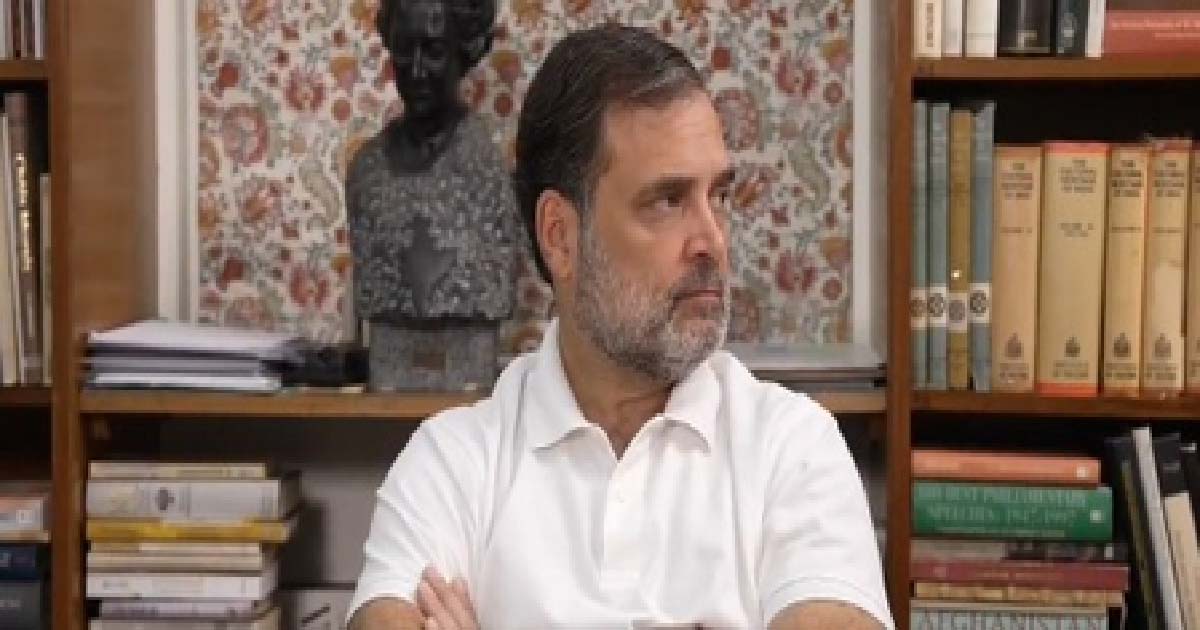
Telangana : Telangana BJP State President N. Ramchander Rao on Monday launched a sharp attack on Leader of Opposition (LoP) in the Lok Sabha and senior Congress leader Rahul Gandhi over his repeated allegations of “vote chori”, accusing him of misleading the public despite clarifications from the Election Commission of India (ECI) and the Supreme Court.
Reacting to Gandhi’s recent remarks targeting Prime Minister Narendra Modi, Union Home Minister Amit Shah and Chief Election Commissioner (CEC) Gyanesh Kumar, Rao questioned the Congress leader’s credibility and alleged that he had repeatedly made misleading statements.
“Again and again, Rahul Gandhi is misleading the people with regard to vote chori and says that PM Modi, Shah, and Gyanesh will have to pay a price for it. The Gandhi family, Rahul Gandhi’s family, first of all, they are the chor; they are naam chor. They have stolen the name of Gandhi. And these people are now speaking about vote chori. This is nothing but misleading the people, in spite of several clarifications by the Election Commission and the court, the Supreme Court itself. Rahul Gandhi shamelessly goes around the country and speaks of vote chori,” Rao told Media.
Rao also asserted that India would not witness the kind of violence seen in neighbouring countries, alleging that some political leaders were attempting to promote unrest in pursuit of “regime change”.
“What has happened in Nepal and Bangladesh cannot be repeated or happen in India. Though the CJP leaders, and the Congress leaders, and people like Prashant Bhushan may say that they are fighting for regime change by creating violence, India will never accept violence. India is a democratic country; people have a democratic temperament. And today, what has happened even in France, which we have seen, the violence has been escalated there, violence has been sponsored there, and it is the foreign powers who are sponsoring all these people. India can never play to the foreign powers’ tune,” he said.
Earlier on Sunday, describing the Congress as “guardian of the Constitution”, Rahul Gandhi launched a fresh attack on the government and CEC Gyanesh Kumar for what he called “vote chori”, promising to bring the culprits to book.
Addressing a party rally at Margao in Goa, Gandhi said, “Vote chori is an attack on the Constitution and the Congress party’s dharma as the party is the guardian of the statute.”
“Gyanesh Kumar and others will face the law and pay a price for what they have done,” said Gandhi, challenging the government to file a case against him for his repeated claims about vote theft.
“I already have 45 cases, including defamation, against me, and I challenge them to file a new case for my vote chori claims. I know they will not do this as filing a case against me on this issue will make the matter legal and expose them,” he said.
Gandhi said those who have indulged in vote theft are experiencing sleepless nights in Delhi as they know that they will have to face the Congress someday.

Tiger Shroff firing case: Juvenile among 3 detained in Rajasthan Kota

US intelligence blackout hurt Ukraine: Zelensky

Pune: 70-year-old man duped of Rs 4.81 lakh in pension card fraud

Tiger Shroff attack: CM Fadnavis vows action, says Mumbai Police will dismantle gangs operating from abroad

Regime change inevitable, natural democratic process: Shiv Sena(UBT) in ‘Samaana’

Rahul, Cong ecosystem want to force regime change: BJP after Neha Bora praises B’desh Gen-Z protest

BJP pays tribute to ex-President Abdul Kalam, recalls his enduring influence on generations of India’s youth

Attack on democratic rights: INDIA Bloc leaders on detentions of anti-ECI protestors

INDIA bloc begins protest march against ECI

Maha Congress stages agitation against Gyanesh Kumar
-

 Crime4 years ago
Class 10 student jumps to death in Jaipur
-

 Maharashtra2 years ago
Mumbai Local Train Update: Central Railway’s New Timetable Comes Into Effect; Check Full List Of Revised Timings & Stations
-

 Maharashtra2 years ago
Mumbai To Go Toll-Free Tonight! Maharashtra Govt Announces Complete Toll Waiver For Light Motor Vehicles At All 5 Entry Points Of City
-

 Maharashtra2 years ago
False photo of Imtiaz Jaleel’s rally, exposing the fooling conspiracy
-

 National News2 years ago
Ministry of Railways rolls out Special Drive 4.0 with focus on digitisation, cleanliness, inclusiveness and grievance redressal
-

 Maharashtra2 years ago
Maharashtra Elections 2024: Mumbai Metro & BEST Services Extended Till Midnight On Voting Day
-

 National News2 years ago
J&K: 4 Jawans Killed, 28 Injured After Bus Carrying BSF Personnel For Poll Duty Falls Into Gorge In Budgam; Terrifying Visuals Surface
-

 Crime2 years ago
Baba Siddique Murder: Mumbai Police Unable To Get Lawrence Bishnoi Custody Due To Home Ministry Order, Says Report