
Maharashtra
Different Journeys, Same Destination: Devendra Fadnavis, Eknath Shinde, And Ajit Pawar Unite As Maharashtra’s Leadership Trio

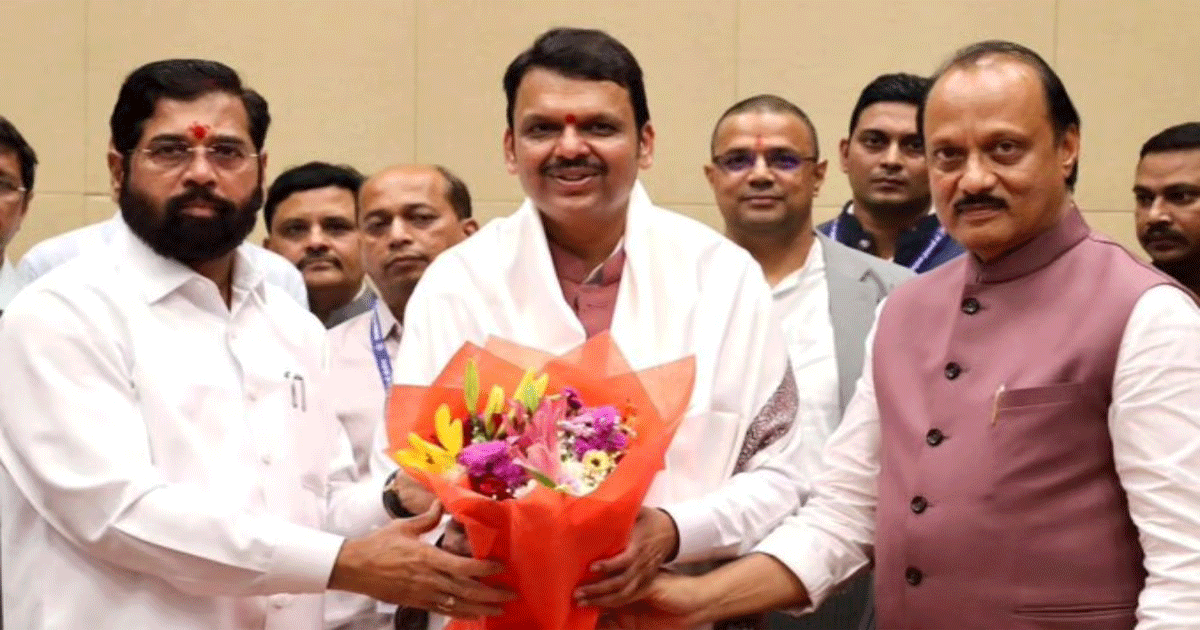
Devendra Fadnavis was sworn in as the new Chief Minister of Maharashtra in a grand and colorful ceremony at the Azad Maidan on Thursday evening. Eknath Shinde, leader of the Shiv Sena, and Ajit Pawar, leader of the NCP, took oath as Deputy Chief Ministers.
Here’s a look at the political careers of the CM and DyCMs.
Devendra Fadanvis
Devendra Fadnavis, the political stalwart who rose from humble beginnings to become a key figure in Maharashtra politics, was on Thursday evening sworn in as chief minister – a position he has held twice before.
During his previous tenure as Chief Minister, before the 2019 elections, Fadnavis famously recited the line “Mi Punha Yein” (I will back), which became both a widely celebrated and critiqued tagline. However, the political landscape shifted dramatically after the elections when Uddhav Thackeray parted ways with the BJP. Fadnavis then allied with the NCP’s Ajit Pawar, and both were sworn in as Chief Minister and Deputy Chief Minister, respectively, in a government that lasted less than 80 hours.
Fadnavis faced ridicule over his “Mi Punha Yein” remark during the Maha Vikas Aghadi (MVA) government’s tenure. In 2022, Eknath Shinde led a split in the Shiv Sena and formed a new government with the BJP. Although many expected Fadnavis to return as the CM, he was appointed Deputy Chief Minister instead. After a challenging political journey of five years, Fadnavis has finally reclaimed the Chief Minister’s position.
From being a corporator and mayor in the Nagpur Municipal Corporation to becoming the Chief Minister of the state, Fadnavis has had a distinguished political career. Fadnavis began his political career as an active member of the Akhil Bharatiya Vidyarthi Parishad (ABVP). At 22, he became a corporator in the Nagpur civic body and its youngest Mayor in 1997 at age 27.
In 1999, he was first elected to the Maharashtra Legislative Assembly from the West Nagpur constituency, where he was re-elected consecutively for two terms. Later, he won the elections from the South West Nagpur constituency four times. Since 1999, he has represented Nagpur in the Maharashtra Legislative Assembly.
Eknath Shinde
From a Shiv Sena rebel in 2022, veteran politician Eknath Sambhaji Shinde went on to acquire the image of a doer and man of action as chief minister in a short span of two-and-a-half years when he headed the Mahayuti government in Maharashtra.
Shinde, who had no prior political background, began his political career in 1980. After working for some time in organisational roles for the Shiv Sena, he was appointed to various constitutional positions. He won his first election as a corporator in the Thane Municipal Corporation in 1997, followed by his appointment as Leader of the House in 2001.
In 2004, Shinde was elected to the Maharashtra Legislative Assembly. A year later, he was named the Thane district head of Shiv Sena. Over the years, Shinde’s popularity grew, leading to his re-election to the Assembly in 2009, 2014, and 2019.
During his tenure in the Legislative Assembly, Shinde held several significant roles. From 2014 to 2019, he served as the Minister for Public Works and Guardian Minister of Thane district. In 2018, he was appointed the Leader of the Shiv Sena in the Assembly.
In 2019, he assumed additional responsibilities as the Minister for Public Health and Family Welfare, as well as the Minister for Urban Development and Public Works. He also briefly served as the acting Minister of Home Affairs later that year.
A turning point in his political career came in June 2022, when Shinde, along with several MLAs, moved to Surat, Gujarat, sparking a political crisis in Maharashtra. This led to Uddhav Thackeray’s resignation as Chief Minister. Shinde subsequently formed a new government in alliance with the BJP and NCP and was sworn in as the 20th Chief Minister of Maharashtra in June 2022.
On December 5, 2024, Shinde took oath as the Deputy Chief Minister of Maharashtra, further cementing his role as a key figure in the state’s political landscape.
Ajit Pawar
Ajit Pawar, who has long aspired to become the chief minister but finished second five times, has once again been appointed as the Deputy Chief Minister. This marks the sixth time as the deputy chief minister, setting a unique record.
A stalwart of Maharashtra politics, Ajit Pawar is a seasoned leader renowned for his administrative expertise, sharp political instincts, and strong grassroots presence. Over his political career, he has served as deputy chief minister under Chief Ministers Prithviraj Chavan, Devendra Fadnavis, Uddhav Thackeray and Eknath Shinde.
Despite speculations about facing challenges in retaining the Baramati constituency during the assembly elections, Ajit Pawar was re-elected for the eighth consecutive time with a significant majority. His re-election solidifies his position as a key figure in Maharashtra politics.
In 1991, Ajit Pawar contested the Lok Sabha elections for the first time and became the Member of Parliament (MP) from Baramati. That same year, following the assassination of Rajiv Gandhi and the subsequent political changes at the Centre, Sharad Pawar was appointed as the Union Defence Minister.
After Sharad Pawar resigned from his position in the Baramati Assembly constituency, Ajit Pawar contested the by-election and was elected as the MLA for the first time. Since then, for the past 35 years, he has been consistently elected from the Baramati.
While in government, Ajit Pawar has handled key portfolios such as finance minister, water resources minister and rural development minister. He has also served as the guardian minister of Pune. After the fall of the MVA government, he served as the Leader of the Opposition in the Maharashtra Legislative Assembly for a year.


Maharashtra
Eknath Shinde Calls Rahul Gandhi’s Supreme Court March a Black Day in India’s History, Alleges INDIA Bloc Is Part of a Foreign Conspiracy.

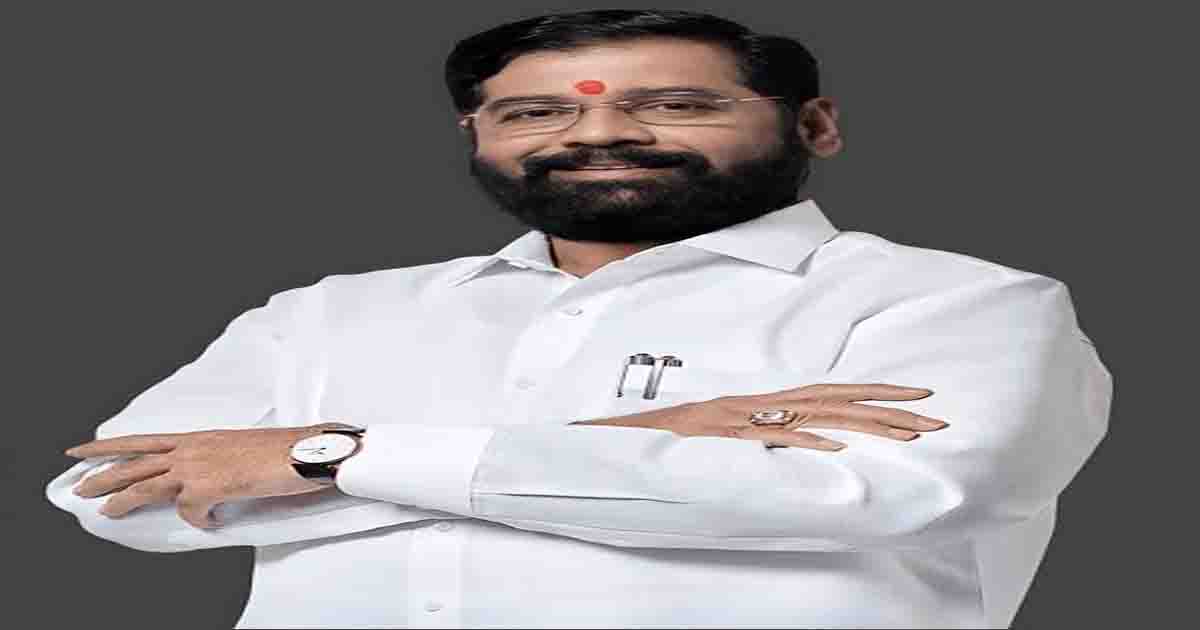
The ‘INDIA’ alliance organized a march to the Supreme Court in Delhi, attended by Rahul Gandhi, Priyanka Gandhi, and Members of Parliament from the alliance. Following this protest, it appears that the ‘INDIA’ alliance has adopted an aggressive stance. Commenting on the protest, Eknath Shinde remarked that yesterday was a ‘black day’ in the country’s history. He observed that the Constitution and the constitutional institutions established by Babasaheb were trampled upon. An unprecedented event occurred where a march to the Supreme Court was undertaken to exert pressure. Condemning the actions of Rahul Gandhi and the ‘INDIA’ alliance, he stated that no amount of condemnation would be enough. While acknowledging their right to protest in a democracy, he questioned the method of leading a march merely to file a petition. He emphasized that they should apologize for attacking India’s judicial system. Claiming that they are actively working to destroy the Constitution and strangle democracy, he added that the current situation poses a danger to the country. He expressed suspicion regarding the involvement of foreign forces, suggesting it could be part of an international conspiracy. Eknath Shinde said, “It is extremely unfortunate that they are pushing the country towards chaos; this is dangerous for the nation.” He added that since they cannot win elections or defeat the Prime Minister, they are resorting to such tactics. Shinde also leveled serious allegations, stating that the opposition is undermining the country’s freedom. Attempts are being made by foreign powers to destabilize the country. He emphasized the need to consistently speak out against their anti-national mindset. They operate under the conviction that they will not come to power at the Centre; this very thought drives their daily actions. It was the opposition itself that once attempted to destroy the Constitution. Referring to the Emergency, Shinde asked: if an Emergency were in place today, would protests even reach the Supreme Court? Nowadays, everyone is free to express their views. Is the current situation an Emergency, or was that the Emergency? Back then, everything was shut down. Is it right to march towards the judiciary and insult it? They talk about ‘breaking India’ and protest while threatening to leave the country. They know their demands are flawed; they are aware they will not get justice because their demands are baseless. They had protested against the increase in voter turnout. Now, if names are removed from the voter list, they protest—even though ‘Form 6’ exists to ensure no injustice occurs. It was merely a drama staged by ‘immature’ (shortsighted) people, all for the sake of gaining power. This is an insult to Lord Shiva; they lack wisdom. If the ‘third eye’ were to open, the ‘INDIA’ alliance would be wiped out. When people gather, they simply step out of their homes; they do not have to travel far—they find a ready-made platform and join in. They simply want to speak out against Modi. They claim that Modi has rendered them unemployed, so what other option do they have but to protest?
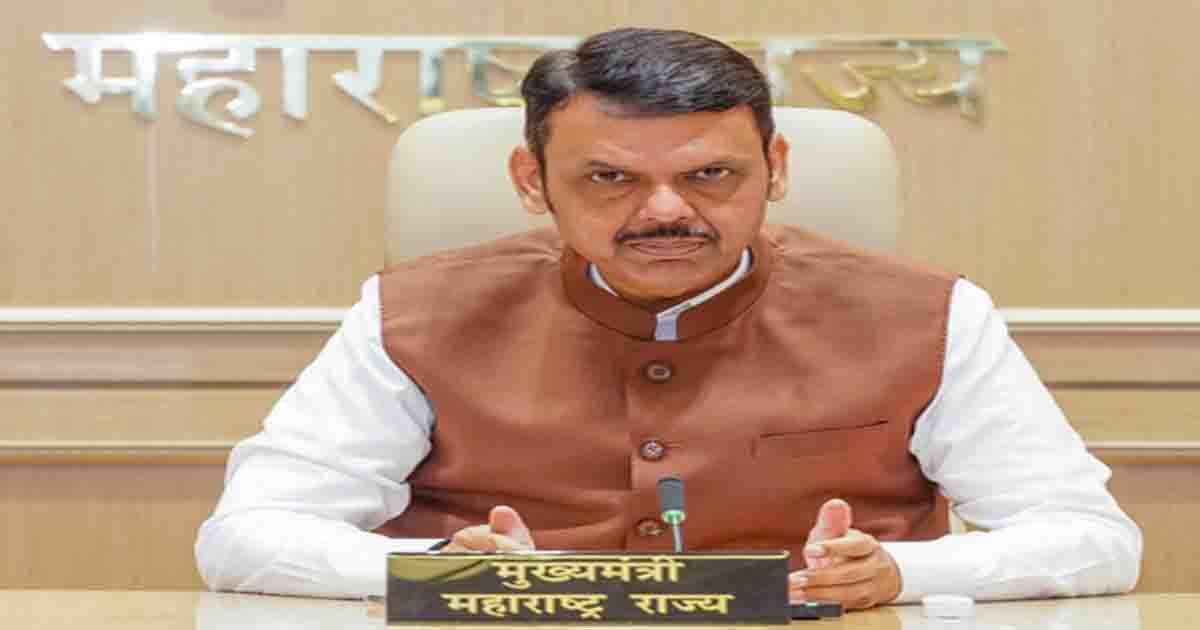
Mumbai, Oct 13: Highlighting Maharashtra’s competitive edge, Chief Minister Devendra Fadnavis on Tuesday affirmed that the state stands at the forefront of creating a robust ecosystem for industrial investment across sectors.
Speaking at the launch of the Maharashtra-UK Partnership program, the Chief Minister urged UK-based institutions and business leaders to actively invest in the state.
CM Fadnavis stated that Maharashtra offers a well-established framework integrating skilled manpower, capital, and technology.
To facilitate swift execution for investors, he assured that all state agencies concerned would seamlessly coordinate through the ‘Invest Maharashtra’ single-window platform.
He emphasised that the visit of the high-level UK delegation—comprising Secretaries of State, Mayors, and senior officials—was not merely a ceremonial visit, but a concrete initiative to transform shared ambitions into active businesses and formal agreements.
Following bilateral talks between the state leadership and the UK delegation, formal Memorandums of Understanding (MoUs) were exchanged to expand cooperation across critical growth sectors.
CM Fadnavis pointed out that Mumbai bridges international finance, trade, and entrepreneurship directly with global markets. Concurrently, Pune has developed into a major hub for engineering, automotive manufacturing, and Information Technology (IT).
Under the New Education Policy (NEP), international institutions are now permitted to establish campuses in Maharashtra. Institutions such as the University of Bristol, University of York, and University of Aberdeen are setting up physical footprints in the state. Key upcoming projects like EduCity, MediCity, and AI Innovation City will bring together world-class research and global talent pool under one framework, said the CM.
According to the CM, the state offers immense potential for clean energy and sustainability initiatives, including industrial decarbonisation, energy efficiency, water resource management, intelligent transit systems, and resource recycling. The state government pledged complete support for global firms establishing Global Capability Centres (GCCs) and R&D facilities.
The strategic tie-up will unlock export potential for local manufacturers, food processing industries, technology startups, and small-scale entrepreneurs across Maharashtra, allowing them access to new markets and consumer bases in the United Kingdom, he stated.
Speaking at the occasion, UK Business Secretary Jonathan Reynolds highlighted that Maharashtra is the most natural entry point for UK businesses expanding into India.
“Maharashtra was chosen for its distinct economic strength, political stability, and strong leadership. The economy of Maharashtra alone exceeds that of Norway in Europe. We have not come here merely to sign a piece of paper; we seek tangible results and success. We look forward to working together to accelerate growth for both nations,” Reynolds remarked.
The UK delegation also included Dame Angela Eagle (Secretary for Environment, Food and Rural Affairs, Scotland), Douglas Alexander (Minister of State), Sophie Bryce (Director of EU and International Trade), Harshbir Sangha (UK Deputy Trade Commissioner for South Asia), Harjinder Kang (UK Trade Commissioner for South Asia and Deputy High Commissioner for Western India), alongside visiting British Mayors and officials.
Maharashtra
Pursue positive politics, congratulate Captain Machchhar: Former Shiv Sena-UBT leader advice to Rahul Gandhi
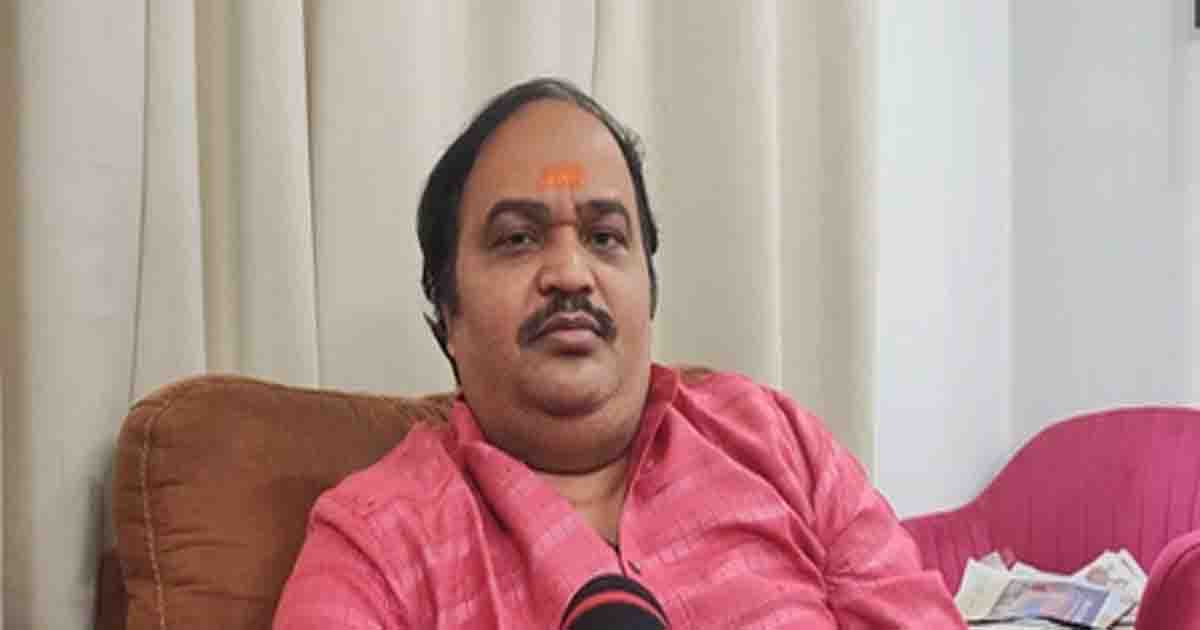
Mumbai, Oct 13: Former Shiv Sena-UBT leader Anand Dubey on Tuesday urged the Leader of Opposition in Lok Sabha Rahul Gandhi to pursue what he called positive politics, support Indian industrialists over foreign entrepreneurs and publicly congratulate Captain Smit Machchhar for his bravery.
Speaking to media, Dubey said the Congress was an old party with sufficient resources to support its workers, but Rahul Gandhi should also focus on constructive politics.
“You (Rahul Gandhi) are one of the leading Opposition leaders; you should engage in positive politics. Please do not choose Elon Musk; please choose Indian industrialists,” the former Shiv Sena-UBT leader said, adding that keeping the country’s money within India would demonstrate commitment to the nation.
He also called on Rahul Gandhi to congratulate Captain Smit Machchhar, whom he described as a national hero.
“If your (Rahul Gandhi’s) conscience is awake, it is not too late to congratulate Captain Smit Machchhar. If you can do it, the nation will stand with you,” he said, adding that such a gesture would demonstrate Rahul Gandhi’s commitment to Indian politics.
Dubey said India, with a population of around 147 crore, had established itself as a country that could engage with major powers, including China, Russia and the United States, and see eye to eye with them.
The former Shiv Sena-UBT leader also shed light on his resignation from the party and said, “I was keen on politics since my college days. I worked for the Youth Congress for 14-15 years. However, I always listened to Shiv Sena founder Balasaheb Thackeray. I considered Swami Vivekanand as my idol; Bhagat Singh and Rajguru are my idols. I have grown up adhering to the values of Chatrapati Maharaj; thus, Shiv Sena became very dear.”
Dubey said he joined the Shiv Sena in 2019, when it was aligned with the Bharatiya Janata Party (BJP), but became increasingly uncomfortable as the party moved closer to the Congress.
Despite his reservations over the Shiv Sena-BJP coalition’s breakdown in 2022, he noted that he continued working as a spokesperson and political debater, articulating the party’s position.
Dubey said he eventually decided to resign because he disagreed with the Shiv Sena-UBT’s political direction, including what he described as its failure to uphold the legacy of Hindutva idealogue Veer Savarkar.
“When I saw that leaders of my party (Shiv Sena-UBT) are going at Coackroach Janta Party’s platform, supporting them, following Congress, and are not talking in the lines of Veer Savarkar or, for that matter, not praising the Indian pilot Captain Smit Machchhar for his bravery, who saved so many lives, and in lieu of that supporting insects like ‘Cockroaches’, I thought I should resign,” he added.
Dubey said he believed Balasaheb Thackeray would have blessed his decision, describing himself as a Shiv Sainik, a devotee of Lord Ram, a Sanatani and a right-winger.
He added that he could not support a political position that, in his view, treated Lord Shiva and Lord Ram as separate.

Delhi Police arrest 11 cyber criminals for digital arrests linked to Cambodia

Eknath Shinde Calls Rahul Gandhi’s Supreme Court March a Black Day in India’s History, Alleges INDIA Bloc Is Part of a Foreign Conspiracy.

Maha leads in creating an investment ecosystem for industries: CM Fadnavis

Indians in Saudi Arabia advised to stay indoors during aerial attacks; Embassy opens 24×7 control room

Adani Enterprises, Jabil plan to build mega AI, data centre infra platform in India

INDIA bloc begins protest march against ECI

Maha Congress stages agitation against Gyanesh Kumar

Complaint against Netflix & Mukesh Chhabra for inappropriate language on ‘India’s Got Latent 2’

Delhi court grants three-week interim bail to influencer Swatantra Bhardwaj

Bombay HC warns Vijay Mallya against posting court documents on social media
-

 Crime4 years ago
Class 10 student jumps to death in Jaipur
-

 Maharashtra2 years ago
Mumbai Local Train Update: Central Railway’s New Timetable Comes Into Effect; Check Full List Of Revised Timings & Stations
-

 Maharashtra2 years ago
Mumbai To Go Toll-Free Tonight! Maharashtra Govt Announces Complete Toll Waiver For Light Motor Vehicles At All 5 Entry Points Of City
-

 Maharashtra2 years ago
False photo of Imtiaz Jaleel’s rally, exposing the fooling conspiracy
-

 National News2 years ago
Ministry of Railways rolls out Special Drive 4.0 with focus on digitisation, cleanliness, inclusiveness and grievance redressal
-

 Maharashtra2 years ago
Maharashtra Elections 2024: Mumbai Metro & BEST Services Extended Till Midnight On Voting Day
-

 National News2 years ago
J&K: 4 Jawans Killed, 28 Injured After Bus Carrying BSF Personnel For Poll Duty Falls Into Gorge In Budgam; Terrifying Visuals Surface
-

 Crime2 years ago
Baba Siddique Murder: Mumbai Police Unable To Get Lawrence Bishnoi Custody Due To Home Ministry Order, Says Report