
Maharashtra
Devendra Fadnavis should clarify his position on Maharashtra Vishwas Nagre Patil’s participation in RSS event, Congress demands inquiry

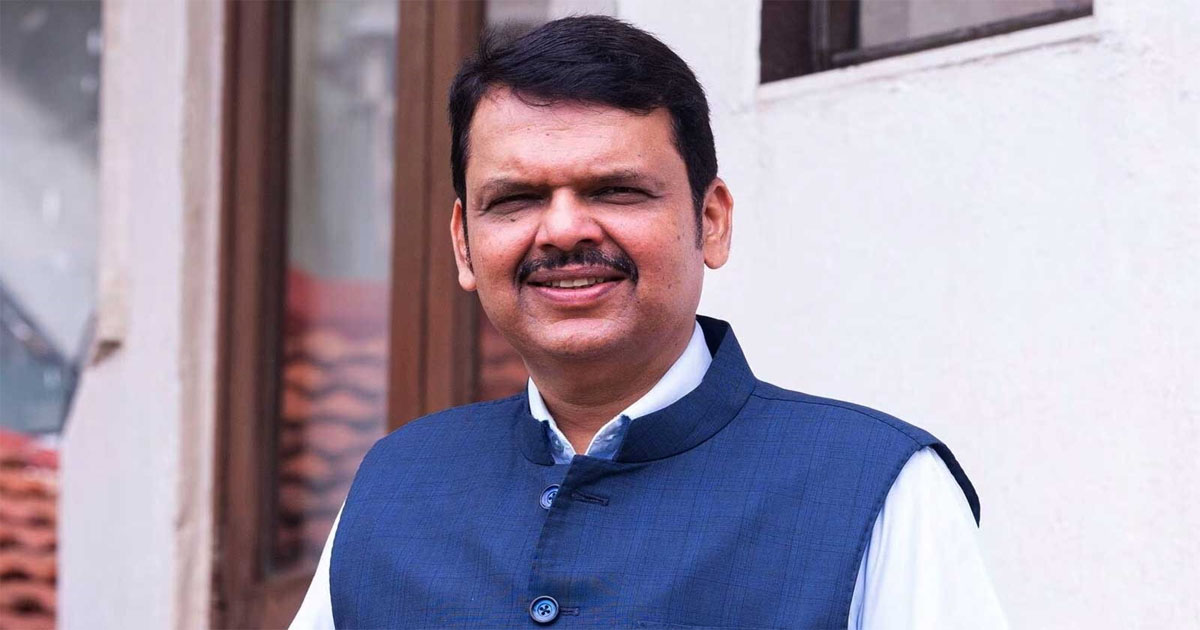
Congress has demanded an inquiry into Vishwas Nagre Patil, who was appointed as Nagpur Commissioner from Mumbai Anti-Corruption Bureau, after a video of him reciting the homily of its founder Dr. Krishna Hegdewar and describing the RSS as a patriotic organisation, went viral.
The Congress has written on Twitter and Facebook that an IPS officer enters the service by taking an oath on the Indian Constitution and accepting the responsibility of treating all citizens equally. He does not identify with any religion, caste, party or ideology. He identifies only with the Constitution. However, after watching the Rashtriya Swayamsevak Sangh stage and Nangre Patil’s speech praising the Sangh, Hindutva and Dr. Hedgewar, a fundamental question arises: was he appointing as a constitutional post? Or was he representing a particular ideology? Now the question is not limited to Nangre Patil alone but is directly related to Maharashtra Home Minister and Chief Minister Devendra Fadnavis. Therefore, as Chief Minister/Home Minister, Fadnavis should give clear answers to some questions before the people of Maharashtra. As per Rule 13(2)(f)(iii) of the All India Services (Conduct) Rules, 1968, an IPS officer requires prior permission from the government to attend a private media video or similar event. Did Vishwas Nangre Patil take prior permission from the Maharashtra Home Department or the state government to attend this event? If so, under which rule was it given, will a copy of it be made public? If permission is not taken, will the government take action for violation of the All India Services (Conduct) Rules, 1968? Violation of Rule 3(1)?. The All India Services (Conduct) Rules, 1968 clearly states that an officer should not indulge in any conduct that is unbecoming of his post. It would be appropriate for a common citizen to go to the forum of a particular ideological organization and publicly praise that ideology. But is it appropriate for an IPS officer in the service? A police officer is a guardian of the law, not a propagator of ideology.
Political neutrality or political loyalty?
Rule 3(1A)(ii) clearly states that every member of the service shall maintain political neutrality. “Political neutrality is the soul of the IPS service. So the question is whether to go to the forum of the Sangh and praise the ideology of neutrality or to express public loyalty to a particular political ideology? If tomorrow a senior police officer goes to the forum of any other religious or political organisation and starts praising them in the same way, how will the public have faith in the administration? Is the Constitution supreme or the ideology of the Sangh?
Rule 3(2B)(ii) binds every officer to the supremacy of the Constitution. The Constitution does not belong to any one religion, caste or ideology. It belongs to all Indians. So is it constitutional neutrality for a constitutional officer to go to the forum of a particular ideological organisation and publicly praise it? Rule 3(2B)(vi): “Suspected of being influenced” This rule prevents an officer from being influenced by any organisation or person that may affect his official duties.
Today, millions of citizens of Maharashtra are asking that if an officer openly praises a particular ideological organization on a platform, who will guarantee that his decisions tomorrow will not be influenced by that ideology? This is the most serious question. Rule 5(1): says,
“No member of the service shall be associated with any organization participating in politics.” “No officer in the service shall be associated with any organization participating in politics.” This rule is not limited to membership alone. The word “with affiliation” has been used deliberately. Then, will going to the platform of the Sangh and openly praising it not be considered “association”? Today, the question is not of one person.
The question is of the credibility of the Indian administrative system.
The question is of the supremacy of the Constitution.
The question is of maintaining the dignity of the khaki uniform. Therefore, this matter should be investigated, the permits should be made public and the government should be clear whether there has been a violation of the rules in this. Because there is no person, institution, or ideology greater than the Constitution. When IPS officer and Nagpur Commissioner Vishwas Nagre Patil was contacted to know his stand on this matter, he did not receive the call. After this viral video, there has been a stir among IPS officers as most IPS officers are part of any event from time to time, in such a situation, will action be taken against these IPS officers too?

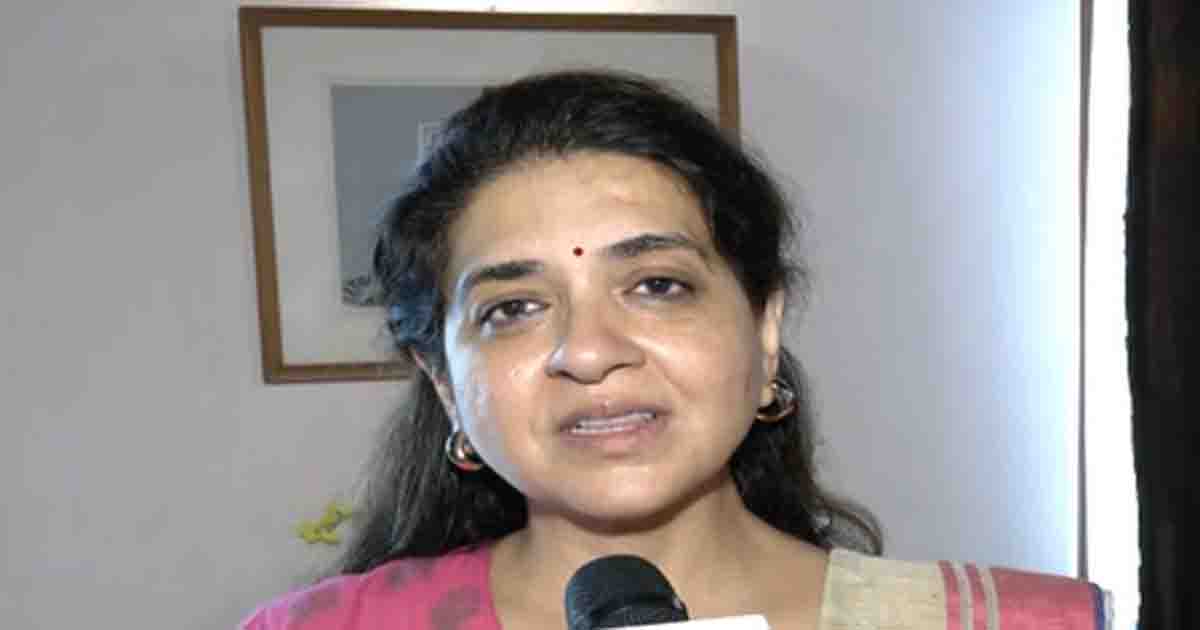
Mumbai, Oct 12: Shiv Sena national spokesperson Shaina NC said on Monday that Leader of Opposition in Lok Sabha, Rahul Gandhi, thinks protesting is equivalent to ordering food items on a delivery app.
“For Rahul Gandhi, calling for protests is similar to ordering food on delivery apps. Call someone to protest; create inconvenience for people every day,” Shaina said while commenting on the ongoing unrest in the national capital.
“Honourable Supreme Court Justice Surya Kant has said that the matter is sub judice; then why are you creating nuisance on the streets and not letting the court do its work?” she asked.
She added, “Rahul Gandhi lacks empathy and does not care about common people who would want to go to Rajiv Chowk, Patel Chowk, Mandi House, Secretariat, Barakhamba Road. They are getting affected.”
“The protestors don’t care about the Metros, traffic, security of the people,” she said.
She further said, “When the matter is in court, one must wait and respect the decision of the Supreme Court.”
Stressing the matter, she further said, “How long will you (Opposition) be able to mislead people through a false narrative? You are welcome to debate in the parliament, but don’t create chaos on the streets.”
Shaina further said that people are not attracted by names like ‘Thackeray’, ‘Gandhi’, and that the opposition has no vision, plans, or blueprints whatsoever.
On the detention of CJP leaders, Shaina said, “There is a stark difference between ‘detention’ and ‘arrest’. Everyone has the right to protest, but when it leads to unrest and riots, then the police will also have to take action.”
She praised the Delhi Police for not aggravating the protests, controlling the mobs and further protecting the common masses.
Reacting to PM Narendra Modi appeal to the country’s Gen Z to make use of the opportunities that come with Viksit Bharat and taking the world towards solutions, Shaina said that the Indian Gen Z are not the future but the ‘present’. With initiatives such as Startup India, MSME, and Lakhpati Didi, the PM has empowered all.
She further said that the youth of the nation should move forward in development and not indulge in chaos and unrest. Rather, one must understand that the need of the hour is education, security and ‘Atma-nirbharta’.
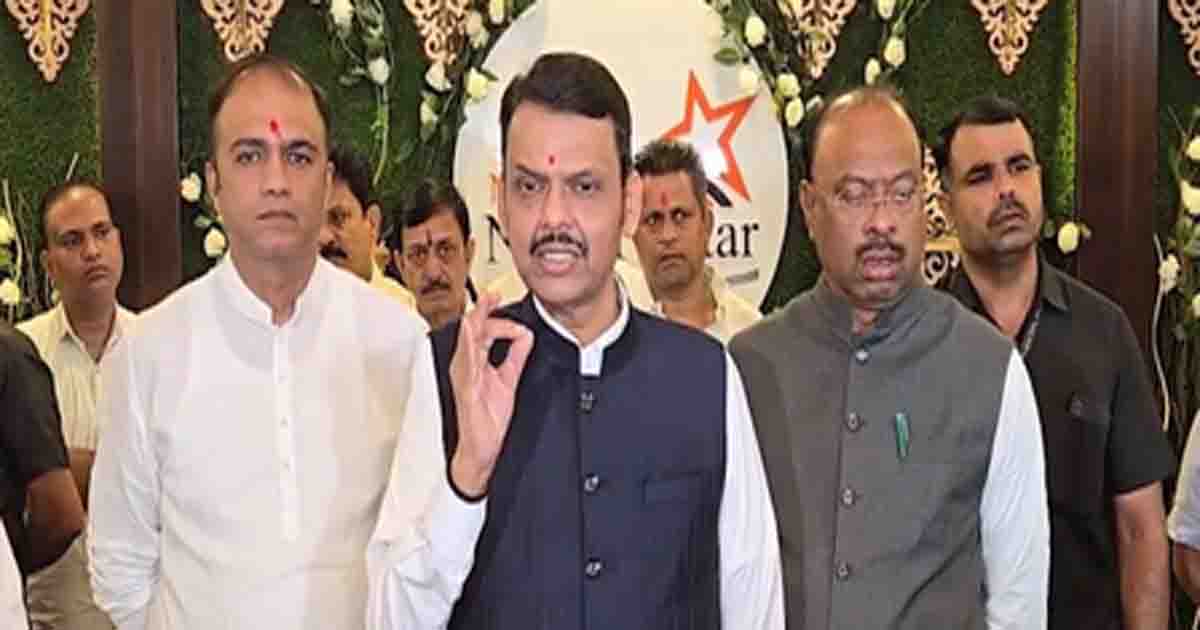
Mumbai, Oct 12: Maharashtra Chief Minister Devendra Fadnavis on Monday launched a scathing attack on Lok Sabha Opposition Leader Rahul Gandhi and the INDIA bloc, accusing them of executing a deliberate strategy to pressure and delegitimize India’s constitutional institutions, including the Supreme Court, the Comptroller and Auditor General (CAG), and the Reserve Bank of India (RBI).
The Chief Minister’s strong reaction came as INDIA bloc leaders, led by Rahul Gandhi, staged a high-voltage march in New Delhi towards the Supreme Court.
The opposition leaders are demanding the removal of Chief Election Commissioner (CEC) Gyanesh Kumar, accusing him, Prime Minister Narendra Modi, and Union Home Minister Amit Shah of subverting electoral integrity and “robbing the nation”.
CM Fadnavis criticised the opposition for brandishing copies of the Constitution while systematically undermining constitutional bodies. He alleged that the current protests are part of an extreme far-left plot designed to reject Dr B R Ambedkar’s Constitution and breed public distrust against democratic systems.
Questioning the rationale behind marching to the apex court to force a meeting with the Chief Justice of India (CJI), CM Fadnavis asked, “Which section of the Constitution empowers a political march to demand an audience with the Chief Justice of India? Attempting to exert pressure on the Supreme Court is a direct insult to Dr Ambedkar’s Constitution.”
Drawing a sharp contrast, he invoked the 1975 Emergency imposed by former Prime Minister Indira Gandhi. He highlighted how the Congress regime then suspended fundamental rights and restricted citizens from approaching High Courts and the Supreme Court.
“We fought against constitutional tampering in 1975, and we will fight again today. We will never allow anyone to alter or tamper with Dr B R Ambedkar’s Constitution,” he declared.
CM Fadnavis asserted that Congress’s repeated electoral failures have driven it to resort to anarchy. He also pointed to instances during past agitations at Jantar Mantar, where social media algorithms were manipulated to spread chaos, noting that platforms like Meta later issued apologies over ad-driven content and missteps involving Prime Minister Modi’s posts.
He stated that Congress needs to stop blaming Electronic Voting Machines (EVMs) for its political setbacks and instead look inward at its failed leadership. “Congress needs to find the reasons for its failure not in EVMs, but in its own leadership. This is a rejected leadership that is repeatedly re-launched, only to fail every time,” he noted.
Emphasising Congress’s declining footprint, CM Fadnavis noted that key states across the nation have rejected the party for decades, including Tamil Nadu: 59 years, West Bengal: 50 years, Uttar Pradesh: 46 years, Sikkim: 42 years, Bihar: 36 years, Tripura: 33 years, Gujarat: 31 years and Madhya Pradesh & Odisha: 23+ years.
He added that across 18 states, voters have distanced themselves from Congress for decades, forcing the party to rely heavily on regional partners like the DMK, RJD, and BSP to survive.
He accused the opposition of systematically trying to instill distrust in the public mind regarding democratic institutions and the rule of law.
Maharashtra
CM Fadnavis criticises protesters for targeting constitutional bodies; backs CJI’s stance

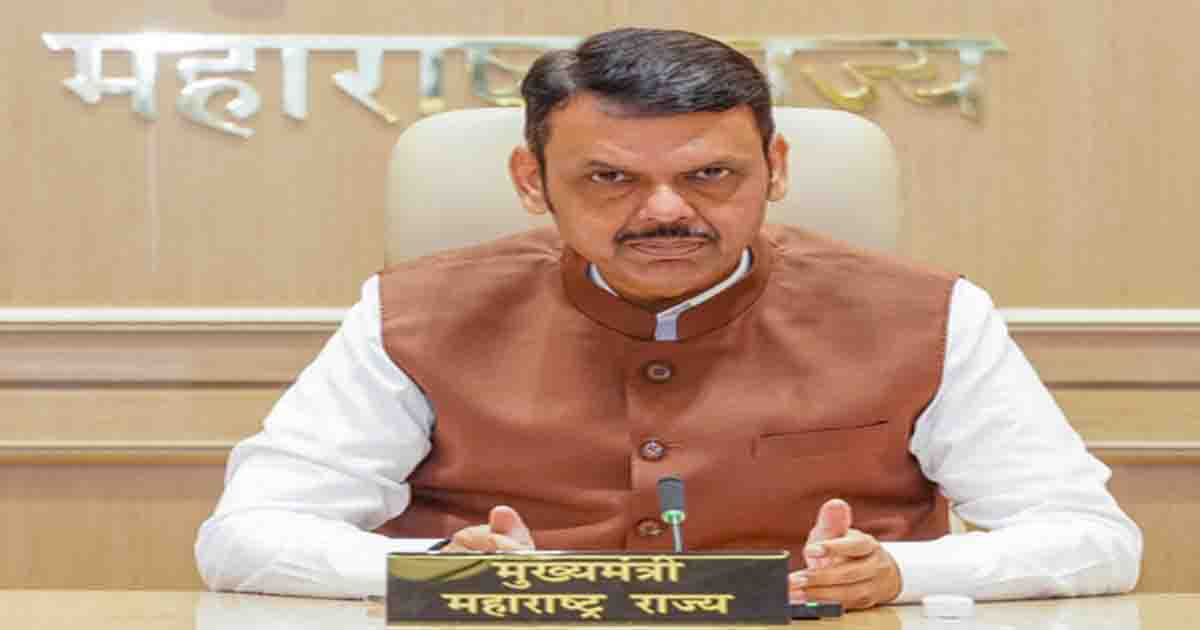
Mumbai, Oct 12: Maharashtra Chief Minister Devendra Fadnavis on Monday launched a scathing attack on the opposition and activist groups, defending Chief Justice of India (CJI) Surya Kant’s decision to decline a meeting with protesters.
Speaking during a media interaction, he accused opposition parties and outfits of running a systematic design to undermine India’s core constitutional institutions and usher in an “ultra-Leftist” brand of anarchy.
Defending the CJI’s refusal to meet demonstrators, CM Fadnavis asked, “Which Constitution states that the Chief Justice of India should meet protesters and marchers?” He emphasised that the CJI acted well within his constitutional rights and praised the judiciary’s stance that grievances must be legally addressed inside courtrooms rather than through street pressure.
CM Fadnavis alleged that a well-crafted conspiracy is underway to systematically devalue independent pillars of democracy, such as the Supreme Court, the Election Commission, and the Reserve Bank of India (RBI). He noted that the ultimate goal of these groups is to convince citizens that constitutional frameworks cannot deliver justice.
Commenting on recent demonstrations, including those by the Congress and civil groups, CM Fadnavis distinguished between lawful democratic protest and chaos. Pointing to instances where crowds allegedly crossed the line with provocative sloganeering, he asserted that when thousands with criminal records mobilise to disrupt public order, it amounts to outright anarchy rather than peaceful dissent.
Addressing reports that certain protesters praised his governance style as “soft-hearted” to allow demonstrations, he dismissed the remarks as a tactical ploy. He stated he is not easily swayed by opportunistic flattery, pointing out that the intent behind such praise was merely a convenient vehicle to target higher offices.
Contrasting the current protests with constructive democratic engagement, CM Fadnavis highlighted his administration’s willingness to engage in dialogue with anyone — reiterating that even violent insurgent elements like Naxalites have been approached with attempts at reform and persuasion through democratic channels, rather than enabling lawlessness under the guise of activism.
CM Fadnavis’ comment comes after BJP National President Nitin Nabin targeted Opposition parties and youth groups leading protests in the national capital over electoral roll revisions and the Chief Election Commissioner’s accountability.
Nabin accused the INDIA bloc and youth organisations (such as the Cockroach Janta Party) of attempting to “destabilise the nation” after being rejected by voters in democratic elections. He alleged that the ongoing protests were being driven at the behest of “foreign forces” seeking to undermine domestic peace and economic development.

MP Congress leaders join Rahul Gandhi Delhi protest

Riyadh airport attack: Embassy officials visit hospital, provide support to injured Indians

Protests not similar to ordering food from delivery apps: Shiv Sena blasts Rahul Gandhi

Security won’t return to Strait of Hormuz as long as US continues war: Iran

Maha CM accuses Rahul Gandhi, INDIA bloc of trying to weaken judiciary through protests

INDIA bloc begins protest march against ECI

Maha Congress stages agitation against Gyanesh Kumar

Complaint against Netflix & Mukesh Chhabra for inappropriate language on ‘India’s Got Latent 2’

Delhi court grants three-week interim bail to influencer Swatantra Bhardwaj

Bombay HC warns Vijay Mallya against posting court documents on social media
-

 Crime4 years ago
Class 10 student jumps to death in Jaipur
-

 Maharashtra2 years ago
Mumbai Local Train Update: Central Railway’s New Timetable Comes Into Effect; Check Full List Of Revised Timings & Stations
-

 Maharashtra2 years ago
Mumbai To Go Toll-Free Tonight! Maharashtra Govt Announces Complete Toll Waiver For Light Motor Vehicles At All 5 Entry Points Of City
-

 Maharashtra2 years ago
False photo of Imtiaz Jaleel’s rally, exposing the fooling conspiracy
-

 National News2 years ago
Ministry of Railways rolls out Special Drive 4.0 with focus on digitisation, cleanliness, inclusiveness and grievance redressal
-

 Maharashtra2 years ago
Maharashtra Elections 2024: Mumbai Metro & BEST Services Extended Till Midnight On Voting Day
-

 National News2 years ago
J&K: 4 Jawans Killed, 28 Injured After Bus Carrying BSF Personnel For Poll Duty Falls Into Gorge In Budgam; Terrifying Visuals Surface
-

 Crime2 years ago
Baba Siddique Murder: Mumbai Police Unable To Get Lawrence Bishnoi Custody Due To Home Ministry Order, Says Report