
National
Desperate Pakistan ‘pleads’ with India to reconsider Indus Waters Treaty suspension

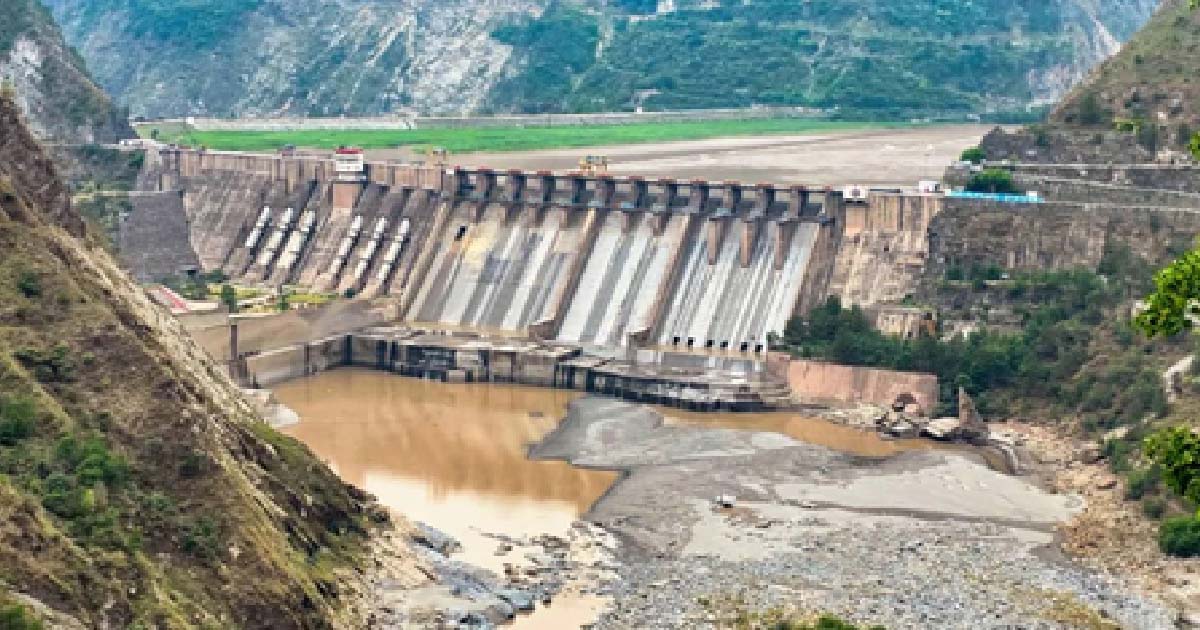
New Delhi, May 15: Nearly a few days into the understanding with Pakistan after the Indian Armed Forces left the Pakistani defence and military shattered, Islamabad has now reportedly written a letter to New Delhi, urging it to reconsider the decision of putting the Indus Waters Treaty which it has put into abeyance.
Pakistan’s Ministry of Water Resources has reportedly written a letter to New Delhi to resume the flow of rivers into its territory under the Indus Waters Treaty, media reports have claimed.
The Indus Waters Treaty is a pivotal water-sharing accord that has endured for more than six decades.
The plea comes after India halted the 1960 agreement in the wake of yet another Pakistan-backed terrorist attack, this time in Jammu and Kashmir’s Pahalgam on April 22, which left 26 civilians dead, mostly tourists.
India, invoking its national security prerogative, has placed the treaty in abeyance until Islamabad “credibly and irrevocably” ends its support for terrorism.
The move was endorsed by the Cabinet Committee on Security (CCS), the apex decision-making body on strategic affairs, marking the first time New Delhi has hit pause on the World Bank-brokered agreement.
In a letter sent to India’s Ministry of External Affairs, the Pakistani Ministry warned that suspending the treaty would trigger a crisis within the country.
Prime Minister Narendra Modi, in his first address since Operation Sindoor, underlined the government’s uncompromising position.
“Water and blood cannot flow together,” he declared.
“Terror and talks cannot happen at the same time. Terror and trade cannot happen simultaneously.”
However, Indian officials have dismissed these concerns, pointing to Pakistan’s longstanding use of terrorism as a state policy.
The treaty allocates three western rivers, Indus, Jhelum, and Chenab, to Pakistan, while the eastern rivers – Sutlej, Beas, and Ravi, remain with India.
India has now announced a three-tier strategy — short-term, mid-term, and long-term to prevent any flow of Indus waters into Pakistan.
Union Jal Shakti Minister C.R. Paatil said that steps are being taken to ensure not a single drop of water is allowed to leave Indian territory unutilised.
India’s Foreign Ministry Spokesperson Randhir Jaiswal reinforced the government’s stance, saying, “The Indus Waters Treaty was founded on goodwill and friendship. Pakistan has trampled on these values by supporting cross-border terrorism for decades.”
The strong response follows Operation Sindoor, a swift military campaign launched after the Pahalgam attack, which resulted in a brief ceasefire agreement. But New Delhi has made it clear: dialogue with Islamabad will now be limited to one agenda — ending terrorism and ensuring the return of Pakistan-Occupied Kashmir.
As per the 1960 treaty, India got around 30 per cent of the total water carried by the Indus River System located in India, while Pakistan got the remaining 70 per cent.
With the Indus Waters Treaty suspended, the Narendra Modi government is expected to take major steps toward completing the stalled hydroelectric projects.
A key meeting is likely to be held this week with Home Minister Amit Shah, along with Water Resources Minister Paatil, Power Minister Manohar Lal Khattar, Agriculture Minister Shivraj Singh Chouhan, and senior officials from all related Ministries. Since the suspension of the Indus Waters Treaty, two meetings have already taken place between Amit Shah, Paatil, and top officials of the Ministry.


New Delhi, Jan 24 : Investors are likely to remain on edge over the proposed US framework on Greenland, and near-term volatility related to this issue can continue, a report has said.
The report from Bank of Baroda said that market participants are awaiting more details that could determine whether negotiations succeed or unravel.
“Going ahead, investors are likely to await more details of the deal, as there are a few sticking points which can derail the negotiations. Hence, some volatility can be expected,” the report said.
Several analysts expect the arrangement to resemble an update of the existing security agreement between the US and Denmark, which was signed in 1951, the report noted.
Further negotiations will follow in due course which will cover areas such as US military presence in Greenland, as well as use of its mineral resources and sovereignty, said Aditi Gupta, Economist, Bank of Baroda.
US President Donald Trump has framed Washington’s interest in Greenland as driven by national security concerns, but the island’s largely unexplored mineral wealth including oil, gas and rare earth elements is of interest to US, the report said.
“The announcement of a framework deal between the US and NATO has helped to soothe investors’ nerves, however the details of the deal are still fuzzy,” it added.
Geo-political tensions escalated and markets went into turmoil after the US President intensified rhetoric to annex Greenland and threatened economic measures against European countries that oppose US plans. In response, several European nations, including France, Germany, Sweden amongst others increased military deployment in Greenland, further escalating tensions.
Trump had announced a 10 per cent additional tariff on goods from the UK, Denmark, Norway, Sweden, France, Germany, Netherlands and Finland from February 1, 2026. The rate was expected to increase to 25 per cent by June 1, 2026.
Later, he backed off from his threat of imposing tariffs on European countries along the sidelines of the World Economic Forum meeting in Davos.
Crime
Two Held With ₹68 Lakh Cash Near India-Myanmar Border In Mizoram; Heroin Worth ₹78 Lakh Seized


Aizawl: Two persons were arrested with Rs 68 lakh in cash near the India-Myanmar border in east Mizoram’s Champhai district, officials said on Thursday.
Acting on a tip-off, the Assam Rifles intercepted a vehicle at Zote village on August 11, they said.
Upon thorough checking, Rs 60 lakh in cash was recovered from two persons in the vehicle.
The duo, identified as Joseph Lalthansanga and Vanlalruati, could not state any proper reason why they were carrying such a huge amount of cash. They were subsequently handed over to the police for legal action, officials said.
In another operation, the Assam Rifles recovered 94.6 gram of heroin, worth Rs 78 lakh, from the village on Wednesday.
The drugs were handed over to the Excise and Narcotics Department, officials said.

India’s AI technology spending is projected to grow at an annualised rate of 38 per cent from 2023 to reach $10.4 billion (approximately Rs. 92 thousand crore) in 2028, a report said on Thursday.
Around 40 per cent of organisations in India have already implemented agentic AI, and close to 50 per cent are planning to use the technology within the next 12 months, IDC InfoBrief and UiPath said in a joint report.
In 2025, AI investments are focused on building the foundational infrastructure required to power transformative, high-value use cases.
According to the report, the adoption is surging, fueled by a tech-savvy workforce, expanding digital infrastructure, and government-backed initiatives.
Organisations’ spending on enterprise automation, multilingual AI models, and agentic deployments is driving this momentum further.
The benefits are already visible, as 80 per cent of Indian companies say agentic AI boosts productivity, while 73 per cent say it improves decision-making, the report said.
According to the report, agentic AI is gaining strong traction across the manufacturing, retail and wholesale, healthcare, and life sciences industries, which heavily rely on data and repetitive decision-making cycles.
“Agentic automation is rapidly redefining business operations across India. While enterprises in this region are embracing the full potential of AI agents to streamline workflows and autonomously execute complex business processes, trust and security remain barriers to widespread implementation,” said DebDeep Sengupta, Area Vice President, South Asia, UiPath.
Our agentic automation platform directly addresses these challenges, breaking down barriers to enterprise AI adoption by enhancing security and compliance, improving accuracy and reliability for agentic outcomes, Sengupta added.
About 69 per cent of Indian organisations are using agentic AI to enhance productivity, 59 per cent to drive personalised customer engagement, while 57 per cent apply it to risk and fraud detection, highlighting how agentic AI is being applied across front and back-office functions, the report highlighted.
“Becoming an AI-fueled business is no longer an option in today’s unpredictable climate. For many organisations, it’s fast becoming a strategic necessity,” said Deepika Giri, Associate Vice President, IDC Asia/Pacific.
Across the region, organisations are embracing agentic AI and agentic automation at scale, Giri added.

Drug dealer arrested in Mumbai with 1.5 kg of charas (cannabis resin)

Lawrence Bishnoi gang shooters had practised shooting in the Aarey Colony forest before opening fire at Tiger Shroff’s residence.

PM Modi witnesses IAF’s air show, inaugurates garment facility in Varanasi

Major action by Mumbai ANC: Drug peddlers arrested.

Delhi Police bust Jamtara-based cyber fraud syndicate, 2 held for credit card fraud

Rahul, Cong ecosystem want to force regime change: BJP after Neha Bora praises B’desh Gen-Z protest

BJP pays tribute to ex-President Abdul Kalam, recalls his enduring influence on generations of India’s youth

Attack on democratic rights: INDIA Bloc leaders on detentions of anti-ECI protestors

INDIA bloc begins protest march against ECI

Maha Congress stages agitation against Gyanesh Kumar
-

 Crime4 years ago
Class 10 student jumps to death in Jaipur
-

 Maharashtra2 years ago
Mumbai Local Train Update: Central Railway’s New Timetable Comes Into Effect; Check Full List Of Revised Timings & Stations
-

 Maharashtra2 years ago
Mumbai To Go Toll-Free Tonight! Maharashtra Govt Announces Complete Toll Waiver For Light Motor Vehicles At All 5 Entry Points Of City
-

 Maharashtra2 years ago
False photo of Imtiaz Jaleel’s rally, exposing the fooling conspiracy
-

 National News2 years ago
Ministry of Railways rolls out Special Drive 4.0 with focus on digitisation, cleanliness, inclusiveness and grievance redressal
-

 Maharashtra2 years ago
Maharashtra Elections 2024: Mumbai Metro & BEST Services Extended Till Midnight On Voting Day
-

 National News2 years ago
J&K: 4 Jawans Killed, 28 Injured After Bus Carrying BSF Personnel For Poll Duty Falls Into Gorge In Budgam; Terrifying Visuals Surface
-

 Crime2 years ago
Baba Siddique Murder: Mumbai Police Unable To Get Lawrence Bishnoi Custody Due To Home Ministry Order, Says Report