
Crime
Delhi Police invokes attempted murder charge in FIR over NEET protest violence

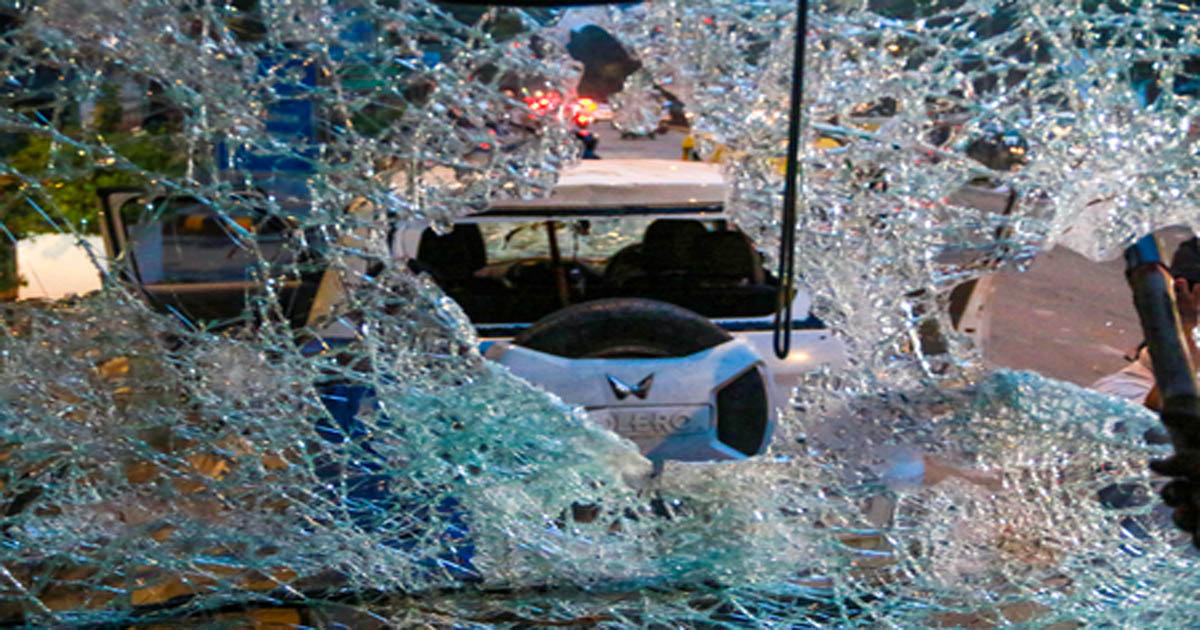
New Delhi, July 25: Delhi Police has invoked the charge of attempted murder in the FIR registered at Kartavya Path Police Station in connection with the violence that erupted near Rail Bhawan and Parliament during the July 20 protest march.
The case incorporates several serious offences under the Bharatiya Nyaya Sanhita (BNS).
According to police, the FIR was lodged on the complaint of an Inspector posted at Kartavya Path Police Station and documents the sequence of events that unfolded on Rafi Marg during the protest.
The FIR states that the complainant was deployed on duty at C-Hexagon, Zone-11 (Pink Booth), from 5:00 a.m. onwards as part of the security arrangements in the high-security zone.
As per the complaint, after receiving information over the wireless network, the police team rushed to the barricades near the Rail Bhawan roundabout, where thousands of protesters had assembled.
The FIR further states that repeated announcements were made through loudspeakers informing the gathering that prohibitory orders under Section 163 of the Bharatiya Nagarik Suraksha Sanhita (BNSS) were in force and that permission had not been granted for the protest.
Despite the repeated warnings, the protesters allegedly refused to disperse and continued raising slogans, according to the FIR.
Police have further alleged in the complaint that certain individuals in the crowd instigated protesters to breach the barricades and move towards Parliament.
According to the FIR, protesters allegedly surrounded police personnel and assaulted them, besides hurling slippers and stones at the security forces deployed at the site.
The complaint further alleges that the mob attacked police personnel with the intention to kill, resulting in injuries to several officers deployed for law and order duties.
The FIR also alleges that public property, along with several private vehicles, was damaged during the violence.
According to the police, in view of the security requirements around Parliament and other key government establishments, personnel resorted to a lathi-charge and used tear gas shells to disperse the crowd and restore order.
Officials said the case has been registered under 13 provisions of the Bharatiya Nyaya Sanhita, including Section 109(1) relating to attempted murder, along with offences pertaining to assault on a public servant, obstruction in discharge of official duty, unlawful assembly, rioting, damage to public property and acts endangering human life.
Police said a total of 129 police personnel and more than 60 protesters sustained injuries during the clashes that took place on July 20.
In the aftermath of the violence, Delhi Police has deployed 18 Deputy Commissioners of Police (DCPs) across various routes as part of enhanced security arrangements.
Officials further said that around 15 FIRs have been registered so far in connection with the incidents linked to the protest.
Delhi Police also stated that if any allegations are made by the Cockroach Janata Party (CJP) or any other individual or organisation regarding the incident, those claims will be examined and investigated, and the findings will be made public.

Crime
Suspicious passenger apprehended at Delhi Jama Masjid Metro Station after trying to flee during screening

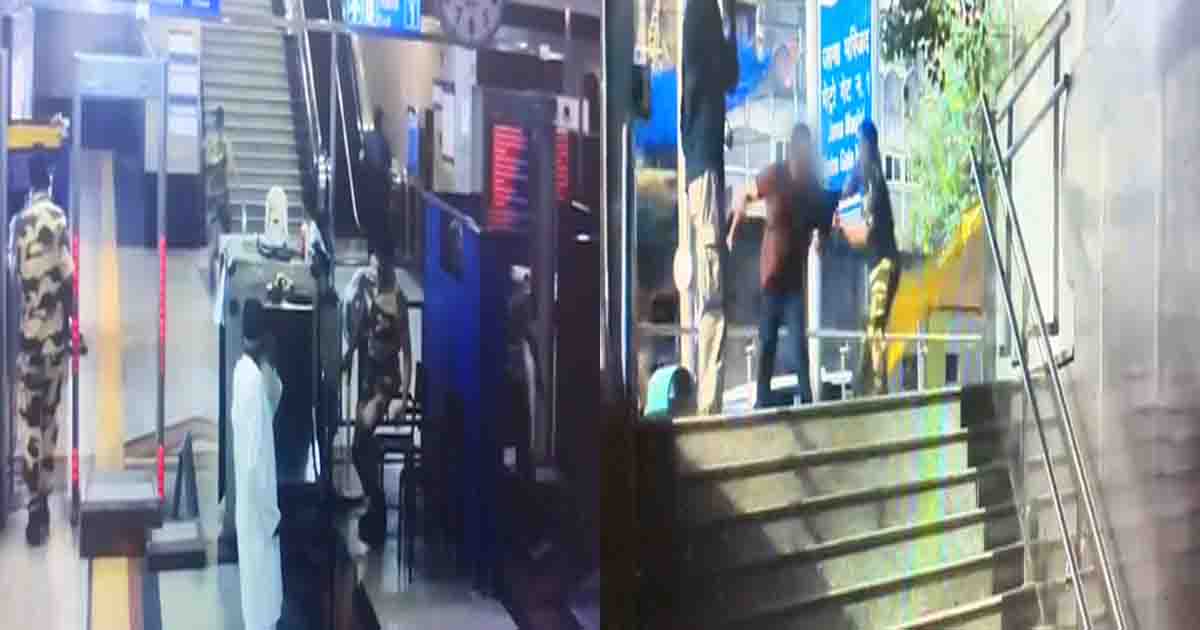
Alert personnel of the Central Industrial Security Force (CISF) apprehended a passenger at Delhi’s Jama Masjid Metro Station after he allegedly attempted to flee when a suspicious object was detected during his baggage screening.
According to the CISF, the incident came to light when the passenger’s baggage was being screened through an X-ray Baggage Inspection System (XBIS). During the examination, personnel noticed a dense and suspicious object on the scanner screen.
Sensing something unusual, the security personnel attempted to examine the matter further. However, the passenger allegedly tried to escape from the screening area, according to CISF.
Displaying promptness and alertness, CISF personnel immediately chased him and apprehended him near the station’s exit gate before he could leave the premises.
A subsequent examination of his belongings led to the recovery of an unidentified semi-solid substance concealed inside a stitched portion of his undergarment, the CISF said.
According to reports, the passenger reportedly claimed to be a non-resident Indian (NRI) residing in Kuala Lumpur, Malaysia.
Following the recovery, the CISF handed over the passenger, along with his belongings and the suspected substance, to the police for further investigation.
The nature of the semi-solid substance and the reason behind its concealment remain unclear. Police are investigating the matter to establish the identity of the substance and determine the circumstances surrounding the incident.
The CISF’s swift intervention prevented the passenger from leaving the station without further examination.
The force said its personnel remain alert during the screening of passengers and their baggage to ensure compliance with security protocols and prevent any potential threat to metro commuters. Further action in the case will depend on the findings of the investigation, said the police officials.

Amid campaigning for the biennial elections for eight MLC seats on October 23 in Bihar, police have registered three FIRs in connection with alleged violation of election rules during a roadshow in the Mokama Assembly constituency of Patna district.
The roadshow was held on Sunday. The cases have been registered against local MLA Anant Singh and Jan Suraaj candidate Anuj Singh, according to police sources.
Of the three cases, two were registered at Barh police station and one at Mokama police station in Patna district.
The police are investigating the alleged violations and examining the circumstances surrounding the roadshow.
According to police sources, the action followed complaints of violations of the Model Code of Conduct and other applicable regulations during the Member of Legislative Council (MLC) election-related event.
The allegations concern compliance with rules governing political roadshows and public campaigning.
However, the specific allegations against each leader and the legal sections invoked in the FIRs have not yet been independently confirmed.
The registration of the cases has triggered political discussions in the Mokama and Barh areas, where election-related activities have intensified.
During the MLC election period, candidates and political parties are required to comply with the Model Code of Conduct and applicable rules governing public meetings, roadshows, permissions and traffic management.
Authorities can initiate legal action when alleged violations are reported.
However, the filing of an FIR does not establish guilt. The allegations against Anant Singh and Anuj Singh will be subject to investigation and the due process of law.
Police said further action would be taken on the basis of the evidence collected and the findings of the investigation.
Additional details are awaited.
Anant Singh, the JD(U) MLA from Mokama in Patna district, has openly extended his support to Jan Suraaj candidate Anuj Singh and is campaigning against his own party’s official nominee, Neeraj Kumar, in the upcoming MLC election.
Anant Singh said his decision to support Anuj Singh stemmed from a personal dispute with Neeraj Kumar. He clarified that his move had nothing to do with his political relationship with the JD(U).
The election for eight Legislative Council seats is scheduled to be held on October 23, with counting of votes and announcement of results set for October 27.

The police on Monday apprehended a dreaded criminal following an exchange of fire in the Amdarah forest under the Orient police station area in Odisha Jharsuguda district, said a senior police official.
The Jharsuguda police also informed the media that the incident took place early Monday morning. The notorious criminal was identified as Bunty Prasad, a resident in the Hanuman Nagar area under the limits of the Orient Police Station of Jharsuguda.
Bunty has reportedly been evading law enforcement and is allegedly wanted in connection with 17 pending serious criminal cases, including attempted murder and Arms Act cases registered at Brajrajnagar and Orient police stations.
According to police, a special team from the Orient police station received reliable intelligence at around 6:00 a.m. indicating that the wanted criminal was hiding out in the dense cover of the Amdarah forest.
“Acting swiftly on the tip-off, the police personnel cordoned off the perimeter and launched a meticulous combing operation. Trapped and realising he was cornered, Bunty Prasad attempted to shoot his way out, opening sudden fire on the advancing police party,” the police official added.
Exercising restraint and acting strictly in self-defence, the police team returned controlled fire. During the exchange, a bullet struck Bunty in his left leg, causing him to fall to the ground. The police overpowered and arrested him immediately at the scene. An illegal firearm was also recovered from his possession, and his motorcycle was seized by the police.
Bunty was first rushed to the Khaliakani Community Health Centre for initial medical attention and was later shifted to the Jharsuguda District Headquarters Hospital (DHH) for further treatment.
In a separate case, the Brajarajnagar police of Jharsuguda district also arrested another notorious criminal and seized two country-made pistols and some ammunition following a raid on Monday.
Odisha Police have launched a special drive to arrest habitual offenders and criminals to avoid incidents of violence during the ongoing festive season.

Suspicious passenger apprehended at Delhi Jama Masjid Metro Station after trying to flee during screening

Tiger Shroff attack: Bihar family denies accused is their son

Bollywood in the Crosshairs After Firing at Tiger Shroff; Legal Action Initiated Against Bishnoi Gang, Three Shooters Arrested

E-Office System Implemented in Mumbai Municipal Corporation; 14,000 Users to Be Integrated in Phases to Make Administration More Transparent and Efficient

Bihar MLC election: Three FIRs filed against Anant Singh, Jan Suraaj candidate Anuj Singh

Rahul, Cong ecosystem want to force regime change: BJP after Neha Bora praises B’desh Gen-Z protest

BJP pays tribute to ex-President Abdul Kalam, recalls his enduring influence on generations of India’s youth

Attack on democratic rights: INDIA Bloc leaders on detentions of anti-ECI protestors

INDIA bloc begins protest march against ECI

Maha Congress stages agitation against Gyanesh Kumar
-

 Crime4 years ago
Class 10 student jumps to death in Jaipur
-

 Maharashtra2 years ago
Mumbai Local Train Update: Central Railway’s New Timetable Comes Into Effect; Check Full List Of Revised Timings & Stations
-

 Maharashtra2 years ago
Mumbai To Go Toll-Free Tonight! Maharashtra Govt Announces Complete Toll Waiver For Light Motor Vehicles At All 5 Entry Points Of City
-

 Maharashtra2 years ago
False photo of Imtiaz Jaleel’s rally, exposing the fooling conspiracy
-

 National News2 years ago
Ministry of Railways rolls out Special Drive 4.0 with focus on digitisation, cleanliness, inclusiveness and grievance redressal
-

 Maharashtra2 years ago
Maharashtra Elections 2024: Mumbai Metro & BEST Services Extended Till Midnight On Voting Day
-

 National News2 years ago
J&K: 4 Jawans Killed, 28 Injured After Bus Carrying BSF Personnel For Poll Duty Falls Into Gorge In Budgam; Terrifying Visuals Surface
-

 Crime2 years ago
Baba Siddique Murder: Mumbai Police Unable To Get Lawrence Bishnoi Custody Due To Home Ministry Order, Says Report