
Crime
Delhi Police busts pan-India matrimonial cyber fraud call centre in Agra; mastermind arrested

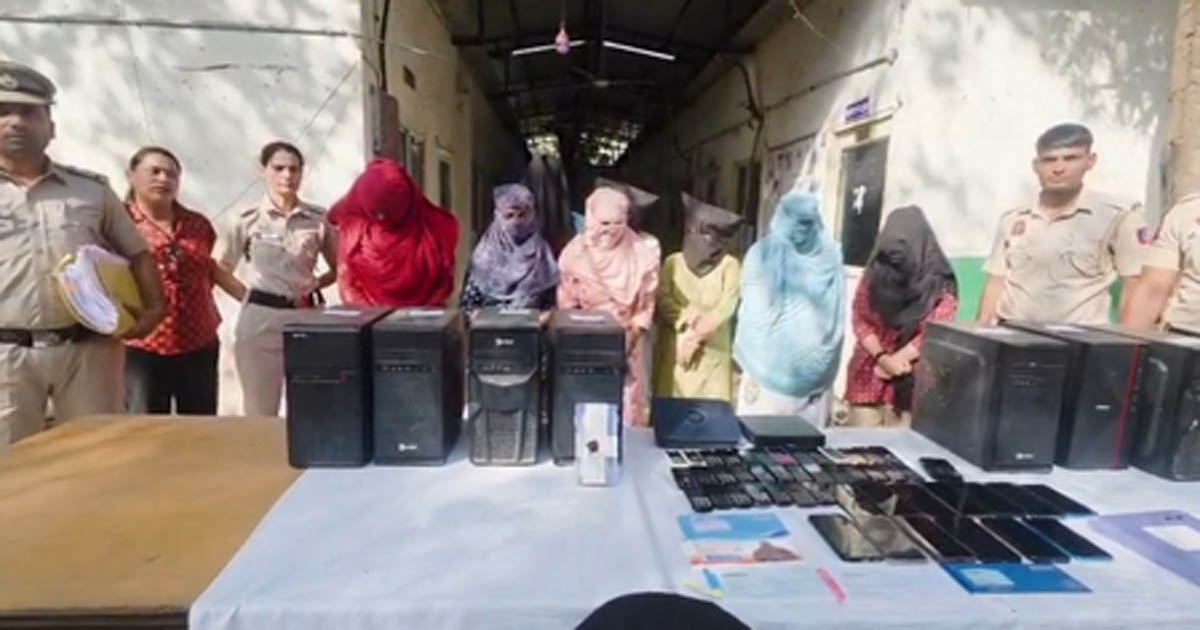
New Delhi, Sep 15: The Central District Cyber Police have busted an organised pan-India matrimonial cyber fraud racket being operated from a call centre in Agra under the facade of a branded matrimonial portal, shaadipartner.com, and arrested its mastermind, a practising advocate.
According to the police, the syndicate targeted men seeking matrimonial alliances and used fake profiles, photographs of women sourced from the internet and staged conversations to create an impression of genuine matchmaking services.
The racket operated on the principle of ‘cheat small, cheat many’, with the accused deliberately limiting the amount extracted from an individual victim to a maximum of Rs 15,000.
The investigation began following a complaint lodged on the National Cyber Crime Reporting Portal (NCRP) by a man who alleged that he had been induced, deceived and defrauded on the false promise of being provided a matrimonial alliance through shaadipartner.com.
Following the complaint, FIR No. 78/2025 was registered at Cyber Police Station, Central District, under Sections 318(4), 317(5), 61(2) and 3(5) of the Bharatiya Nyaya Sanhita (BNS).
According to the investigation, the syndicate had been operating the racket for around one year and systematically targeting matrimonial seekers across different parts of the country.
To lure prospective victims, the fraudsters initially shared photographs of attractive women through WhatsApp. To establish trust and create the appearance of an authentic matchmaking process, they allegedly arranged telephonic conversations between the complainants and women posing as prospective brides.
Once a victim developed an emotional connection or expressed genuine interest, the accused allegedly induced him to make payments at different stages. The victim was charged under various pretexts, including registration charges, profile access fees, profile activation charges and contact-unlocking fees. In the case under investigation, the complainant was allegedly defrauded of Rs 15,000.
Subsequent technical investigation and analysis of the financial trail established that the entire amount allegedly defrauded from the complainant was credited directly into a current account with the Central Bank of India. The account, bearing the number 0512****190, was registered in the name of the commercial entity “M/s Shaadi Partner Com”.
According to banking records and KYC details, Jaya Shakya alias Shashi was the sole proprietor and authorised signatory of the beneficiary account.
Further analysis through the NCRP database revealed that the same bank account was linked to six complaints registered from different parts of the country. Police said the findings indicated an active and coordinated racket that primarily targeted male matrimonial seekers across India using a similar modus operandi.
Acting on the information gathered during the investigation, a police team raided an illegal and fully functional tele-calling call centre operating from Property No. 25, Ramaji Dham Apartment, Sikandra, Agra, Uttar Pradesh, on September 4.
Jaya Shakya, 44, who served as the operational manager and front face of the establishment, was arrested at the spot. Eight female tele-callers were also apprehended during the operation.
During sustained custodial interrogation of Jaya Shakya after she was brought to Delhi, investigators uncovered the identity of the person behind the operation.
Police said the call centre was financed, owned and masterminded by Amit Kumar, 29, an advocate and BA LLB graduate.
According to investigators, Kumar used his knowledge of legal procedures and documentation to create a multi-layered structure aimed at shielding himself from direct scrutiny.
Investigators said the banking channels and procurement of SIM cards were also structured in the name of the proprietorship firm. This ensured that any initial investigation into the financial transactions or communication channels would lead to Jaya Shakya rather than Kumar.
Police alleged that Kumar presented himself as the firm’s ‘Legal Advisor’, thereby attempting to establish plausible deniability and avoid direct police scrutiny.
Following the raid on September 4, Kumar switched off his mobile phones and went underground after learning that the Agra call centre had been raided by Delhi Police.
The investigation team subsequently deployed technical surveillance to track his movements and zeroed in on his location in Agra.
On September 8, police intercepted Kumar in the Kala Kunj area of Agra while he was travelling in a black Hyundai Creta bearing an ‘Advocate’ sticker on its windshields.
According to the police, Kumar displayed his credentials issued by the Uttar Pradesh State Bar Council and claimed that he was merely acting as a legal counsel. However, investigators said that digital evidence gathered during the probe contradicted his claim. Police subsequently arrested Kumar on September 8.
According to police, female tele-callers were recruited through vacancies advertised on recruitment platforms such as WorkIndia and Apna App, as well as through newspaper advertisements. The recruits were allegedly made to believe that they were joining a genuine matrimonial service.
To establish the credibility of the operation, the accused used documents such as an MSME Udyam certificate, Uttar Pradesh Labour Department registration, a franchise agreement and Kumar’s Bar Council credentials.
Police said these documents were shown to young employees during recruitment to convince them that the organisation was a legitimate and legally compliant matrimonial service.
Investigators alleged that, over time, some of the female employees realised that they were participating in a fraudulent operation. However, the prospect of earning additional money allegedly kept them involved.
According to the police, Jaya Shakya and Amit Kumar paid the tele-callers a 10 per cent incentive on every amount they successfully extracted from a victim. This was in addition to their monthly salaries of around Rs 6,000 to Rs 7,000.
To make the operation appear genuine, the accused created dummy client profiles on the matrimonial website and sent screenshots to victims. These screenshots were intended to convince them that they were receiving genuine matchmaking services.
When a victim requested to speak with the woman whose photograph had been shown to him, another female employee from the call centre allegedly posed as the prospective bride during conference calls.
The victim was then allowed to speak with the woman for several days, creating the impression that a genuine relationship was developing.
After the victim had developed an emotional connection, the alliance was rejected on various false grounds. These included claims of Manglik Dosh, family disapproval or an assertion that the woman had become engaged elsewhere.
If a victim insisted on receiving more options, the tele-callers provided details of other families whose profiles were already available on the portal.
By using photographs downloaded from the internet, staging conversations with women posing as prospective brides and arranging calls with people pretending to be family members, the syndicate allegedly created a convincing illusion of genuine matchmaking.
Each female tele-caller had a monthly target of bringing in at least Rs 15,000 in fraudulent collections. Failure to meet the target could reportedly result in salary deductions, while repeated failure led to termination.
The accused also adopted measures to prevent victims from filing police complaints.
According to investigators, whenever tele-callers sensed that a suspicious or angry victim was preparing to report the matter, they would refund the money to the victim to quietly settle the issue.
Police further alleged that when a victim nevertheless filed a complaint through the NCRP, the complainant’s action could lead to the freezing of the proprietorship firm’s bank account.
At that stage, Amit Kumar stepped in and used his legal credentials to handle the situation.
The alleged mastermind, Amit Kumar, a resident of Sikandra, Agra, is 29 years old and is a practising advocate. Police have described him as the alleged real owner and mastermind of the fake matrimonial matchmaking call centre.
Jaya Shakya, a resident of West Arjun Nagar, Agra, is 44 years old. Police have identified her as the alleged operational manager and on-paper sole proprietor of the fraudulent entity. She supervised day-to-day tele-calling operations and managed the female staff.
Other accused identified by the police include Jyoti Kumari, 27, a resident of Mohalla Bichpuri Road, Agra; Karishma Sharma, 24, a resident of Shastri Puram, Agra; Rashmi, 24, a resident of Shahganj, Agra; Anshu Kumari, 32, a resident of Radhe Garden, Agra, and originally from Bhagalpur, Bihar; Meghna Parashar, 23, a resident of Agra; Padma, 26, a resident of Bodla, Agra; and Aashika, 21, a resident of Agra.


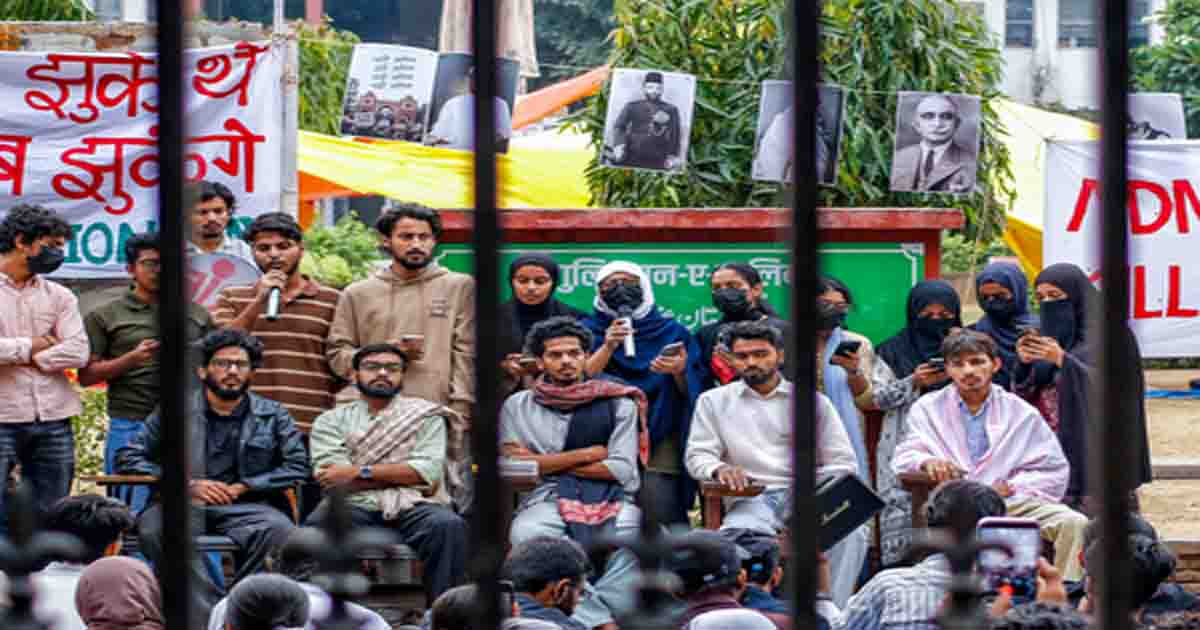
The Delhi Police on Thursday lodged a First Information Report (FIR) against unknown persons in connection with an incident involving vandalism and damage to property at the Jamia Millia Islamia (JMI), officials said.
According to the police, the case has been registered at Jamia Nagar Police Station, on the complaint of the varsity administration.
This is the second FIR registered in connection with the ongoing students’ protests at the university in recent days.
Earlier, the Delhi Police had registered an FIR at the Jamia Nagar police station against Congress MPs Imran Pratapgarhi and Imran Masood, as well as Samajwadi Party MP Mohibbullah Nadvi, following a complaint by Jamia Millia Islamia registrar Md. Mahtab Alam Rizvi.
Rizvi had alleged that the Congress MPs entered the campus without authorisation on separate occasions, amid the ongoing agitation.
Students of the university have been staging a hunger strike since October 12 demanding the restoration of the Jamia Millia Islamia Students’ Union (JMISU) and the removal of the University’s Chief Proctor over a “crackdown” on protesters.
Meanwhile, on Wednesday, the university expressed deep shock, disappointment, and concern regarding the incidents that took place on Tuesday night, which involved vandalism and damage to university property.
The varsity said that upon receiving reports of attacks on the campus, the proctorial team and JMI faculty members immediately arrived on the spot.
“They discovered that groups of protesting students and local residents had vandalised University gates and walls, brought down Gate No. 4C, pelted stones, and damaged the CCTV control room and cameras, while also severing their connections. It is reported that a group of masked protesters even reached the University’s boys’ hostel in an attempt to mobilise more individuals to join them,” the JMI said in a statement.
According to the University, viral social media videos posted by the protesting students themselves show extensive damage inflicted upon JMI property.
“This has left the university community deeply distressed and outraged,” it said.
“Most concerning is the fact that the vandalism began shortly after members of the protesting student committee had been in discussions with JMI faculty (this marked the seventh such attempt at dialogue initiated by the university administration),” the University said.
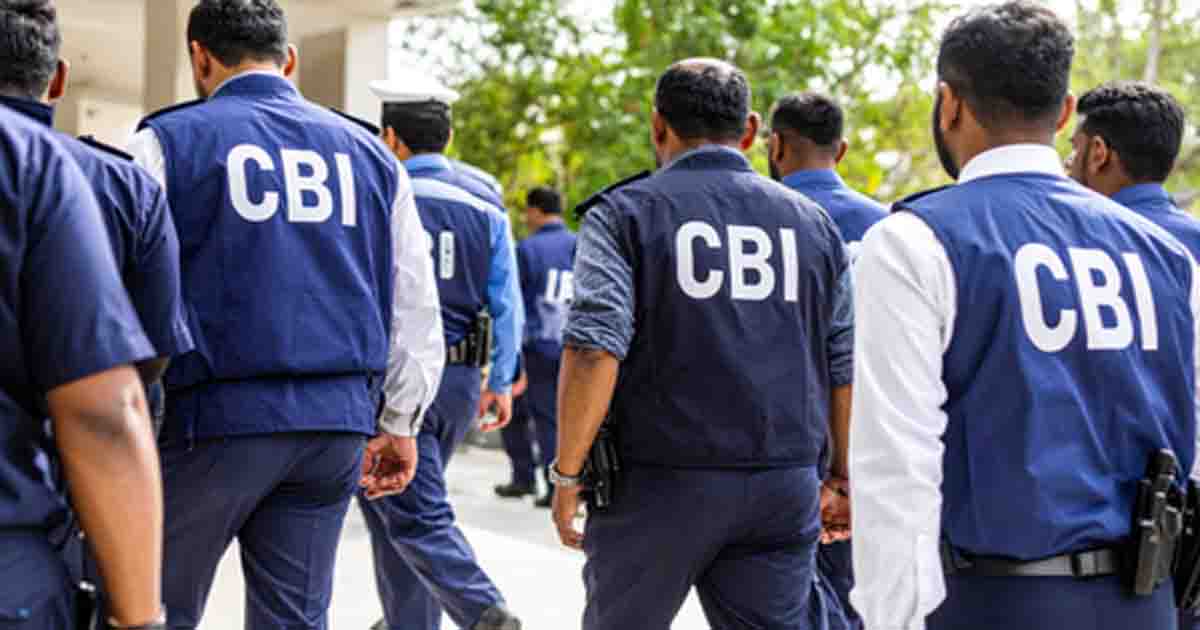
The Central Bureau of Investigation (CBI) on Thursday carried out searches at multiple locations in Pune in connection with an alleged bank fraud case involving M/s Aaj Ka Anand Papers Pvt Ltd, an official statement said.
The agency recently registered a case against the company, its directors and unknown public servants based on a complaint filed by the State Bank of India (SBI), Mumbai.
The complaint alleges criminal conspiracy, cheating, criminal breach of trust, and manipulation of accounts, resulting in a wrongful loss of Rs 81.66 crore to the bank.
According to the CBI, the accused allegedly suppressed and misappropriated business revenues, altered and falsified books of accounts and electronic records, and diverted funds in violation of lending conditions.
Investigators suspect that substantial amounts were routed through current accounts maintained outside the designated banking channels without obtaining the consent of consortium lenders.
The agency said the alleged diversion of funds and unauthorised transactions amounted to cheating, criminal breach of trust, misappropriation and criminal conspiracy, causing significant financial loss to SBI.
As part of the ongoing probe, CBI teams searched several premises linked to the company and its directors. The searches covered both office establishments and residential properties associated with the accused persons.
During the operation, investigators recovered documents and digital evidence that are believed to be relevant to the case. The seized material is being examined to ascertain the full extent of the alleged fraud, including the suspected diversion and misappropriation of funds, as well as the involvement of other individuals who may have played a role in the conspiracy.
The CBI said the evidence collected during the searches would help investigators trace the flow of funds and determine whether there were any violations of banking norms and sanction conditions imposed by the lending institutions.
Further investigation in the case is underway, the agency added.
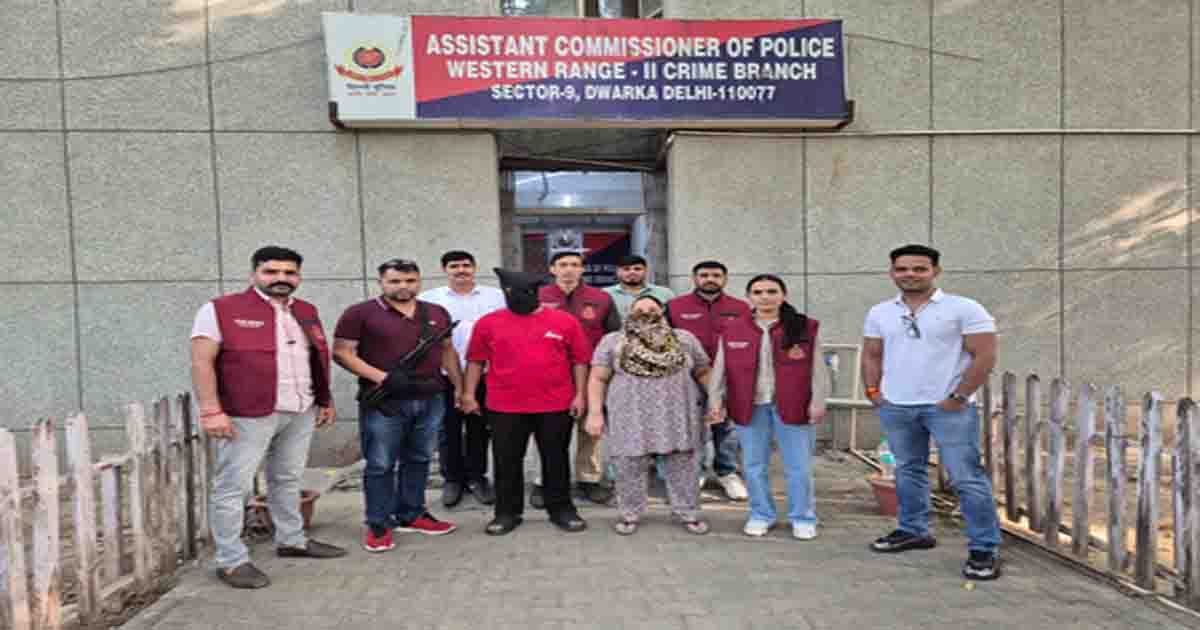
The Delhi Police Crime Branch has arrested a wanted mother-son duo linked to an organised drug syndicate and facing cases under the Maharashtra Control of Organised Crime Act (MCOCA) and the Narcotic Drugs and Psychotropic Substances (NDPS) Act, officials said on Thursday.
The accused have been identified as Neelam Rana, 47, wife of Rajesh Rana alias Bunty, and her son Rahul Rana, 27. Both were wanted in FIR No. 74/2026, registered under Sections 3 and 4 of MCOCA at Tilak Nagar police station, and FIR No. 968/2021, registered under Sections 21 and 29 of the NDPS Act at Khyala police station.
Proceedings under Section 84 of the Bharatiya Nagarik Suraksha Sanhita (BNSS) had been initiated against both accused by the concerned courts. Rajesh Rana, who is the head of the syndicate, has already been charge-sheeted in the MCOCA case and is currently in judicial custody.
According to police, a team from the Western Range-II unit of the Crime Branch was constituted on the directions of DCP Harsh Indora following specific intelligence received by Head Constable Pramod Kumar. The team was led by Inspector Satish Malik under the supervision of ACP Raj Pal Dabas.
The team included Sub-Inspectors Anuj Chhikara and Pradeep Dahiya, Assistant Sub-Inspector Shreeom, and Head Constables Ravinder Singh, Pramod Kumar and Azad.
SI Anuj Chhikara and HC Ravinder Singh conducted technical surveillance to trace the accused. Following sustained efforts, the team located them at their residential premises in Bindapur and Mahavir Enclave, Delhi, on October 27.
After the court proceedings and completing the necessary legal formalities, both were arrested under Section 35(1)(c) of the BNSS.
Police said Neelam Rana had been involved in 13 criminal cases since 1995, including cases under the Excise Act and the NDPS Act. Non-bailable warrants were also pending against her in two NDPS cases. Rahul Rana is also an accused in an NDPS case and a separate case registered under the Bharatiya Nyaya Sanhita (BNS).
According to investigators, Neelam Rana began selling liquor illegally in the Khyala and Tilak Nagar areas with her husband and his family. She later allegedly became involved in procuring and selling heroin, also known as smack. Her son Rahul Rana allegedly joined the illegal drug trade.
The police further alleged that the family operated an organised syndicate led by Rajesh Rana, generating substantial proceeds from drug trafficking. Following his arrest, Neelam and Rahul went into hiding and frequently changed locations to evade arrest.

Pradeep Purnekar murder case: Aaditya Thackeray accuses Eknath Shinde of protecting ‘conspirators’

Delhi Police register FIR against unknown persons in Jamia vandalism case

CBI conducts searches in SBI fraud case against Aaj Ka Anand Papers Pvt Ltd

MLC poll result calls for self-introspection: Maha Dy CM Pawar

Internal conflict escalates within Mahayuti following Maharashtra Legislative Council election results

Rahul, Cong ecosystem want to force regime change: BJP after Neha Bora praises B’desh Gen-Z protest

Attack on democratic rights: INDIA Bloc leaders on detentions of anti-ECI protestors

BJP pays tribute to ex-President Abdul Kalam, recalls his enduring influence on generations of India’s youth

INDIA bloc begins protest march against ECI

Gujarat govt to honour Flydubai captain Smit Machchhar with ‘Vishisht Gujarat Garima Award’, Rs 25 lakh reward
-

 Crime4 years ago
Class 10 student jumps to death in Jaipur
-

 Maharashtra2 years ago
Mumbai Local Train Update: Central Railway’s New Timetable Comes Into Effect; Check Full List Of Revised Timings & Stations
-

 Maharashtra2 years ago
Mumbai To Go Toll-Free Tonight! Maharashtra Govt Announces Complete Toll Waiver For Light Motor Vehicles At All 5 Entry Points Of City
-

 Maharashtra2 years ago
False photo of Imtiaz Jaleel’s rally, exposing the fooling conspiracy
-

 National News2 years ago
Ministry of Railways rolls out Special Drive 4.0 with focus on digitisation, cleanliness, inclusiveness and grievance redressal
-

 Maharashtra2 years ago
Maharashtra Elections 2024: Mumbai Metro & BEST Services Extended Till Midnight On Voting Day
-

 National News2 years ago
J&K: 4 Jawans Killed, 28 Injured After Bus Carrying BSF Personnel For Poll Duty Falls Into Gorge In Budgam; Terrifying Visuals Surface
-

 Crime2 years ago
Baba Siddique Murder: Mumbai Police Unable To Get Lawrence Bishnoi Custody Due To Home Ministry Order, Says Report