
National News
Chhattisgarh Waqf Board chairman backs new law; says it will empower Muslim community


Raipur, April 11: Chhattisgarh Waqf Board Chairman, Dr Salim Raj, has welcomed the Waqf (Amendment) Act, calling it a progressive step that will benefit the Muslim community a great deal. He said the new law would ensure better management of Waqf properties and promote education and development within the community.
Dr Raj stated, “This is a historic move by the BJP-led central government. Under the amended law, land belonging to mosques, dargahs, and graveyards will not be acquired by the government. Waqf properties will be redeveloped for the community’s good.”
He said that the amendment aims to introduce transparency and accountability in the management of Waqf properties, which he claims are currently plagued by misuse and illegal occupation.
“In Chhattisgarh, nearly 85 per cent of Waqf land is under illegal possession or is being arbitrarily controlled by Maulanas and Mutawallis (caretakers). This law will put an end to such unregulated control and bring these assets under legal scrutiny.”
Dr Raj argued that Waqf properties, worth crores of rupees, are underutilised, yielding no return for the community.
“If these assets are managed properly, the revenue generated can be invested in education for Muslim children and the overall uplift of the community,” he said.
He also announced that a new team would soon survey Waqf properties across the state. “The team will assess the current condition of properties, ensure proper usage, fix market-aligned rent values, and initiate recovery of encroached lands. The goal is to use every piece of Waqf land for the benefit of the people,” he said.
Dr. Raj also took a strong stance against West Bengal Chief Minister Mamata Banerjee’s opposition to the implementation of the new law in her state.
“Is Mamata Banerjee above the Constitution? If the law has been passed by Parliament, she is bound to implement it. Refusing to do so amounts to a violation of constitutional responsibility. Her position reflects vote-bank politics and nothing else,” he remarked.
He further stated that such resistance only hinders the socio-economic progress of the Muslim community and politicises a reform meant for its betterment.

National News
Bihar to Uttar Pradesh: Seat-sharing battles reveal Congress’ shrinking leverage, dependence on others in Hindi heartland

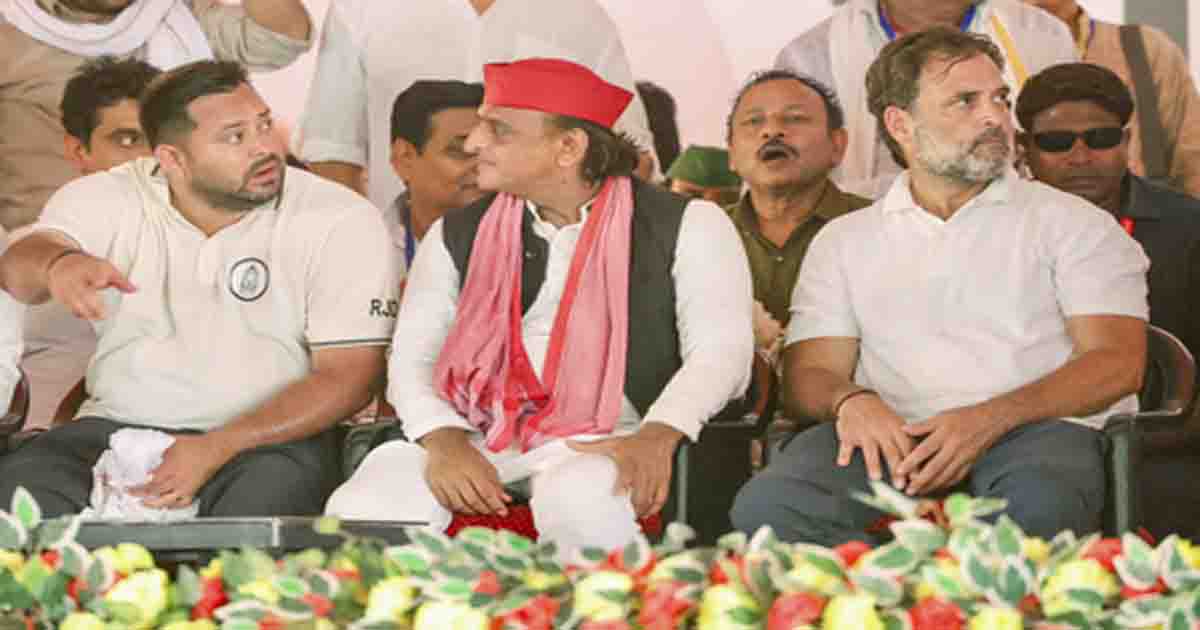
The seat-sharing talks within Bihar Mahagathbandhan ahead of the 2025 Assembly elections highlighted the changing balance of power within the Opposition alliance.
While the Congress remained an important partner in the INDIA bloc at the national level, its position in Bihar was weaker. The RJD, led by Tejashwi Yadav, was the dominant force in the alliance and held greater influence over seat-sharing negotiations.
The development was significant, especially when seen alongside the ongoing seat-sharing talks for the 2027 Uttar Pradesh Assembly elections. In both cases, the Congress appears to be negotiating from a position of weakness.
The Samajwadi Party (SP), led by Akhilesh Yadav, appears perched in a position of strength after outperforming the Congress in the state and emerging as the principal force against the ruling Bharatiya Janata Party (BJP).
In Bihar, the central dispute revolved around how many of the state’s 243 Assembly seats the Congress should contest. It had contested 70 seats in the 2020 election and won only 19, and was thus seeking a share in 2025 that would allow the party to rebuild its state unit and avoid being reduced to a symbolic ally.
But RJD leaders repeatedly argued that the party’s demand exceeded its organisational strength and electoral performance. That is an argument that finds echo again in ongoing talks between the Congress and SP over the 403 Assembly seats in Uttar Pradesh.
And at the hustings last year, the RJD finally agreed to contest some 143 seats while its principal ally settled for 61, significantly below the aspirations of many state Congress leaders.
Smaller partners, including Left parties and others, were also included, while others, like the Jharkhand Mukti Morcha (JMM), stood ignored. In both instances, the regional respective parties, being the larger partner in state politics, have countered that seat allocation should be determined by strike rate and winnability rather than historical status.
A key question throughout the negotiations then – as it is now for Uttar Pradesh – was whether talks would be driven directly by Rahul Gandhi and Tejashwi Yadav. Bihar reports suggested that most formal negotiations were conducted through designated representatives and party leaders rather than through the direct involvement by the two principal faces of the alliance.
As, incidentally, is happening now. But reports then did mention involvement of Rahul Gandhi and Tejashwi Yadav as the ultimate political decision-makers whose approval was necessary for any final settlement.
As is likely to happen now. What makes the UP negotiations especially revealing is the wide gap between Congress demands and the SP’s assessment of its electoral worth. Recent reports indicate that Congress sought a triple-digit seat allocation and even reportedly submitted lists running into well over 130 constituencies, while SP leaders emphasised winnability and reportedly offered a much smaller share.
This pattern points to a deeper political trend. Across the Hindi heartland, Congress increasingly functions as a junior partner dependent on regional parties for relevance. While in Bihar, it had to accommodate the RJD’s dominance, in Uttar Pradesh, it negotiates with an SP leadership that sees itself as the primary challenger to the BJP.
Through time, the evolving situation marks a major shift that reflects the erosion of Congress’s independent electoral base after decades of decline in the region.
The party’s predicament is visible in the numbers. In Uttar Pradesh, Congress’ Assembly presence collapsed over successive elections, winning only two seats in 2022 and polling a marginal vote share. That record is repeatedly being cited by allies during negotiations.
In Bihar, although Congress retains pockets of influence, allies continue to question whether its organisational machinery justifies the seat share it seeks.
With upcoming elections, the challenge before the Congress leadership is about proving to allies that it remains electorally relevant in states where regional parties have replaced it as the principal Opposition force.
The Bihar negotiations of 2025 and the Uttar Pradesh talks of 2027 demonstrate that while Rahul Gandhi may be the national face of the Opposition, the Congress increasingly enters state-level alliance talks as a claimant seeking relevance rather than a dominant partner setting the terms.
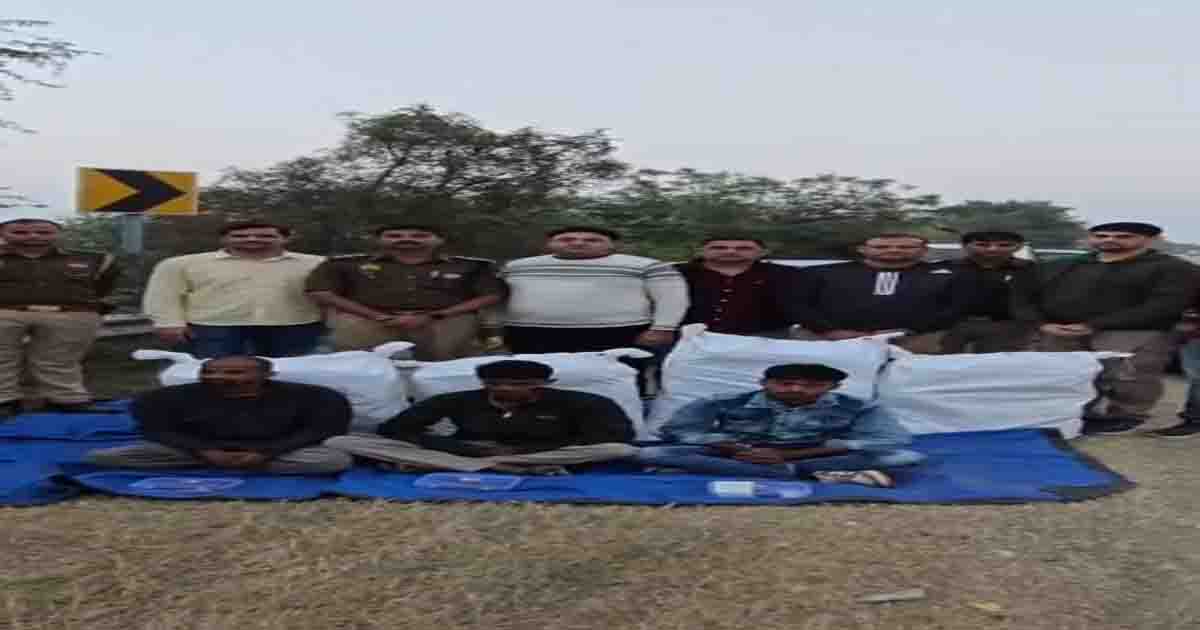
The Anti-Narcotics Task Force (ANTF), Agra Zone, in a joint operation with the Mant police, has seized 134 kg of cannabis worth approximately Rs 70 lakh from two cars near the Mant toll plaza on the Yamuna Expressway and arrested three alleged drug traffickers, officials said on Tuesday.
Acting on a specific tip-off, the joint team intercepted the two vehicles and conducted a search near the toll plaza on Sunday, November 23.
The police recovered 67 packets, each weighing around two kg, containing a total of 134 kg of cannabis from cars with number plates (DL 3 CBW 3807) and (MH 47 W 1971).
The arrested accused have been identified as Anil Kumar alias Chhote, a native of Naugawan village in the Bidhuna area of Uttar Pradesh’s Auraiya district, who was currently residing in Delhi’s Kakrola area near Dwarka Sector 17, and Sachin Devidas Tayawade and Somesh Sahebrao Manekar, both residents of Jamti Ganeshpur in Maharashtra’s Amravati district.
During interrogation, the accused allegedly told investigators that they had procured the consignment from a person identified as ‘Anna’ in Rajahmundry and were transporting it to Delhi.
According to the police, the accused had devised a plan to evade security checks during transportation. Somesh was allegedly driving a 5-seater premium hatchback ahead of a second car to act as a pilot, checking the route and informing the other vehicle about police movement and road conditions.
Anil was transporting the cannabis in the second car, and Somesh had allegedly arranged for Sachin to accompany Anil for security and surveillance, promising him Rs 25,000 and providing him with two mobile phones.
The two vehicles were intercepted when they came together near the Mant toll plaza, following which all three occupants were apprehended, police said.
Apart from the cannabis and the two cars, the police seized four mobile phones, including three Androids and a keypad phone, among other devices. Two debit cards belonging to two separate banks, along with Rs 3,200 in cash, were also recovered.
The police are now investigating the alleged supply chain, and efforts are underway to identify and trace ‘Anna’ in Rajahmundry as well as the network that was supposed to receive the consignment in Delhi.
National News
NDA united to realise ‘Viksit Punjab’ resolve, make state drug-free: BJP chief Nitin Nabin
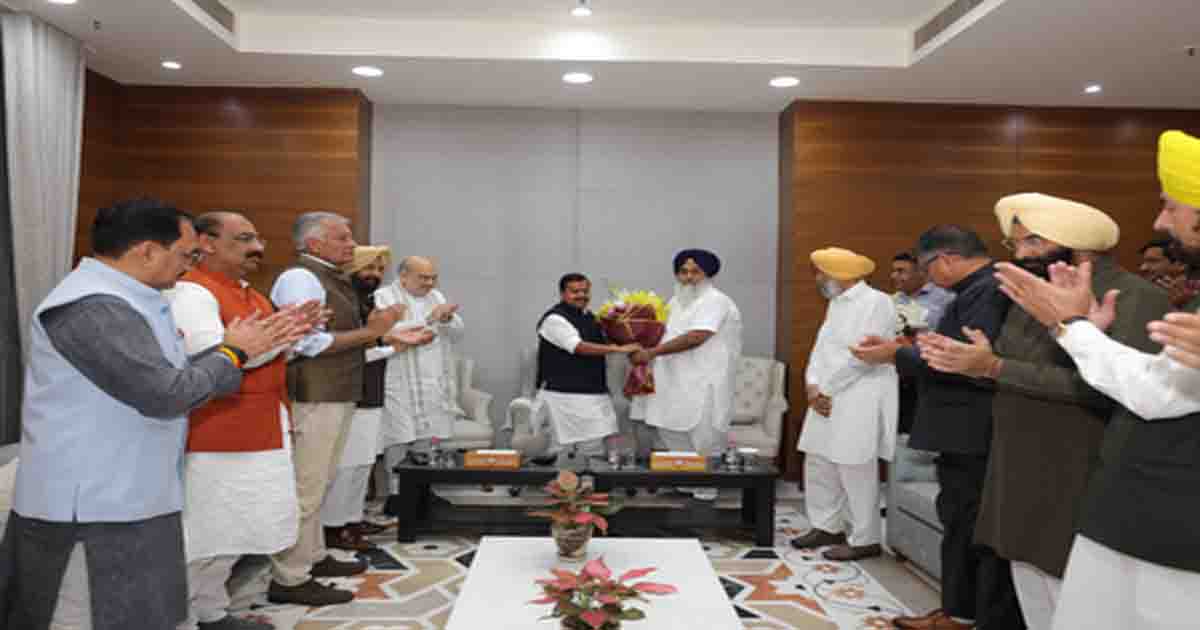
Bharatiya Janata Party (BJP) President Nitin Nabin on Tuesday welcomed Shiromani Akali Dal (SAD) into the NDA and said that the alliance will make the dream of “Viksit Punjab” a reality and resolve to make the state drug-free.
The BJP and SAD on Tuesday announced the revival of their alliance ahead of the 2027 Punjab Assembly elections.
Union Home Minister Amit Shah, BJP President Nitin Nabin and SAD President Sukhbir Singh Badal made the announcement at the BJP headquarters in New Delhi, confirming that the two parties would contest the upcoming Assembly elections in Punjab together.
Taking to his official X account, Nabin said, “A warm welcome to the Shiromani Akali Dal in the NDA! Inspired by the message of ‘the well-being of all’ from the revered Gurus on the sacred occasion of Gurpurab, the BJP and the Shiromani Akali Dal have once again united today for a bright future for Punjab.”
“The NDA family is united in its resolve to make Punjab drug-free, ensure employment for young people in their own state, establish good governance, and make the dream of a ‘Viksit Punjab’ a reality,” the BJP Chief added.
BJP Rajya Sabha member Tarun Chugh also welcomed the development and said that both parties will together work to make Punjab a drug-free and developed state.
In a post on X, Chugh said, “Today, under the leadership of Union Home Minister Amit Shah Ji, BJP President Nitin Nabin Ji and Shiromani Akali Dal President Sukhbir Singh Badal Ji, we have formed an alliance committed to making Punjab free of drugs and gangsters, and safe and developed. Our prayer is that Guru Maharaj grant success to this resolve and that Punjab always continue to prosper.”
The reunion brings together two former allies who parted ways in September 2020 over the Centre’s now-repealed farm laws.
The announcement is expected to strengthen the Opposition’s efforts to challenge the ruling Aam Aadmi Party (AAP) government and the Congress in the upcoming state elections.
Senior leaders, including Union Home Minister Amit Shah, BJP President Nitin Nabin and SAD President Sukhbir Singh Badal, are later expected to formalise the alliance in New Delhi.
The alliance for the 117-member State Assembly marks the return of a partnership that dominated Punjab politics for years.
The two parties governed the state together from 2007 to 2017, but their relationship collapsed in 2020 when the SAD withdrew from the NDA in protest against the three farm laws, which were subsequently repealed.
Congress leaders have criticised the proposed reunion, describing it as political opportunism and questioning whether the two parties have genuinely resolved the issues that led to their split in 2020.

Bihar to Uttar Pradesh: Seat-sharing battles reveal Congress’ shrinking leverage, dependence on others in Hindi heartland

UP: 134 kg of cannabis worth Rs 70 lakh seized on Yamuna Expressway; three arrested

Sharad Pawar unlikely to join NDA, may offer issue-based outside support: Chhagan Bhujbal

Path cleared for Mahim Causeway expansion as 10 structures obstructing the project are demolished.

NDA united to realise ‘Viksit Punjab’ resolve, make state drug-free: BJP chief Nitin Nabin

Congress trying to protect 3 crore Bangladeshi infiltrators in voter list: HM Shah

Red Fort car blast probe exposes blueprint for spread of terror modules across India

Trump flags Iran targets as talks continue

‘Conspiracy, not accident’: NCP on Ajit Pawar death

BJP, Shiv Sena slam Mallikarjun Kharge for terming Diwali ‘Khushiyon ka Eid’
-

 Crime4 years ago
Class 10 student jumps to death in Jaipur
-

 Maharashtra2 years ago
Mumbai Local Train Update: Central Railway’s New Timetable Comes Into Effect; Check Full List Of Revised Timings & Stations
-

 Maharashtra2 years ago
Mumbai To Go Toll-Free Tonight! Maharashtra Govt Announces Complete Toll Waiver For Light Motor Vehicles At All 5 Entry Points Of City
-

 Maharashtra2 years ago
False photo of Imtiaz Jaleel’s rally, exposing the fooling conspiracy
-

 National News2 years ago
Ministry of Railways rolls out Special Drive 4.0 with focus on digitisation, cleanliness, inclusiveness and grievance redressal
-

 Maharashtra2 years ago
Maharashtra Elections 2024: Mumbai Metro & BEST Services Extended Till Midnight On Voting Day
-

 National News2 years ago
J&K: 4 Jawans Killed, 28 Injured After Bus Carrying BSF Personnel For Poll Duty Falls Into Gorge In Budgam; Terrifying Visuals Surface
-

 Crime2 years ago
Baba Siddique Murder: Mumbai Police Unable To Get Lawrence Bishnoi Custody Due To Home Ministry Order, Says Report