
Business
Centre sends notice to Ola, Uber over different pricing for iPhone, Android commuters


New Delhi, Jan 23: Leading taxi aggregators Ola and Uber have been served notices by the Department of Consumer Affairs over differential pricing for the Android and iPhone commuters, seeking responses from the online cab-hailing platforms, Union Minister of Consumer Affairs, Pralhad Joshi, said on Thursday.
Minister Joshi said in a post on X social media platform that the Department, through the Central Consumer Protection Authority (CCPA) has issued notices to these cab aggregators.
“As a follow-up to the earlier observation of apparent differential pricing based on different models of mobiles – iPhone/Android – being used, Department of Consumer Affairs, through the CCPA, has issued notices to major cab aggregators Ola and Uber, seeking their responses,” the minister noted.
Uber and Ola have been directed to respond to the notices issued by the Department. In another post, the minister said that after receiving complaints on the National Consumer Helpline (NCH) regarding performance issues in iPhones following the iOS 18+ software update, “the Department, after examining these grievances, has issued a notice to Apple through the CCPA, seeking a response on the matter”.
Last month, Minister Joshi requested the CCPA to carry out a comprehensive inquiry and had warned the affected companies that there would be “zero tolerance for consumer exploitation.” If differential pricing was used, he claimed it was a “blatant disregard” for the rights of customers.
“This, prima facie, looks like unfair trade practice where the cab-aggregators are alleged to be using differential pricing based on the factors mentioned in the article below. If so, this is blatant disregard for consumers’ rights to know,” he posted on X.
The Union Minister also ordered investigations into other industries, like online ticketing apps and food delivery, to determine whether any comparable problems were reported.
Social media was abuzz last month over cab aggregators charging different prices for users, with the prices being higher for people using iPhones to book their services.

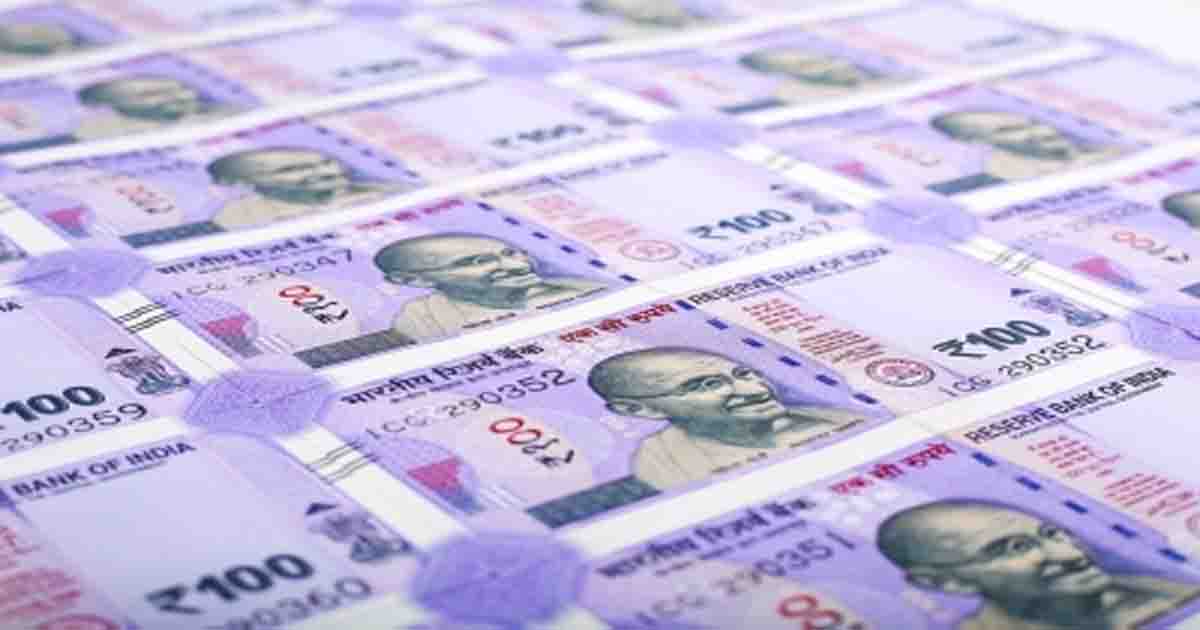
New Delhi, Oct 15: The Indian rupee is likely to remain in an appreciating territory even as global markets remain engulfed in turbulence, while the government and the Reserve Bank of India (RBI) may need to consider further policy steps to shore up resilience, a report said on Thursday.
The report from SBI Research forecasted inflation to peak at around 6.8 per cent in November 2026. It predicted that India’s 10-year yield will likely touch 7.6 per cent which will aid in price discovery in the future as well.
“The USD/INR forward implied yield opened at 4.60 per cent, around 42 bps higher than yesterday’s close,” the report noted.
Higher hedging costs make dollar funding more expensive and could encourage corporates to shift towards INR-denominated borrowing, supporting demand for the rupee, it added.
“The RBI has done a stupendous job and now the government must step up in reducing structural frictions on the taxation front, European Central Bank policy, ODI and AI policy,” the report noted.
The RBI could adopt a calibrated tightening approach through an asymmetric corridor adjustment, raising the MSF rate by 50 bps from 5.75 per cent to 6.25 per cent in the interim.
This could be followed by a 25 bps repo rate hike in December, taking the repo rate to 5.75 per cent and the MSF rate to 6.50 per cent, it forecasted.
Global financial markets are likely to remain volatile amid persistent geopolitical uncertainties, elevated US yields and evolving inflation dynamics.
The RBI has taken salutary steps to stabilise market conditions and can act up to a point, but further measures by the government on the taxation front, particularly concerning G-secs and ECBs clarity on AI policy, could help deepen domestic borrowing avenues and support capital flows.
Business
Govt signs Rs 4,106 crore contracts for communication satellite for IAF, heavyweight torpedoes for Navy


New Delhi, Oct 15: The Ministry of Defence on Thursday said it has signed contracts worth Rs 4,106 crore for the acquisition of a dedicated communication satellite capability for the Indian Air Force, and Varunastra heavy-weight torpedoes for the Indian Navy.
Both contracts mark a significant step towards advancing the development of domestic defence manufacturing capabilities while promoting self-reliance in critical technologies in line with the government’s ‘Aatmanirbhar Bharat’ and ‘Make-in-India’ vision.
The contract for the GSAT-7C satellite, valued at Rs 2,563 crore, was signed with New Space India Limited, Bengaluru.
According to an official statement, this indigenously designed, developed and manufactured satellite will enhance the secure, resilient and seamless communication capabilities for the assets of the Indian Air Force, thereby strengthening operational effectiveness.
Meanwhile, the contract for Varunastra, worth Rs 1,543 crore, was signed with Bharat Dynamics Limited, Hyderabad.
Varunastra is an indigenous ship-launched anti-submarine torpedo developed by the Naval Science and Technological Laboratory.
“Equipped with advanced manoeuvring capabilities, it is capable of engaging enemy submarines at long ranges, thereby enhancing the anti-submarine warfare capability of the Indian Navy,” said the statement.
Earlier this month, the Ministry of Defence signed a Rs 661.50 crore deal with BrahMos Aerospace Private Limited for the procurement of BrahMos fire control system and launchers for Indian Navy ships under the Buy (Indian-IDDM) category.
With a minimum of 68 per cent indigenous content, the project encourages active participation of various Indian industries, including MSMEs (micro, small and medium enterprises) in the supply chain. The project will generate employment over a period of three years.
It also bolsters India’s maritime security architecture and defence capabilities and marks a critical milestone in the ongoing efforts to indigenise advanced military technology, according to the Defence Ministry statement.
The BrahMos System fitted on board various frontline warships is the Indian Navy’s primary Surface-to-Surface Missile (SSM) system for maritime strike operations. The weapon system is capable of targeting land and sea targets from extended ranges with pinpoint accuracy at supersonic speed.

Mumbai, Oct 15: Domestic equity benchmarks opened higher on Thursday, defying fragile sentiment amid weakness in technology stocks across the US and Asian markets.
Sensex opened at 72,965.80, up 183.91 points or 0.25 per cent, while Nifty started at 22,671.30, up 48.60 points or 0.21 per cent.
In early trade, sectoral performance was mixed. Nifty IT, Nifty FMCG, Nifty Auto and Nifty Private Bank were top gainers and increased up to almost 2 per cent.
On the other hand, Nifty Metal was the top laggard which declined 1 per cent. Similarly, PSU bank, consumer durables, pharmaceuticals and healthcare indices were traded lower.
Market experts said hotter-than-expected US inflation — which spiked to 3.7 per cent in September from 3.4 per cent in August — has increased the possibility of another rate hike by the US Federal Reserve in October.
The concern triggered big selling in US markets, with tech-heavy Nasdaq correcting 1.88 per cent, they added.
“The fear has spread to South Korea and Japan. Nikkei is down above 4 per cent and Kospi down more than 7 per cent. From the Indian market perspective, the correction in AI stocks is a positive,” according to the experts.
FIIs who have been selling Indian stocks and buying AI stocks will halt this trend.
Technically, Nifty formed a bearish-leaning candle, while RSI stood at 41.66, above its average of 32.01, indicating some recovery in momentum, according to analysts.
On Wednesday, FIIs remained net sellers and offloaded equities worth approximately Rs 1,857 crore, while DIIs provided strong support with net purchases of around Rs 2,670 crore.
Additionally, Wall Street ended lower on Wednesday as US inflation fueled rate-hike concerns, weighing on the Nasdaq and AI. Asian markets were also trading in red zone.
In addition, crude oil prices declined nearly 2 per cent as investors weighed Strait of Hormuz supply risks against US moves to ease shipping costs.

Rupee to remain in appreciating mode despite global volatility

10,290 litres of fuel, 65 tonnes of chemicals seized in Gujarat, seven held

Govt signs Rs 4,106 crore contracts for communication satellite for IAF, heavyweight torpedoes for Navy

Three Indians killed in fire incident in Germany Bochum

BJP to finalise Bengal civic poll candidates by Diwali; adopts multi-tier screening, eyes professionals

INDIA bloc begins protest march against ECI

Maha Congress stages agitation against Gyanesh Kumar

Complaint against Netflix & Mukesh Chhabra for inappropriate language on ‘India’s Got Latent 2’

Mumbai Cyber Cell arrests 6 members of organized gang in major operation; Beware of cyber fraudsters; Digital arrest has no legal status; DCP Bajrang Bansode

Bombay HC warns Vijay Mallya against posting court documents on social media
-

 Crime4 years ago
Class 10 student jumps to death in Jaipur
-

 Maharashtra2 years ago
Mumbai Local Train Update: Central Railway’s New Timetable Comes Into Effect; Check Full List Of Revised Timings & Stations
-

 Maharashtra2 years ago
Mumbai To Go Toll-Free Tonight! Maharashtra Govt Announces Complete Toll Waiver For Light Motor Vehicles At All 5 Entry Points Of City
-

 Maharashtra2 years ago
False photo of Imtiaz Jaleel’s rally, exposing the fooling conspiracy
-

 National News2 years ago
Ministry of Railways rolls out Special Drive 4.0 with focus on digitisation, cleanliness, inclusiveness and grievance redressal
-

 Maharashtra2 years ago
Maharashtra Elections 2024: Mumbai Metro & BEST Services Extended Till Midnight On Voting Day
-

 National News2 years ago
J&K: 4 Jawans Killed, 28 Injured After Bus Carrying BSF Personnel For Poll Duty Falls Into Gorge In Budgam; Terrifying Visuals Surface
-

 Crime2 years ago
Baba Siddique Murder: Mumbai Police Unable To Get Lawrence Bishnoi Custody Due To Home Ministry Order, Says Report