
International News
Azerbaijan Airlines Crash: Russia Reacts Sharply To Allegations Of Its Defence Missile Involved In Mishap That Killed 38 Passengers

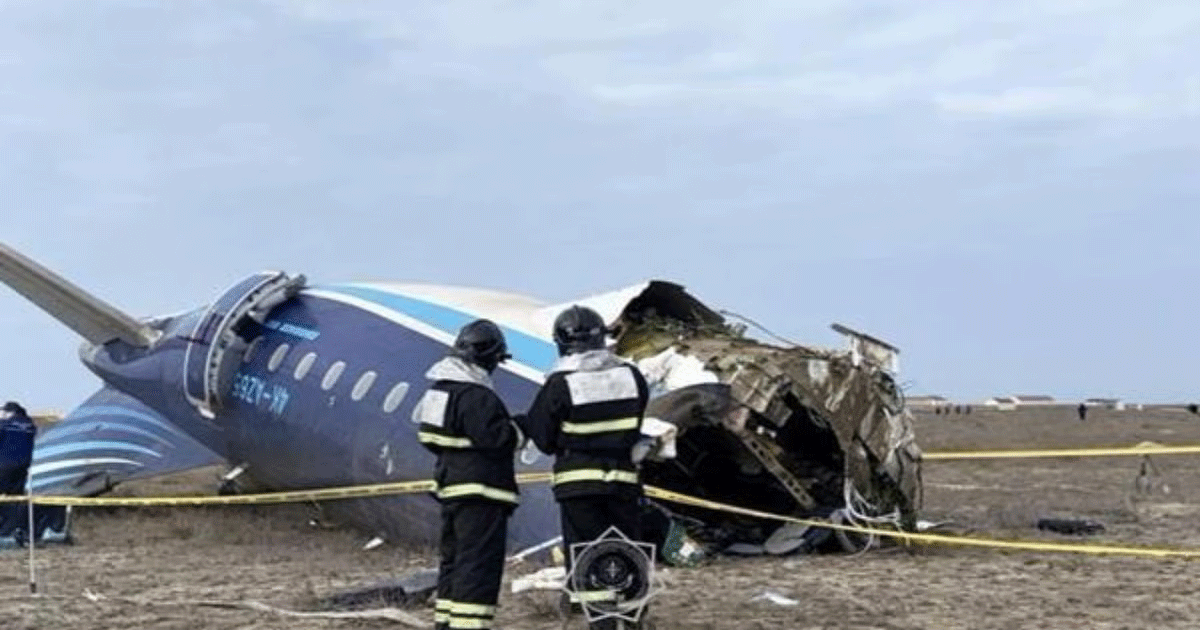
Baku: Aviation experts said Thursday that Russian air defence fire was likely responsible for the Azerbaijani plane crash the day before that killed 38 people and left all 29 survivors injured.
Azerbaijan Airlines’ Embraer 190 was en route from Azerbaijan’s capital of Baku to the Russian city of Grozny in the North Caucasus on Wednesday when it was diverted for reasons still unclear and crashed while making an attempt to land in Aktau in Kazakhstan after flying east across the Caspian Sea.
The plane went down about 3 km (2 miles) from Aktau. Cellphone footage circulating online appeared to show the aircraft making a steep descent before crashing into the ground and exploding in a fireball.
Other footage showed a part of its fuselage ripped away from the wings and the rest of the aircraft lying upside down on the grass.
Azerbaijan mourned the crash victims with national flags at half-staff across on Thursday. Traffic stopped at noon, and sirens sounded from ships and trains as it observed a nationwide moment of silence.
Speaking at a news conference Wednesday, Azerbaijani President Ilham Aliyev said that it was too soon to speculate on the reasons behind the crash, but said that the weather had forced the plane to change from its planned course.
“The information provided to me is that the plane changed its course between Baku and Grozny due to worsening weather conditions and headed to Aktau airport, where it crashed upon landing,” he said.
Bird Strike Led To Emergency On Board
Russia’s civil aviation authority, Rosaviatsia, said that preliminary information indicated the pilots diverted to Aktau after a bird strike led to an emergency on board.
Authorities in Azerbaijan, Kazakhstan and Russia were tight-lipped about a possible cause of the crash but a lawmaker in Azerbaijan blamed Moscow. Rasim Musabekov told the Azerbaijani news agency that the plane was fired on while in the skies over Grozny and urged Russia to offer an official apology.
“Those who did this must face criminal charges,” Musabekov was quoted by Azerbaijani news agency as saying, adding that compensations to the victims should also be paid. “If it doesn’t happen, relations will be affected.” As the official crash investigation started, some experts pointed out that holes seen in the plane’s tail section could indicate that it could have come under fire from Russian air defence systems fending off a Ukrainian drone attack.
Ukrainian drones had previously attacked Grozny, the capital of the Russian republic of Chechnya, and other regions in the country’s North Caucasus. An official in Chechnya said another drone attack on the region was fended off on Wednesday, although federal authorities didn’t report it.
Mark Zee of OPSGroup, which monitors the world’s airspace and airports for risks, said that the analysis of the images of fragments of the crashed plane indicate that it was almost certainly hit by a surface-to-air missile, or SAM.
“Much more to investigate, but at high level we’d put the probability of it being a SAM attack on the aircraft at being well into the 90-99% bracket,” he said.
Osprey Flight Solutions, an aviation security firm based in the United Kingdom, warned its clients that the “Azerbaijan Airlines flight was likely shot down by a Russian military air-defense system.” Osprey provides analysis for carriers still flying into Russia after Western airlines halted their flights during the war.
Osprey CEO Andrew Nicholson said that the company had issued more than 200 alerts regarding drone attacks and air defense systems in Russia during the war.
“This incident is a stark reminder of why we do what we do,” Nicholson posted online. “It is painful to know that despite our efforts, lives were lost in a way that could have been avoided.” Yan Matveyev, an independent Russian military expert, noted that images of the crashed plane’s tail reveal the damage compatible with shrapnel from a small surface-to-air missiles, such as the Pantsyr-S1 air defence system.
“It looks like the tail section of the plane was damaged by some missile fragments,” he said.
Matveyev added that it remains unclear why the pilots decided to fly hundreds of miles east across the Caspian Sea instead of trying to land at a closer airport in Russia after the plane was hit.
“Perhaps some of the plane’s systems kept working for some time and the crew believed that they could make it and land normally,” Matveyev said, adding that the crew could also have faced restrictions on landing at another venue in Russia.
Caliber, an Azerbaijani news website with good government connections, also claimed that the airliner was fired upon by a Russian Pantsyr-S air defence system as it was approaching Grozny. It questioned why Russian authorities failed to close the airport despite the apparent drone raid in the area. Khamzat Kadyrov, head of Chechnya’s Security Council, said that air defences downed drones attacking the region on Wednesday.
Caliber also wondered why Russian authorities didn’t allow the plane to make an emergency landing in Grozny or other Russian airports nearby after it was hit.
Russia Sharply Reacts On Claims
Asked about the claims that the plane had been fired upon by air defence assets, Kremlin spokesman Dmitry Peskov told reporters that “it would be wrong to make hypotheses before investigators make their verdict”.
Kazakhstan’s parliamentary speaker, Maulen Ashimbayev, also warned against rushing to conclusions based on pictures of the plane’s fragments, describing the allegations of air defence fire as unfounded and unethical.
According to Kazakh officials, those aboard the plane included 42 Azerbaijani citizens, 16 Russian nationals, six Kazakhs and three Kyrgyzstan nationals. Russia’s Emergencies Ministry on Thursday flew nine Russian survivors to Moscow for treatment.


New Delhi, Dec 25: The ISI’s role in attempting to fan an anti-India sentiment in Bangladesh is most certainly confirmed, given the rhetoric by some Pakistan news outlets and a few leaders. Some media outlets have recklessly blamed India’s Research and Analysis Wing (RAW) for the murder of student leader Sharif Osman Hadi. The claim has been made at a time when the Bangladesh authorities themselves are unclear about the killers and their motive.
Adding to the fire is a fiery video message by Kamran Sayeed Usmani, a leader of Pakistan’s ruling party, PML-N, who went on an anti-India rhetoric.
While blaming New Delhi for the mess in Bangladesh, he threatens that missiles would be directed at India. Officials say that these are reckless messages only aimed at ensuring that the violence continues in Bangladesh.
The official further pointed out that there is a pattern to such messaging. The intention is to internationalise the domestic problems in Bangladesh, and by dragging India into it, these elements are trying to achieve just that. Not a single country except Pakistan has blamed India for the mess that is on in Bangladesh. In fact, it was the Pakistan deep-state that orchestrated this mess by first ensuring that Sheikh Hasina was ousted and the Jamaat-e-Islami was in the driver’s seat. The international community is aware that the Jamaat is a puppet of the ISI.
Following the Liberation War, it was the ISI and Jamaat which planned large-scale illegal immigration into India so that demographic changes could be executed. Intelligence Bureau officials who are keeping a close watch on the developments in Bangladesh say that the ISI is playing two games here.
Pakistan has been desperately seeking revenge against India since it lost the 1971 war, which led to the creation of Bangladesh. Hence, there has been the manufacturing of a false narrative so that the people of Bangladesh are pitted against India.
The ISI realises that it would need a Jamaat government or one backed by it to be in power. Parties like the Bangladesh National Party (BNP) have been showing signs of moving away from the Jamaat and ISI, as the party wants a developed and not a radical nation.
The signs became clear when the BNP distanced itself from the Jamaat and decided to contest the elections on its own.
This shift has hurt the ISI and made it insecure, as the BNP does have every chance of winning the elections. Pollsters have predicted a win for the BNP in the absence of the Awami League, which has been banned from contesting the elections.
Former Prime Minister and BNP chief Khaleda Zia is unwell, and this could well be a sympathy factor for the party in the February 2026 polls. The BNP cadre will also be bolstered by the return of Zia’s son, Tarique Rehman, who is set to visit Bangladesh after 17 years in exile.
All these factors have made the ISI and Jamaat uneasy, and they feel that the elections can slip out of their hand.
Bangladesh watchers say that the elections are unlikely to be put off as pressure from the international community is building up. Experts say that the elections in Bangladesh are most likely to go as per schedule, but the fairness of it remains a question mark.
Intelligence agencies say that the violence is being fanned by the Jamaat-controlled groups so that the people do not come out and vote in large numbers. They want to create fear in the minds of the people so that they stay indoors when the elections are on.
Many Awami League supporters are unlikely to vote as the party is banned. Some are likely to shift their loyalties to the BNP, and if this does happen, then the party’s chances of winning the elections will only increase.
Analysts say that there is either a chance of a short postponement of the elections or a completely unfair one being conducted.
The ISI is doing everything possible to rig the polls by inciting violence. While trying to rig the polls, the ISI is also dishing out a false narrative to create an anti-India sentiment among the people.
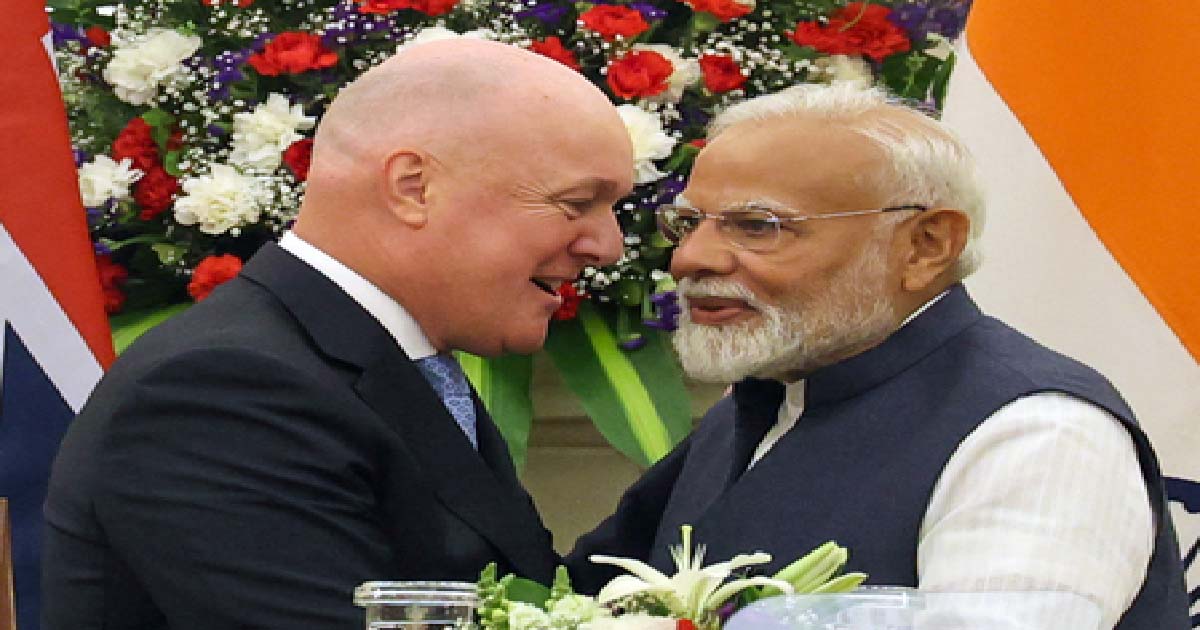
New Delhi, Dec 22: Prime Minister Narendra Modi held a telephone conversation with New Zealand’s Prime Minister, Christopher Luxon, on Monday as the two leaders jointly announced the successful conclusion of the historic, ambitious and mutually beneficial India-New Zealand Free Trade Agreement (FTA).
During the conversation, both leaders expressed confidence in doubling bilateral trade over the next five years as well as an investment of $20 billion in India from New Zealand over the next 15 years.
The negotiations began in March this year and the two leaders concluded the FTA in a record time of nine months, reflecting the shared ambition and political will to further deepen ties between the two countries, according to a statement from Prime Minister’s Office (PMO).
“The FTA would significantly deepen bilateral economic engagement, enhance market access, promote investment flows, strengthen strategic cooperation between the two countries, and also open up new opportunities for innovators, entrepreneurs, farmers, MSMEs, students and youth of both countries across various sectors,” said the statement.
The leaders also welcomed the progress achieved in other areas of bilateral cooperation such as sports, education, and people-to-people ties, and reaffirmed their commitment towards further strengthening of the India-New Zealand partnership.
This historic FTA eliminates and reduces tariffs on 95 per cent of New Zealand’s exports – among the highest of any Indian FTA – with almost 57 per cent being duty-free from day one, increasing to 82 per cent when fully implemented, with the remaining 13 per cent subject to sharp tariff cuts.
It puts New Zealand exporters on an equal or better footing to our competitors across a range of sectors and opens the door to India’s rapidly expanding middle class, according to an official statement from New Zealand.
“The Indian economy is forecast to grow to NZ$12 trillion by 2030. The India-NZ Free Trade Agreement unleashes huge potential for our world-class exporters to the world’s largest country and will significantly accelerate progress towards New Zealand’s ambitious goal of doubling the value of exports over 10 years,” it added.
International News
‘Bodes ill for democratic process’: Tharoor flags attacks on media amid violence in Bangladesh

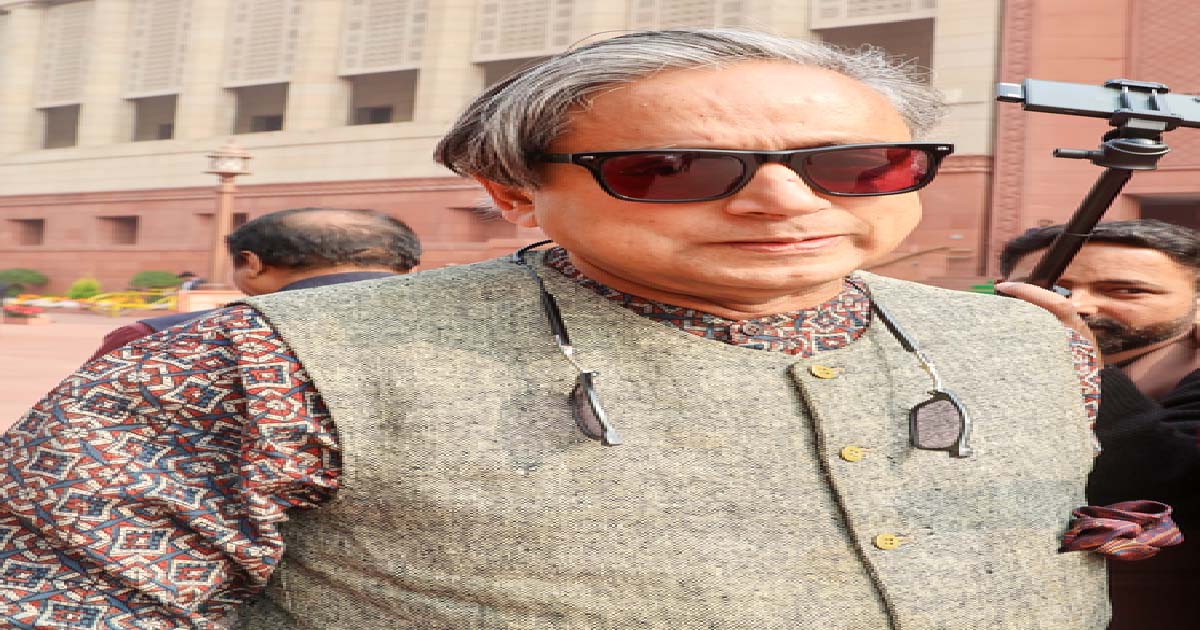
New Delhi, Dec 20: Congress MP Shashi Tharoor on Saturday voiced serious concern over what he described as targeted attacks on prominent media houses in violence-hit Bangladesh, while also condemning the forced suspension of visa services at Indian Assistant High Commissions in Khulna and Rajshahi amid worsening security conditions.
Bangladesh has witnessed a fresh wave of unrest following the death of radical Islamist leader Sharif Osman Hadi, who rose to prominence during the 2024 student movement that culminated in the ouster of the then Prime Minister Sheikh Hasina.
The killing has triggered widespread protests, with violence reported in Dhaka and several other parts of the country.
Protests over the death of Inqilab Moncho leader Hadi have continued to escalate, and the mobs targeted leading media organisations and locations associated with Bangladesh’s secular legacy. Reports of arson and vandalism at media establishments have sparked alarm both within the country and internationally.
Reacting to the developments, Tharoor said the attacks on the press strike at the core of democratic values.
In a post on X, he said: “Deeply concerned by the reports from Bangladesh. The targeted mob attacks and arson at the offices of Prothom Alo and The Daily Star are more than just an assault on two media houses; they are an assault on the freedom of the press and the very foundation of a pluralistic society.”
The Congress MP also expressed concern about the safety of journalists, including senior editors. He said he was worried about the well-being of Editor Mahfuz Anam and other media professionals working under increasingly hostile conditions.
Amid the unrest, India was compelled to shut down two visa application centres in Bangladesh, citing security threats. In Rajshahi, a march was organised by a group called ‘July 36 Mancha’ towards the Indian Assistant High Commission. The procession advanced towards the diplomatic mission but was halted midway following police intervention.
Similar demonstrations were also reported in Khulna, prompting authorities to suspend visa-related operations at both locations.
Condemning the disruption, Tharoor said the suspension of services would have far-reaching consequences.
“The forced suspension of visa services at the Indian Assistant High Commissions in Khulna and Rajshahi, driven by escalating security threats, is a major setback. This disruption directly impacts students, patients, and families who were finally seeing a glimpse of normalisation in cross-border mobility,” he said.
With Bangladesh scheduled to hold national elections on February 12, 2026, Tharoor warned that this atmosphere of violence and intolerance “bodes ill for the democratic process”.
The Congress leader also outlined steps for the Muhammad Yunus-led interim government to ensure stability and democratic continuity in the country.
Emphasising the need for decisive action, he said: “Protection of Journalists: Journalists should not have to post frantic messages for their lives while their offices burn. Mob rule must not be allowed to prevail.”
He further mentioned that the security of diplomatic facilities must be ensured to maintain vital people-to-people ties. “Extra protection must be provided for targeted embassies & consulates,” he said.
“Constructive dialogue must replace ochlocracy if the country is to survive this transition with any semblance of democracy. Interim Chief Mohammed Yunus must take the lead personally to ensure this,” he added, stressing the need to restore the calm.
Tharoor underscored that peace in Bangladesh holds significance beyond its borders, noting that stability in the country is “vital” for South Asia as a whole.
“We hope for a return to peace and a safe environment where the voice of the people is heard through the ballot, not through violence and intimidation,” he added.

Navi Mumbai Crime Branch Busts 3 Overseas Job Fraud Rackets In CBD Belapur, 154 Passports Seized, 8 Arrested

As 2025 ends, these words of wisdom from PM Modi offer lessons for youth

Unprecedented swapping of friends and foes in Maha politics as parties gear up for municipal elections

‘Proxy’ candidate appearing for Kolkata Police’s SI recruitment exam arrested

BMC Elections 2026: 2,516 Nominations Filed For 227 Seats Ahead Of Mumbai Civic Polls

Sensex, Nifty open lower amid weak global cues

Mukesh Ambani, Shiv Sena UBT Chief Uddhav Thackeray & Son Aaditya Share Warm Greetings At Mumbai’s Swadesh Event

Lionel Messi’s G.O.A.T India Tour: Football Legend To Arrive On December 14 In Mumbai; CM Devendra Fadnavis Shares Excitement On X

Mumbai Crime: Father–Son Real Estate Duo Booked For ₹31.26-Crore Investment Fraud In Jogeshwari Redevelopment Project

Virat Kohli and Rohit Sharma show will continue: Dale Steyn
-

 Crime3 years ago
Class 10 student jumps to death in Jaipur
-

 Maharashtra1 year ago
Mumbai Local Train Update: Central Railway’s New Timetable Comes Into Effect; Check Full List Of Revised Timings & Stations
-
 Maharashtra1 year ago
Mumbai To Go Toll-Free Tonight! Maharashtra Govt Announces Complete Toll Waiver For Light Motor Vehicles At All 5 Entry Points Of City
-

 Maharashtra1 year ago
False photo of Imtiaz Jaleel’s rally, exposing the fooling conspiracy
-
 National News1 year ago
Ministry of Railways rolls out Special Drive 4.0 with focus on digitisation, cleanliness, inclusiveness and grievance redressal
-
 Maharashtra1 year ago
Maharashtra Elections 2024: Mumbai Metro & BEST Services Extended Till Midnight On Voting Day
-

 National News1 year ago
J&K: 4 Jawans Killed, 28 Injured After Bus Carrying BSF Personnel For Poll Duty Falls Into Gorge In Budgam; Terrifying Visuals Surface
-
 Crime1 year ago
Baba Siddique Murder: Mumbai Police Unable To Get Lawrence Bishnoi Custody Due To Home Ministry Order, Says Report